 Vorschau anzeigen
 Versenden
 Teilen
 Details anzeigen

 Herunterladen
 Ähnliche Objekte
 Röntgenaufnahme
 Diashow
Landscape (1964)


 Weiterlesen
Giclée / Kunstdruck
Giclée- oder Leinwanddruck in Museumsqualität mit schneller Produktion und flexiblen Veredelungsoptionen. ( Handgemalte Reproduktion bestellen Bild kaufen)




P118B $10

P118H $10

P118W $10

P438Z $10

P508JH $12

P508YH $12

P805H $10

P805Z $10

P919BZ $10

P919G $10

P919XJ $10

P959ZH $10

P968JZ $12

W106C $8

W218G $10

W218JH $8

W218Y $10

W307PJ $10

W316G $10

W316PJ $8

W316Y $10

W398PJ $8

W4111J $10

W500HY $15

W500JH $15

W692G $12

W849H $8

W940BG $15

W953PJ $8




Wählen Sie aus unseren vordefinierten Formaten, die den ursprünglichen Proportionen des Kunstwerks entsprechen.

Sie können Ihre eigenen Maße eingeben, um ein bestimmtes Format oder einen speziellen Platz einzupassen. Wenn das von Ihnen gewählte Format nicht den Proportionen des Originalbildes entspricht, werden wir das Kunstwerk entweder beschneiden oder das Bild mit einem gespiegelten oder einfarbigen Rand erweitern. Ein digitaler Entwurf wird Ihnen zur Genehmigung zugesandt, bevor die Produktion beginnt.
Bitte beachten Sie, dass die Vorschau auf dem Bildschirm nicht den tatsächlichen Zuschnitt oder die Erweiterung widerspiegelt. Nur der Entwurf zeigt die endgültige Komposition präzise an.
Obwohl Sondermaße verfügbar sind, empfehlen wir die Auswahl eines Maßes aus der vordefinierten Liste, um die ursprünglichen Proportionen zu bewahren.
Weltweiter Versand () innerhalb von 2 Wochen statt der üblichen 4/5 Wochen. (7 September)

Kostenloser weltweiter Expressversand

Hochwertige Leinenleinwand

Umfassender Versicherungsschutz beim Versand

Zollgebühren-Rückerstattungsgarantie

Garantie für exakte Farbtreue

100-Tage-Rückgaberecht (nur bei Mängeln)

100% Geld-zurück-Garantie

Mengenrabatt verfügbar
 Die Glasoption ist nur für Größen unter 110 cm verfügbar.

Landscape (1964)
Giclée / Kunstdruck
Format der Reproduktion
-


Gesamtpreis
$ 62
A Geometric Echo of Nature’s Vastness
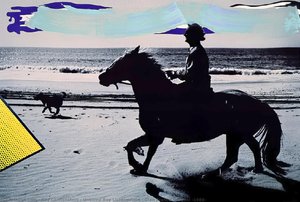
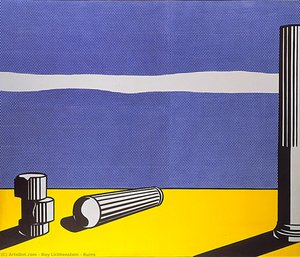
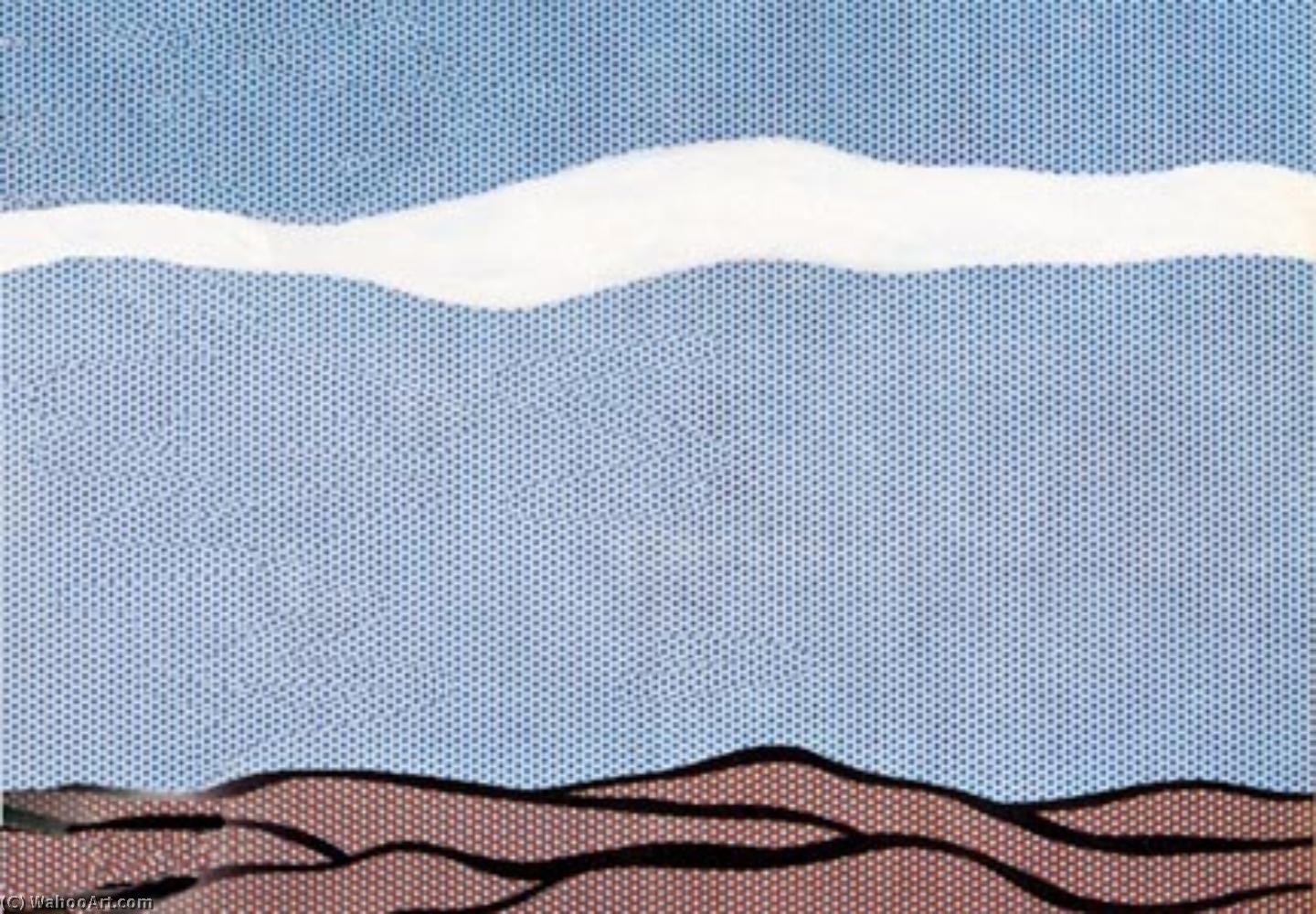
In the pantheon of twentieth-century art, few works capture the electric tension between high culture and mass media as effectively as Roy Lichtenstein’s Landscape (1964). This masterpiece serves as a striking testament to the transformative power of the Pop Art movement, a period that dared to reject the heavy, emotional brushstrokes of Abstract Expressionism in favor of the crisp, calculated language of popular culture. At first glance, the viewer is met with a simplified panorama—a serene yet strikingly artificial depiction of an arid environment. Rolling hills, rendered in cool shades of blue and white, stretch across the canvas, meeting an expansive sky punctuated by stylized clouds. Yet, beneath this tranquil surface lies a profound interrogation of how we perceive reality through the lens of mechanical reproduction.
Lichtenstein’s technique is nothing short of revolutionary, turning the industrial process of printing into a high-art aesthetic. By employing the Ben-Day dot method—a hallmark of his signature style—he meticulously divided the image into tiny, uniform squares of color. This halftone printing technique, originally popularized in cheap comic strips and newspaper advertisements, creates a textured, vibrating surface that mimics the appearance of mass-produced material. The deliberate application of these dots, combined with bold outlines and a flattened perspective, strips away the illusion of depth to prioritize visual impact. In doing so, Lichtenstein transforms a traditional subject like a landscape into a meticulously crafted geometric abstraction, where every curve and color choice feels both intentional and iconic.
The Intersection of Modernity and Emotion
Beyond its technical brilliance, Landscape (1964) carries a deep historical resonance. Created during the mid-1960s, the work emerged from a cultural landscape hungry for accessibility and immediacy. Lichtenstein sought to bridge the gap between the elite gallery space and the everyday visual experience of the street, drawing inspiration from the very things most often dismissed by critics: advertisements, comic books, and industrial design. The painting’s color palette—predominantly blues and whites with subtle, contrasting accents—creates a sense of rhythmic balance that is both intellectually stimulating and visually soothing. It is an art form that does not demand a deep knowledge of classical mythology, but rather invites the viewer to find beauty in the familiar fragments of modern life.
For the discerning collector or interior designer, this piece offers more than just aesthetic appeal; it provides a focal point of sophisticated energy. The way the light seems to play across the geometric hills and the rhythmic repetition of the clouds creates a dynamic atmosphere that can anchor a contemporary space. There is a unique emotional resonance in the work—a sense of calm derived from its order, yet an underlying excitement found in its bold, pop-infused vibrancy. Owning a high-quality reproduction of this work allows one to bring a piece of art history into the home, celebrating the moment when the boundaries between fine art and popular imagery dissolved forever, leaving behind a legacy of color, precision, and profound visual wit.
Ähnliche Kunstwerke
Über den Künstler
frühes Leben und Ausbildung
Roy Fox Lichtenstein, ein prominenter amerikanischer Pop-Künstler, wurde am 27. Oktober 1923 in New York City geboren. Er wuchs in einer wohlhabenden jüdischen Familie auf, mit seinem Vater als Immobilienmakler und seiner Mutter als Hausfrau. Lichtensteins Interesse an Kunst und Design begann während seiner Schulzeit als Hobby.Künstlerische Karriere
Nach Abschluss seiner Schulausbildung am Dwight School im Jahr 1940 besuchte Lichtenstein die Art Students League of New York unter der Anleitung von Reginald Marsh. Er studierte anschließend einen Abschluss in Fine Arts an der Ohio State University, der durch eine dreijährige Verlegung in das Militär während des Zweiten Weltkriegs unterbrochen wurde.- Look Mickey (1961, National Gallery of Art, Washington, D.C.), eines von Lichtensteins frühesten Pop-Kunstwerke, markierte den Beginn seiner einflussreichen Karriere.
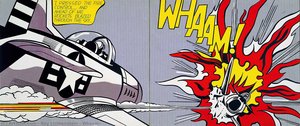
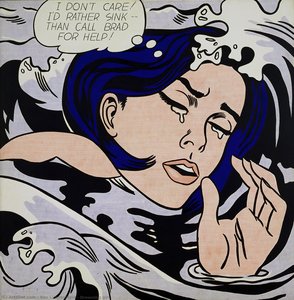
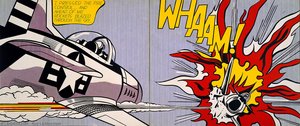
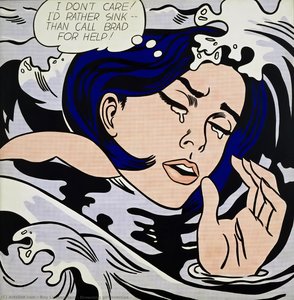
- Seine Arbeit war stark von Werbe- und Comic-Stilen beeinflusst, darunter bedeutende Werke wie Wham!, Drowning Girl und Oh, Jeff...I Love You Too...But...
- Lichtensteins teuerstes Werk, Masterpiece, wurde im Januar 2017 für 165 Millionen Dollar verkauft.
Lehre und Einflüsse
Lichtenstein lehrte an verschiedenen Institutionen, darunter die State University of New York at Oswego und die Rutgers University. Seine Arbeit war von Allan Kaprow beeinflusst, einem Kollegen an der Rutgers University, der sein Interesse an proto-Pop-Bildern wiederbelebte. Bekannte Ausstellungen:- The Museum Chambre de Commerce (Toulouse, Frankreich), das verschiedene Kunstwerke aus der Pop-Art-Bewegung zeigte.
- Lichtensteins Werk wurde in der Leo Castelli Gallery in New York City ausgestellt, wobei seine erste Einzelausstellung 1962 vor der Eröffnung vollständig von einflussreichen Sammlern gekauft wurde.
Vermächtnis und Einfluss
Roy Lichtenstein starb am 29. September 1997 und hinterließ ein Vermächtnis als eine führende Figur in der Pop-Art-Bewegung. Seine Arbeit wird weiterhin für ihre innovative Verschmelzung von Hoch- und Populärkultur gefeiert, wodurch sie einem breiteren Publikum zugänglich gemacht wird.- Entdecken Sie mehr von Lichtensteins Kunstwerke auf ArtsDot.com
- Erfahren Sie die Welt der Pop-Art und ihrer einflussreichen Künstler auf Pop Art und darüber hinaus: Navigieren Sie mit ArtsDot.com durch zeitgenössische Stile
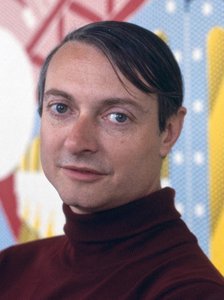
Roy Lichtenstein
1923 - 1997 , Vereinigte Staaten von Amerika
Kurzinfos
- Beeinflusste Künstler:
- Reginald Marsh
- Allan Kaprow
- Bemerkenswerte Werke:
- Look Mickey
- Whaam!
- Drowning Girl
- Masterpiece
- Geburtsdatum: 27. Oktober 1923
- Geburtsort: Manhattan, USA
- Künstlerische Richtung: Pop Art
- Nationalität: Amerikanisch
- Todatum: 29. September 1997
- Vollständiger Name: Roy Lichtenstein
Ähnliche Artikel
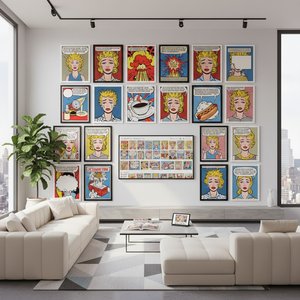
Roy Lichtenstein: Die 25 Meisterwerke des Pop Art – Kunst für Ihr Zuhause | ArtsDot
Entdecken Sie die 25 ikonischsten Meisterwerke von Roy Lichtenstein! Tauchen Sie ein in die Welt der Pop Art, lernen Sie die Geschichten hinter den berühmten Gemälden und finden Sie perfekte Kunstreproduktionen für Ihr Zuhause. Jetzt auf ArtsDot.com entdecken!

Geometrische Abstraktion: Die 10 Meisterwerke, die Kunstgeschichte prägten | ArtsDot.com
Entdecken Sie die 10 Meisterwerke der geometrischen Abstraktion! Von Kandinsky bis Mondrian – erleben Sie die Geschichte, Farben & Formen dieser revolutionären Kunstrichtung. Hochwertige Kunstreproduktionen auf ArtsDot.com
Beyond the Dot: Unveiling the Industrial Magic of Silk Screens and Ben-Day Dots in Pop Art
Unveil the magic of Pop Art! Explore the fascinating history of Ben-Day dots and silk screens. Discover how these bold, industrial techniques transformed everyday imagery into high art—and learn how to bring that vibrant energy into your home with our premium, hand-painted reproductions.
Kandinsky: Die 25 Meisterwerke des Abstrakten – Kunst für Ihr Zuhause | ArtsDot
Entdecken Sie die 25 bedeutendsten Gemälde von Wassily Kandinsky! Tauchen Sie ein in die Welt der abstrakten Kunst, des Expressionismus und der Farbkomposition. Hochwertige Kunstdrucke & Inspiration für Ihr Zuhause auf ArtsDot.com.
Beyond Form & Color: Geometric Abstraction's Evolution in 20th/21st Century Art
Explore the evolution of geometric abstraction from Cubism to contemporary art. Discover key artists like Malevich & Mondrian, investment insights, and expert collecting advice at ArtsDot.