

 Vorschau anzeigen
 Versenden
 Teilen
 Details anzeigen

 Herunterladen
 Ähnliche Objekte
 Röntgenaufnahme
 Diashow
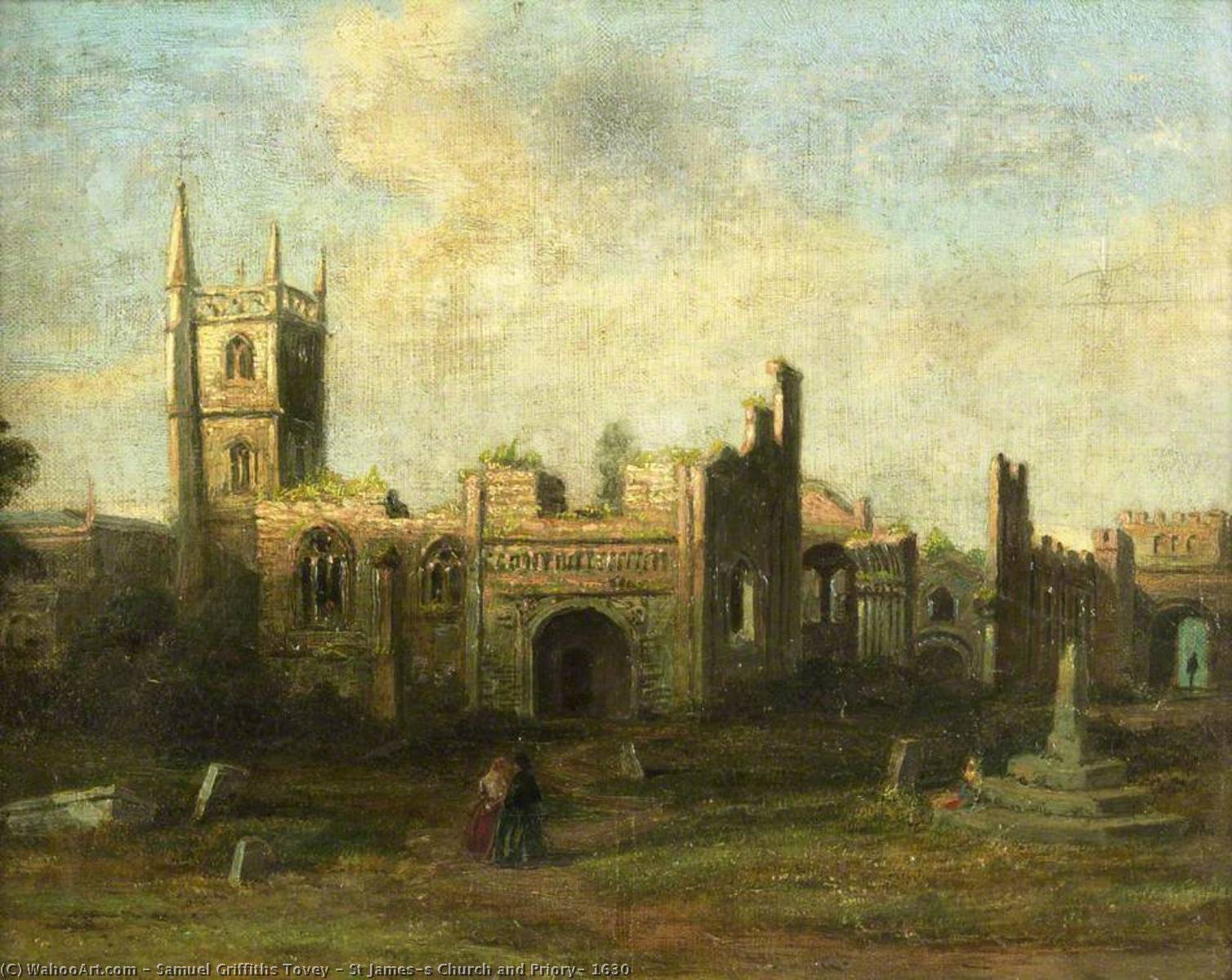
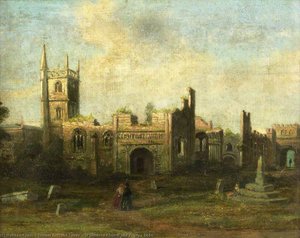
St James's Church and Priory, 1630
 24.0 x 31.0 cm
 Bristol Museum – Kunstgalerie
 Weiterlesen
Handgefertigte Ölreproduktion
Handgemaltes Ölgemälde auf Leinwand in Ihrer Wunschgröße und mit Rahmen, auf Bestellung von unseren Künstlern angefertigt. ( Druck bestellen Bild kaufen)




































Wählen Sie aus unseren vordefinierten Formaten, die den ursprünglichen Proportionen des Kunstwerks entsprechen.

Sie können Ihre eigenen Maße eingeben, um einen bestimmten Rahmen oder Platz auszufüllen. Wenn die gewählte Größe nicht den Proportionen des Originalbildes entspricht, werden wir das Kunstwerk entweder beschneiden oder das Gemälde durch zusätzliche, handgemalte Elemente erweitern. Ein digitales Mockup wird Ihnen zur Genehmigung zugesandt, bevor die Produktion beginnt.
Bitte beachten Sie, dass die Bildschirmvorschau nicht die tatsächliche Beschneidung oder Erweiterung widerspiegelt. Nur das Mockup zeigt die endgültige Komposition exakt an.
Obwohl Sondermaße verfügbar sind, empfehlen wir, eine Größe aus der vordefinierten Liste zu wählen, um die ursprünglichen Proportionen beizubehalten.
Nach der Bestellung wird das ArtsDot.com-Team dem Kunden Anweisungen per E-Mail zusenden und eine Mockup-Vorschau bereitstellen.
Weltweiter Versand () in nur 3 bis 4 Wochen statt der üblichen 5 Wochen. (2 September). Keine Kompromisse bei der Qualität.

Kostenloser weltweiter Expressversand

Hochwertige Leinenleinwand

Umfassender Versicherungsschutz beim Versand

Zollgebühren-Rückerstattungsgarantie

Garantie für exakte Farbtreue

60 Tage Rückgaberecht (nur bei Mängeln)

100% Geld-zurück-Garantie

Mengenrabatt verfügbar
 Die Glasoption ist nur für Größen unter 110 cm verfügbar.

St James's Church and Priory, 1630
Art der Reproduktion
Format der Reproduktion
-


Gesamtpreis
$ 263
Ähnliche Kunstwerke



Über den Künstler
The Visionary of Bristol: The Life and Art of Samuel Griffiths Tovey
In the heart of nineteenth-century England, amidst the rising industrial pulse and shifting social landscapes of Bristol, lived a painter whose brush captured the very soul of his home. Samuel Griffiths Tovey (1808–1873) was more than a mere chronicler of scenery; he was a meticulous observer of the Victorian spirit. Emerging from the vibrant, often soot-stained atmosphere of Bristol, Tovey developed an artistic language that balanced the rugged reality of an industrializing city with a profound, almost poetic reverence for the natural and architectural landmarks that defined his world. His legacy remains etched in the textures of stone, the shimmer of water, and the soft, atmospheric light that seems to emanate from within his most celebrated canvases.
Tovey’s artistic journey was deeply rooted in the rigorous traditions of classical training, yet it was infused with a unique sensitivity to detail. While much of his early education was shaped by private instruction, the intellectual gravity of his work suggests a profound connection to the era's most significant aesthetic movements. It is widely noted that he studied under the legendary John Ruskin, the preeminent Victorian critic whose philosophy of "truth to nature" would become a guiding star for Tove and his contemporaries. From Ruskin, Tovey inherited a commitment to moral seriousness and an uncompromising dedication to anatomical and geological accuracy. This influence is palpable in his ability to render the structural integrity of a building or the complex layering of foliage with a precision that transcends simple imitation, turning observation into a form of devotion.
A Master of Light and Local Landscape
The true brilliance of Tovey’s oeuvre lies in his unparalleled ability to transform the familiar landscapes of Bristol into extraordinary visual experiences. He possessed an uncanny knack for capturing the city's essence, moving beyond mere topographical recording to evoke a sense of place that is both intimate and monumental. His depictions of iconic landmarks—such as the Clifton Suspension Bridge, the venerable St Mary Redcliffe Church, and the sprawling Ashton Court Estate—are masterclasses in tonal gradation and light manipulation. Through subtle variations in color and a sophisticated understanding of shadow, he could convey the damp chill of an English morning or the warm, golden glow of a late summer afternoon, making the viewer feel as though they are standing on the very banks of the Avon.
Tovey’s technique was characterized by a meticulousness that demanded patience and immense skill. Unlike many landscape painters of his generation who sought to idealize or romanticize their subjects into dreamlike abstractions, Tovey embraced the tangible. He documented the grit and the grace of Bristol with equal fervor. His work often features:
- Textural Precision: A remarkable ability to differentiate between the rough, weathered surfaces of ancient stone and the delicate, translucent quality of light hitting water.
- Atmospheric Depth: The use of subtle tonal shifts to create a sense of immense space and receding perspective within his landscapes.
- Truthful Depiction: An avoidance of artificial embellishment in favor of a realistic portrayal of the textures of foliage, earth, and architecture.
This dedication to realism allowed him to capture not just the visual beauty of Bristol, but its very character—the interplay between the enduring strength of its historical monuments and the ephemeral nature of the light and weather that pass over them.
Legacy and Historical Significance
As the nineteenth century progressed, Tovey’s work served as a vital visual record of a changing Britain. His portraits and landscapes offer a window into a period of immense transition, capturing a world on the cusp of modernity while still deeply anchored in tradition. Beyond his technical prowess, his historical significance lies in his role as a custodian of Bristol's visual identity. Through his paintings, such as Bristol High Cross and The Great House, St Augustine's Back, he preserved the architectural and social nuances of a city that would soon be transformed by the rapid expansions of the industrial age.
Today, the works of Samuel Griffiths Tovey continue to resonate with collectors and historians alike. His ability to marry the rigorous demands of Ruskinian realism with a deeply personal, emotive touch ensures that his paintings are not merely historical artifacts, but living pieces of art. He remains a quintessential figure of British landscape painting, a visionary who looked at the familiar streets and hills of Bristol and saw within them a timeless, luminous beauty that continues to captivate the modern imagination.
samuel griffiths tovey
1808 - 1873
Kurzinfos
- Artistic Movement Or Style: Romantic Landscape Painting
- Artists Or Movements Influenced By This Artist: ['Hudson Lowe']
- Artists Who Influenced This Artist: ['John Constable']
- Date Of Birth: 1808
- Date Of Death: 1873
- Full Name: Samuel Griffiths Tovey
- Nationality: British
- Notable Artworks:
- Bristol High Cross
- Cheltenham Pump Room
- Place Of Birth: Bristol, England

