 Vorschau anzeigen
 Versenden
 Teilen
 Details anzeigen

 Herunterladen
 Ähnliche Objekte
 Röntgenaufnahme
 Diashow
Dante And Virgil From 'the Divine Comedy'

 Weiterlesen
Handgefertigte Ölreproduktion
Handgemaltes Ölgemälde auf Leinwand in Ihrer Wunschgröße und mit Rahmen, auf Bestellung von unseren Künstlern angefertigt. ( Druck bestellen Bild kaufen)




P118B $10

P118H $10

P118W $10

P438Z $10

P508JH $12

P508YH $12

P805H $10

P805Z $10

P919BZ $10

P919G $10

P919XJ $10

P959ZH $10

P968JZ $12

W106C $8

W218G $10

W218JH $8

W218Y $10

W307PJ $10

W316G $10

W316PJ $8

W316Y $10

W398PJ $8

W4111J $10

W500HY $15

W500JH $15

W692G $12

W849H $8

W940BG $15

W953PJ $8




Wählen Sie aus unseren vordefinierten Formaten, die den ursprünglichen Proportionen des Kunstwerks entsprechen.

Sie können Ihre eigenen Maße eingeben, um einen bestimmten Rahmen oder Platz auszufüllen. Wenn die gewählte Größe nicht den Proportionen des Originalbildes entspricht, werden wir das Kunstwerk entweder beschneiden oder das Gemälde durch zusätzliche, handgemalte Elemente erweitern. Ein digitales Mockup wird Ihnen zur Genehmigung zugesandt, bevor die Produktion beginnt.
Bitte beachten Sie, dass die Bildschirmvorschau nicht die tatsächliche Beschneidung oder Erweiterung widerspiegelt. Nur das Mockup zeigt die endgültige Komposition exakt an.
Obwohl Sondermaße verfügbar sind, empfehlen wir, eine Größe aus der vordefinierten Liste zu wählen, um die ursprünglichen Proportionen beizubehalten.
Nach der Bestellung wird das ArtsDot.com-Team dem Kunden Anweisungen per E-Mail zusenden und eine Mockup-Vorschau bereitstellen.
Weltweiter Versand () in nur 3 bis 4 Wochen statt der üblichen 5 Wochen. (23 August). Keine Kompromisse bei der Qualität.

Kostenloser weltweiter Expressversand

Hochwertige Leinenleinwand

Umfassender Versicherungsschutz beim Versand

Zollgebühren-Rückerstattungsgarantie

Garantie für exakte Farbtreue

60 Tage Rückgaberecht (nur bei Mängeln)

100% Geld-zurück-Garantie

Mengenrabatt verfügbar
 Die Glasoption ist nur für Größen unter 110 cm verfügbar.

Dante And Virgil From 'the Divine Comedy'
Art der Reproduktion
Format der Reproduktion
-


Gesamtpreis
$ 363
Beschreibung des Kunstwerks
Dante’s Descent: Botticelli's Vision of Hell
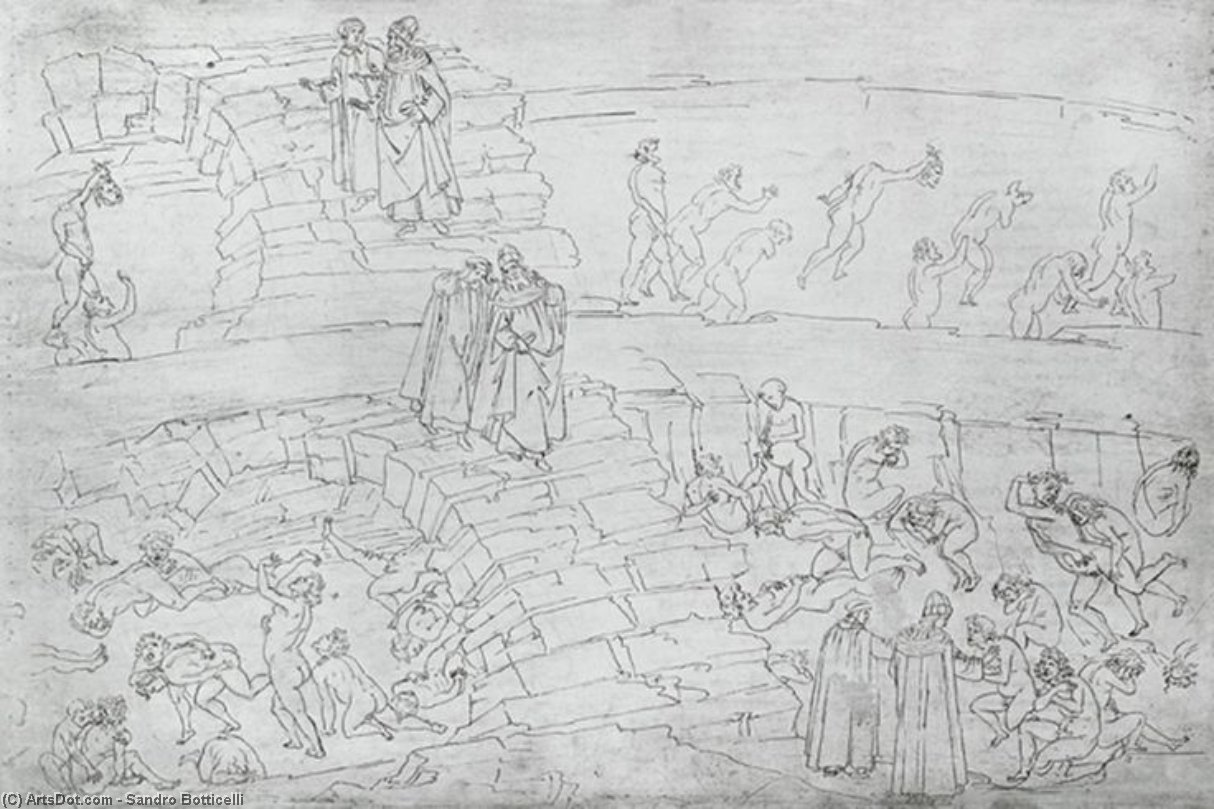
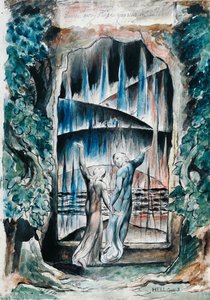
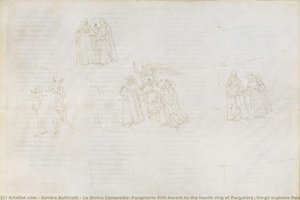
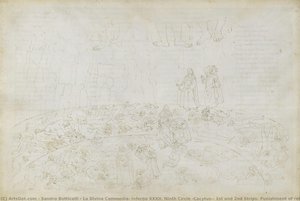
Sandro Botticelli’s “Dante And Virgil From ‘The Divine Comedy’” is not merely an illustration; it’s a visceral plunge into the heart of Dante Alighieri’s infernal vision. Completed around 1488-1495, this monumental work transcends its role as a visual accompaniment to the epic poem and stands as a powerful testament to the Renaissance fascination with classical antiquity and medieval theology. The painting depicts a pivotal moment within Hell – the descent into the ninth circle, where traitors are eternally tormented – capturing not just a scene of punishment but also a profound meditation on justice, sin, and the human condition.
Botticelli’s masterful technique is immediately striking. He employs a meticulously rendered linear style, characteristic of his early work, yet imbued with an unprecedented level of detail and dramatic intensity. The composition is dominated by a complex, tiered architectural setting – angular blocks and imposing steps that create a sense of relentless descent, mirroring the spiraling path down into the abyss. The color palette is deliberately restrained, almost monochromatic, relying heavily on shades of grey, ochre, and black to amplify the painting’s somber mood. This limited range focuses attention on the figures themselves, their tormented expressions, and the intricate details of their suffering.
The Figures of Fate: Dante and Virgil
At the center of the composition stand Dante and Virgil, rendered as youthful, idealized figures – a deliberate echo of classical depictions of heroes embarking on perilous journeys. Botticelli’s portrayal subtly shifts the traditional image of Virgil as a stern guide to one of contemplative wisdom and compassion. Dante, depicted with an expression of both apprehension and determination, is not simply observing the horrors below; he is actively engaged in confronting them alongside his mentor. The positioning of the figures – Dante slightly ahead, gesturing towards the chaos – suggests a shared responsibility for navigating this landscape of despair.
Virgil, meanwhile, embodies classical reason and intellect, guiding Dante through the labyrinthine depths of Hell. His face is etched with sorrow, reflecting the immense suffering he witnesses, yet his posture remains resolute, conveying an unwavering commitment to his task. The contrast between their youthful appearances and the grim reality surrounding them underscores the enduring power of human intellect and moral fortitude in the face of overwhelming adversity.
Symbolism and Allegory: A Journey Through Sin
“Dante And Virgil” is rich with symbolic meaning, drawing heavily from Dante’s “Inferno.” The tormented figures below represent various sins – betrayal, lust, violence, heresy – each subjected to a unique and horrifying punishment. The arrangement of the circles within Hell reflects not only Dante's theological understanding but also his astute observation of human nature. Botticelli masterfully translates these abstract concepts into tangible forms, creating a visually arresting depiction of moral consequence.
Notably, the inclusion of Gianni Schicchi, biting at the neck of Capocchio, highlights the theme of deception and treachery – central to Dante’s portrayal of betrayal. The scene speaks to the corrupting influence of ambition and the devastating consequences of deceitful actions. The overall composition serves as a potent allegory for the human struggle between good and evil, virtue and vice, highlighting the eternal battle waged within each individual soul.
A Renaissance Masterpiece: Context and Legacy
Botticelli’s “Dante And Virgil” was created during a period of profound artistic and intellectual ferment in Florence. The painting reflects the renewed interest in classical antiquity that characterized the Early Renaissance, alongside a continued engagement with medieval religious thought. It's important to note that this work was part of a larger project – a complete illustrated cycle of Dante’s “Divine Comedy” commissioned by Lorenzo de’ Medici, a powerful patron of the arts. The surviving drawings offer a rare glimpse into Botticelli’s creative process and his profound understanding of Dante’s epic poem.
Today, "Dante And Virgil" remains one of Botticelli's most celebrated works, admired for its dramatic intensity, intricate detail, and powerful symbolic resonance. It continues to captivate viewers with its haunting depiction of Hell and its exploration of timeless themes of sin, justice, and the human condition. Reproductions of this extraordinary artwork offer a unique opportunity to experience the vision of one of the Renaissance’s greatest masters.
Ähnliche Kunstwerke
Über den Künstler
frühes Leben und Ausbildung
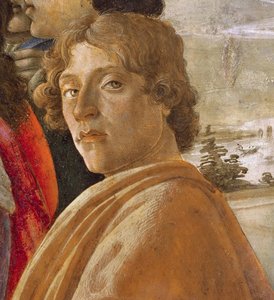
Sandro Botticelli, geboren Alessandro di Mariano di Vanni Filipepi um 1445, war eine zentrale Figur im frühen italienischen Frührenaissance der Malerei. Zunächst posthumig vernachlässigt, wurde Botticellis Werk im späten 19. Jahrhundert von den Präraffaeliten revitalisiert und führte zu einer Neubewertung seiner künstlerischen Beiträge. Botticelli wurde in Florenz, Italien, geboren und lebte sein ganzes Leben im selben Viertel. Seine Familie, darunter sein Vater Mariano di Vanni d’Amedeo Filipepi, war in verschiedene Berufe involviert, was sie mit Künstlern in Kontakt brachte. Giorgio Vasari berichtete, dass Botticelli zunächst als Goldschmied ausgebildet wurde.Künstlerischer Stil und bemerkenswerte Werke
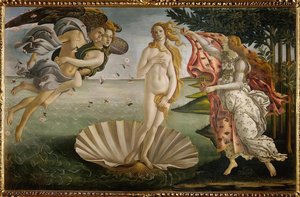
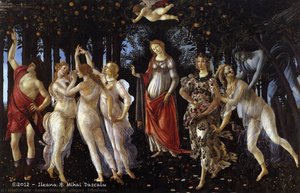
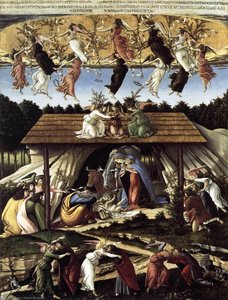
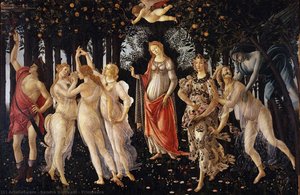
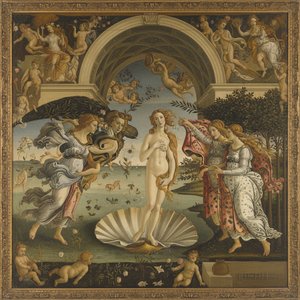
Botticellis Werk ist durch elegante Linearität gekennzeichnet, die die Lücke zwischen der späten italienischen Gotik und dem frühen Frührenaissance schließt. Seine berühmtesten Werke, die Geburt des Venus und Primavera, werden in der Uffizialleerie in Florenz ausgestellt, die eine bedeutende Sammlung seiner Kunst beherbergt. * die Geburt des Venus (ansicht auf ArtsDot) * Primavera (Sandro Botticellis Kunst erkunden auf ArtsDot) * Mystische Geburt (Nationalgalerie, London), datiert 1501, ist das einzige Werk von Botticelli mit einem klaren Datum.Vermächtnis und Einfluss
Botticellis Stil entwickelte sich in den 1490er Jahren zu einem persönlicheren Ansatz und unterschied sich von Zeitgenossen wie Leonardo da Vinci und dem aufkommenden Hochrenaissance-Stil. Sein Werk wurde als bedeutende Beiträge zur italienischen Renaissance Kunstbewegung anerkannt. * Die italienische Renaissance Kunstbewegung * Sandro Botticelli auf Wikipedia- Bekannte Künstler der italienischen Renaissance umfassen Sandro Botticelli, Leonardo da Vinci, Michelangelo und Tizian.
- Die Uffizialleerie in Florenz beherbergt eine bedeutende Sammlung von Botticellis Kunst.
- Botticellis Werk wurde als eine zentrale Figur im frühen italienischen Frührenaissance der Malerei anerkannt.
Sandro Botticelli
1445 - 1510 , Italien
Kurzinfos
- Beeinflusste Künstler: ['Präraffaeliten']
- Bemerkenswerte Werke:
- Die Geburt der Venus
- Primavera
- Mystische Geburt
- Einflussreiche Künstler:
- Fra Angelico
- Paolo Uccello
- Geburtsdatum: ca. 1445
- Geburtsort: Florenz, Italien
- Künstlerische Bewegung: Frührenaissance
- Nationalität: Italienisch
- Sterbedatum: 1510
- Vollständiger Name: Sandro Botticelli
Ähnliche Artikel
Sandro Botticelli: Die 25 Meisterwerke des Renaissance-Genies – Kunst für Ihr Zuhause
Entdecken Sie die 25 schönsten Meisterwerke von Sandro Botticelli! Erleben Sie die Renaissance-Kunst mit 'Geburt der Venus', 'Primavera' & mehr. Hochwertige Reproduktionen für Ihr Zuhause – jetzt auf ArtsDot.com!
Dante Gabriel Rossetti: Die 25 Meisterwerke des Präraffelitismus | ArtsDot
Entdecken Sie die 25 schönsten Gemälde von Dante Gabriel Rossetti! Tauchen Sie ein in die Welt der Präraffeliten, symbolistischer Kunst & viktorianischer Romantik. Hochwertige Reproduktionen für Ihr Zuhause – jetzt bei ArtsDot.com!
Frührenaissance: Die 10 Meisterwerke, die eine Epoche prägten – Kunst für Ihr Zuhause
Entdecken Sie die 10 prägendsten Meisterwerke der Frührenaissance! Von Giotto bis Botticelli – erleben Sie Kunstgeschichte hautnah. Hochwertige Reproduktionen für Ihr Zuhause auf .

Die 25 Meisterwerke der Uffizien: Kunstgeschichte für Ihr Zuhause | ArtsDot
Entdecken Sie die 25 berühmtesten Meisterwerke der Uffizien, Florenz! Von Botticelli bis Leonardo da Vinci – Kunstgeschichte erleben. Hochwertige Reproduktionen & Inspiration für Ihr Zuhause auf ArtsDot.com.

Celestial Messengers: A Comprehensive Exploration of Angelic Representation in Art History
Explore the captivating history of angels in art! Discover symbolism, iconic Renaissance masterpieces & renowned artists. Expert insights for art lovers & collectors at ArtsDot.