Versenden als Grußkarte
 Teilen
 Details anzeigen

 Herunterladen
 Ähnliche Objekte
 Diashow
 Besucherstatistiken
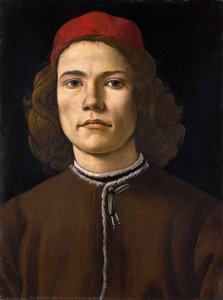
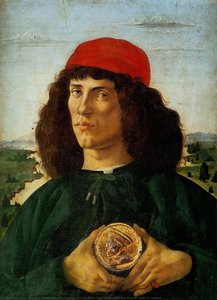
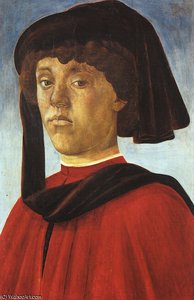
Portrait of a Young Man


 Mehr anzeigen
Giclée / Kunstdruck
Giclée- oder Leinwanddruck in Museumsqualität mit schneller Produktion und flexiblen Veredelungsoptionen. ( Handgemalte Reproduktion kaufen Zum digitalen Bild wechseln)




































Wählen Sie aus unseren vordefinierten Formaten, die den ursprünglichen Proportionen des Kunstwerks entsprechen.

Sie können Ihre eigenen Maße eingeben, um ein bestimmtes Format oder einen speziellen Platz einzupassen. Wenn das von Ihnen gewählte Format nicht den Proportionen des Originalbildes entspricht, werden wir das Kunstwerk entweder beschneiden oder das Bild mit einem gespiegelten oder einfarbigen Rand erweitern. Ein digitaler Entwurf wird Ihnen zur Genehmigung zugesandt, bevor die Produktion beginnt.
Bitte beachten Sie, dass die Vorschau auf dem Bildschirm nicht den tatsächlichen Zuschnitt oder die Erweiterung widerspiegelt. Nur der Entwurf zeigt die endgültige Komposition präzise an.
Obwohl Sondermaße verfügbar sind, empfehlen wir die Auswahl eines Maßes aus der vordefinierten Liste, um die ursprünglichen Proportionen zu bewahren.
Weltweiter Versand () innerhalb von 2 Wochen statt der üblichen 4/5 Wochen. (17 September)

Kostenloser weltweiter Expressversand

Hochwertige Leinenleinwand

Vollständiger Versicherungsschutz beim Versand

Zollgebühren-Rückerstattungsgarantie

Garantie für exakte Farbtreue

100-tägiges Rückgaberecht (nur bei Mängeln)

100% Geld-zurück-Garantie

Angebot für Mengenrabatt
 Die Glasoption ist nur für Größen unter 110 cm verfügbar.

Portrait of a Young Man
Giclée / Kunstdruck
Format der Reproduktion
-


Gesamtpreis
$ 62
A Portrait of Youthful Promise: Sandro Botticelli’s Enigmatic Young Man
Sandro Botticelli's "Portrait of a Young Man," a work shrouded in the quiet mystery of its origins, offers a captivating glimpse into the sensibilities of the Early Renaissance. More than simply a likeness, it’s an embodiment of the era’s burgeoning interest in individual portraiture and a subtle exploration of humanism – a shift away from purely religious iconography towards celebrating earthly beauty and experience. The painting, likely created around 1480-1500, stands as a testament to Botticelli's evolving style, moving beyond the overtly narrative works that initially defined his career and delving into a more intimate and psychologically nuanced representation of his subject.
The young man himself is presented with an arresting directness. He gazes out at the viewer, not with overt challenge or invitation, but with a contemplative stillness that invites speculation. His posture is relaxed yet dignified, suggesting a quiet self-awareness. The details are meticulously rendered: the subtle curve of his lips, the delicate structure of his face, and the carefully arranged feather adorning his black hat – each element contributing to an overall impression of youthful elegance and restrained power. The simplicity of the composition—a single figure against a luminous blue sky—forces the viewer’s attention entirely upon this individual, amplifying the sense of intimacy.
Botticelli's Florentine Palette and Technique
Botticelli’s mastery lies not just in capturing likeness but in imbuing his subjects with an ethereal quality. This portrait exemplifies his signature style: a delicate balance between realism and idealized beauty. He employed tempera on panel, a technique favored during this period for its luminosity and ability to create smooth transitions of color. Notice the subtle layering of pigments – the way the blue of the sky seems to bleed into the flesh tones, creating an atmospheric depth that belies the painting’s relatively small scale. Botticelli's use of *sfumato*, a technique borrowed from Leonardo da Vinci, is evident in the softening of edges and the hazy quality of the background, contributing to the portrait’s dreamlike atmosphere.
The color palette itself is restrained yet sophisticated. The dominant tones – the deep black of the hat, the rich red of the robe, and the vibrant blue of the sky – create a harmonious contrast that draws the eye. Botticelli's attention to detail extends beyond mere color; he skillfully renders textures—the velvet of the robe, the sheen of the hat’s feather—adding tactile richness to the image.
Symbolism and the Humanist Spirit
While seemingly straightforward, "Portrait of a Young Man" is rich in symbolic potential. The black hat with its feather was a common accessory for young men of quality during this period, signifying status and refinement. The red robe, often associated with passion and nobility, further reinforces the subject’s elevated position. However, it's the gaze itself that holds particular significance. Botticelli, influenced by classical ideals, sought to capture not just physical appearance but also the inner life of his subjects. The young man’s directness suggests a confidence and self-possession indicative of the humanist values gaining prominence in Florence at the time – an emphasis on human potential and individual worth.
Furthermore, the simple background—a clear blue sky—can be interpreted as representing hope and possibility. It's a backdrop devoid of earthly concerns, suggesting that the subject is poised to embark on a journey of self-discovery and achievement. The painting, therefore, becomes more than just a portrait; it’s a visual meditation on youth, beauty, and the promise of human potential – themes central to Botticelli’s artistic vision.
Bringing Botticelli's Vision Home
ArtsDot offers meticulously crafted hand-painted reproductions of Sandro Botticelli’s “Portrait of a Young Man,” allowing you to experience the artistry and emotional depth of this iconic work in stunning detail. Our reproductions faithfully capture the nuances of Botticelli’s technique, from the delicate *sfumato* to the rich color palette, ensuring that you possess an authentic representation of this masterpiece. Whether for your private collection or as a striking addition to your interior design scheme, a ArtsDot reproduction offers a timeless connection to one of the Renaissance's most celebrated artists. Explore our selection today and bring Botticelli’s vision into your world.
Ähnliche Kunstwerke

Biografie des Künstlers
frühes Leben und Ausbildung
Sandro Botticelli, geboren Alessandro di Mariano di Vanni Filipepi um 1445, war eine zentrale Figur im frühen italienischen Frührenaissance der Malerei. Zunächst posthumig vernachlässigt, wurde Botticellis Werk im späten 19. Jahrhundert von den Präraffaeliten revitalisiert und führte zu einer Neubewertung seiner künstlerischen Beiträge. Botticelli wurde in Florenz, Italien, geboren und lebte sein ganzes Leben im selben Viertel. Seine Familie, darunter sein Vater Mariano di Vanni d’Amedeo Filipepi, war in verschiedene Berufe involviert, was sie mit Künstlern in Kontakt brachte. Giorgio Vasari berichtete, dass Botticelli zunächst als Goldschmied ausgebildet wurde.Künstlerischer Stil und bemerkenswerte Werke
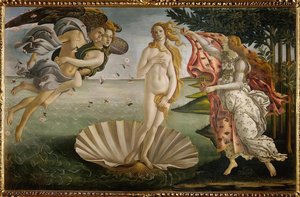
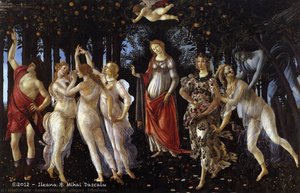
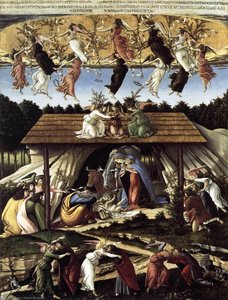
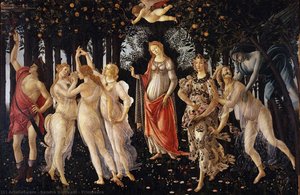
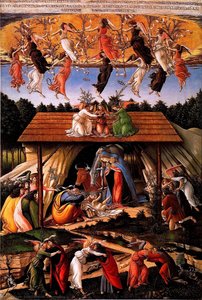
Botticellis Werk ist durch elegante Linearität gekennzeichnet, die die Lücke zwischen der späten italienischen Gotik und dem frühen Frührenaissance schließt. Seine berühmtesten Werke, die Geburt des Venus und Primavera, werden in der Uffizialleerie in Florenz ausgestellt, die eine bedeutende Sammlung seiner Kunst beherbergt. * die Geburt des Venus (ansicht auf ArtsDot) * Primavera (Sandro Botticellis Kunst erkunden auf ArtsDot) * Mystische Geburt (Nationalgalerie, London), datiert 1501, ist das einzige Werk von Botticelli mit einem klaren Datum.Vermächtnis und Einfluss
Botticellis Stil entwickelte sich in den 1490er Jahren zu einem persönlicheren Ansatz und unterschied sich von Zeitgenossen wie Leonardo da Vinci und dem aufkommenden Hochrenaissance-Stil. Sein Werk wurde als bedeutende Beiträge zur italienischen Renaissance Kunstbewegung anerkannt. * Die italienische Renaissance Kunstbewegung * Sandro Botticelli auf Wikipedia- Bekannte Künstler der italienischen Renaissance umfassen Sandro Botticelli, Leonardo da Vinci, Michelangelo und Tizian.
- Die Uffizialleerie in Florenz beherbergt eine bedeutende Sammlung von Botticellis Kunst.
- Botticellis Werk wurde als eine zentrale Figur im frühen italienischen Frührenaissance der Malerei anerkannt.
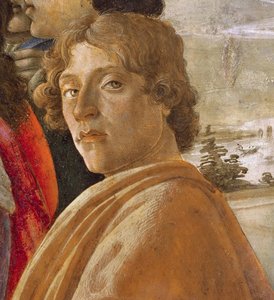
Sandro Botticelli
1445 - 1510 , Italien
Eckdaten zum Künstler
- Beeinflusste Künstler: ['Präraffaeliten']
- Bemerkenswerte Werke:
- Die Geburt der Venus
- Primavera
- Mystische Geburt
- Einflussreiche Künstler:
- Fra Angelico
- Paolo Uccello
- Geburtsdatum: ca. 1445
- Geburtsort: Florenz, Italien
- Künstlerische Bewegung: Frührenaissance
- Nationalität: Italienisch
- Sterbedatum: 1510
- Vollständiger Name: Sandro Botticelli
Verwandte Artikel

Crimson Threads of Narrative: Exploring Symbolism & Representation in Artworks Featuring the Red Dress
Explore the rich symbolism of the red dress in art history! From ancient power displays to iconic portraits like Cézanne’s 'Madame Cezanne', discover the cultural and artistic significance behind this captivating color. Expert analysis & insights.
Frührenaissance: Die 10 Meisterwerke, die eine Epoche prägten – Kunst für Ihr Zuhause
Entdecken Sie die 10 prägendsten Meisterwerke der Frührenaissance! Von Giotto bis Botticelli – erleben Sie Kunstgeschichte hautnah. Hochwertige Reproduktionen für Ihr Zuhause auf .
Sandro Botticelli: Die 25 Meisterwerke des Renaissance-Genies – Kunst für Ihr Zuhause
Entdecken Sie die 25 schönsten Meisterwerke von Sandro Botticelli! Erleben Sie die Renaissance-Kunst mit 'Geburt der Venus', 'Primavera' & mehr. Hochwertige Reproduktionen für Ihr Zuhause – jetzt auf ArtsDot.com!

Die Top 10 berühmter Gemälde im Reich der dunklen Töne |
Entdecken Sie die Top 10 berühmter Gemälde, beherrscht von dunklen Tönen! Von Caravaggio bis Manet – erfahren Sie die Geschichten hinter Meisterwerken der Kunstgeschichte. Finden Sie Ihre perfekte Reproduktion auf .
Mark Rothkos Meisterwerke: Die Top 25 für Kunstliebhaber | ArtsDot
Entdecken Sie die 25 Meisterwerke von Mark Rothko! Tauchen Sie ein in die Welt der abstrakten Kunst, des Expressionismus und der Farbfeldmalerei. Hochwertige Kunstdrucke & Reproduktionen auf ArtsDot.com – für Ihre Wohnräume.