 Versenden
 Teilen
 Details anzeigen

 Herunterladen
 Ähnliche Objekte
 Diashow
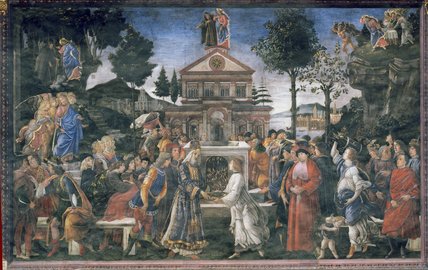
The Purification Of The Leper And The Temptation Of Christ


 Weiterlesen
Giclée / Kunstdruck
Giclée- oder Leinwanddruck in Museumsqualität mit schneller Produktion und flexiblen Veredelungsoptionen. ( Handgemalte Reproduktion bestellen Bild kaufen)




































Wählen Sie aus unseren vordefinierten Formaten, die den ursprünglichen Proportionen des Kunstwerks entsprechen.

Sie können Ihre eigenen Maße eingeben, um ein bestimmtes Format oder einen speziellen Platz einzupassen. Wenn das von Ihnen gewählte Format nicht den Proportionen des Originalbildes entspricht, werden wir das Kunstwerk entweder beschneiden oder das Bild mit einem gespiegelten oder einfarbigen Rand erweitern. Ein digitaler Entwurf wird Ihnen zur Genehmigung zugesandt, bevor die Produktion beginnt.
Bitte beachten Sie, dass die Vorschau auf dem Bildschirm nicht den tatsächlichen Zuschnitt oder die Erweiterung widerspiegelt. Nur der Entwurf zeigt die endgültige Komposition präzise an.
Obwohl Sondermaße verfügbar sind, empfehlen wir die Auswahl eines Maßes aus der vordefinierten Liste, um die ursprünglichen Proportionen zu bewahren.
Weltweiter Versand () innerhalb von 2 Wochen statt der üblichen 4/5 Wochen. (24 August)

Kostenloser weltweiter Expressversand

Hochwertige Leinenleinwand

Umfassender Versicherungsschutz beim Versand

Zollgebühren-Rückerstattungsgarantie

Garantie für exakte Farbtreue

60 Tage Rückgaberecht (nur bei Mängeln)

100% Geld-zurück-Garantie

Mengenrabatt verfügbar
 Die Glasoption ist nur für Größen unter 110 cm verfügbar.

The Purification Of The Leper And The Temptation Of Christ
Giclée / Kunstdruck
Format der Reproduktion
-


Gesamtpreis
$ 62
Sammlerstück-Beschreibung
A Divine Encounter: The Intersection of Faith and Trial
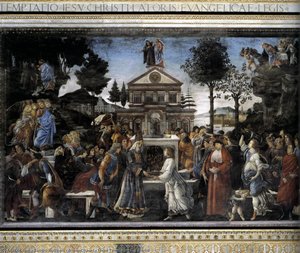
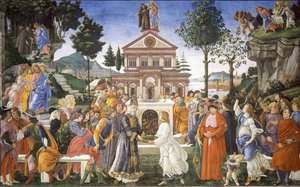
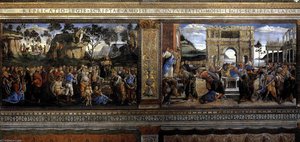
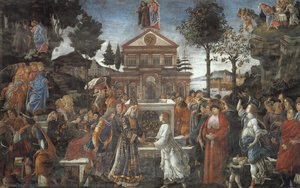
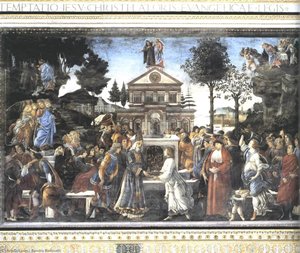
In the heart of the Florentine Renaissance, where the boundaries between the earthly and the divine often blurred, Sandro Botticelli captured a moment of profound spiritual tension in his masterpiece, The Purification Of The Leper And The Temptation Of Christ. This monumental fresco, originally conceived for the Cappella Maggiore of Santa Maria Novella, serves as a breathtaking window into the soul of the fifteenth century. The composition is a masterful duality; it weaves together two distinct biblical narratives—the healing of a leper and the spiritual trial of Jesus—into a single, seamless tapestry of devotion. As the viewer’s eye wanders across the scene, they are met with a landscape that feels both intimately Tuscan and cosmically significant, reflecting the humanist belief in a harmonious universe where every natural element carries a weight of divine purpose.
The emotional core of the work lies in the dramatic confrontation between Christ and the forces of darkness. Positioned prominently, Jesus stands as a pillar of serene resolve against the looming, menacing presence of Lucifer. This is not merely a depiction of a struggle; it is an exploration of the human condition, representing the eternal tug-of-war between righteousness and temptation. Flanked by angels who act as celestial guardians, Christ’s figure radiates a quiet strength that anchors the entire composition. The surrounding figures—saints, supplicants, and those witnessing the purification ritual—add layers of communal depth, suggesting that the struggle for faith is a universal journey shared by all humanity.
The Mastery of Line and Luminous Color
To behold a Botticelli work is to witness the pinnacle of Florentine technique. In this fresco, the artist employs his signature linear grace, using delicate yet decisive lines to define the anatomical precision of his subjects. While there is an undeniable accuracy to the forms, Botticelli softens the edges with a poetic idealism that elevates the figures from mere mortals to icons of spiritual beauty. His use of tempera on plaster allows for a remarkable luminosity; even centuries later, the colors retain a vibrant, ethereal quality that seems to glow from within. The palette is a sophisticated balance of earthy tones and celestial light, creating a sense of depth that draws the observer into the very atmosphere of the wilderness.
For the discerning collector or interior designer, this piece offers more than just visual splendor; it provides a profound sense of narrative complexity. The way the light interacts with the textures of the landscape and the flowing drapery of the figures creates a dynamic energy that can transform any space. Whether displayed as a focal point in a grand gallery or as a contemplative element in a curated study, the painting’s ability to evoke both drama and tranquility makes it an incomparable treasure. It is a work that does not merely decorate a wall but enriches the environment with its historical weight and aesthetic elegance.
A Legacy of Symbolism and Spiritual Resonance
Every element within this fresco is imbued with symbolic significance, designed to guide the viewer through a meditative experience. The purification of the leper serves as a powerful metaphor for the cleansing of the soul, while the temptation in the wilderness represents the trials that test the integrity of one's convictions. Even the background—a serene landscape that mirrors the beauty of the Florentine countryside—acts as a symbol of the divine order present in nature. Botticelli’s ability to blend these complex theological themes with such accessible, captivating beauty is what renders this work timeless.
Owning or displaying a high-quality reproduction of this masterpiece allows one to bring a piece of the Renaissance spirit into the modern era. It serves as a constant reminder of the power of resilience and the enduring search for truth. For those who appreciate art that speaks to the intellect as much as the eye, Botticelli’s vision remains an unparalleled source of inspiration, offering a window into a time when art was the ultimate bridge between the human heart and the heavens.
Ähnliche Kunstwerke
Über den Künstler
frühes Leben und Ausbildung
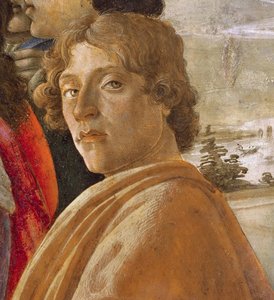
Sandro Botticelli, geboren Alessandro di Mariano di Vanni Filipepi um 1445, war eine zentrale Figur im frühen italienischen Frührenaissance der Malerei. Zunächst posthumig vernachlässigt, wurde Botticellis Werk im späten 19. Jahrhundert von den Präraffaeliten revitalisiert und führte zu einer Neubewertung seiner künstlerischen Beiträge. Botticelli wurde in Florenz, Italien, geboren und lebte sein ganzes Leben im selben Viertel. Seine Familie, darunter sein Vater Mariano di Vanni d’Amedeo Filipepi, war in verschiedene Berufe involviert, was sie mit Künstlern in Kontakt brachte. Giorgio Vasari berichtete, dass Botticelli zunächst als Goldschmied ausgebildet wurde.Künstlerischer Stil und bemerkenswerte Werke
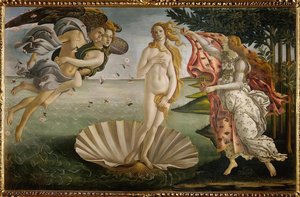
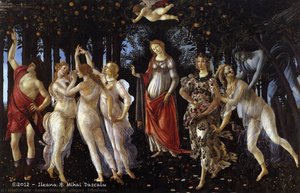
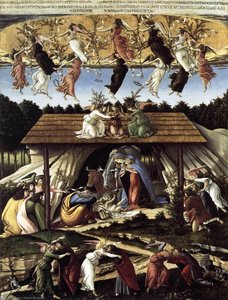
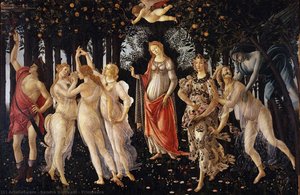
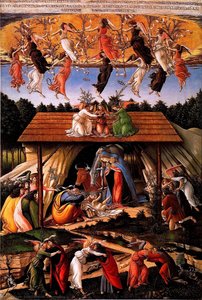
Botticellis Werk ist durch elegante Linearität gekennzeichnet, die die Lücke zwischen der späten italienischen Gotik und dem frühen Frührenaissance schließt. Seine berühmtesten Werke, die Geburt des Venus und Primavera, werden in der Uffizialleerie in Florenz ausgestellt, die eine bedeutende Sammlung seiner Kunst beherbergt. * die Geburt des Venus (ansicht auf ArtsDot) * Primavera (Sandro Botticellis Kunst erkunden auf ArtsDot) * Mystische Geburt (Nationalgalerie, London), datiert 1501, ist das einzige Werk von Botticelli mit einem klaren Datum.Vermächtnis und Einfluss
Botticellis Stil entwickelte sich in den 1490er Jahren zu einem persönlicheren Ansatz und unterschied sich von Zeitgenossen wie Leonardo da Vinci und dem aufkommenden Hochrenaissance-Stil. Sein Werk wurde als bedeutende Beiträge zur italienischen Renaissance Kunstbewegung anerkannt. * Die italienische Renaissance Kunstbewegung * Sandro Botticelli auf Wikipedia- Bekannte Künstler der italienischen Renaissance umfassen Sandro Botticelli, Leonardo da Vinci, Michelangelo und Tizian.
- Die Uffizialleerie in Florenz beherbergt eine bedeutende Sammlung von Botticellis Kunst.
- Botticellis Werk wurde als eine zentrale Figur im frühen italienischen Frührenaissance der Malerei anerkannt.
Sandro Botticelli
1445 - 1510 , Italien
Kurzinfos
- Beeinflusste Künstler: ['Präraffaeliten']
- Bemerkenswerte Werke:
- Die Geburt der Venus
- Primavera
- Mystische Geburt
- Einflussreiche Künstler:
- Fra Angelico
- Paolo Uccello
- Geburtsdatum: ca. 1445
- Geburtsort: Florenz, Italien
- Künstlerische Bewegung: Frührenaissance
- Nationalität: Italienisch
- Sterbedatum: 1510
- Vollständiger Name: Sandro Botticelli
Ähnliche Artikel
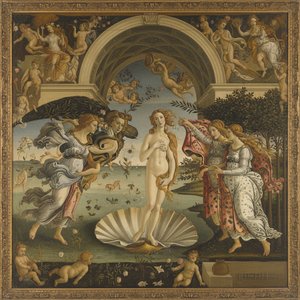
Sandro Botticelli: Die 25 Meisterwerke des Renaissance-Genies – Kunst für Ihr Zuhause
Entdecken Sie die 25 schönsten Meisterwerke von Sandro Botticelli! Erleben Sie die Renaissance-Kunst mit 'Geburt der Venus', 'Primavera' & mehr. Hochwertige Reproduktionen für Ihr Zuhause – jetzt auf ArtsDot.com!

Das Familienerbe an die Wand bringen: Wandgemälde als Generationenschatz
Verwandeln Sie Ihre Familiengeschichte in ein beeindruckendes Wandgemälde! Expertenrat & hochwertige Handwerkskunst für einzigartige Kunstwerke, die Generationen verbinden. Entdecken Sie jetzt!

Giclée Prints: Archival Quality & Aesthetic Nuances for the Discerning Collector
Explore the world of giclée prints with ArtsDot. Learn about archival quality, aesthetic nuances & investment potential. Expert guidance for discerning art collectors seeking museum-quality reproductions and lasting value.

The Enduring Legacy of Fresco Painting: Techniques, History & Contemporary Relevance
Explore the rich history & enduring artistry of fresco painting – from Giotto to Michelangelo! Discover techniques, conservation efforts, & modern applications. Learn how ArtsDot brings this timeless art form to your home.

The Enduring Legacy of Fresco: Technique, History & Artistic Expression Across Cultures
Explore the rich history & enduring legacy of fresco painting! Discover ancient techniques, Giotto's masterpieces, and modern applications. Expert insights for art lovers & professionals.