

 Versenden
 Teilen
 Details anzeigen

 Herunterladen
 Ähnliche Objekte
 Diashow
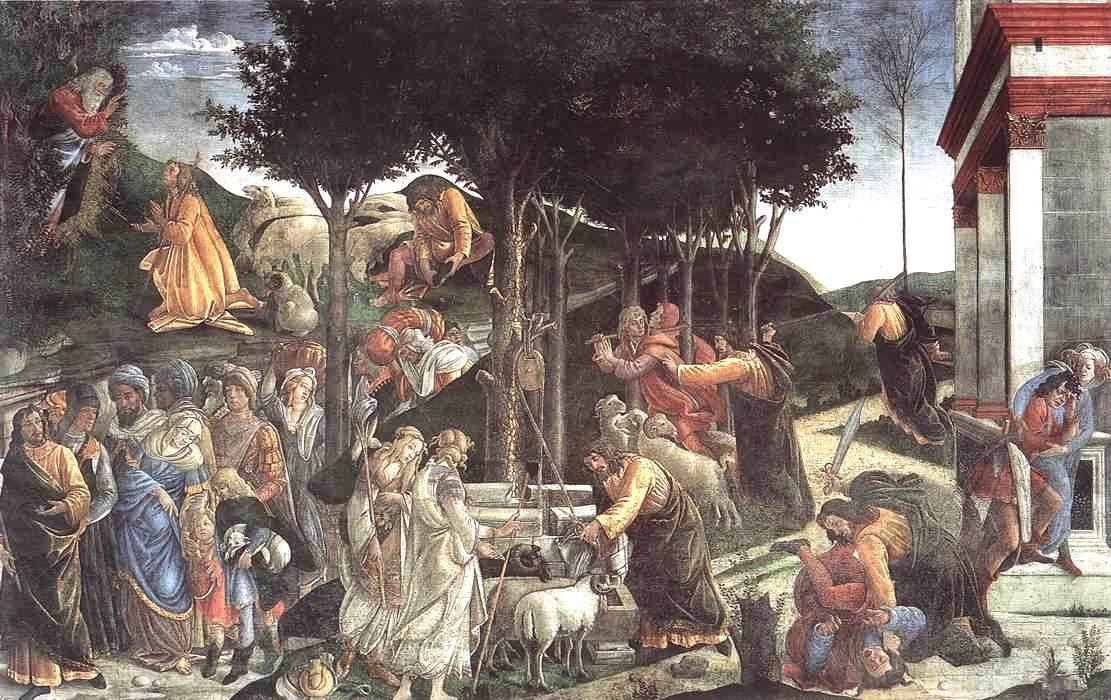
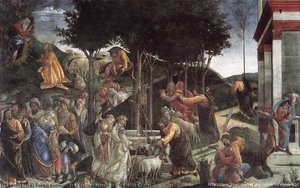
The Trials and Calling of Moses (Cappella Sistina, Vatican)
 Fresco
- Decor
- Early Renaissance
 1481
1481- Renaissance
 348.0 x 558.0 cm
 Weiterlesen
Erwerben Sie ein hochauflösendes, optimiertes digitales Bild, das der Online-Vorschau weit überlegen ist.
Jede Datei wird von unseren hauseigenen Spezialisten mit modernsten Werkzeugen und fachmännischer manueller Retusche sorgfältig vorbereitet. Wir stellen sicher, dass jedes Bild eine außergewöhnliche Klarheit, präzise Farbgenauigkeit und feinste Details aufweist.
Die endgültige Datei wird innerhalb von 72 Stunden per E-Mail zugestellt und ist für den sofortigen Einsatz in professionellen, redaktionellen und Druckumgebungen optimiert. Es handelt sich um dieselbe Qualität, der führende Designstudios, Verlage und Galerien vertrauen.
Digitales Bild
Laden Sie eine hochauflösende Datei für die persönliche Präsentation, den Druck und kreative Projekte herunter. ( Druck bestellen Handgemalte Reproduktion bestellen)
In jeder Bestellung digitaler Bilder enthalten
Professionelle digitale Bereitstellung, garantiert
Wenn Sie sich für ArtsDot.com entscheiden, erhalten Sie nicht nur ein Bild – Sie erhalten ein professionell aufbereitetes digitales Kunstwerk, das mit höchster Präzision erstellt und durch eine Zufriedenheitsgarantie abgesichert wird. Hier ist alles, was automatisch mit Ihrer Bestellung geliefert wird:

Schnelle E-Mail-Zustellung
Ihre hochauflösende digitale Bilddatei wird Ihnen innerhalb von 72 Stunden nach der Bestellung per E-Mail zugestellt – bereit zur sofortigen Verwendung.

KI-optimierte digitale Datei
Ihre Kunstwerke werden professionell mithilfe fortschrittlicher KI-Tools und manueller Bearbeitung optimiert, um maximale Detailtreue, Klarheit und Farbgenauigkeit zu gewährleisten.

Lebenslanger kostenloser Neudruckservice
Datei versehentlich gelöscht oder verloren? Keine Sorge – wir senden sie Ihnen jederzeit kostenlos erneut zu.

Keine Einfuhrgebühren – jemals
Genießen Sie Ihr Kunstwerk sofort ohne Zollgebühren, Einfuhrabgaben oder Versandkosten – digitale Downloads sind immer steuerfrei.

Garantierte Farbtreue
Wir garantieren, dass Ihr digitales Bild mithilfe professioneller Werkzeuge und Farbmanagement die Originalfarben so präzise wie möglich wiedergibt.

60-Tage-Zufriedenheitsgarantie
Sollten Sie mit Ihrem digitalen Bild nicht zufrieden sein, werden wir es überarbeiten oder Ihnen innerhalb von 60 Tagen 100% erstatten – ohne Wenn und Aber.

100% Geld-zurück-Garantie
Nicht zufrieden? Erhalten Sie innerhalb von 60 Tagen nach Erhalt Ihrer digitalen Datei eine vollständige Rückerstattung – ohne Angabe von Gründen.

Rabatte bei Großbestellungen
3 Bilder kaufen, 10% sparen – 5 Bilder kaufen, 15% sparen – Ab 10 Bildern 20% sparen. Ideal für kreative Projekte, Galerien und Agenturen.
Details zum Sammlerstück
A Divine Encounter in the Sistine Chapel
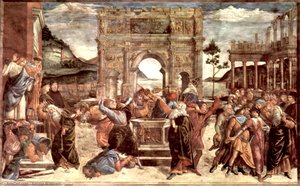
Within the hallowed, silent corridors of the Vatican’s Sistine Chapel, where the echoes of centuries of prayer linger, lies one of Sandro Botticelli’s most profound narrative achievements. The Trials and Calling of Moses is not merely a fresco; it is a breathtaking window into the spiritual intensity of the Early Renaissance. Painted in 1481, this masterpiece occupies a prestigious position on the south wall, serving as a visual testament to the pivotal moments of biblical liberation. As one gazes upon the scene, the viewer is transported to the rugged wilderness of the Exodus, witnessing the monumental tension of Moses standing before Pharaoh’s court. Botticelli does not simply depict a historical event; he captures the very breath of faith and the heavy weight of divine destiny as the Israelites prepare to journey toward freedom.
The composition is a masterclass in movement and human emotion. Unlike the static, iconographic styles of previous eras, Botticelli breathes life into every figure through his signature graceful lines and delicate coloration. The scene is teeming with a vibrant, restless energy—a multitude of people gathered in a state of both anticipation and trepidation. While Moses stands as the central pillar of strength and divine mediation, the surrounding crowd provides a rich tapestry of human reaction. Through subtle gradations of tone and an ethereal approach to beauty, Botticelli avoids harsh realism in favor of a humanist elegance that emphasizes the dignity of the human spirit even amidst the trials of oppression.
Symbolism and the Language of Nature
Beyond the central drama of the biblical narrative, Botticelli weaves a complex web of symbolism that rewards the contemplative eye. The artist meticulously integrates the natural world to reinforce the theological themes of the work. Amidst the figures, one finds a carefully curated collection of animals—sheep, goats, and horses—that ground the divine event in the earthly reality of the wandering Israelites. Yet, even within this pastoral setting, spiritual metaphors abound. The presence of doves offers a soft whisper of peace and divine mercy, while the soaring eagle serves as a powerful emblem of God’s sovereignty and protective gaze over His people.
For the discerning collector or interior designer, these symbolic layers offer an unparalleled depth of meaning. The interplay between the wild landscape and the structured court of Pharaoh creates a visual dialogue between chaos and order, much like the internal struggle of faith itself. This richness makes the artwork an extraordinary centerpiece for any space dedicated to contemplation, intellectual rigor, or classical elegance. To possess a reproduction of such a work is to invite a piece of the Renaissance's most profound theological and philosophical inquiries into one's own environment.
A Legacy of Masterful Technique
The technical execution of this fresco represents the pinnacle of 15th-century Florentine craftsmanship. Utilizing the traditional method of tempera on plaster, Botticelli achieved a luminous quality that allows light to seem as though it is emanating from within the pigments themselves. His ability to manage the drying time of the fresco technique allowed for incredible precision in detail, from the intricate folds of the classical drapery to the subtle expressions of the faces in the crowd. This meticulous attention to detail ensures that every viewing of the piece reveals something new—a hidden gesture, a shifting shadow, or a symbolic creature tucked into the periphery.
As an element of high-end decor, a hand-painted reproduction of The Trials and Calling of Moses brings with it the prestige of the Medici era. It serves as a bridge between the historical grandeur of the Vatican and the modern aesthetic, offering a sophisticated focal point that commands attention through its narrative complexity and artistic grace. Whether placed in a grand library, a formal salon, or a curated gallery space, this work continues to inspire awe, reminding us of the timeless human pursuit of truth, justice, and divine guidance.
Ähnliche Kunstwerke
Biografie des Künstlers
frühes Leben und Ausbildung
Sandro Botticelli, geboren Alessandro di Mariano di Vanni Filipepi um 1445, war eine zentrale Figur im frühen italienischen Frührenaissance der Malerei. Zunächst posthumig vernachlässigt, wurde Botticellis Werk im späten 19. Jahrhundert von den Präraffaeliten revitalisiert und führte zu einer Neubewertung seiner künstlerischen Beiträge. Botticelli wurde in Florenz, Italien, geboren und lebte sein ganzes Leben im selben Viertel. Seine Familie, darunter sein Vater Mariano di Vanni d’Amedeo Filipepi, war in verschiedene Berufe involviert, was sie mit Künstlern in Kontakt brachte. Giorgio Vasari berichtete, dass Botticelli zunächst als Goldschmied ausgebildet wurde.Künstlerischer Stil und bemerkenswerte Werke
Botticellis Werk ist durch elegante Linearität gekennzeichnet, die die Lücke zwischen der späten italienischen Gotik und dem frühen Frührenaissance schließt. Seine berühmtesten Werke, die Geburt des Venus und Primavera, werden in der Uffizialleerie in Florenz ausgestellt, die eine bedeutende Sammlung seiner Kunst beherbergt. * die Geburt des Venus (ansicht auf ArtsDot) * Primavera (Sandro Botticellis Kunst erkunden auf ArtsDot) * Mystische Geburt (Nationalgalerie, London), datiert 1501, ist das einzige Werk von Botticelli mit einem klaren Datum.Vermächtnis und Einfluss
Botticellis Stil entwickelte sich in den 1490er Jahren zu einem persönlicheren Ansatz und unterschied sich von Zeitgenossen wie Leonardo da Vinci und dem aufkommenden Hochrenaissance-Stil. Sein Werk wurde als bedeutende Beiträge zur italienischen Renaissance Kunstbewegung anerkannt. * Die italienische Renaissance Kunstbewegung * Sandro Botticelli auf Wikipedia- Bekannte Künstler der italienischen Renaissance umfassen Sandro Botticelli, Leonardo da Vinci, Michelangelo und Tizian.
- Die Uffizialleerie in Florenz beherbergt eine bedeutende Sammlung von Botticellis Kunst.
- Botticellis Werk wurde als eine zentrale Figur im frühen italienischen Frührenaissance der Malerei anerkannt.
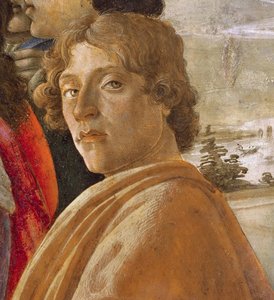
Sandro Botticelli
1445 - 1510 , Italien
Kurzinfos
- Beeinflusste Künstler: ['Präraffaeliten']
- Bemerkenswerte Werke:
- Die Geburt der Venus
- Primavera
- Mystische Geburt
- Einflussreiche Künstler:
- Fra Angelico
- Paolo Uccello
- Geburtsdatum: ca. 1445
- Geburtsort: Florenz, Italien
- Künstlerische Bewegung: Frührenaissance
- Nationalität: Italienisch
- Sterbedatum: 1510
- Vollständiger Name: Sandro Botticelli

