

 Vorschau anzeigen
 Versenden
 Teilen
 Details anzeigen

 Herunterladen
 Ähnliche Objekte
 Röntgenaufnahme
 Diashow
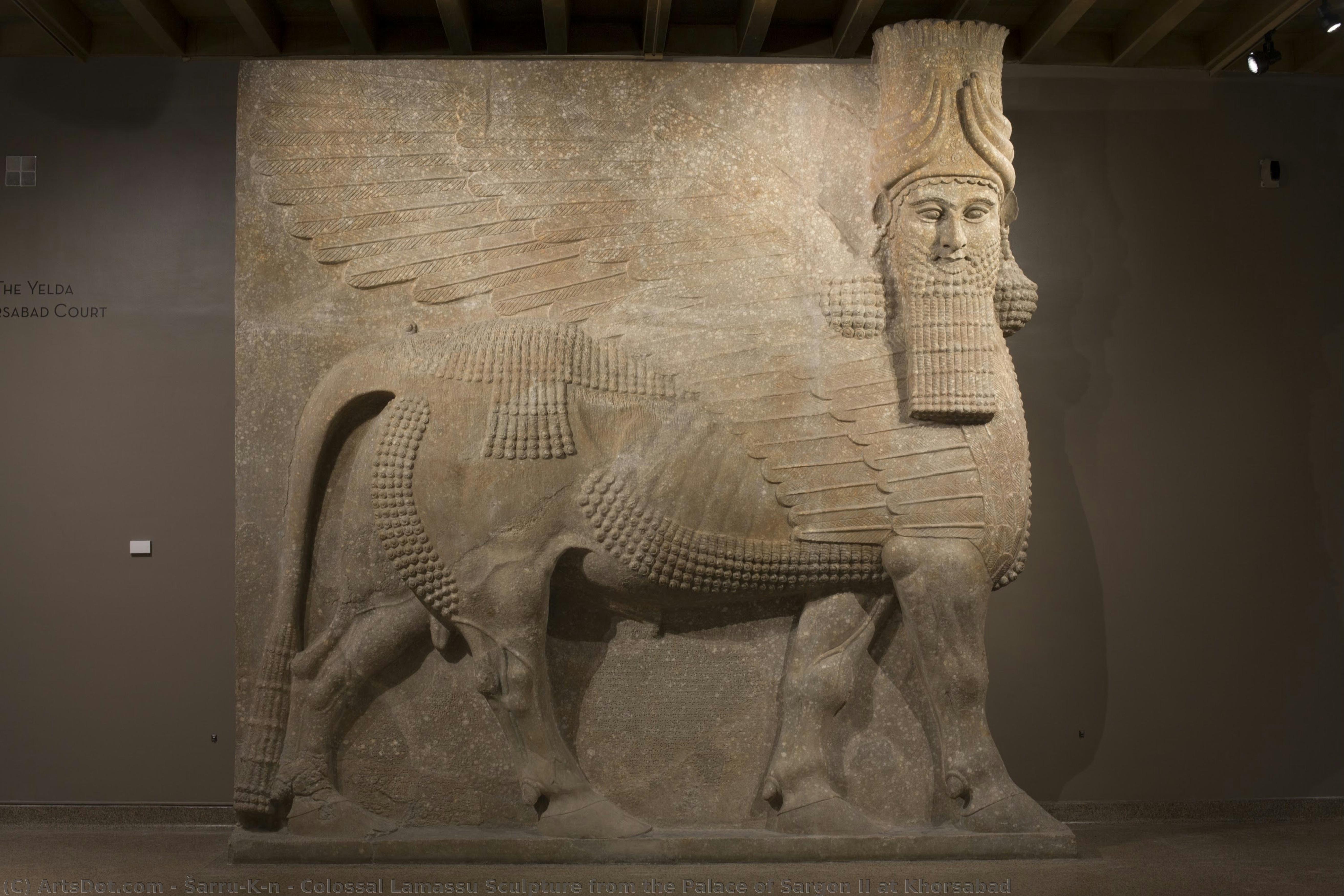
Colossal Lamassu Sculpture from the Palace of Sargon II at Khorsabad

 Weiterlesen
Erwerben Sie ein hochauflösendes, optimiertes digitales Bild, das der Online-Vorschau weit überlegen ist.
Jede Datei wird von unseren hauseigenen Spezialisten mit modernsten Werkzeugen und fachmännischer manueller Retusche sorgfältig vorbereitet. Wir stellen sicher, dass jedes Bild eine außergewöhnliche Klarheit, präzise Farbgenauigkeit und feinste Details aufweist.
Die endgültige Datei wird innerhalb von 72 Stunden per E-Mail zugestellt und ist für den sofortigen Einsatz in professionellen, redaktionellen und Druckumgebungen optimiert. Es handelt sich um dieselbe Qualität, der führende Designstudios, Verlage und Galerien vertrauen.
Digitales Bild
Laden Sie eine hochauflösende Datei für die persönliche Präsentation, den Druck und kreative Projekte herunter. ( Druck bestellen Handgemalte Reproduktion bestellen)
In jeder Bestellung digitaler Bilder enthalten
Professionelle digitale Bereitstellung, garantiert
Wenn Sie sich für ArtsDot.com entscheiden, erhalten Sie nicht nur ein Bild – Sie erhalten ein professionell aufbereitetes digitales Kunstwerk, das mit höchster Präzision erstellt und durch eine Zufriedenheitsgarantie abgesichert wird. Hier ist alles, was automatisch mit Ihrer Bestellung geliefert wird:

Schnelle E-Mail-Zustellung
Ihre hochauflösende digitale Bilddatei wird Ihnen innerhalb von 72 Stunden nach der Bestellung per E-Mail zugestellt – bereit zur sofortigen Verwendung.

KI-optimierte digitale Datei
Ihre Kunstwerke werden professionell mithilfe fortschrittlicher KI-Tools und manueller Bearbeitung optimiert, um maximale Detailtreue, Klarheit und Farbgenauigkeit zu gewährleisten.

Lebenslanger kostenloser Neudruckservice
Datei versehentlich gelöscht oder verloren? Keine Sorge – wir senden sie Ihnen jederzeit kostenlos erneut zu.

Keine Einfuhrgebühren – jemals
Genießen Sie Ihr Kunstwerk sofort ohne Zollgebühren, Einfuhrabgaben oder Versandkosten – digitale Downloads sind immer steuerfrei.

Garantierte Farbtreue
Wir garantieren, dass Ihr digitales Bild mithilfe professioneller Werkzeuge und Farbmanagement die Originalfarben so präzise wie möglich wiedergibt.

60-Tage-Zufriedenheitsgarantie
Sollten Sie mit Ihrem digitalen Bild nicht zufrieden sein, werden wir es überarbeiten oder Ihnen innerhalb von 60 Tagen 100% erstatten – ohne Wenn und Aber.

100% Geld-zurück-Garantie
Nicht zufrieden? Erhalten Sie innerhalb von 60 Tagen nach Erhalt Ihrer digitalen Datei eine vollständige Rückerstattung – ohne Angabe von Gründen.

Rabatte bei Großbestellungen
3 Bilder kaufen, 10% sparen – 5 Bilder kaufen, 15% sparen – Ab 10 Bildern 20% sparen. Ideal für kreative Projekte, Galerien und Agenturen.
Ähnliche Kunstwerke








Biografie des Künstlers
The Rise of a King: Sargon of Akkad and the Dawn of Empire
The name Sargon, meaning “true king” in Akkadian – Šarru-kīn – echoes through the millennia as synonymous with power, conquest, and the very birth of empire. While shrouded in legend for much of his early life, Sargon’s impact on Mesopotamia, and indeed the world, is undeniable. He emerged not from a lineage of kings, but from relative obscurity around 2334 BC, a period when Sumerian city-states fiercely guarded their independence. The details of his ascent are interwoven with myth, most notably the tale of being abandoned in a reed basket on the Euphrates River – a parallel to Moses’s story that speaks to a common archetype of divinely favored beginnings. Rescued and raised by Akki, a gardener, Sargon rose through the ranks, eventually becoming cupbearer to Ur-Zababa, the ruler of Kish. This position afforded him access to power, but it was his ambition and military prowess that ultimately propelled him to greatness. He didn’t simply inherit a kingdom; he forged one, uniting Sumerian city-states under his rule through a series of brilliant campaigns. His conquest wasn't merely political; it represented a cultural shift, establishing Akkadian as the dominant language and ushering in a new era of centralized governance.Akkadian Innovations: Administration, Art, and Religious Synthesis
Sargon’s genius extended far beyond military strategy. He understood that lasting power required more than just conquest; it demanded effective administration and cultural cohesion. He implemented a sophisticated bureaucracy, appointing officials loyal to him throughout his vast empire. This centralized system allowed for efficient tax collection, resource management, and the standardization of weights and measures – crucial elements in fostering economic stability. His army was also reorganized, becoming a professional fighting force equipped with standardized weaponry. Perhaps less known but equally significant were Sargon’s contributions to art and religion. He commissioned monumental sculptures and reliefs depicting his victories and divine legitimacy. The famous Victory Stele of Naram-Sin (his grandson) builds upon the artistic foundations laid during Sargon's reign, showcasing a clear emphasis on royal power and divine favor. Religiously, Sargon skillfully integrated Akkadian deities with existing Sumerian gods, creating a syncretic system that appealed to diverse populations within his empire. He rebuilt temples dedicated to both Akkadian and Sumerian divinities, demonstrating respect for local traditions while asserting his own authority. This policy of religious tolerance helped to quell potential unrest and solidify his rule.The Sargonid Dynasty: Legacy and Expansion
Sargon’s reign wasn't just about personal glory; he established a dynasty – the Sargonids – that would continue to shape Mesopotamia for centuries. His son, Rimush, inherited a vast but restless empire, facing numerous rebellions. While Rimush proved capable of suppressing these uprisings, it was his brother, Manishtushu, who further consolidated Akkadian power through continued military campaigns and administrative reforms. However, the true culmination of the Sargonid dynasty came with Naram-Sin, Sargon’s grandson. Naram-Sin declared himself a god – an unprecedented act that reflected the immense power wielded by the Akkadian kings. He led successful campaigns against neighboring kingdoms, expanding the empire to its greatest extent and leaving behind a legacy of military prowess and artistic innovation. The Akkadian Empire under Naram-Sin saw a flourishing of literature, with royal hymns and epics celebrating his achievements. However, this very assertion of divinity may have contributed to the empire’s eventual decline, as it alienated traditional religious authorities and fostered resentment among conquered peoples.Decline and Rediscovery: The Fall of Akkad and Modern Scholarship
The Akkadian Empire ultimately succumbed to internal strife and external pressures around 2154 BC. A combination of factors contributed to its collapse, including prolonged droughts, economic instability, and the rise of Gutian invaders from the Zagros Mountains. The Gutians, though not necessarily a unified force, disrupted trade routes, weakened Akkadian defenses, and ultimately overran much of Mesopotamia. The empire fragmented into smaller city-states once again, ushering in a period of chaos and decline known as the Gutian Period. Despite its relatively short lifespan – roughly 150 years – the Akkadian Empire left an indelible mark on Mesopotamian history. The rediscovery of Sargon’s legacy began with archaeological excavations in the 19th century. Cuneiform tablets unearthed at various sites revealed details about his life, conquests, and administrative policies. Scholars pieced together fragments of information to reconstruct the story of this remarkable king and his empire. Today, Sargon of Akkad is recognized as one of the most important figures in ancient history – a visionary leader who transformed Mesopotamia from a collection of independent city-states into a unified empire, laying the foundations for future civilizations. His name continues to inspire awe and fascination, reminding us of the enduring power of ambition, innovation, and the pursuit of greatness.
Kurzinfos
- Artistic Movement Or Style: Akkadian Empire Founder
- Date Of Death: Living
- Full Name: Šarru-Kīn

