 Vorschau anzeigen
 Versenden
 Teilen
 Details anzeigen

 Herunterladen
 Ähnliche Objekte
 Röntgenaufnahme
 Diashow
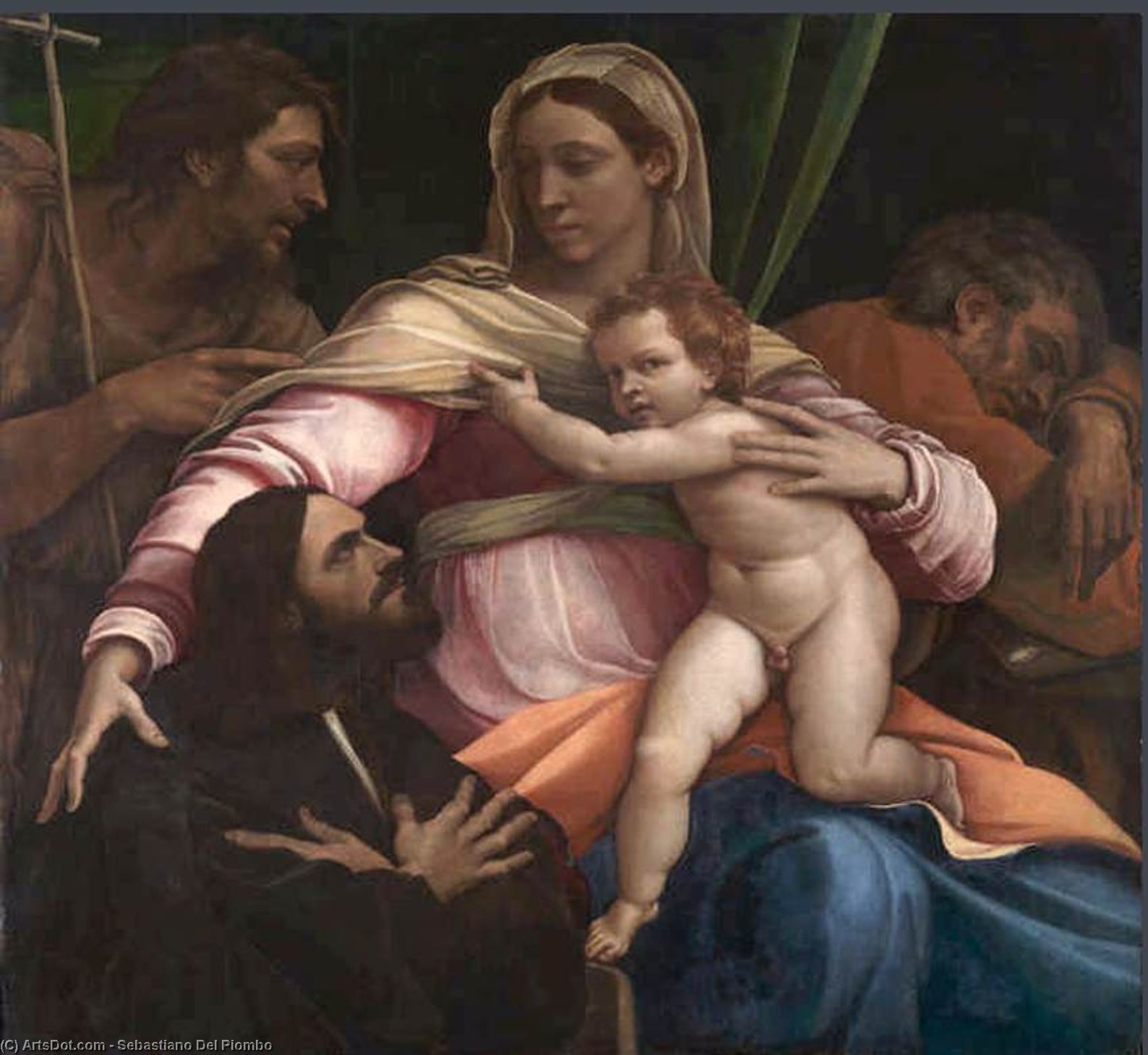
The Holy Family with St John the Baptist and a Donor
 Oil On Canvas
- WallArt
- High Renaissance
 1517
1517 98.0 x 107.0 cm
 National Gallery
 Weiterlesen
Giclée / Kunstdruck
Giclée- oder Leinwanddruck in Museumsqualität mit schneller Produktion und flexiblen Veredelungsoptionen. ( Handgemalte Reproduktion bestellen Bild kaufen)




P118B $10

P118H $10

P118W $10

P438Z $10

P508JH $12

P508YH $12

P805H $10

P805Z $10

P919BZ $10

P919G $10

P919XJ $10

P959ZH $10

P968JZ $12

W106C $8

W218G $10

W218JH $8

W218Y $10

W307PJ $10

W316G $10

W316PJ $8

W316Y $10

W398PJ $8

W4111J $10

W500HY $15

W500JH $15

W692G $12

W849H $8

W940BG $15

W953PJ $8




Wählen Sie aus unseren vordefinierten Formaten, die den ursprünglichen Proportionen des Kunstwerks entsprechen.

Sie können Ihre eigenen Maße eingeben, um ein bestimmtes Format oder einen speziellen Platz einzupassen. Wenn das von Ihnen gewählte Format nicht den Proportionen des Originalbildes entspricht, werden wir das Kunstwerk entweder beschneiden oder das Bild mit einem gespiegelten oder einfarbigen Rand erweitern. Ein digitaler Entwurf wird Ihnen zur Genehmigung zugesandt, bevor die Produktion beginnt.
Bitte beachten Sie, dass die Vorschau auf dem Bildschirm nicht den tatsächlichen Zuschnitt oder die Erweiterung widerspiegelt. Nur der Entwurf zeigt die endgültige Komposition präzise an.
Obwohl Sondermaße verfügbar sind, empfehlen wir die Auswahl eines Maßes aus der vordefinierten Liste, um die ursprünglichen Proportionen zu bewahren.
Weltweiter Versand () innerhalb von 2 Wochen statt der üblichen 4/5 Wochen. (2 September)

Kostenloser weltweiter Expressversand

Hochwertige Leinenleinwand

Umfassender Versicherungsschutz beim Versand

Zollgebühren-Rückerstattungsgarantie

Garantie für exakte Farbtreue

60 Tage Rückgaberecht (nur bei Mängeln)

100% Geld-zurück-Garantie

Mengenrabatt verfügbar
 Die Glasoption ist nur für Größen unter 110 cm verfügbar.

The Holy Family with St John the Baptist and a Donor
Giclée / Kunstdruck
Format der Reproduktion
-


Gesamtpreis
$ 62
The Holy Family: A Venetian Masterpiece of Grace and Roman Weight
Sebastiano del Piombo’s “The Holy Family with St John the Baptist and a Donor” is not merely a depiction of a biblical scene; it's a profound meditation on family, faith, and the delicate balance between earthly presence and divine grace. Painted in 1517 during his Roman period, this tondo – a circular composition – reveals a masterful synthesis of Venetian colorism, a hallmark of his early career, interwoven with the monumental formality characteristic of Roman art. The painting immediately draws the eye to its central figures: Mary, Joseph, and Jesus, rendered with an almost palpable tenderness, while St John the Baptist stands as a youthful embodiment of prophetic zeal. A distinguished gentleman, likely a patron or donor, occupies the right side of the composition, engaging in what appears to be a thoughtful exchange – a subtle addition that invites speculation about the dynamics of faith and earthly influence within this sacred space.
Del Piombo’s technique is immediately striking. He employs a rich, layered application of oil paint, building up textures with meticulous detail. The colors are deeply saturated—jewel-toned reds, blues, and greens dominate—a deliberate choice that echoes the vibrant palette favored by Venetian artists like Giorgione, whose influence is undeniably present. However, unlike the hazy atmospheric perspective often associated with Venetian painting, Del Piombo’s approach is more grounded, utilizing sharp lines and carefully modeled forms to create a sense of depth and solidity. This juxtaposition of luminous color and precise form speaks to his evolving artistic sensibilities as he transitioned from Venice to Rome, where he was increasingly exposed to the principles of classical art.
A Roman Echo: Form and Composition
The painting’s composition is deliberately structured, reflecting a clear engagement with Renaissance ideals. The central grouping of the Holy Family is framed by the architectural setting – a modestly furnished room with a simple chair suggesting a space for conversation or contemplation. This deliberate framing draws attention to the figures within, emphasizing their importance and creating a sense of intimacy despite the formal arrangement. Noticeably, Del Piombo departs from traditional depictions of the family; there’s no overt display of piety or religious fervor. Instead, the scene exudes a quiet dignity and understated grace, suggesting a more intimate understanding of faith as lived experience.
The inclusion of the donor figure is particularly noteworthy. It's not uncommon in Renaissance paintings for patrons to be depicted alongside the subjects, signifying their support and influence. However, Del Piombo’s portrayal is subtly different. The donor isn’t presented as a heroic figure; he’s simply a man engaged in conversation, adding an element of human complexity to the scene. This suggests that faith wasn't solely about grand gestures or outward displays of piety but also about quiet contemplation and personal connection.
Symbolism and Spiritual Depth
Beyond its formal qualities, “The Holy Family” is rich in symbolic meaning. St John the Baptist, depicted as a young boy, represents innocence, repentance, and the beginning of Christ’s ministry. Mary's serene expression and gentle gesture convey her role as the Mother of God—a figure of profound grace and compassion. Jesus, cradled in his mother’s arms, embodies divine love and sacrifice. The painting subtly explores themes of family unity, faith, and the enduring power of the Holy Trinity.
The choice of a circular composition – a tondo – is also significant. Circles are often associated with eternity and wholeness, reinforcing the idea that this scene represents an eternal truth—the divine family at the heart of Christian belief. The subtle details, from the folds of Mary’s robe to the expression on the donor's face, invite viewers to linger and contemplate the profound spiritual message embedded within the artwork.
A Timeless Masterpiece: Reproduction Possibilities
Reproductions of “The Holy Family” offer a remarkable opportunity to bring this exquisite Renaissance masterpiece into any home or space. The vibrant colors and intricate details are faithfully captured in high-quality prints, allowing you to experience the painting’s beauty and emotional depth firsthand. Whether adorning a study, a living room, or a chapel, this artwork serves as a constant reminder of faith, family, and the enduring legacy of Sebastiano del Piombo—a Venetian soul who brilliantly blended color and form to create a timeless testament to human spirituality.
Ähnliche Kunstwerke
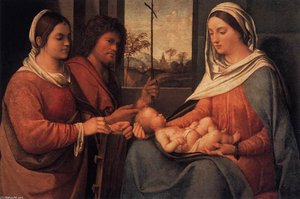
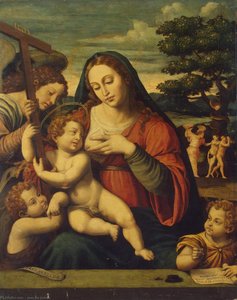
Über den Künstler
Frühes Leben und Ausbildung
Sebastiano del Piombo, ein italienischer Maler der Hochrenaissance, hinterließ mit seiner einzigartigen Verbindung aus venezianischer Farbe und römischen monumentalen Formen einen bleibenden Eindruck in der Kunstwelt. Geboren um 1485 in Venedig, ist Sebastianos frühes Leben von Geheimnissen umgeben, aber es ist bekannt, dass er erst spät im Leben mit dem Malen begann und Schüler Giorgiones (1477/78 oder 1473/74 – 1510) wurde, einem bedeutenden Maler der venezianischen Hochrenaissance.Aufstieg in Rom
Sebastianos Karriere gewann an Schwung, als er 1511 nach Rom zog, wo er zusammen mit Raffael arbeitete und schließlich zu den wenigen Malern gehörte, die eine gute Beziehung zu Michelangelo pflegten, der ihn ermutigte, gegen Raffael um Aufträge zu konkurrieren. Diese Erfahrung führte dazu, dass Sebastiano zum führenden Maler Roms nach Raffaels Tod im Jahr 1520 wurde.Wichtige Werke und Kooperationen
- Die drei Philosophen (Kunsthistorisches Museum, Wien, Österreich), eine Zusammenarbeit mit Giorgione, zeigt Sebastianos einzigartigen Stil.
- Moses empfängt die Gesetzestafeln (Detail) (Madonna dell'orto, Venedig, Italien) demonstriert seine Meisterschaft in Öl auf Leinwand.
Entwicklung und künstlerischer Stil
Sebastiano del Piombo vereinte Elemente des venezianischen Kolorits mit der monumentalen Stärke römischer Kunst. Sein Stil zeichnete sich durch eine kraftvolle Darstellung von Figuren aus, oft größer als das Leben, die er durch lebendige Farben und eindrucksvolle Lichteffekte ausglichen konnte. Er bevorzugte Ölfarben und schuf sowohl Porträts als auch religiöse Szenen. Obwohl er in seinen frühen Jahren in Venedig bereits einen eigenen Stil entwickelte, festigte er ihn in Rom unter dem Einfluss Michelangelos.Bedeutung und Vermächtnis
Trotz seiner Bedeutung zu Lebzeiten war Sebastiano del Piombos Einfluss auf andere Künstler begrenzt, da er wenige prominente Schüler hatte und seine Werke nur selten verbreitet wurden. Sein einzigartiger Stil, der venezianische Farbenreichtum mit römischer Monumentalität verbindet, inspiriert jedoch weiterhin Kunstliebhaber. Erkunden Sie weitere Werke von Giorgione auf ArtsDot, Vertiefen Sie sich in Sebastiano del Piombos Biografie auf Wikipedia, Entdecken Sie Sebastiano del Piombos Profil auf ArtsDot. Wichtige Daten: * Geboren: ca. 1485, Venedig * Gestorben: 21. Juni 1547 * Bemerkenswerte Zusammenarbeit: Die drei Philosophen, mit Giorgione (Kunsthistorisches Museum, Wien, Österreich)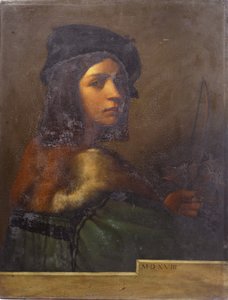
Sebastiano del Piombo
1485 - 1547 , Italien
Kurzinfos
- Beeinflusste Künstler:
- Giorgione
- Raphael
- Michelangelo
- Bemerkenswerte Werke:
- Die drei Philosophen
- Moses empfängt die Tabellen
- Geburtsdatum: ca. 1485
- Geburtsort: Venedig, Italien
- Künstlerische Richtung: Hochrenaissance
- Nationalität: Italiener
- Todatum: 21. Juni 1547
- Vollständiger Name: Sebastiano del Piombo
Ähnliche Artikel
Sebastiano del Piombo: Bridging Venetian Colorism & Roman Grand Manner Portraiture
Explore the captivating art of Sebastiano del Piombo, a Renaissance master bridging Venetian colorism & Roman grandeur. Discover his iconic portraits and lasting influence on art history. Learn more at ArtsDot.
Entwicklung von Familienporträts: Personalisierte Kunst als Chronik des Lebens über Generationen hinweg
Entdecken Sie die faszinierende Welt der Familienporträts! Von historischen Meisterwerken bis zu personalisierten Auftragsgemälden – wir bieten Kunst für Generationen. Expertenberatung & höchste Qualität.
The Enduring Legacy of Family Portraiture: A Historical & Artistic Exploration
Explore the rich history of family portraiture with ArtsDot. Discover artistic styles, symbolism & collecting insights. Commission a custom oil painting or appraise your existing artwork today!
Jacob Henricus Maris: Meister des niederländischen Stimmungsrealismus und der intimen Landschaft
Entdecken Sie das Werk von Jacob Henricus Maris, einem Meister des niederländischen Stimmungsrealismus! Erfahren Sie mehr über seine Landschaftsmalerei, Einflüsse und berühmte Gemälde. Jetzt lesen & inspirieren lassen!

Das Echo der Ahnen: Familienporträts im Laufe der Geschichte
Entdecken Sie die Geschichte der Familienporträts! Von Renaissance bis Moderne – fertigt hochwertige Reproduktionen & Auftragsgemälde an. Expertenberatung inklusive!