 Vorschau anzeigen
 Versenden
 Teilen
 Details anzeigen

 Herunterladen
 Ähnliche Objekte
 Röntgenaufnahme
 Diashow
 Statistiken
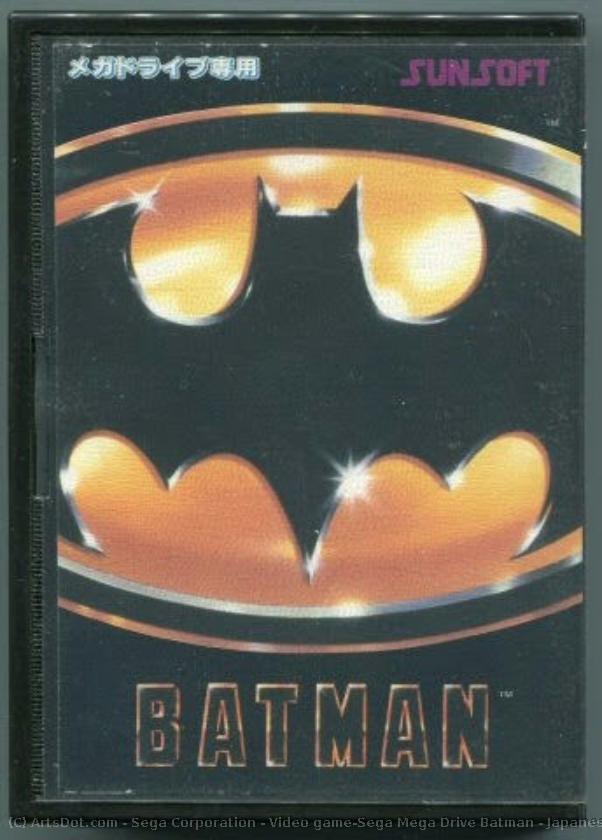
Video game:Sega Mega Drive Batman - Japanese Edition


 Weiterlesen
Erwerben Sie ein hochauflösendes, optimiertes digitales Bild, das der Online-Vorschau weit überlegen ist.
Jede Datei wird von unseren hauseigenen Spezialisten mit modernsten Werkzeugen und fachmännischer manueller Retusche sorgfältig vorbereitet. Wir stellen sicher, dass jedes Bild eine außergewöhnliche Klarheit, präzise Farbgenauigkeit und feinste Details aufweist.
Die endgültige Datei wird innerhalb von 72 Stunden per E-Mail zugestellt und ist für den sofortigen Einsatz in professionellen, redaktionellen und Druckumgebungen optimiert. Es handelt sich um dieselbe Qualität, der führende Designstudios, Verlage und Galerien vertrauen.
Digitales Bild
Laden Sie eine hochauflösende Datei für die persönliche Präsentation, den Druck und kreative Projekte herunter. ( Zu Druck wechseln Handgemalte Reproduktion bestellen)
In jeder Bestellung digitaler Bilder enthalten
Professionelle digitale Bereitstellung, garantiert
Wenn Sie sich für ArtsDot.com entscheiden, erhalten Sie nicht nur ein Bild – Sie erhalten ein professionell aufbereitetes digitales Kunstwerk, das mit höchster Präzision erstellt und durch eine Zufriedenheitsgarantie abgesichert wird. Hier ist alles, was automatisch mit Ihrer Bestellung geliefert wird:

Schnelle E-Mail-Zustellung
Ihre hochauflösende digitale Bilddatei wird Ihnen innerhalb von 72 Stunden nach der Bestellung per E-Mail zugestellt – bereit zur sofortigen Verwendung.

KI-optimierte digitale Datei
Ihre Kunstwerke werden professionell mithilfe fortschrittlicher KI-Tools und manueller Bearbeitung optimiert, um maximale Detailtreue, Klarheit und Farbgenauigkeit zu gewährleisten.

Lebenslanger kostenloser Neudruckservice
Datei versehentlich gelöscht oder verloren? Keine Sorge – wir senden sie Ihnen jederzeit kostenlos erneut zu.

Keine Einfuhrgebühren – jemals
Genießen Sie Ihr Kunstwerk sofort ohne Zollgebühren, Einfuhrabgaben oder Versandkosten – digitale Downloads sind immer steuerfrei.

Garantierte Farbtreue
Wir garantieren, dass Ihr digitales Bild mithilfe professioneller Werkzeuge und Farbmanagement die Originalfarben so präzise wie möglich wiedergibt.

100-Tage-Zufriedenheitsgarantie
Wenn Sie mit Ihrem digitalen Bild nicht zufrieden sind, werden wir es überarbeiten oder 100% innerhalb von 100 Tagen erstatten – ohne Wenn und Aber.

100% Geld-zurück-Garantie
Nicht zufrieden? Erhalten Sie innerhalb von 100 Tagen nach Erhalt Ihrer digitalen Datei eine vollständige Rückerstattung – ohne Wenn und Aber.

Rabatte bei Großbestellungen
3 Bilder kaufen, 10% sparen – 5 Bilder kaufen, 15% sparen – Ab 10 Bildern 20% sparen. Ideal für kreative Projekte, Galerien und Agenturen.
Ähnliche Kunstwerke





Biografie des Künstlers
The Enduring Legacy of Sega Corporation: A Collective Vision
Sega Corporation, more than a single artist, represents a vibrant collective—a Japanese video game company born from the post-war desire for entertainment and evolving into a global icon. Its story isn’t one of individual brushstrokes but rather a tapestry woven with the contributions of countless designers, programmers, musicians, and artists who shaped the landscape of arcade gaming and home console experiences. Founded in 1960 as Nihon Goraku Bussan by Martin Bromley and Richard Stewart, the company initially focused on importing coin-operated amusement machines to American military bases in Japan. This early exposure to Western entertainment sensibilities would subtly influence its future direction. The acquisition of Service Games of Japan shortly after solidified its position within the burgeoning arcade industry, but it was the 1965 rebranding as Sega Enterprises Ltd., following a merger with Rosen Enterprises, that truly signaled the company’s ambition—a commitment to creating original gaming experiences.From Arcades to Consoles: A Revolution in Play
The mid-1960s saw Sega begin its journey into game development itself, most notably with *Periscope*, a pioneering coin-operated submarine simulator. This marked the beginning of a relentless pursuit of innovation that would define the company for decades. However, it was the 1980s that truly cemented Sega’s place in gaming history. Recognizing the potential of home consoles, Sega launched the SG-1000 and later the Master System, attempting to challenge Nintendo's growing dominance. While these early ventures faced stiff competition, they laid the groundwork for a more significant breakthrough: the Mega Drive (known as Genesis in North America). The arrival of *Sonic the Hedgehog* in 1991 was nothing short of revolutionary. Sonic wasn’t merely a character; he was an attitude—a symbol of speed, rebellion, and cool that directly contrasted with Nintendo's established mascot, Mario. This bold move ignited a console war that captivated a generation, briefly establishing Sega as the market leader in North America. The artistic design of *Sonic*, spearheaded by Naoto Ohshima, Yuji Naka, and Hirokazu Yasuhara, was crucial to its success—a vibrant aesthetic that embraced bright colors, fluid animation, and a sense of kinetic energy.A Spectrum of Creative Talent
The strength of Sega lay not just in *Sonic* but in the diversity of its creative teams. Artists like Greg Martin, responsible for the iconic Western *Sonic* cover art, crafted images that captured the spirit of the games and became synonymous with the brand. Boris Vallejo and Julie Belle brought their signature fantasy style to numerous titles, lending a sense of epic scale and visual richness. Within Japan, Hiroaki Shioya’s painterly covers offered a distinct aesthetic sensibility. The company fostered an environment where different artistic visions could flourish, resulting in a remarkably varied catalog. Beyond the visual arts, composers like Masato Nakamura created unforgettable soundtracks that became integral to the gaming experience. Sega's internal teams, such as Ryu Ga Gotoku Studio (known for the *Yakuza* series) and Sonic Team, continue to push boundaries today. The influence of these artists extends beyond their immediate work; they inspired a generation of game developers and illustrators.Challenges, Transformations, and Enduring Influence
The late 1990s proved challenging for Sega. Commercial failures like the 32X and Saturn, coupled with the rise of Sony’s PlayStation, led to the difficult decision to exit the console market in 2001. This wasn't an end but a transformation. Sega reinvented itself as a third-party developer and publisher, focusing on creating high-quality games for other platforms. The acquisition by Sammy Corporation in 2004 further stabilized the company, leading to renewed success with franchises like *Yakuza*, *Total War* (through Creative Assembly), and *Persona* (through Atlus). Today, Sega is a multifaceted entertainment powerhouse, encompassing video game development, arcade operations, animation studios (TMS Entertainment and Marza Animation Planet), and even toy manufacturing. The company’s legacy isn't simply about the games it created but about its willingness to take risks, embrace innovation, and foster a culture of creativity. Sega continues to shape the gaming landscape, proving that a collective vision can endure—and evolve—through decades of change.Major Achievements & Historical Significance
- Pioneering Arcade Gaming: Sega’s early success in arcades established it as a major player in the entertainment industry, laying the foundation for its future ventures.
- The Sonic Revolution: *Sonic the Hedgehog* redefined platforming and challenged Nintendo's dominance, sparking a console war that captivated a generation.
- Diverse Artistic Styles: Sega fostered an environment where different artistic visions could flourish, resulting in a remarkably varied catalog of games.
- Innovation in Gameplay: From the fast-paced action of *Sonic* to the strategic depth of *Total War*, Sega consistently pushed boundaries in gameplay design.
- Enduring Franchises: The continued success of franchises like *Yakuza*, *Persona*, and *Super Monkey Ball* demonstrates Sega’s ability to adapt and thrive in a constantly evolving market.