

 Vorschau anzeigen
 Versenden
 Teilen
 Details anzeigen

 Herunterladen
 Ähnliche Objekte
 Röntgenaufnahme
 Diashow
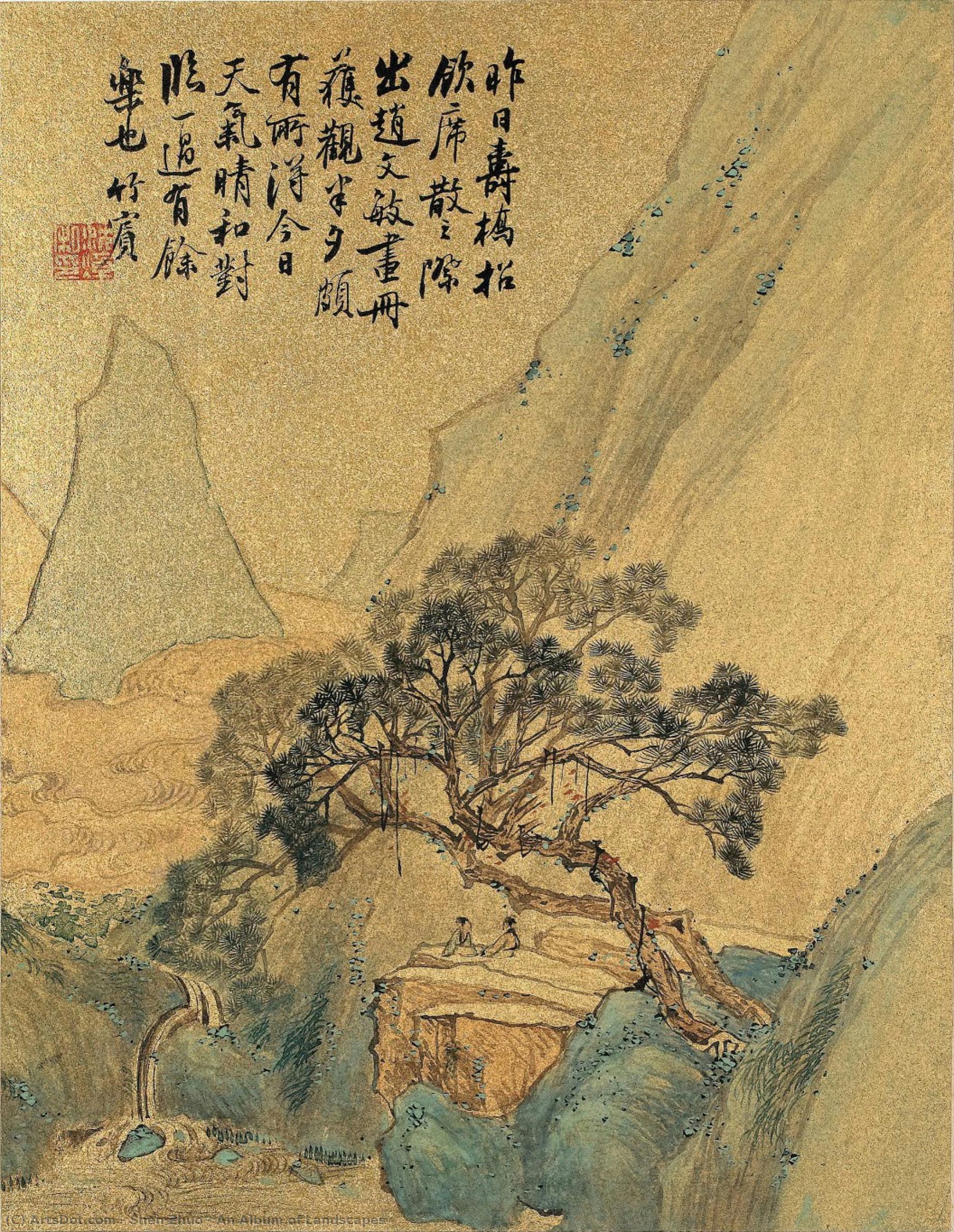
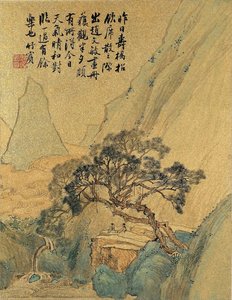
An Album of Landscapes
 Ink On Paper
- Wu School
 1912
1912- Early Modern
 20.0 x 16.0 cm
 Song Art Museum
 Weiterlesen
Giclée / Kunstdruck
Giclée- oder Leinwanddruck in Museumsqualität mit schneller Produktion und flexiblen Veredelungsoptionen. ( Handgemalte Reproduktion bestellen Bild kaufen)




































Wählen Sie aus unseren vordefinierten Formaten, die den ursprünglichen Proportionen des Kunstwerks entsprechen.

Sie können Ihre eigenen Maße eingeben, um ein bestimmtes Format oder einen speziellen Platz einzupassen. Wenn das von Ihnen gewählte Format nicht den Proportionen des Originalbildes entspricht, werden wir das Kunstwerk entweder beschneiden oder das Bild mit einem gespiegelten oder einfarbigen Rand erweitern. Ein digitaler Entwurf wird Ihnen zur Genehmigung zugesandt, bevor die Produktion beginnt.
Bitte beachten Sie, dass die Vorschau auf dem Bildschirm nicht den tatsächlichen Zuschnitt oder die Erweiterung widerspiegelt. Nur der Entwurf zeigt die endgültige Komposition präzise an.
Obwohl Sondermaße verfügbar sind, empfehlen wir die Auswahl eines Maßes aus der vordefinierten Liste, um die ursprünglichen Proportionen zu bewahren.
Weltweiter Versand () innerhalb von 2 Wochen statt der üblichen 4/5 Wochen. (1 September)

Kostenloser weltweiter Expressversand

Hochwertige Leinenleinwand

Umfassender Versicherungsschutz beim Versand

Zollgebühren-Rückerstattungsgarantie

Garantie für exakte Farbtreue

60 Tage Rückgaberecht (nur bei Mängeln)

100% Geld-zurück-Garantie

Mengenrabatt verfügbar
 Die Glasoption ist nur für Größen unter 110 cm verfügbar.

An Album of Landscapes
Giclée / Kunstdruck
Format der Reproduktion
-


Gesamtpreis
$ 62
Ähnliche Kunstwerke


Über den Künstler
The Soul of the Wu School: The Life and Legacy of Shen Zhuo
In the rich tapestry of Chinese art history, few figures embody the harmonious union of scholarly intellect and painterly mastery as gracefully as Shen Zhuo. Born in 1427 in Xiangcheng, Suzhou, during a period of profound cultural flourishing, Shen Zhuo emerged as a pivotal force within the Wu School. This illustrious collective of scholar-artists sought to transform landscape painting from simple representation into a profound medium for philosophical and spiritual contemplation. Known by various names including Shen Luo, Shen Chun, and his courtesy name Zhubin, his life was deeply rooted in the traditions of the literati, where art served as an extension of one's moral character and connection to the cosmos.
Shen Zhuo’s early years were shaped by a life of scholarly pursuit and privilege, providing him with the intellectual foundation necessary to navigate the complex aesthetic landscapes of his era. His artistic journey was not merely one of self-expression but an intentional dialogue with the past. He began his development by meticulously imitating the styles of masters such as Wang Xuehao and Xi Gang, demonstrating a disciplined approach to brushwork and composition. As his skill matured, he turned toward the legendary Wen Zhengming, integrating the refined elegance of the Wu School into his own unique vision. This evolution from imitation to innovation allowed him to create works that felt both deeply anchored in tradition and vibrantly alive with personal resonance.
Technique, Symbolism, and the Mastery of Brushwork
The brilliance of Shen Zhuo’s oeuvre lies in his ability to manipulate the physical elements of painting to evoke intangible emotions. He was a master of hua qiang, or bold brushstrokes, which he utilized to impart atmospheric depth and textural complexity to his landscapes. Through these vigorous strokes, he could capture the ruggedness of mountain ridges or the delicate mist clinging to a valley, creating a sense of movement and life within the stillness of the paper. His use of color was equally sophisticated; in works such as his famous Album of Landscapes, he skillfully combined light reds with blues and greens, often accented with gold paint, to create vistas that were both visually striking and spiritually evocative.
Beyond technical prowess, Shen Zhuo’s paintings are layered with profound symbolism rooted in Confucian and Taoist thought. His landscapes function as metaphors for the spiritual journey of the soul:
- Pine Trees: Frequently appearing in his compositions, these represent resilience, strength, and longevity amidst the changing seasons of life.
- Misty Peaks: These ethereal elements symbolize transcendence, the mystery of the unknown, and the pursuit of higher enlightenment.
- Water and Rivers: Serving as the lifeblood of his landscapes, they reflect the fluid nature of existence and the continuous flow of time.
Historical Significance and Artistic Influence
The historical importance of Shen Zhuo extends far beyond his individual compositions. He acted as a vital bridge between the great masters of the Song, Yuan, Ming, and Qing dynasties, synthesizing their diverse styles into a cohesive aesthetic that resonated with the scholar-official class. His ability to model his work on legends like Zhao Mengfu and Ni Zan demonstrated an extraordinary capacity for historical empathy, allowing him to breathe new life into ancient techniques. By traveling between the provinces of Jiangsu and Zhejiang, he not only sustained himself through the sale of his art but also disseminated the refined values of the Wu School across much of the region.
As a mentor and a practitioner of high culture, Shen Zhuo helped solidify the landscape painting tradition as a vehicle for moral virtue and intellectual rigor. His legacy is found in every brushstroke that seeks to find the infinite within the finite, and in every landscape that invites the viewer to lose themselves in the quiet beauty of the natural world. Through his work, the mountains and rivers of China became more than just scenery; they became mirrors reflecting the enduring harmony between humanity and the universe.
shen zhuo
China
Kurzinfos
- Artistic Movement Or Style: Wu School
- Date Of Birth: 1427 Xiangcheng, Suzhou, China
- Date Of Death: 1509
- Full Name: Shen Zhuo
- Nationality: Chinese
- Notable Artworks:
- Peach Blossom Spring
- Landscape
- Place Of Birth: China
Ähnliche Artikel

Die Top 10 Gemälde in Schattierungen von 'Slate Blue': Kunst für Ihr Zuhause
Entdecken Sie die Top 10 Gemälde in faszinierenden 'Slate Blue' Tönen! Von Monet bis Manet – erleben Sie Kunstgeschichte und lassen Sie sich von Meisterwerken inspirieren. Hochwertige Kunstdrucke auf
Verdant Visions: Exploring the Symbolism & Aesthetic Impact of Green in Art History
Explore the rich history & symbolism of green in art! Discover iconic paintings, techniques, and how to bring verdant harmony into your home with ArtsDot's expert guide.
Claude Monet: Die 25 Meisterwerke des Impressionismus für Ihr Zuhause | ArtsDot
Entdecken Sie die 25 Meisterwerke von Claude Monet! Tauchen Sie ein in die Welt des Impressionismus, erleben Sie Seerosen, Sonnenaufgänge & Kathedralen. Hochwertige Reproduktionen für Ihr Zuhause – exklusiv auf ArtsDot.com.
Chromgrüne Meisterwerke: Die Top 10 berühmtesten Gemälde & ihre Geschichte |
Entdecken Sie die Top 10 berühmter Gemälde, dominiert von faszinierendem Chromgrün! Von Monet bis Van Gogh – erfahren Sie die Geschichten hinter den Meisterwerken und lassen Sie sich für Ihre Wohnraumgestaltung inspirieren. Kunstdrucke in Museumsqualiät auf

Romantische Landschaften: Die 10 Meisterwerke, die eine Epoche prägten | ArtsDot
Entdecken Sie die 10 Meisterwerke der Romantischen Landschaftsmalerei! Von Caspar David Friedrich bis Turner – erleben Sie die Kunst, Emotion & Natur. Hochwertige Reproduktionen auf ArtsDot.com

