

 Vorschau anzeigen
 Versenden
 Teilen
 Details anzeigen

 Herunterladen
 Ähnliche Objekte
 Röntgenaufnahme
 Diashow
 Stats
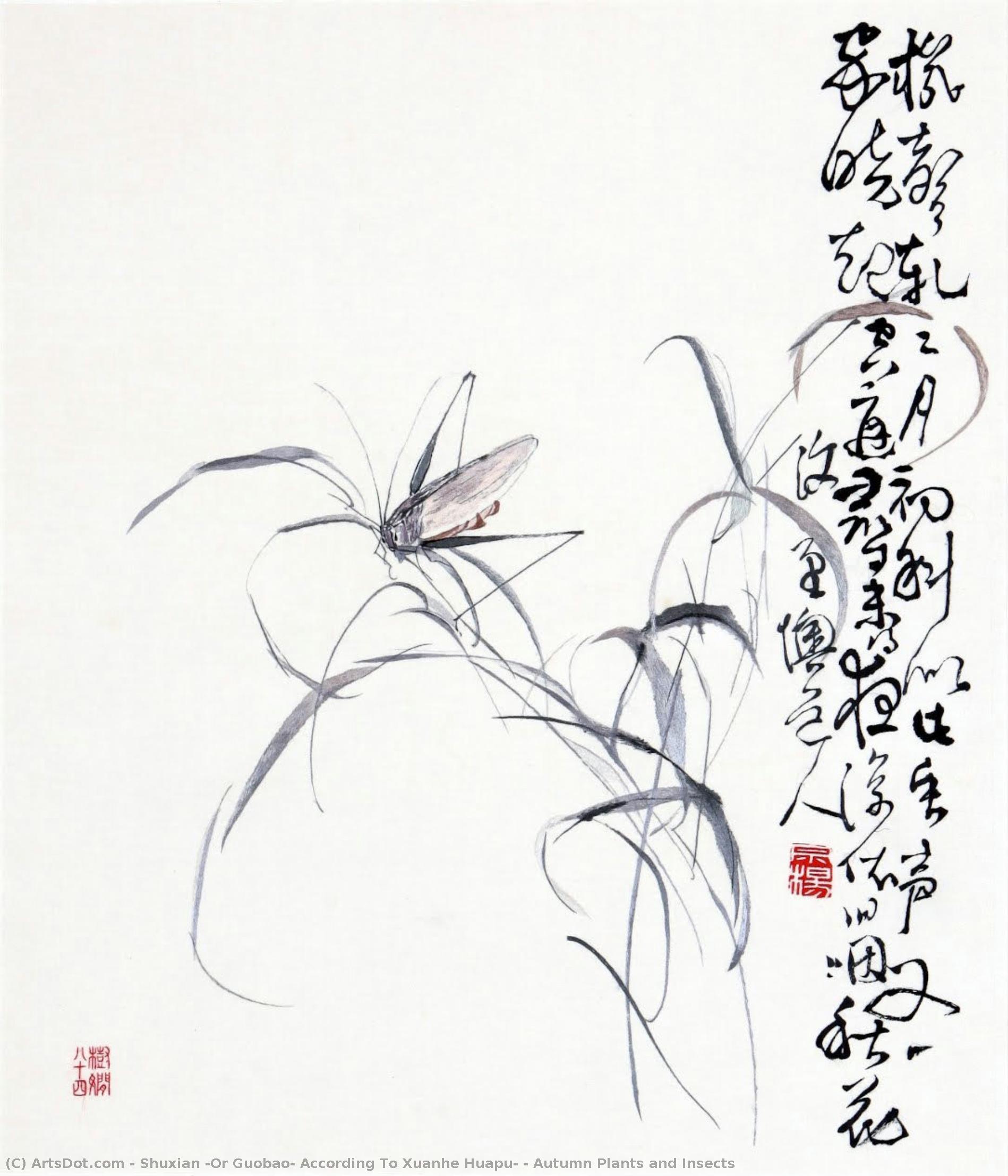
StatsAutumn Plants and Insects

 Weiterlesen
Giclée / Kunstdruck
Giclée- oder Leinwanddruck in Museumsqualität mit schneller Produktion und flexiblen Veredelungsoptionen. ( Handgemalte Reproduktion bestellen Switch to Digital Image)




































Wählen Sie aus unseren vordefinierten Formaten, die den ursprünglichen Proportionen des Kunstwerks entsprechen.

Sie können Ihre eigenen Maße eingeben, um ein bestimmtes Format oder einen speziellen Platz einzupassen. Wenn das von Ihnen gewählte Format nicht den Proportionen des Originalbildes entspricht, werden wir das Kunstwerk entweder beschneiden oder das Bild mit einem gespiegelten oder einfarbigen Rand erweitern. Ein digitaler Entwurf wird Ihnen zur Genehmigung zugesandt, bevor die Produktion beginnt.
Bitte beachten Sie, dass die Vorschau auf dem Bildschirm nicht den tatsächlichen Zuschnitt oder die Erweiterung widerspiegelt. Nur der Entwurf zeigt die endgültige Komposition präzise an.
Obwohl Sondermaße verfügbar sind, empfehlen wir die Auswahl eines Maßes aus der vordefinierten Liste, um die ursprünglichen Proportionen zu bewahren.
Weltweiter Versand () innerhalb von 2 Wochen statt der üblichen 4/5 Wochen. (8 September)

Kostenloser weltweiter Expressversand

Hochwertige Leinenleinwand

Umfassender Versicherungsschutz beim Versand

Zollgebühren-Rückerstattungsgarantie

Garantie für exakte Farbtreue

100-Tage-Rückgaberecht (nur bei Mängeln)

100% Geld-zurück-Garantie

Mengenrabatt verfügbar
 Die Glasoption ist nur für Größen unter 110 cm verfügbar.

Autumn Plants and Insects
Giclée / Kunstdruck
Format der Reproduktion
-


Gesamtpreis
$ 62
Ähnliche Kunstwerke

Über den Künstler
A Master of Landscape Painting in Turbulent Times
Guo Zhongshu, known by the courtesy name Shuxian (or Guobao, as recorded in the Xuanhe Huapu), remains a singular and luminous figure within the complex artistic tapestry of the Five Dynasties and Song dynasties. Born in Luoyang around 929 AD, his life unfolded during an era defined by profound political fragmentation and cultural upheaval. Yet, amidst this landscape of instability, Shuxian achieved a level of artistic serenity that would define a generation. His work serves as a bridge between the fading grandeur of the Tang Dynasty and the emerging, more introspective aesthetic of the Song period—a transition marked by a shift toward Neo-Confucian ideals of restraint, harmony, and deep philosophical contemplation.
The foundations of Shuxian’s mastery were laid in his early scholarly pursuits. Immersed in the rigorous study of Confucian classics and the disciplined practice of calligraphy, he developed an eye for meticulous detail and a hand capable of extraordinary grace. His lineage, connected to prominent officials, provided him with the intellectual resources necessary to cultivate a vision that was as much about spiritual depth as it and visual beauty. This scholarly background allowed him to infuse his landscapes with a sense of literati elegance, where every brushstroke carried the weight of classical wisdom and every mountain peak whispered of ancient truths.
The Essence of the Xuanhe Huapu Style
Shuxian’s artistic breakthrough is most notably associated with the Xuanhe Huapu style, a method that prioritized the capture of atmospheric essence over mere photographic realism. During the Xuanhe reign, he embraced a technique characterized by subtle tonal variations and the meticulous layering of ink washes. This approach allowed him to evoke the ephemeral qualities of nature—the dampness of a morning mist, the shifting light through forest canopies, and the heavy stillness of mountain air. By focusing on these atmospheric conditions, Shuxian could convey profound emotions, inviting the viewer to experience the landscape not just as a sight, but as a felt presence.
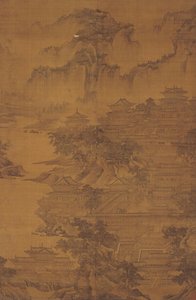
His technical brilliance is perhaps most evident in his architectural depictions, where he achieved a breathtaking balance between structural precision and organic fluidity. In masterpieces such as Title(Japanese): 明皇避暑宮図, one observes a remarkable command of line. He utilized fine, almost architectural strokes to render the summer palace of Emperor Xuanzong with perfect proportion and integrity. However, this rigidity is never overwhelming; it is softened by the soulful vitality of the surrounding trees and the ethereal, mist-shrouded mountains that meet the gentle ripples of foreground lakes. This interplay between the man-made and the natural world reflects a harmonious coexistence that was central to the era's philosophical aspirations.
Legacy and Historical Significance
The enduring legacy of Shuxian lies in his ability to find stillness within chaos. While his contemporaries often grappled with the literal turbulence of their political reality, Shuxian’s oeuvre offered a sanctuary of peace. His influence can be traced through the development of the Northern Song landscape tradition, where the emphasis on shanshui (mountain-water) painting became a vehicle for spiritual exploration. Through his signature use of ink washes and his ability to imbue nature with human emotion, he helped establish a visual language that would resonate throughout Chinese art history for centuries.
To study the works attributed to Shuxian is to engage in a dialogue with the past. Whether observing the delicate interplay of light in his landscapes or the structural elegance of his architectural scenes, one encounters an artist who sought to capture the eternal within the transient. His life and art stand as a testament to the power of creativity to transcend the boundaries of time and political strife, leaving behind a world of profound tranquility and unmatched aesthetic splendor.
Kurzinfos
- Artistic Movement Or Style: Literati Painting Style
- Artists Or Movements Influenced By This Artist: ['Eight Eccentrics of Yangzhou']
- Artists Who Influenced This Artist: ['Li Shan']
- Date Of Birth: c. 929
- Date Of Death: 977
- Full Name: Guo Zhongshu
- Nationality: Chinese
- Notable Artworks:
- Autumn Plants and Insects
- Title(Japanese): 明皇避暑宮図
- Place Of Birth: Luoyang, China