

 Vorschau anzeigen
 Versenden
 Teilen
 Details anzeigen

 Herunterladen
 Ähnliche Objekte
 Röntgenaufnahme
 Diashow
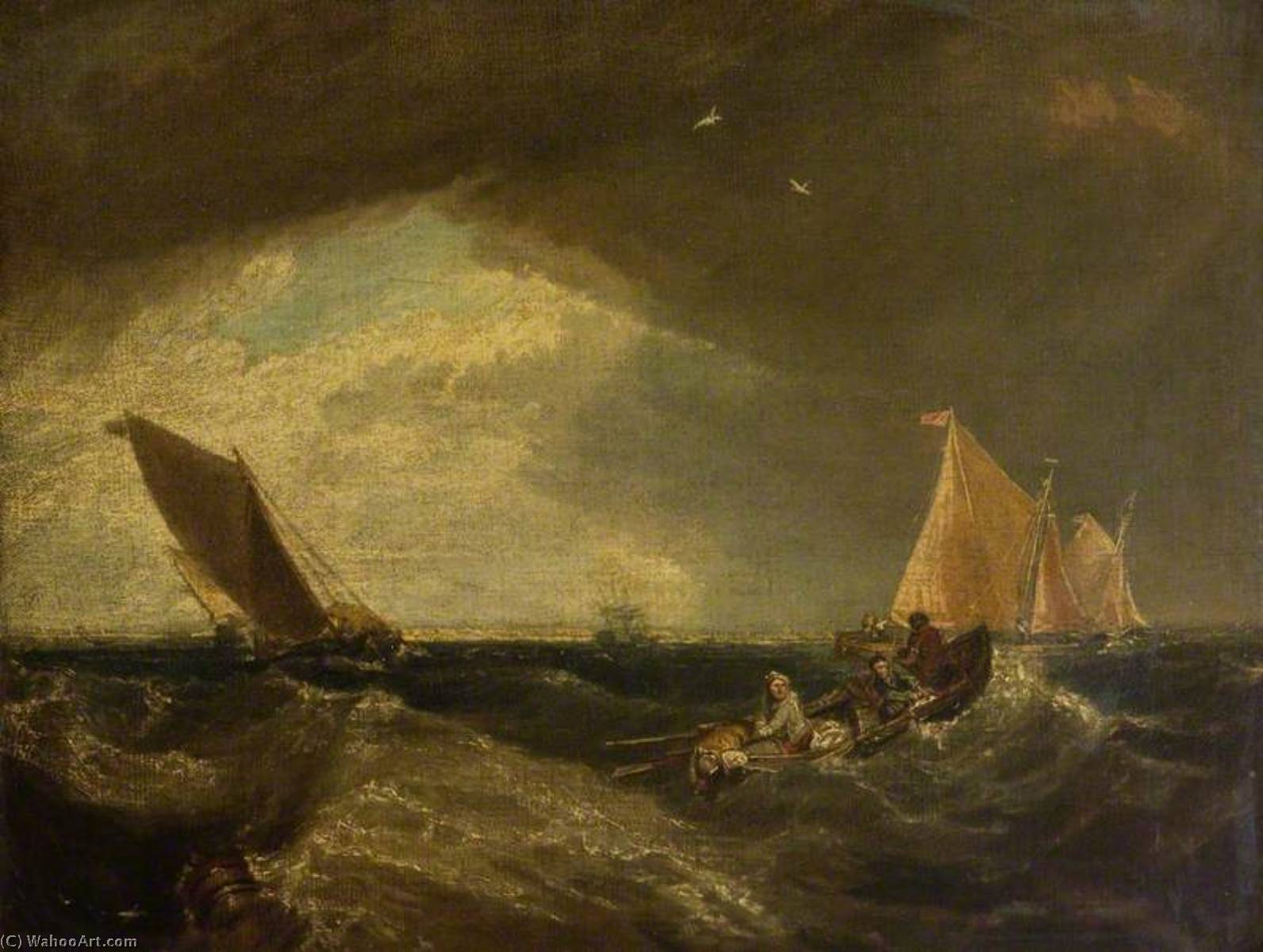
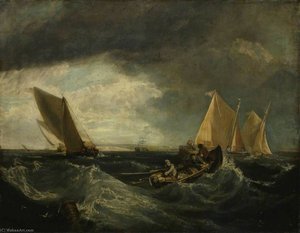
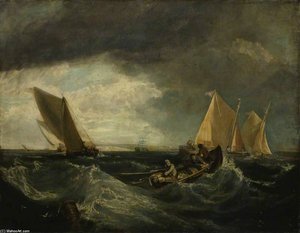
The Junction of the Thames and the Medway
 Acrylic On Canvas
- WallArt
- Romantic Landscape
 19th Century
 36.0 x 46.0 cm
 Ashmolean Museum of Art and Archaeology
 Weiterlesen
Erwerben Sie ein hochauflösendes, optimiertes digitales Bild, das der Online-Vorschau weit überlegen ist.
Jede Datei wird von unseren hauseigenen Spezialisten mit modernsten Werkzeugen und fachmännischer manueller Retusche sorgfältig vorbereitet. Wir stellen sicher, dass jedes Bild eine außergewöhnliche Klarheit, präzise Farbgenauigkeit und feinste Details aufweist.
Die endgültige Datei wird innerhalb von 72 Stunden per E-Mail zugestellt und ist für den sofortigen Einsatz in professionellen, redaktionellen und Druckumgebungen optimiert. Es handelt sich um dieselbe Qualität, der führende Designstudios, Verlage und Galerien vertrauen.
Digitales Bild
Laden Sie eine hochauflösende Datei für die persönliche Präsentation, den Druck und kreative Projekte herunter. ( Druck bestellen Handgemalte Reproduktion bestellen)
In jeder Bestellung digitaler Bilder enthalten
Professionelle digitale Bereitstellung, garantiert
Wenn Sie sich für ArtsDot.com entscheiden, erhalten Sie nicht nur ein Bild – Sie erhalten ein professionell aufbereitetes digitales Kunstwerk, das mit höchster Präzision erstellt und durch eine Zufriedenheitsgarantie abgesichert wird. Hier ist alles, was automatisch mit Ihrer Bestellung geliefert wird:

Schnelle E-Mail-Zustellung
Ihre hochauflösende digitale Bilddatei wird Ihnen innerhalb von 72 Stunden nach der Bestellung per E-Mail zugestellt – bereit zur sofortigen Verwendung.

KI-optimierte digitale Datei
Ihre Kunstwerke werden professionell mithilfe fortschrittlicher KI-Tools und manueller Bearbeitung optimiert, um maximale Detailtreue, Klarheit und Farbgenauigkeit zu gewährleisten.

Lebenslanger kostenloser Neudruckservice
Datei versehentlich gelöscht oder verloren? Keine Sorge – wir senden sie Ihnen jederzeit kostenlos erneut zu.

Keine Einfuhrgebühren – jemals
Genießen Sie Ihr Kunstwerk sofort ohne Zollgebühren, Einfuhrabgaben oder Versandkosten – digitale Downloads sind immer steuerfrei.

Garantierte Farbtreue
Wir garantieren, dass Ihr digitales Bild mithilfe professioneller Werkzeuge und Farbmanagement die Originalfarben so präzise wie möglich wiedergibt.

60-Tage-Zufriedenheitsgarantie
Sollten Sie mit Ihrem digitalen Bild nicht zufrieden sein, werden wir es überarbeiten oder Ihnen innerhalb von 60 Tagen 100% erstatten – ohne Wenn und Aber.

100% Geld-zurück-Garantie
Nicht zufrieden? Erhalten Sie innerhalb von 60 Tagen nach Erhalt Ihrer digitalen Datei eine vollständige Rückerstattung – ohne Angabe von Gründen.

Rabatte bei Großbestellungen
3 Bilder kaufen, 10% sparen – 5 Bilder kaufen, 15% sparen – Ab 10 Bildern 20% sparen. Ideal für kreative Projekte, Galerien und Agenturen.
A Symphony of Thames Waters: Callcott’s “The Junction of the Thames and the Medway”
Augustus Wall Callcott's "The Junction of the Thames and the Medway," painted around 1807, isn’t merely a depiction of a riverbank; it’s a carefully constructed tableau brimming with the spirit of early 19th-century England. This captivating landscape transcends simple representation, offering a glimpse into a world where commerce, leisure, and the natural beauty of the Thames estuary converged. The scene unfolds along the Hoo Peninsula, a sliver of land separating the mighty Thames from the Medway River, a strategic waterway vital for naval transport and trade. Callcott masterfully captures this pivotal meeting point, imbuing it with a sense of serene activity and understated elegance.
The painting’s style leans heavily into the Neoclassical tradition, popular at the time, yet infused with a distinctly English sensibility. Notice how Callcott employs a soft, diffused light—a hallmark of his technique—to create an atmosphere of hazy tranquility. The brushstrokes are delicate and precise, particularly evident in the rendering of the boats and the subtle reflections on the water’s surface. He avoids dramatic contrasts, favoring instead a harmonious blend of colors that evokes a feeling of warmth and contentment. This approach was influenced by the Dutch Masters, whose use of light and color Callcott deeply admired.
A Portrait of an Era: Historical Context
To fully appreciate “The Junction,” one must understand its historical context. The early 1800s were a period of significant change in England – the Napoleonic Wars had recently concluded, leaving a nation eager to rebuild and re-establish trade routes. The Thames and Medway Canal was conceived precisely to facilitate this process, offering a quicker alternative to the lengthy journey around the peninsula. Callcott’s painting, therefore, isn't just a pretty picture; it subtly reflects this strategic importance. The presence of several sailing vessels—a mix of barges and smaller craft—suggests the bustling activity of commerce along these vital waterways. The figure standing near the center, likely a gentleman enjoying the view, embodies the leisurely pursuits available to those connected to the river’s prosperity.
Symbolism Woven into the Scene
Beyond its straightforward depiction, “The Junction” is rich in symbolic meaning. The Thames and Medway rivers themselves represent connection – the link between London and Kent, England and Europe. The boats symbolize trade and progress, while the figure on the shore embodies human interaction with nature and the fruits of commerce. The composition—with the river flowing towards the viewer—creates a sense of invitation, drawing us into this idyllic scene. The careful placement of elements – the boats, the figure, the distant shoreline – all contribute to a carefully orchestrated narrative.
Capturing Light and Emotion: Callcott’s Technique
Callcott's skill lies not just in his ability to accurately depict a landscape but also in his capacity to evoke an emotional response. He achieves this through masterful use of light, color, and composition. The muted palette—dominated by blues, greens, and browns—creates a sense of calm and serenity. The subtle variations in tone suggest the play of sunlight on the water’s surface, adding depth and realism to the scene. Notice how he uses atmospheric perspective – objects further away appear paler and less distinct – to create a believable sense of distance. This technique, combined with his delicate brushwork, results in an image that is both visually stunning and emotionally resonant.
Bringing “The Junction” Home: A High-Quality Reproduction
Reproducing this exquisite painting requires meticulous attention to detail, mirroring Callcott’s original approach. Each hand-painted reproduction faithfully recreates the artwork's details and atmosphere, allowing you to bring the beauty of British landscape painting into your home or office. The careful selection of materials ensures that the colors remain true to the original, while the high level of craftsmanship guarantees a piece that will last for generations. “The Junction of the Thames and the Medway” is more than just a print; it’s a window into a bygone era—a testament to Callcott's artistry and a celebration of England’s rich maritime heritage.
Ähnliche Kunstwerke
Biografie des Künstlers
Frühes Leben und Ausbildung
Sir Augustus Wall Callcott, ein gefeierter englischer Landschaftsmaler, wurde am 20. Februar 1779 in Kensington Gravel Pits, einem Dorf am westlichen Rand von London, geboren. Seine frühen Jahre waren geprägt von einer Leidenschaft für Musik, die ihn dazu veranlasste, mehrere Jahre lang im Chor der Westminster Abbey zu singen. Später wurde er an der Royal Academy Schüler und begann dort seine künstlerische Karriere als Porträtmaler unter der Anleitung von John Hoppner.Aufstieg zur Prominenz
Callcotts Vorliebe für Landschaftsmalerei wurde bald deutlich, und nach 1804 stellte er ausschließlich Landschaften aus. Seine Geschicklichkeit, das elegante Design und die charmanten tonalen Qualitäten führten zu einem stetigen Anstieg seines Rufs. Im Jahr 1806 wurde er zum Associated der Royal Academy gewählt und 1810 zum ordentlichen Akademiker.Bemerkenswerte Werke und Ausstellungen
Zu Callcotts bemerkenswertesten Werken gehören:- Die Einfahrt in den Pool von London (1816)
- Der Fluss Tyne (1818)
- Eine ruhige Lage auf der Medway (1820)
- Rochester (1824)
- Raffaele und die Fornarina (1837) – ein seltenes Beispiel seiner Figurengemälde, das sich im South Kensington Museum (Sheepshanks Collection), heute Teil der V&A, befindet.
Vermächtnis und spätere Jahre
Callcott erhielt 1837 bei der Thronbesteigung von Königin Victoria den Titel eines Ritters. Er löste William Seguier als Kurator der königlichen Gemälde im Jahr 1843 ab. Callcott verstarb am 25. November 1844 und wurde im Kensal Green Cemetery beigesetzt. Weitere Werke von Sir Augustus Wall Callcott finden Sie auf ArtsDot.com: Weitere Informationen finden Sie auf Wikipedia:
Sir Augustus Wall Callcott
1779 - 1844 , Vereinigtes Königreich
Kurzinfos
- Bemerkenswerte Werke:
- The Entrance to the Pool of London
- The Mouth of the Tyne
- A Dead Calm on the Medway
- Rochester
- Raffaelle and the Fornarina
- Geburtsdatum: 20. Februar 1779
- Geburtsort: Kensington, Vereinigtes Königreich
- Kunstrichtung: Landschaftsmalerei
- Nationalität: Britisch
- Todatum: 25. November 1844
- Vollständiger Name: Sir Augustus Wall Callcott

