 Vorschau anzeigen
 Versenden
 Teilen
 Details anzeigen

 Herunterladen
 Ähnliche Objekte
 Röntgenaufnahme
 Diashow
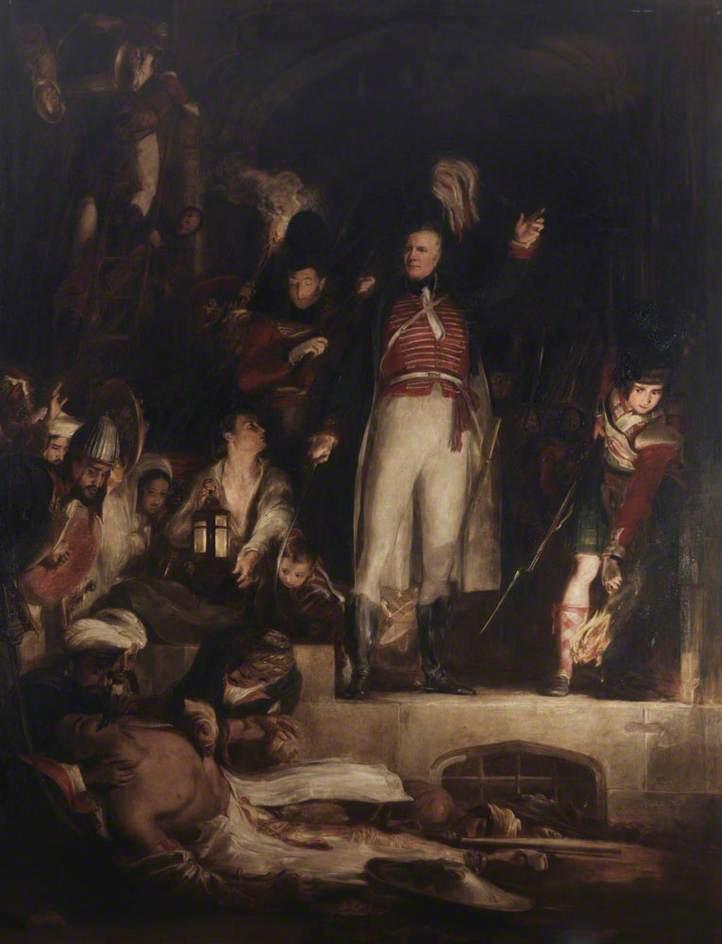
General Sir David Baird Discovering the Body of Sultan Tippoo Sahib


 Weiterlesen
Giclée / Kunstdruck
Giclée- oder Leinwanddruck in Museumsqualität mit schneller Produktion und flexiblen Veredelungsoptionen. ( Handgemalte Reproduktion bestellen Bild kaufen)




P118B $10

P118H $10

P118W $10

P438Z $10

P508JH $12

P508YH $12

P805H $10

P805Z $10

P919BZ $10

P919G $10

P919XJ $10

P959ZH $10

P968JZ $12

W106C $8

W218G $10

W218JH $8

W218Y $10

W307PJ $10

W316G $10

W316PJ $8

W316Y $10

W398PJ $8

W4111J $10

W500HY $15

W500JH $15

W692G $12

W849H $8

W940BG $15

W953PJ $8




Wählen Sie aus unseren vordefinierten Formaten, die den ursprünglichen Proportionen des Kunstwerks entsprechen.

Sie können Ihre eigenen Maße eingeben, um ein bestimmtes Format oder einen speziellen Platz einzupassen. Wenn das von Ihnen gewählte Format nicht den Proportionen des Originalbildes entspricht, werden wir das Kunstwerk entweder beschneiden oder das Bild mit einem gespiegelten oder einfarbigen Rand erweitern. Ein digitaler Entwurf wird Ihnen zur Genehmigung zugesandt, bevor die Produktion beginnt.
Bitte beachten Sie, dass die Vorschau auf dem Bildschirm nicht den tatsächlichen Zuschnitt oder die Erweiterung widerspiegelt. Nur der Entwurf zeigt die endgültige Komposition präzise an.
Obwohl Sondermaße verfügbar sind, empfehlen wir die Auswahl eines Maßes aus der vordefinierten Liste, um die ursprünglichen Proportionen zu bewahren.
Weltweiter Versand () innerhalb von 2 Wochen statt der üblichen 4/5 Wochen. (26 August)

Kostenloser weltweiter Expressversand

Hochwertige Leinenleinwand

Umfassender Versicherungsschutz beim Versand

Zollgebühren-Rückerstattungsgarantie

Garantie für exakte Farbtreue

60 Tage Rückgaberecht (nur bei Mängeln)

100% Geld-zurück-Garantie

Mengenrabatt verfügbar
 Die Glasoption ist nur für Größen unter 110 cm verfügbar.

General Sir David Baird Discovering the Body of Sultan Tippoo Sahib
Giclée / Kunstdruck
Format der Reproduktion
-


Gesamtpreis
$ 62
Sammlerstück-Beschreibung
A Moment Frozen in Triumph: Wilkie’s Baird at Seringapatam
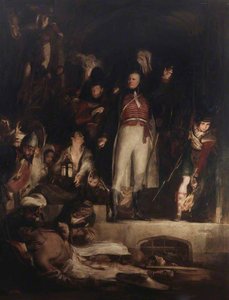
Sir David Wilkie's "General Sir David Baird Discovering the Body of Sultan Tippoo Sahib after Having Captured Seringapatam, on the 4th May, 1799" is more than just a historical painting; it’s a visceral tableau of victory steeped in drama and profound human emotion. Completed in 1839, this monumental canvas transports us to the chaotic aftermath of the Anglo-Mysore War, capturing a pivotal moment that reverberates with strategic significance and poignant loss. Wilkie, already celebrated for his ability to imbue everyday life with remarkable empathy – earning him the moniker “The People’s Painter” – here demonstrates his mastery of theatrical composition and psychological depth.
At first glance, the scene unfolds within a claustrophobic tunnel of shattered stone and billowing smoke, remnants of the besieged Seringapatam fortress. General Sir David Baird, a figure of stoic command in his scarlet uniform, stands at the forefront, his hand raised – not in triumphant gesture, but with an air of solemn contemplation. He’s flanked by British troops, their faces etched with exhaustion and a grim satisfaction, yet also tinged with a palpable sense of unease. The focal point, however, is the body of Sultan Tippoo Sahib, sprawled amidst the debris, a symbol of both defeat and the brutal realities of colonial ambition. The artist’s meticulous rendering of the fallen ruler – his opulent attire stained with blood, his face frozen in a final expression of defiance – immediately compels our empathy, forcing us to confront the human cost of war.
The Romantic Drama: Composition and Technique
Wilkie's genius lies not merely in depicting a historical event but in crafting an intensely dramatic scene. The composition is masterfully controlled, utilizing converging lines that draw the viewer’s eye towards Baird and the body of Tippoo Sahib. The use of chiaroscuro – the stark contrast between light and shadow – intensifies the theatricality of the moment, highlighting key figures while shrouding others in darkness, creating a sense of mystery and foreboding. The artist employs loose, expressive brushstrokes, characteristic of the Romantic movement, to convey the energy and chaos of the battlefield. Note particularly how Wilkie captures the texture of the stone, the billowing smoke, and the folds of the soldiers’ uniforms – details that contribute significantly to the painting's immersive quality.
The color palette is deliberately restrained, dominated by earthy tones—ochres, browns, and grays—reflecting the grim reality of war. However, flashes of crimson from the blood and the scarlet of Baird’s uniform punctuate the scene, drawing attention to the central drama. The lighting, originating from an unseen source above, casts dramatic shadows that heighten the sense of tension and uncertainty. Wilkie's technical skill is evident in his ability to create a convincing illusion of depth and space within this confined setting.
Historical Context: A Turning Point
“General Sir David Baird Discovering the Body of Sultan Tippoo Sahib” commemorates a decisive victory for the British East India Company, marking a turning point in the Third Anglo-Mysore War. The capture of Seringapatam and the death of Tippoo Sahib effectively ended Mysore’s independence and solidified British dominance in Southern India. The painting was commissioned by Baird's widow, Lady Baird, as a poignant memorial to her husband’s achievements – a testament to his military prowess and strategic acumen. It’s important to note that Wilkie based his depiction of Baird on a posthumous portrait by Henry Raeburn, adding another layer of historical significance to the work.
The painting's creation coincided with a period of intense political and social upheaval in Britain, marked by industrialization, urbanization, and growing anxieties about empire. Wilkie’s portrayal of this pivotal moment reflects these broader concerns, offering a complex meditation on themes of power, ambition, loss, and the human cost of conflict. The scene subtly hints at the moral ambiguities inherent in colonial expansion – a subject that would later become increasingly scrutinized by historians and artists.
Symbolism and Emotional Resonance
Beyond its historical significance, “General Sir David Baird Discovering the Body of Sultan Tippoo Sahib” is rich in symbolism. The fallen ruler represents not only military defeat but also the demise of a once-powerful kingdom and the disruption of established traditions. Baird’s gesture – raised hand, thoughtful expression – suggests a complex mix of emotions: pride, duty, and perhaps even regret. The painting invites us to contemplate the ethical implications of conquest and the enduring legacy of war.
Wilkie's masterful use of light and shadow, combined with his dramatic composition and psychological insight, creates an emotionally resonant experience for the viewer. The image lingers in the mind long after it has been viewed, prompting reflection on the human cost of conflict and the complexities of historical narratives. It remains a powerful testament to Wilkie’s artistic genius and a significant work within the broader context of Romantic painting.
Ähnliche Kunstwerke

Über den Künstler
Sir David Wilkie (1785–1841): Der Künstler des Volkes und Visionär der Romantik
David Wilkie, geboren am 18. November 1785 in Schottland, steht als eine zentrale Figur im neunzehnten Jahrhundert britischer Kunst – ein Maler, der nicht nur für sein technisches Können gefeiert wird, sondern auch dafür, dass er den Geist des Alltagsliebes mit außergewöhnlicher Empathie einfängt. Er starb am 1. Juni 1841 und hinterließ ein beeindruckendes Werk, das weiterhin Bewunderung und wissenschaftliche Untersuchung inspiriert. Wilkie begann seine künstlerische Reise inmitten der aufkommenden Romantik und prägte damit seinen unverwechselbaren Stil und seine thematischen Interessen.Frühes Leben und künstlerische Ausbildung
Wilkies frühe Jahre verbrachte er in Edinburgh, wo er unter John Ramsay eine strenge künstlerische Bildung erhielt und seine Fähigkeiten im Zeichnen und Malen von Landschaftsbildern und Porträts entwickelte. Diese grundlegende Ausbildung vermittelte ihm eine präzise Aufmerksamkeit für Detail und ein tiefes Verständnis für Tonwertgradation – Eigenschaften, die zu seinem reifen Werk wurden. Sein Talent wurde schnell anerkannt und beschleunigte seinen Aufstieg in die Kunstszene Londons, wo er sich als angesehener Künstler und Lehrer etablierte. Seine Ausbildung beeinflusste ihn maßgeblich von Künstlern wie John Ramsay und Allan Ramsay.Genremalerei: Die Erfassung der Essenz des Lebens
Wilkie zeichnete sich insbesondere durch Genrebilder aus – Szenen des alltäglichen Lebens mit einem außergewöhnlichen Grad an Realismus und psychologischer Einsicht. Anders als viele Künstler seiner Zeit, die sich für großartige historische Erzählungen entschieden, konzentrierte sich Wilkie darauf, die Nuancen menschlicher Erfahrung einzufangen – die Ausdrucksweise von Emotionen, die Interaktionen zwischen Individuen und die subtilen Details, die Atmosphäre und Charakter vermittelten. Sein Meisterwerk „Die Chelsea Pensionäre beim Lesen des Waterloo-Telegramms“ spiegelt dies perfekt wider; es ist nicht nur eine Darstellung eines historischen Ereignisses, sondern eine immersive Wiedergabe der Männer selbst und vermittelt ihre Ängste, Hoffnungen und Kameradschaft mit atemberaubender Genauigkeit. Dieses Gemälde befindet sich heute im Apsley House.Historische Aufträge und künstlerischer Stil
Wilkie erlangte seinen Ruhm durch die Ernennung zum Hauptmaler des Königs Wilhelm IV. und Königin Victoria – eine prestigeträchtige Position, die ihm Aufträge für monumentale historische Gemälde und Porträts von Mitgliedern der königlichen Familie sicherte. Er nahm diese Herausforderung mit charakteristischer Hingabe an und schuf Leinwände, die mit Größe und Wärme durchdrungen waren und Idealismus der Romantik widerspiegelten. Sein Stil entwickelte sich im Laufe der Zeit weiter und integrierte Einflüsse von Caravaggio und Rembrandt, während er dennoch eine deutliche schottische Sensibilität bewahrte, die sich durch leuchtende Farbpaletten und meisterhafte Pinselstriche auszeichnete. Seine Schwester Sophia Wilkie wurde später Mrs James Winfield und unterstützte ihn maßgeblich in seinen künstlerischen Bemühungen. Er studierte unter John Ramsay und entwickelte eine besondere Leidenschaft für Landschaftsbildern und Porträts.Bekannte Werke und Vermächtnis
Wilkies künstlerisches Vermächtnis geht über individuelle Gemälde hinaus; er prägte tiefgreifend die Entwicklung der britischen Kunst maßgeblich aus. Seine sorgfältige Beobachtung der Natur – wie sie sich in Landschaftsbildern wie „Die Schäferin kehrt von einem Getränkepfad zurück“ zeigt – etablierte ihn als Pionier der Topographie und setzte neue Maßstäbe für seine Zeit. Darüber hinaus sind seine Porträts, darunter diejenigen von Königin Victoria und Prinz Albert, zu einigen der besten ihrer Epoche geworden und erfassen nicht nur körperliche Erscheinung, sondern auch psychologische Tiefe. Bewundern Sie „Ein Bücherregal“ von Sir David Wilkie – ein beeindruckendes neoklassisches Gemälde von unvergleichlicher Detailtreue und meisterhaftem Technik – eine Erinnerung an die Schönheit und Bedeutung der Romantik! Er gilt als einer der bedeutendsten Künstler seiner Zeit und wird für sein außergewöhnliches Talent gefeiert. Seine Werke werden heute in Museen über ganz Europa ausgestellt und erinnern daran, dass Wilkie ein wahrer Visionär war, dessen Kunst bis zum heutigen Tag inspiriert und fasziniert.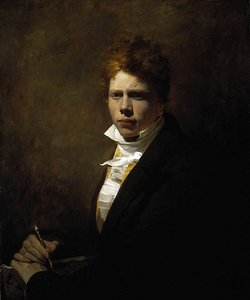
Sir David Wilkie
1785 - 1841 , Schottland
Kurzinfos
- Artistic Movement Or Style: Genre Malerei
- Artists Or Movements Influenced By This Artist: ['Romantik']
- Artists Who Influenced This Artist:
- John Ramsay
- Caravaggio
- Rembrandt
- Date Of Birth: November 18, 1785
- Date Of Death: June 1, 1841
- Full Name: David Wilkie
- Nationality: Schottisch
- Notable Artworks:
- Die Fleming Sammlung
- Chelsea Pensioners Lesen die Waterloo Nachricht
- Place Of Birth: Edinburgh, Scotland
Ähnliche Artikel
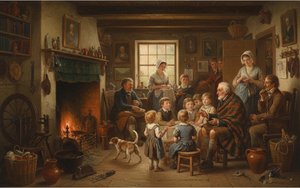
Sir David Wilkie und der Aufstieg der viktorianischen Genremalerei: Narrative Detail als Spiegel einer Epoche
Entdecken Sie das Werk von Sir David Wilkie, einem Pionier der viktorianischen Genremalerei! Erfahren Sie mehr über seinen Einfluss auf die Darstellung des Alltagslebens und seine Rolle in der Kunstgeschichte. Jetzt lesen!
The Evocative Brushstroke: Exploring Emotion, Individuality & the Sublime in Romanticism's Artistic Landscape
Explore the passionate world of Romanticism! Discover masterpieces by Friedrich & Goya, delve into the sublime, and understand the movement's lasting impact on art history. Expert analysis & insights at ArtsDot.
Romantik in der Kunst: Die 10 Meisterwerke, die eine Epoche prägten |
Entdecken Sie die 10 Meisterwerke der Romantik! Von Caspar David Friedrich bis Delacroix – erleben Sie Gefühl, Landschaft & Historie. Hochwertige Kunst Reproduktionen auf . Jetzt entdecken!
The Sublime and the Sensual: Exploring Emotion & Individuality in Romanticism's Artistic Revolution
Explore the passionate world of Romanticism! Discover masterpieces by Friedrich & Goya, delve into the sublime, and understand the movement's lasting impact on art history. Expert analysis & insights.

Caspar David Friedrich: Romantik, Landschaft und die Sublimität innerer Erfahrung
Entdecken Sie die tiefgründige Welt Caspar David Friedrichs! Analysen seiner Romantik-Landschaften, philosophische Hintergründe und die Symbolik seiner Meisterwerke. Jetzt lesen!