Vorschau anzeigen
 Versenden
 Teilen
 Details anzeigen

 Herunterladen
 Ähnliche Objekte
 Röntgenaufnahme
 Diashow
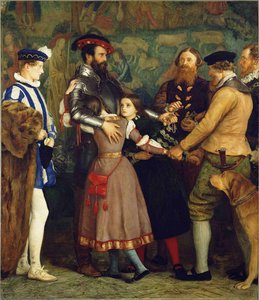
Christ in the House of His Parents


 Weiterlesen
Giclée / Kunstdruck
Giclée- oder Leinwanddruck in Museumsqualität mit schneller Produktion und flexiblen Veredelungsoptionen. ( Handgemalte Reproduktion bestellen Bild kaufen)




P118B $10

P118H $10

P118W $10

P438Z $10

P508JH $12

P508YH $12

P805H $10

P805Z $10

P919BZ $10

P919G $10

P919XJ $10

P959ZH $10

P968JZ $12

W106C $8

W218G $10

W218JH $8

W218Y $10

W307PJ $10

W316G $10

W316PJ $8

W316Y $10

W398PJ $8

W4111J $10

W500HY $15

W500JH $15

W692G $12

W849H $8

W940BG $15

W953PJ $8




Wählen Sie aus unseren vordefinierten Formaten, die den ursprünglichen Proportionen des Kunstwerks entsprechen.

Sie können Ihre eigenen Maße eingeben, um ein bestimmtes Format oder einen speziellen Platz einzupassen. Wenn das von Ihnen gewählte Format nicht den Proportionen des Originalbildes entspricht, werden wir das Kunstwerk entweder beschneiden oder das Bild mit einem gespiegelten oder einfarbigen Rand erweitern. Ein digitaler Entwurf wird Ihnen zur Genehmigung zugesandt, bevor die Produktion beginnt.
Bitte beachten Sie, dass die Vorschau auf dem Bildschirm nicht den tatsächlichen Zuschnitt oder die Erweiterung widerspiegelt. Nur der Entwurf zeigt die endgültige Komposition präzise an.
Obwohl Sondermaße verfügbar sind, empfehlen wir die Auswahl eines Maßes aus der vordefinierten Liste, um die ursprünglichen Proportionen zu bewahren.
Weltweiter Versand () innerhalb von 2 Wochen statt der üblichen 4/5 Wochen. (25 August)

Kostenloser weltweiter Expressversand

Hochwertige Leinenleinwand

Umfassender Versicherungsschutz beim Versand

Zollgebühren-Rückerstattungsgarantie

Garantie für exakte Farbtreue

60 Tage Rückgaberecht (nur bei Mängeln)

100% Geld-zurück-Garantie

Mengenrabatt verfügbar
 Die Glasoption ist nur für Größen unter 110 cm verfügbar.

Christ in the House of His Parents
Giclée / Kunstdruck
Format der Reproduktion
-


Gesamtpreis
$ 62
Sammlerstück-Beschreibung
Sir John Everett Millais's 'Christ in the House of His Parents': A Window into Victorian Faith
Sir John Everett Millais’s “Christ in the House of His Parents,” often referred to as "The Carpenter’s Shop," stands as a monumental achievement within the Pre-Raphaelite Brotherhood and a cornerstone of 19th-century British art. Painted between 1849 and 1850, this oil on canvas transcends mere religious depiction; it's an immersive tableau of domestic life imbued with profound symbolism and executed with a meticulous realism that captivated – and occasionally scandalized – Victorian society. Measuring 86.4 cm × 139.7 cm, the painting’s scale invites viewers into the heart of Joseph’s workshop, allowing for an intimate contemplation of faith, sacrifice, and the everyday miracle of Christ's birth.
A Pre-Raphaelite Vision: Reclaiming Medieval Truth
Millais was a founding member of the Pre-Raphaelite Brotherhood, a group dedicated to rejecting the idealized forms and artificiality of Renaissance art – particularly that of Raphael – in favor of a return to the perceived sincerity and detail of medieval and early Renaissance works. This movement prioritized truth to nature, demanding an almost photographic accuracy in their depictions. “Christ in the House of His Parents” exemplifies this commitment; every nail, splinter of wood, and strand of hair is rendered with painstaking precision, creating a scene that feels utterly authentic and immediate. The artist’s dedication to detail wasn't simply stylistic; it was a deliberate act of rebellion against the prevailing artistic conventions of the time.
- Technique: Millais employed a layering technique, building up color through countless thin glazes – a hallmark of Pre-Raphaelite painting. This created an unparalleled luminosity and depth, particularly evident in the play of light on the wood and fabrics.
- Composition: The crowded composition, filled with twelve figures engaged in various activities, reflects the Pre-Raphaelites’ fascination with depicting complex scenes with a sense of naturalism.
- Color Palette: The rich, earthy tones – browns, reds, and greens – contribute to the painting's solemn atmosphere and evoke the feeling of a warm, dimly lit workshop.
Symbolic Layers Within a Simple Scene
Beyond its immediate depiction of the Holy Family, “Christ in the House of His Parents” is laden with symbolic meaning. The central image of Christ, as a young boy, cutting himself while working alongside his father immediately foreshadows his future suffering and sacrifice. The blood flowing from the wound isn’t merely a depiction of injury; it represents the shedding of Christ's blood for humanity’s salvation. The tools of Joseph’s trade – the saw, hammer, and plane – are interpreted as representing the Holy Trinity, while the ladder leaning against the wall alludes to Jacob’s Ladder, a biblical symbol of ascent towards God. The inclusion of Saint Anne, Jesus’s grandmother, further reinforces the theme of familial devotion and lineage.
Controversy and Enduring Legacy
The painting's initial reception was far from universally positive. Writer Charles Dickens famously criticized Millais for his unflinching realism, finding the scene too vulgar and unsettling. John Ruskin initially offered support, recognizing the work’s technical brilliance. However, scandal followed when Millais married Euphemia Gray, who had previously been married to Ruskin – a connection that fueled gossip and damaged Millais's reputation. Despite this controversy, “Christ in the House of His Parents” has secured its place as one of Millais’s most important works and a defining image of the Pre-Raphaelite movement. Its meticulous detail, profound symbolism, and emotional resonance continue to captivate viewers today.
NoneÄhnliche Kunstwerke
Über den Künstler
Frühes Leben und Ausbildung
Sir John Everett Millais, ein renommierter englischer Maler und Illustrator, wurde am 8. Juni 1829 in Southampton, England, geboren. Als Wunderkind wurde er bereits im Alter von elf Jahren zum jüngsten Schüler der Royal Academy Schools zugelassen.Gründung der Präraffaeliten
Im September 1848 gründeten Sir John Everett Millais, zusammen mit William Holman Hunt und Dante Gabriel Rossetti, die Präraffaeliten in seinem Familiendomizil in Gower Street, London. Diese Bewegung strebte danach, den Stil der frühen italienischen Renaissance wiederzubeleben.Bedeutende Werke
Zu Sir John Everett Millais' bedeutendsten Werken zählen:- Christ in der Werkstatt seines Vaters (1849-1850), ein höchst kontroverses Werk, das seine realistische Darstellung einer Arbeiterfamilie als Heilige Familie zeigte.
- Ein hugenottisches Paar (1851-1852), das ein junges Paar darstellt, das aufgrund religiöser Konflikte voneinander getrennt werden soll.
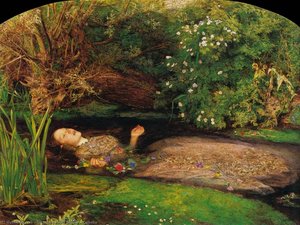
- Ophelia (1851-1852), ein Gemälde, das seine dichten und elaborierten bildlichen Oberflächen demonstrierte, oft konzentriert auf die Schönheit und Komplexität der Naturwelt.
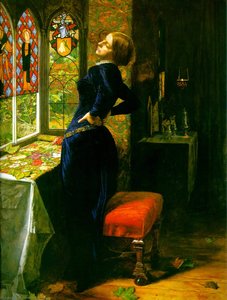
- Mariana (1850-1851), basierend auf dem Stück "Was ihr wollt" von William Shakespeare und dem Gedicht gleichen Namens von Alfred Lord Tennyson.
Einfluss und Spätere Werke
Sir John Everett Millais' spätere Werke wurden von seiner Frau Effie beeinflusst, die zuvor mit dem Kritiker John Ruskin verheiratet war. Sein Stil entwickelte sich zu einer breiteren Form des Realismus, der zunächst von Ruskin kritisiert wurde, aber später als bedeutender Beitrag zur Kunstwelt anerkannt wurde.Museen und Sammlungen
Werke Sir John Everett Millais' finden sich in verschiedenen Museen, darunter:- Die Tate Britain in London, die The Order of Release (1853) und Ophelia (1852) zeigt.
- Das Ashmolean Museum in Oxford, das The Return of the Dove to the Ark (1851) ausstellt.
Vermächtnis
Sir John Everett Millais' Vermächtnis geht über seine Kunst hinaus. Er war ein Pionier der Präraffaelitenbewegung und eine bedeutende Figur in der Entwicklung der britischen Kunst.- Erfahren Sie mehr über Sir John Everett Millais auf ArtsDot.com.
- Erkunden Sie die Präraffaelitenbewegung und ihren Einfluss auf die britische Kunst bei Wikipedia.

Sir John Everett Millais
1829 - 1896 , Vereinigtes Königreich
Kurzinfos
- Beeinflusste Künstler: ['Dante Gabriel Rossetti']
- Bemerkenswerte Werke:
- Christ in der Elternhaus
- Ein hugenottisches Paar
- Ophelia
- Mariana
- Einflüsse: ['Frührenaissance Italien']
- Geburtsdatum: 8. Juni 1829
- Geburtsort: Southampton, Vereinigtes Königreich
- Künstlerische Bewegung: Präraffaeliten
- Nationalität: Britisch
- Todatum: 13. August 1896
- Vollständiger Name: Sir John Everett Millais
Ähnliche Artikel
Sir John Everett Millais: Präraffaelitische Revolution und viktorianische Erzählkunst
Entdecken Sie das Leben und Werk von Sir John Everett Millais, einem Pionier der Präraffaeliten! Detaillierte Analysen seiner Gemälde, Einblicke in die viktorianische Kunstszene und seine bleibende Bedeutung. Jetzt lesen!
Dante Gabriel Rossetti: Die 25 Meisterwerke des Präraffelitismus | ArtsDot
Entdecken Sie die 25 schönsten Gemälde von Dante Gabriel Rossetti! Tauchen Sie ein in die Welt der Präraffeliten, symbolistischer Kunst & viktorianischer Romantik. Hochwertige Reproduktionen für Ihr Zuhause – jetzt bei ArtsDot.com!

The Pre-Raphaelite Brotherhood: Rebellion, Romance & Medieval Revival
Explore the captivating world of the Pre-Raphaelite Brotherhood! Discover their rebellious spirit, iconic masterpieces & lasting influence on art history. Learn about Rossetti, Millais & more.
The Pre-Raphaelite Brotherhood: A Rebellion of Beauty & Medieval Revival
Explore the captivating world of the Pre-Raphaelite Brotherhood! Discover their rebellion against academic art, iconic masterpieces, and lasting influence on Victorian aesthetics. Learn about Rossetti, Burne-Jones & more.

Arthur Hughes: Pre-Raphaelite Visions of Beauty & Melancholy
Explore the captivating world of Arthur Hughes (1832-1915), a leading Pre-Raphaelite painter. Discover his dreamy landscapes, poetic narratives & iconic Victorian artworks. Learn about his life, style & collecting today.