 Vorschau anzeigen
 Versenden
 Teilen
 Details anzeigen

 Herunterladen
 Ähnliche Objekte
 Röntgenaufnahme
 Diashow
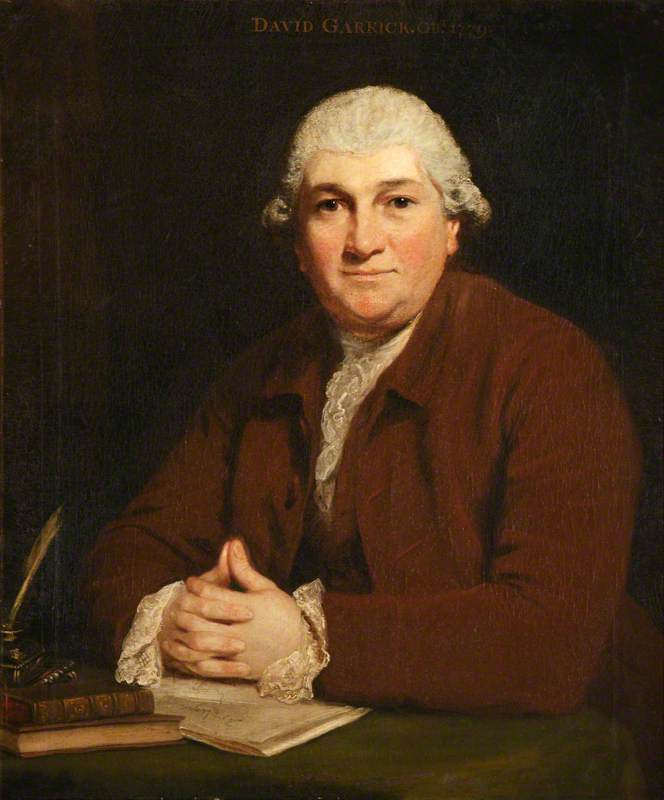
David Garrick (1717–1779) ‘The Prologue Portrait’
 Öl auf Leinwand
- Wandkunst
- Grand Style Portraiture
 1776
1776 76.0 x 64.0 cm
 National Trust
 Weiterlesen
Handgefertigte Ölreproduktion
Handgemaltes Ölgemälde auf Leinwand in Ihrer Wunschgröße und mit Rahmen, auf Bestellung von unseren Künstlern angefertigt. ( Druck bestellen Bild kaufen)




P118B $10

P118H $10

P118W $10

P438Z $10

P508JH $12

P508YH $12

P805H $10

P805Z $10

P919BZ $10

P919G $10

P919XJ $10

P959ZH $10

P968JZ $12

W106C $8

W218G $10

W218JH $8

W218Y $10

W307PJ $10

W316G $10

W316PJ $8

W316Y $10

W398PJ $8

W4111J $10

W500HY $15

W500JH $15

W692G $12

W849H $8

W940BG $15

W953PJ $8




Wählen Sie aus unseren vordefinierten Formaten, die den ursprünglichen Proportionen des Kunstwerks entsprechen.

Sie können Ihre eigenen Maße eingeben, um einen bestimmten Rahmen oder Platz auszufüllen. Wenn die gewählte Größe nicht den Proportionen des Originalbildes entspricht, werden wir das Kunstwerk entweder beschneiden oder das Gemälde durch zusätzliche, handgemalte Elemente erweitern. Ein digitales Mockup wird Ihnen zur Genehmigung zugesandt, bevor die Produktion beginnt.
Bitte beachten Sie, dass die Bildschirmvorschau nicht die tatsächliche Beschneidung oder Erweiterung widerspiegelt. Nur das Mockup zeigt die endgültige Komposition exakt an.
Obwohl Sondermaße verfügbar sind, empfehlen wir, eine Größe aus der vordefinierten Liste zu wählen, um die ursprünglichen Proportionen beizubehalten.
Nach der Bestellung wird das ArtsDot.com-Team dem Kunden Anweisungen per E-Mail zusenden und eine Mockup-Vorschau bereitstellen.
Weltweiter Versand () in nur 3 bis 4 Wochen statt der üblichen 5 Wochen. (23 August). Keine Kompromisse bei der Qualität.

Kostenloser weltweiter Expressversand

Hochwertige Leinenleinwand

Umfassender Versicherungsschutz beim Versand

Zollgebühren-Rückerstattungsgarantie

Garantie für exakte Farbtreue

60 Tage Rückgaberecht (nur bei Mängeln)

100% Geld-zurück-Garantie

Mengenrabatt verfügbar
 Die Glasoption ist nur für Größen unter 110 cm verfügbar.

David Garrick (1717–1779) ‘The Prologue Portrait’
Art der Reproduktion
Format der Reproduktion
-


Gesamtpreis
$ 263
Beschreibung des Kunstwerks
The Prologue Portrait: A Window into Garrick’s Soul
Sir Joshua Reynolds' “David Garrick (1717–1779) ‘The Prologue Portrait’,” painted in 1776, is far more than a simple likeness of the celebrated actor. It’s a carefully constructed tableau vivant—a moment frozen in time that reveals not just Garrick’s outward appearance but also his inner character and the very essence of theatrical performance. The painting captures Garrick mid-sentence, poised to deliver a prologue, an introductory speech designed to ignite the audience's anticipation before a dramatic presentation. He sits at a richly appointed table, bathed in soft light that emphasizes the textures of his velvet coat, the delicate lace cuffs, and the worn pages of the books surrounding him – volumes of Shakespeare, Milton, and other literary giants. His posture is one of thoughtful concentration, yet there’s an undeniable magnetism about him; his gaze downward suggests both humility and a quiet confidence. Reynolds masterfully employs chiaroscuro—the dramatic contrast between light and shadow—to sculpt Garrick's form and draw the viewer into his world. The subtle play of light on his face hints at the emotions he would convey onstage, creating an immediate connection with the observer.A Masterstroke of the Grand Style
Reynolds’s “Prologue Portrait” is a quintessential example of his renowned ‘Grand Style,’ a technique that dominated British portraiture in the late 18th century. Unlike earlier styles which focused on strict realism and meticulous detail, Reynolds sought to elevate portraiture to an art form by employing idealized forms, rich colors, and carefully orchestrated compositions. He wasn’t simply painting a likeness; he was crafting an image of virtue, intelligence, and social standing – qualities highly valued in the aristocratic circles that were his patrons. The use of warm, earthy tones—ochres, browns, and reds—creates a sense of gravitas and stability, while the inclusion of classical references—the books on the table, the elegant attire—underscores Garrick’s intellectual pursuits and his connection to the cultural heritage of Europe. Reynolds' skill in rendering fabric is particularly noteworthy; the velvet coat appears luxurious and weighty, the lace delicate yet substantial – details that contribute significantly to the painting’s overall sense of opulence and refinement.The Actor’s World: Symbolism and Context
Beyond its technical brilliance, “The Prologue Portrait” is rich in symbolic meaning. The books represent Garrick's deep engagement with literature and his understanding of dramatic tradition. The quill pen suggests his role as a writer and adapter – Garrick was not merely an actor; he actively shaped the plays he performed, often rewriting them to suit his own style and the tastes of his audiences. The table itself is laden with props—a folio titled “Prologue,” a writing desk, and various books—all reinforcing the idea that Garrick is preparing for a significant artistic undertaking. The very act of delivering a prologue speaks volumes about the theatrical world – it’s an invitation to enter a realm of illusion, imagination, and heightened emotion. The painting can be interpreted as a meditation on the power of performance, the blurring of boundaries between reality and artifice, and the role of the actor in shaping public perception.A Legacy Preserved: Garrick and Reynolds
The relationship between Sir Joshua Reynolds and David Garrick was one of mutual admiration and artistic collaboration. Reynolds considered Garrick his most important subject, dedicating numerous portraits to him throughout his career. This particular painting—created in 1776, a pivotal year for Garrick as he prepared to retire from the stage—captures the actor at the height of his fame and influence. It’s a testament to their shared vision – Reynolds sought to elevate portraiture to an art form, while Garrick embodied the ideals of theatrical excellence and social grace. The “Prologue Portrait” remains one of the most iconic images of the 18th century, offering a rare glimpse into the world of a brilliant actor and the artistic genius who immortalized him on canvas. It’s a painting that continues to resonate with viewers today, inviting us to contemplate the enduring power of performance and the complexities of human character.Ähnliche Kunstwerke
Über den Künstler
Frühes Leben und Ausbildung
Sir Joshua Reynolds, eine bedeutende Figur der britischen Kunst des 18. Jahrhunderts, wurde am 16. Juli 1723 in Plympton, Devon geboren. Er war das dritte Kind von Reverend Samuel Reynolds, dem Leiter der Plympton Free Grammar School. Reynolds' frühes Interesse an der Kunst führte zu einer Lehrlingsausbildung bei Thomas Hudson, einem modischen Londoner Porträtmaler, von 1740 bis 1743.Aufstieg zur Prominenz
Reynolds' künstlerisches Talent und sein innovativer Stil brachten ihm schnell Anerkennung. Er wurde Gründungsmitglied und erster Präsident der Royal Academy of Arts und erhielt 1769 von König George III den Adelstitel eines Sir. Seine Förderung des "Grand Style" in der Malerei, der die Idealisierung des Unvollkommenen betonte, beeinflusste eine Generation von Künstlern.Wichtige Werke und Kooperationen
Reynolds' umfangreiche Karriere umfasst zahlreiche Porträts des britischen Adels, darunter den Duke of Devonshire und den Duke of Grafton. Seine Werke sind in verschiedenen Museen zu finden, darunter die Tate Britain (London, Großbritannien), die sein Meisterwerk "Peter Darnell Muilman, Charles Crokatt und William Keable in einer Landschaft" ausstellt. Besondere Werke sind:- Porträt von John Hayes St. Leger (Royal Collection, Hampton Court, Großbritannien)
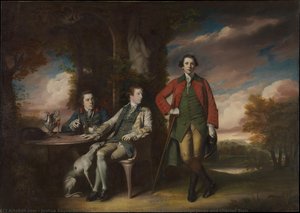
- Peter Darnell Muilman, Charles Crokatt und William Keable in einer Landschaft (Tate Britain, London, Großbritannien)
- Mr. und Mrs. William Lindow (Tate Britain, London, Großbritannien)
Entwicklung und Einfluss
Reynolds' künstlerische Entwicklung war geprägt von seiner Auseinandersetzung mit klassischen Idealen und der Betonung von Würde und Eleganz in seinen Porträts. Er strebte danach, die menschliche Figur zu idealisieren und gleichzeitig ihre individuelle Persönlichkeit einzufangen. Sein "Grand Style" wurde oft kritisiert für seine vermeintliche Distanziertheit und mangelnde emotionale Tiefe, aber er verteidigte ihn als eine Möglichkeit, die Größe und den Status seiner Auftraggeber widerzuspiegeln. Einflüsse: Reynolds' Werk zeigt Einflüsse von Peter Paul Rubens und anderen Meistern der europäischen Malerei des 17. Jahrhunderts. Er war auch ein Bewunderer klassischer Skulpturen und versuchte, deren Prinzipien in seine Gemälde zu integrieren. Er beeinflusste nachfolgende Künstler wie Thomas Gainsborough, der ebenfalls auf Porträtmalerei spezialisiert war.Historische Bedeutung
Reynolds' Vermächtnis geht über seine Kunst hinaus. Er war ein Pionier bei der Entwicklung britischer Kunstinstitutionen und spielte eine entscheidende Rolle bei der Gestaltung der künstlerischen Identität des Landes. Seine Bemühungen zur Förderung der Künste und die Gründung der Royal Academy trugen wesentlich zur Professionalisierung und Anerkennung der Künstler in Großbritannien bei. Reynolds gilt als einer der wichtigsten Porträtmaler Englands und hat das Genre nachhaltig geprägt.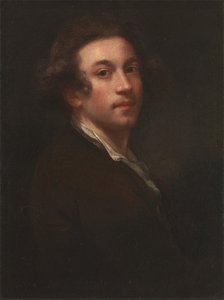
Sir Joshua Reynolds
1723 - 1792 , Vereinigtes Königreich
Kurzinfos
- Beeinflusste Künstler: ['Thomas Gainsborough']
- Bemerkenswerte Werke:
- Peter Darnell Muilman...
- Porträt von John Hayes St. Leger
- Mr und Mrs William Lindow
- Geburtsdatum: 16. Juli 1723
- Geburtsort: Plymouth, Vereinigtes Königreich
- Künstlerische Richtung: Grand Style, Porträtmalerei
- Nationalität: Britisch
- Sterbedatum: 1792
- Vollständiger Name: Sir Joshua Reynolds
- Von Künstlern Beeinflusst: ['Thomas Hudson']
Ähnliche Artikel
Sir Joshua Reynolds: Die 25 Meisterwerke des Porträtmalers | ArtsDot
Entdecken Sie die 25 Meisterwerke von Sir Joshua Reynolds! Erleben Sie Rokoko & Klassizismus durch ikonische Porträts. Hochwertige Reproduktionen für Ihr Interieur auf ArtsDot.com – jetzt entdecken!
Sir Joshua Reynolds: Gestaltung britischer Kunst durch Grand Style und gesellschaftliche Porträtmalerei
Entdecken Sie das Werk von Sir Joshua Reynolds, dem führenden englischen Porträtmaler des 18. Jahrhunderts. Erfahren Sie mehr über den 'Grand Manner', seine Einflüsse und sein Vermächtnis in der britischen Kunstgeschichte.
The Enduring Legacy of Formal Portraiture: Power, Identity & Artistic Exploration
Explore the rich history of formal portraiture & its enduring power to capture identity and shape perception. Discover investment-worthy artworks, expert appraisals, and custom reproduction services at ArtsDot.
The Grandeur of Presence: Exploring Representations of Stately Bearing in Western Portraiture
Explore the art of stately bearing in Western portraiture with expert analysis of Renaissance & Baroque masterpieces. Discover symbolism, techniques, and the legacy of iconic portraits – a guide for discerning collectors.
The Enduring Gaze: Portraiture's Historical & Psychological Evolution
Explore the rich history of portraiture with expert analysis from ArtsDot. Discover iconic Renaissance masterpieces, symbolism & techniques that shaped identity. Find museum-quality art for your collection.