 Vorschau anzeigen
 Versenden
 Teilen
 Details anzeigen

 Herunterladen
 Ähnliche Objekte
 Röntgenaufnahme
 Diashow
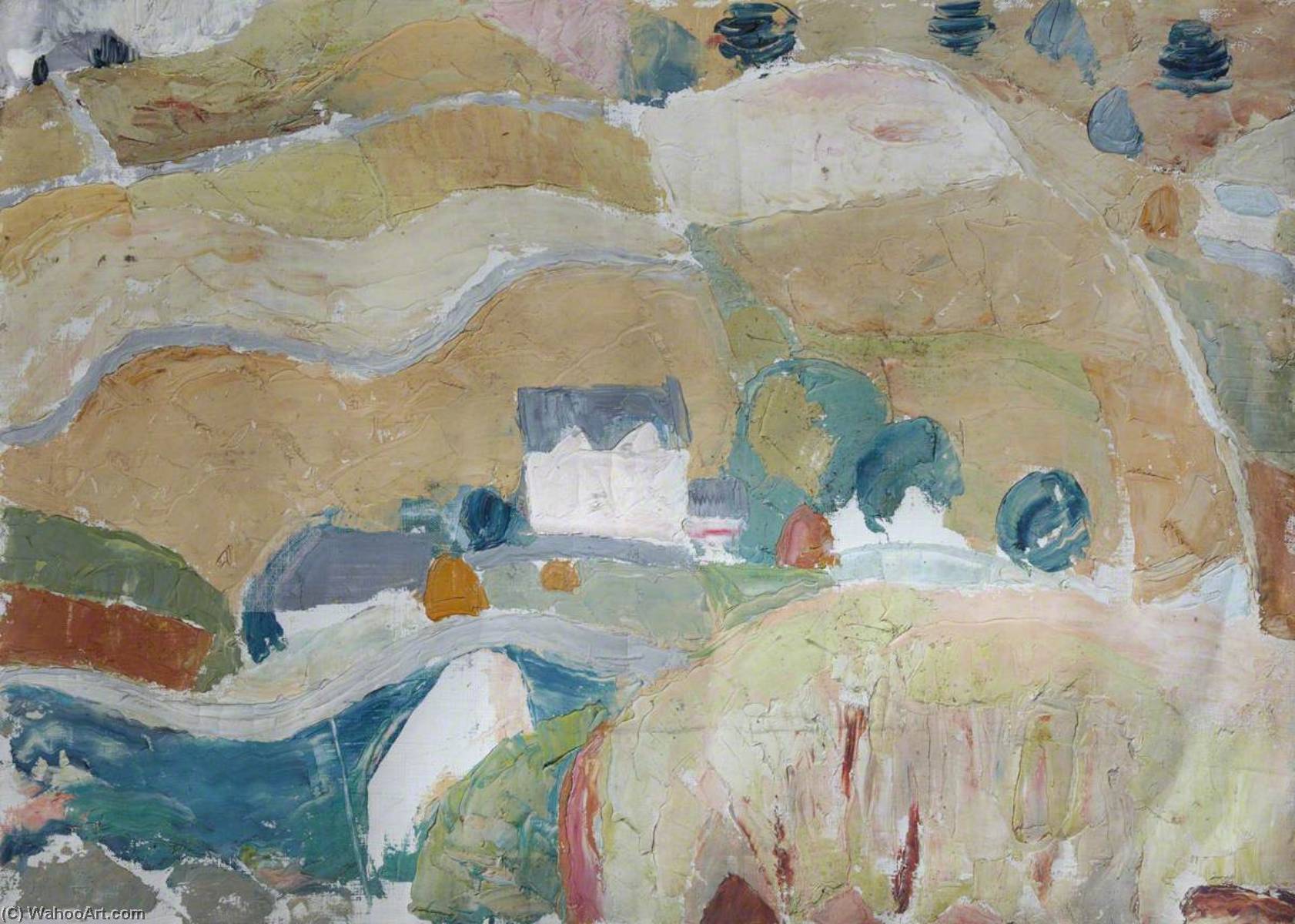
Landscape with Yellow Fields


 Weiterlesen
Giclée / Kunstdruck
Giclée- oder Leinwanddruck in Museumsqualität mit schneller Produktion und flexiblen Veredelungsoptionen. ( Handgemalte Reproduktion bestellen Bild kaufen)




P118B $10

P118H $10

P118W $10

P438Z $10

P508JH $12

P508YH $12

P805H $10

P805Z $10

P919BZ $10

P919G $10

P919XJ $10

P959ZH $10

P968JZ $12

W106C $8

W218G $10

W218JH $8

W218Y $10

W307PJ $10

W316G $10

W316PJ $8

W316Y $10

W398PJ $8

W4111J $10

W500HY $15

W500JH $15

W692G $12

W849H $8

W940BG $15

W953PJ $8




Wählen Sie aus unseren vordefinierten Formaten, die den ursprünglichen Proportionen des Kunstwerks entsprechen.

Sie können Ihre eigenen Maße eingeben, um ein bestimmtes Format oder einen speziellen Platz einzupassen. Wenn das von Ihnen gewählte Format nicht den Proportionen des Originalbildes entspricht, werden wir das Kunstwerk entweder beschneiden oder das Bild mit einem gespiegelten oder einfarbigen Rand erweitern. Ein digitaler Entwurf wird Ihnen zur Genehmigung zugesandt, bevor die Produktion beginnt.
Bitte beachten Sie, dass die Vorschau auf dem Bildschirm nicht den tatsächlichen Zuschnitt oder die Erweiterung widerspiegelt. Nur der Entwurf zeigt die endgültige Komposition präzise an.
Obwohl Sondermaße verfügbar sind, empfehlen wir die Auswahl eines Maßes aus der vordefinierten Liste, um die ursprünglichen Proportionen zu bewahren.
Weltweiter Versand () innerhalb von 2 Wochen statt der üblichen 4/5 Wochen. (7 September)

Kostenloser weltweiter Expressversand

Hochwertige Leinenleinwand

Umfassender Versicherungsschutz beim Versand

Zollgebühren-Rückerstattungsgarantie

Garantie für exakte Farbtreue

100 Tage Rückgaberecht (nur bei Mängeln)

100% Geld-zurück-Garantie

Mengenrabatt verfügbar
 Die Glasoption ist nur für Größen unter 110 cm verfügbar.

Landscape with Yellow Fields
Giclée / Kunstdruck
Format der Reproduktion
-


Gesamtpreis
$ 62
A Frozen Reverie: Sir William George Gillies’ “Landscape with Yellow Fields”
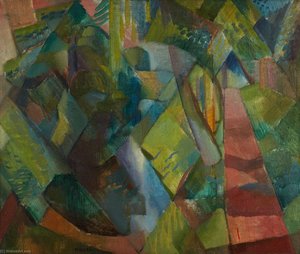
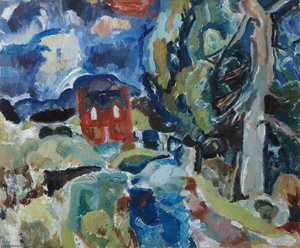
Sir William George Gillies' "Landscape with Yellow Fields" isn’t merely a depiction of a rural scene; it’s a carefully constructed meditation on light, color, and the quiet dignity of the Scottish countryside. Painted around 1934, this work stands as a pivotal moment in Gillies’ artistic evolution, bridging his earlier explorations of Cubism with a deeply rooted appreciation for the evocative beauty of the British Isles. The painting captures a quintessential Highland vista – a rolling expanse of golden fields punctuated by a modest farmhouse and scattered trees, all bathed in the soft, diffused light characteristic of a late afternoon. It's a scene that feels both familiar and profoundly serene, inviting the viewer to step into a timeless moment of rural tranquility.
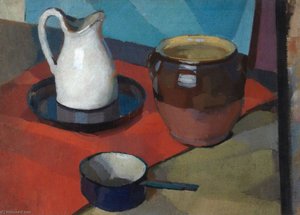
Gillies’ artistic journey had been shaped by encounters with European masters. His time in Paris with André Lhote exposed him to the principles of Cubism, leading to early works like “Two Pots, Saucer and Fruit,” where objects were fragmented and reassembled into geometric arrangements. However, a transformative encounter with Paul Klee in 1934 ignited a shift towards a more intuitive and emotionally resonant style. Klee’s use of vibrant color and childlike simplicity – his ability to imbue everyday subjects with a sense of wonder – profoundly influenced Gillies, prompting him to embrace bolder hues and a looser, more expressive brushstroke.
The Language of Color and Light
What immediately draws the eye is Gillies’ masterful manipulation of color. The dominant yellow of the fields isn't a flat, uniform hue; it’s layered with subtle variations – ochre, amber, and hints of gold – creating an illusion of depth and movement. This rich palette is expertly contrasted against the muted greens and browns of the trees and distant hills, further emphasizing the warmth and luminosity of the foreground. The red roof of the farmhouse acts as a striking focal point, anchoring the composition and adding a touch of domesticity to the vast landscape. Gillies’ use of light isn't photographic realism; it’s an artistic interpretation – a deliberate choice to capture the *feeling* of sunlight filtering through the air.
The technique employed is distinctly Impressionistic, yet infused with Gillies’ unique sensibility. He utilizes short, broken brushstrokes to build up texture and create a sense of atmosphere. These strokes aren't blended smoothly; instead, they retain their individual character, contributing to the painting’s vibrant energy. The layering of color and the visible brushwork invite the viewer to actively engage with the artwork, noticing the subtle shifts in tone and hue as they gaze upon it.
A Portrait of Rural Scotland
Beyond its aesthetic qualities, “Landscape with Yellow Fields” offers a glimpse into the heart of rural Scottish life. The farmhouse, modest yet sturdy, suggests a connection to the land and a sense of community. The scattered trees hint at the presence of wildlife and the rhythms of nature. Gillies’ paintings frequently depicted scenes from his native Scotland, capturing its distinctive landscapes and portraying the lives of its people with empathy and understanding.
The painting's historical context is also significant. Created during a period of economic hardship in Britain, it reflects a longing for simpler times and a connection to the land – values that resonated deeply with many at the time. Gillies’ work served as a powerful reminder of the beauty and resilience of the Scottish countryside.
Collecting the Essence: Reproduction & Beyond
Reproductions of “Landscape with Yellow Fields” offer an accessible way to experience the painting's captivating atmosphere. ArtsDot meticulously recreates Gillies’ techniques, capturing the nuances of color, texture, and light that make this artwork so compelling. The 55 x 76 cm size is ideal for adding a touch of rustic charm to any interior space – whether it’s a living room, bedroom, or study.
More than just a decorative piece, “Landscape with Yellow Fields” evokes a sense of nostalgia and tranquility. It's an invitation to slow down, appreciate the beauty of nature, and connect with the timeless spirit of rural Scotland. Consider this reproduction not merely as a print, but as a portal – a window into a world of quiet contemplation and artistic brilliance.
Ähnliche Kunstwerke


Über den Künstler
Sir William George Gillies: Ein Leben in der schottischen Kunst
Frühes Leben und Ausbildung
- Geboren: Haddington, East Lothian, Vereinigtes Königreich, 1898.
- Gillies begann sein Studium an der Edinburgh College of Art, wurde aber durch seinen Dienst im Ersten Weltkrieg bei den Royal Engineers unterbrochen.
- Nach dem Krieg kehrte er zurück und setzte seine Ausbildung am Edinburgh College of Art fort, schloss sie ab und arbeitete anschließend über 40 Jahre als engagierter Lehrer dort.
Künstlerische Entwicklung und Einflüsse
- Gillies’ künstlerischer Weg begann mit einer Erkundung des Kubismus, nachdem er unter André Lhote in Paris (1923) studiert hatte und Italien (1924) bereist hatte.
- Frühe Werke wie „Two Pots, Saucer and Fruit“ (1933) zeigen diese Einflüsse und präsentieren eine Cézanne-inspirierte Anordnung mit den unaufdringlichen Farbpaletten von Braque und Picasso.
- Ein entscheidender Moment kam 1934, als er die Werke von Paul Klee entdeckte und sich dadurch inspirieren ließ, eine imaginative Verwendung von Farbe und kindliche Qualitäten in seinen Kompositionen einzusetzen.
- Er entwickelte allmählich einen eigenen Stil, der in schottischen Landschaftsbildern und Stillleben Traditionen verwurzelt ist.
Die 1922er Gruppe und kollaborativer Geist
- Im Jahr 1922 gründete Gillies zusammen mit anderen Künstlern wie William Crozier, William Geissler und William MacTaggart die „1922er Gruppe“.
- Diese Ausstellungsgruppe bot einer Plattform für aufstrebende schottische Künstler, um ihre Werke über ein Jahrzehnt im New Gallery in Edinburgh auszustellen.
- Die Gruppe förderte ein Gefühl von Gemeinschaft und Innovation innerhalb der schottischen Kunstszene.
Themen und Gegenstände
- Landschaften: Gillies ist bekannt für seine Darstellungen der Lothian-, Fife- und Borderregionen Schottlands. Er erfasste den Charakter dieser Landschaften mit einem feinfühligen Blick.
- Stillleben: Stillleben waren ein weiteres wichtiges Thema, oft mit Keramiken, die von seiner jüngeren Schwester Emma Smith Gillies geschaffen wurden, deren frühes Ableben 1936 ihn tief betraf, dargestellt.
- Porträts: Obwohl er in seiner frühen Karriere mit Porträts experimentierte, blieben Landschaften und Stillleben seine Hauptthemen.
Wichtige Leistungen und Anerkennung
- Gillies war von 1959 bis zu seinem Ruhestand im Jahr 1966 Direktor der Edinburgh College of Art.
- Seine produktive Arbeit und sein Engagement für die Lehre hatten einen tiefgreifenden Einfluss auf Generationen schottischer Maler.
- Er wurde zum Royal Academician (RA) ernannt, was eine bedeutende Anerkennung in der Kunstwelt darstellte.
Historische Bedeutung und Vermächtnis
- Sir William George Gillies gilt als einer der wichtigsten schottischen Maler des 20. Jahrhunderts.
- Seine Werke verbinden den frühen Modernismus mit einer eigenständigen schottischen künstlerischen Identität.
- Vermächtnis: Sein Einfluss erstreckt sich über seine Gemälde hinaus und prägt die Richtung der schottischen Kunst durch sein Unterrichten und Mentoring.
- Er starb 1973 und hinterließ ein reiches Œuvre, das bis heute für seine Schönheit, Sensibilität und zeitlose Relevanz gefeiert wird.
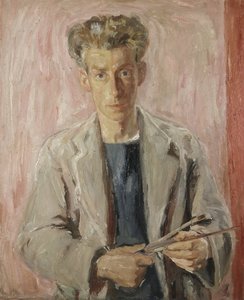
Sir William George Gillies
1898 - 1973 , Vereinigtes Königreich
Kurzinfos
- Artistic Movement Or Style: Kubismus
- Artists Or Movements Influenced By This Artist: ['Scottish Colourists']
- Artists Who Influenced This Artist:
- André Lhote
- Paul Klee
- Cézanne
- Braque
- Picasso
- Date Of Birth: 1898
- Full Name: Sir William George Gillies
- Nationality: Schottisch
- Notable Artworks:
- Young Boy with a Teapot
- Mediterranean Landscape mit Überdachung
- Stillleben – Gelbes Krug und gestreifte Leinwand
- Place Of Birth: Haddington, Vereinigtes Königreich
Ähnliche Artikel

John Constable: Die 25 Meisterwerke des englischen Landschaftsgenies – ArtsDot
Entdecken Sie die 25 Meisterwerke von John Constable! Erleben Sie englische Landschaftsmalerei vom Hay Wain bis zur Stour Valley. Hochwertige Reproduktionen & Kunst für Ihr Zuhause auf ArtsDot.com.
Sir William George Gillies: Ein schottischer Farbist und seine Reise durch Landschaft und Abstraktion
Entdecken Sie das faszinierende Werk von Sir William George Gillies! Erfahren Sie mehr über seine Entwicklung vom schottischen Realismus zur Abstraktion und die Bedeutung seiner Landschaftsmalerei für die moderne Kunst. Jetzt lesen!
Cultivating Visions: A Historical Journey Through Rural Landscapes in Art
Explore the rich history of rural landscape painting with ArtsDot. Discover Impressionist masterpieces, key artists & movements. Find your perfect serene artwork and bring nature's beauty home.

Romantische Landschaften: Die 10 Meisterwerke, die eine Epoche prägten | ArtsDot
Entdecken Sie die 10 Meisterwerke der Romantischen Landschaftsmalerei! Von Caspar David Friedrich bis Turner – erleben Sie die Kunst, Emotion & Natur. Hochwertige Reproduktionen auf ArtsDot.com
Anthony Vandyke Copley Fielding: Rediscovering a Master of Romantic Landscape
Discover the captivating landscapes of Anthony Vandyke Copley Fielding, a master of Romantic watercolour painting. Explore his life, technique, and legacy with ArtsDot – your source for museum-quality art reproductions & expert appraisal.