 Vorschau anzeigen
 Versenden
 Teilen
 Details anzeigen

 Herunterladen
 Ähnliche Objekte
 Röntgenaufnahme
 Diashow
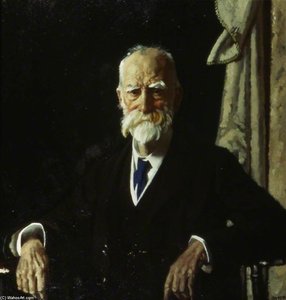
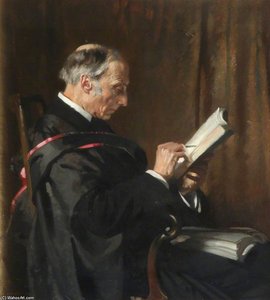
Sir William Orpen


 Weiterlesen
Giclée / Kunstdruck
Giclée- oder Leinwanddruck in Museumsqualität mit schneller Produktion und flexiblen Veredelungsoptionen. ( Handgemalte Reproduktion bestellen Bild kaufen)




P118B $10

P118H $10

P118W $10

P438Z $10

P508JH $12

P508YH $12

P805H $10

P805Z $10

P919BZ $10

P919G $10

P919XJ $10

P959ZH $10

P968JZ $12

W106C $8

W218G $10

W218JH $8

W218Y $10

W307PJ $10

W316G $10

W316PJ $8

W316Y $10

W398PJ $8

W4111J $10

W500HY $15

W500JH $15

W692G $12

W849H $8

W940BG $15

W953PJ $8




Wählen Sie aus unseren vordefinierten Formaten, die den ursprünglichen Proportionen des Kunstwerks entsprechen.

Sie können Ihre eigenen Maße eingeben, um ein bestimmtes Format oder einen speziellen Platz einzupassen. Wenn das von Ihnen gewählte Format nicht den Proportionen des Originalbildes entspricht, werden wir das Kunstwerk entweder beschneiden oder das Bild mit einem gespiegelten oder einfarbigen Rand erweitern. Ein digitaler Entwurf wird Ihnen zur Genehmigung zugesandt, bevor die Produktion beginnt.
Bitte beachten Sie, dass die Vorschau auf dem Bildschirm nicht den tatsächlichen Zuschnitt oder die Erweiterung widerspiegelt. Nur der Entwurf zeigt die endgültige Komposition präzise an.
Obwohl Sondermaße verfügbar sind, empfehlen wir die Auswahl eines Maßes aus der vordefinierten Liste, um die ursprünglichen Proportionen zu bewahren.
Weltweiter Versand () innerhalb von 2 Wochen statt der üblichen 4/5 Wochen. (21 August)

Kostenloser weltweiter Expressversand

Hochwertige Leinenleinwand

Umfassender Versicherungsschutz beim Versand

Zollgebühren-Rückerstattungsgarantie

Garantie für exakte Farbtreue

60 Tage Rückgaberecht (nur bei Mängeln)

100% Geld-zurück-Garantie

Mengenrabatt verfügbar
 Die Glasoption ist nur für Größen unter 110 cm verfügbar.

Sir William Orpen
Giclée / Kunstdruck
Format der Reproduktion
-


Gesamtpreis
$ 62
Sammlerstück-Beschreibung
Sir William Orpen: A Portraitist of War and Soul
The world of Edwardian England was one of opulent social gatherings and burgeoning anxieties – a period captured with remarkable intensity by Sir William Orpen (1878–1931). Born in Ireland, Orpen’s artistic journey led him to London, where he swiftly established himself as both a celebrated portraitist and, crucially, one of the most impactful official war artists of World War I. His work transcends simple representation; it's a visceral exploration of human experience, imbued with psychological depth and unflinching realism – qualities that continue to resonate powerfully today.
Orpen’s artistic development was profoundly shaped by his family’s legacy of artistic talent. His father, Arthur Herbert Orpen, was a solicitor who also pursued painting, fostering an early appreciation for art within the household. His brother, Richard Caulfield Orpen, became a renowned architect, and his uncle Goddard Henry Orpen was a historian. This environment instilled in William a rigorous approach to observation and a deep understanding of composition – skills he honed through formal training at the Dublin Metropolitan School of Art and later at the Slade School of Fine Art in London. Early influences included Jan van Eyck’s meticulous detail and the atmospheric perspective of Dutch masters, which he skillfully integrated into his own distinctive style.
The War Artist's Vision: Beyond Battlefield Glory
While many official war artists focused on heroic depictions of battles and patriotic scenes, Orpen chose a radically different path. He sought to capture the *reality* of trench warfare – not the romanticized version often presented in propaganda, but the brutal, dehumanizing experience faced by ordinary soldiers. His paintings are characterized by an almost unsettling honesty; he depicted mud-caked faces, vacant stares, and the devastating aftermath of combat with a directness that shocked many contemporaries.
His most famous series, “The Old Contemptibles,” comprised 138 drawings and paintings created during his extended service in France. These works weren’t celebratory glorifications; they were portraits of men stripped bare by war – their dignity eroded, their faces etched with exhaustion and despair. Orpen's masterful use of light and shadow accentuated the physical toll of the conflict, while his attention to detail revealed the individual stories behind each soldier’s face. He deliberately avoided idealization, presenting a profoundly human portrayal of suffering.
Technique and Style: A Master of Observation
Orpen's technical skill was exceptional – he possessed an almost preternatural ability to capture likeness and emotion with remarkable speed and accuracy. His drawings were executed with astonishing precision, utilizing charcoal and pen with a confident hand. His paintings, predominantly in oil on canvas, showcased his mastery of color and texture. He employed loose brushwork and a muted palette to convey the bleakness of the trenches, yet he also injected moments of intense drama through sharp contrasts and vibrant hues.
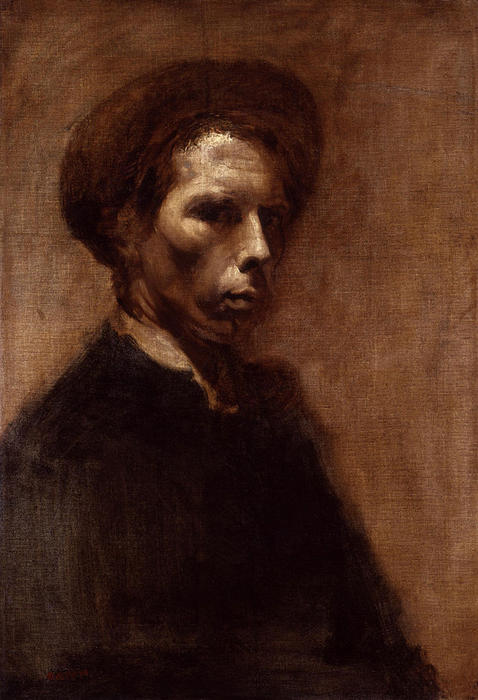
Notably, Orpen frequently incorporated elements of self-portraiture into his work, often depicting himself alongside his subjects – a technique that suggests a shared experience of hardship and vulnerability. He was known for his meticulous preparatory sketches, which he would then transform into finished paintings with remarkable efficiency. His process involved layering multiple glazes to achieve depth and luminosity, creating surfaces that seemed to shimmer with life.
Symbolism and Emotional Resonance
Beyond the immediate depiction of war’s horrors, Orpen's work is rich in symbolism. The recurring motif of the “broken man” – a figure rendered physically and emotionally shattered by conflict – speaks to the profound psychological impact of war. His portraits often convey a sense of isolation and despair, reflecting the experience of soldiers cut off from home and loved ones. Yet, amidst this darkness, there’s also an underlying current of resilience and humanity – a testament to the enduring spirit of those who faced unimaginable adversity.
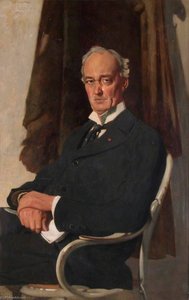
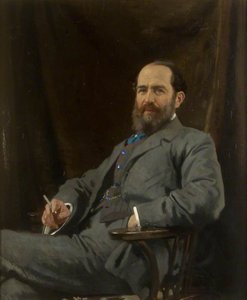
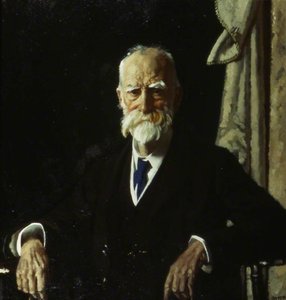
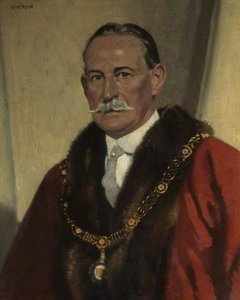
Orpen's legacy extends far beyond his wartime contributions. His portraits of Edwardian society figures are equally compelling, capturing the elegance and social complexities of the era. However, it is his unflinching portrayal of war that truly defines him as one of the most significant artists of the 20th century – a master of observation who dared to confront the darkest aspects of human experience with honesty, compassion, and unparalleled artistic skill.
Ähnliche Kunstwerke
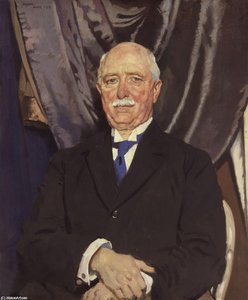
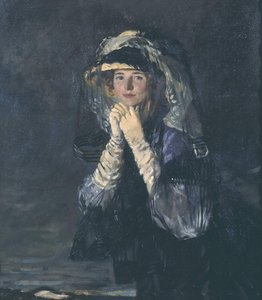
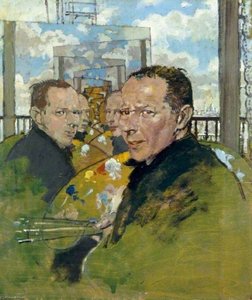
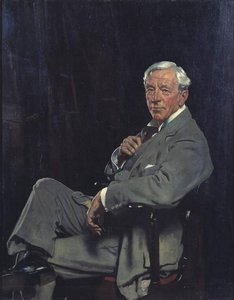
Über den Künstler
Frühes Leben und Ausbildung
Sir William Newenham Montague Orpen, ein renommierter irischer Künstler, wurde am 27. November 1878 in Stillorgan, County Dublin, geboren. Er war das vierte und jüngste Kind von Arthur Herbert Orpen, einem Rechtsanwalt, und Anne Caulfield, einer Amateurmalerin. Orpens frühes Leben war geprägt von einer glücklichen Kindheit auf Oriel, einem großen Haus mit weitläufigen Grundstücken. Sein künstlerisches Talent wurde schon in jungen Jahren deutlich. Mit 13 Jahren schrieb er sich an der Dublin Metropolitan School of Art ein, wo er alle wichtigen Preise und die British Isles Gold Medal für Aktzeichnen gewann. Später studierte er von 1897 bis 1899 an der Slade School of Art, beherrschte die Ölmalerei und experimentierte mit verschiedenen Techniken.Künstlerische Karriere
Orpens künstlerische Karriere war geprägt von seiner feinen Linienführung und seinen kommerziell erfolgreichen Porträts der wohlhabenden Gesellschaft im edwardianischen Stil. Viele seiner eindrucksvollsten Gemälde sind jedoch Selbstporträts. Während des Ersten Weltkriegs war er der produktivste offizielle Kriegskünstler und schuf 138 Zeichnungen und Gemälde, die er der britischen Regierung vermachte und die sich nun in der Sammlung des Imperial War Museum befinden.- Sir William Newenham Montague Orpens Verbindungen zu hochrangigen britischen Militärs ermöglichten es ihm, länger in Frankreich als andere offizielle Kriegskünstler zu bleiben.
- Er wurde 1918 zum Knight Commander des Order of the British Empire ernannt und zum Mitglied der Royal Academy of Arts gewählt.
- Orpens Entschlossenheit, als Kriegskünstler tätig zu sein, kostete ihn sowohl seine Gesundheit als auch seinen sozialen Status in England.
Bemerkenswerte Werke und Vermächtnis
- Die Szene aus Hamlet, ein zweimeterbreites Gemälde, gewann 1899 den Slade Composition Prize.
- Der Spiegel, der 1900 im New English Art Club ausgestellt wurde, bezieht sich auf Jan van Eycks A Arnolfini Portrait und Elemente niederländischer Innenräume des 17. Jahrhunderts.
- Orpens Mittag am Strand, der 1910 im New English Art Club ausgestellt wurde, zeigt seinen charakteristischen Plein-Air-Stil.
Museen und Sammlungen
- Das Imperial War Museum beherbergt Orpens 138 gespendete Werke, darunter Zeichnungen und Gemälde aus dem Ersten Weltkrieg.
- Die British Council Collection, die von der Dublin City Gallery The Hugh Lane und dem Dublin City Council betrieben wird, umfasst eine breite Palette von Kunstwerken, darunter Werke renommierter Künstler wie Morris Louis, William Larkin und Alison Watt.
- Das Museum Faculty of English Language and Literature in Oxford, Großbritannien, ist ein Schatz für Literaturbegeisterte und beherbergt Kunstwerke, die die reiche Geschichte der englischen Literatur zeigen.
Schlussfolgerung
Sir William Newenham Montague Orpens künstlerisches Vermächtnis ist ein Beweis für seine Meisterschaft im edwardianischen Porträt. Seine Beiträge zur Sammlung des Imperial War Museum und sein Einfluss auf die britische Kunstszene sind unbestreitbar. Entdecken Sie weitere Werke von Orpen und anderen bemerkenswerten Künstlern auf ArtsDot.com, und entdecken Sie die Welt der Kunst mit Gerard ter Borchs ruhigen Genreszenen oder Edward Fishers akribischen Stichen.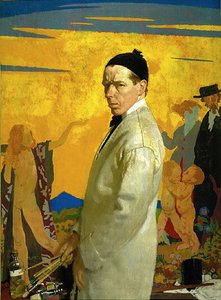
Sir William Newenham Montague Orpen
1878 - 1931 , Irland
Kurzinfos
- Beeinflusste Künstler: ['Jan van Eyck']
- Bemerkenswerte Werke:
- The Play Scene from Hamlet
- The Mirror
- Midday on the Beach
- Geburtsdatum: 27. November 1878
- Geburtsort: Stillorgan, Irland
- Künstlerische Richtung: Realismus, Plein-Air
- Nationalität: Irisch
- Sterbedatum: 1931
- Vollständiger Name: Sir William Newenham Montague Orpen
Ähnliche Artikel
Sir William Orpen: A Study in Edwardian Portraiture & the Shadows of Modernity
Explore the life & art of Sir William Orpen, a master of Edwardian portraiture and poignant WWI depictions. Discover his unique realism, psychological depth, and enduring legacy in this insightful analysis.
Romantic Realism's Finest: 10 Masterpieces for Your Home | ArtsDot
Explore 10 defining masterpieces of Romantic Realism! Discover Courbet, Millet & Daumier's powerful paintings—capturing emotion and social realities. Find museum-quality reproductions for your home at ArtsDot.com.
Reflecting the Self: A History of Portraiture & Psychological Insight
Explore the fascinating history of self-portraiture from Renaissance masters like Dürer & Rembrandt to modern interpretations. Discover the psychological insights and artistic techniques behind these iconic works. Expert analysis for art enthusiasts.
Akademischer Realismus: Die 10 Meisterwerke, die eine Epoche prägten | ArtsDot
Entdecken Sie die 10 prägendsten Meisterwerke des Akademischen Realismus! Erfahren Sie die Geschichten hinter berühmten Gemälden, Künstlern & Techniken. Hochwertige Reproduktionen für Ihr Zuhause – jetzt auf ArtsDot.com!
Sir George Clausen: Capturing Edwardian Life & British Impressionism's Nuances
Explore the luminous world of Sir George Clausen, a leading British Impressionist painter. Discover his captivating scenes of Edwardian life, rural England & poignant war art. Learn about his legacy and find high-quality reproductions at ArtsDot.