

 Vorschau anzeigen
 Versenden
 Teilen
 Details anzeigen

 Herunterladen
 Ähnliche Objekte
 Röntgenaufnahme
 Diashow
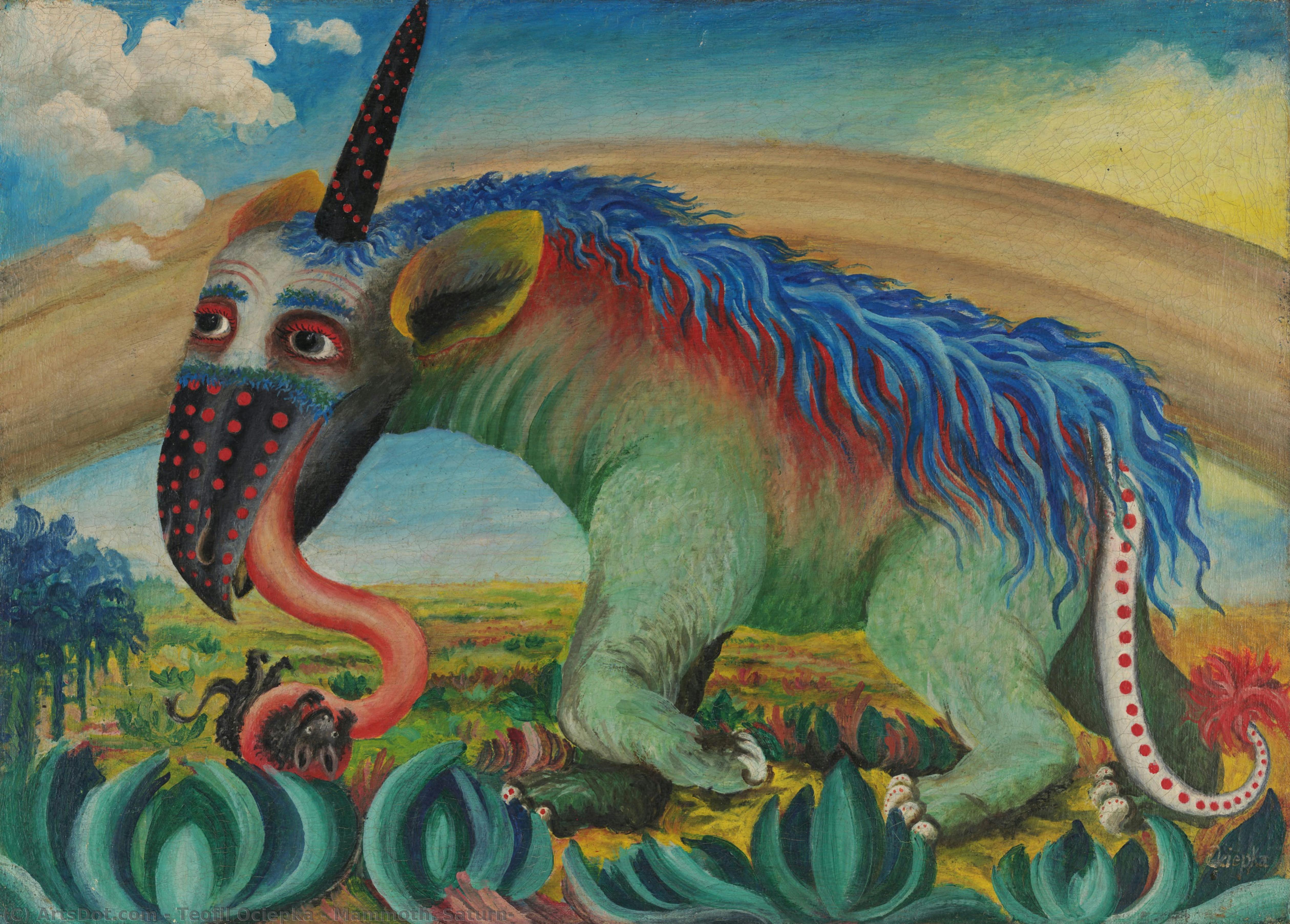
Mammoth. Saturn


 Weiterlesen
Giclée / Kunstdruck
Giclée- oder Leinwanddruck in Museumsqualität mit schneller Produktion und flexiblen Veredelungsoptionen. ( Handgemalte Reproduktion bestellen Bild kaufen)




P118B $10

P118H $10

P118W $10

P438Z $10

P508JH $12

P508YH $12

P805H $10

P805Z $10

P919BZ $10

P919G $10

P919XJ $10

P959ZH $10

P968JZ $12

W106C $8

W218G $10

W218JH $8

W218Y $10

W307PJ $10

W316G $10

W316PJ $8

W316Y $10

W398PJ $8

W4111J $10

W500HY $15

W500JH $15

W692G $12

W849H $8

W940BG $15

W953PJ $8




Wählen Sie aus unseren vordefinierten Formaten, die den ursprünglichen Proportionen des Kunstwerks entsprechen.

Sie können Ihre eigenen Maße eingeben, um ein bestimmtes Format oder einen speziellen Platz einzupassen. Wenn das von Ihnen gewählte Format nicht den Proportionen des Originalbildes entspricht, werden wir das Kunstwerk entweder beschneiden oder das Bild mit einem gespiegelten oder einfarbigen Rand erweitern. Ein digitaler Entwurf wird Ihnen zur Genehmigung zugesandt, bevor die Produktion beginnt.
Bitte beachten Sie, dass die Vorschau auf dem Bildschirm nicht den tatsächlichen Zuschnitt oder die Erweiterung widerspiegelt. Nur der Entwurf zeigt die endgültige Komposition präzise an.
Obwohl Sondermaße verfügbar sind, empfehlen wir die Auswahl eines Maßes aus der vordefinierten Liste, um die ursprünglichen Proportionen zu bewahren.
Weltweiter Versand () innerhalb von 2 Wochen statt der üblichen 4/5 Wochen. (6 September)

Kostenloser weltweiter Expressversand

Hochwertige Leinenleinwand

Umfassender Versicherungsschutz beim Versand

Zollgebühren-Rückerstattungsgarantie

Garantie für exakte Farbtreue

100 Tage Rückgaberecht (nur bei Mängeln)

100% Geld-zurück-Garantie

Mengenrabatt verfügbar
 Die Glasoption ist nur für Größen unter 110 cm verfügbar.

Mammoth. Saturn
Giclée / Kunstdruck
Format der Reproduktion
-


Gesamtpreis
$ 62
A Visionary Encounter: The Mystical World of Teofil Ociepka
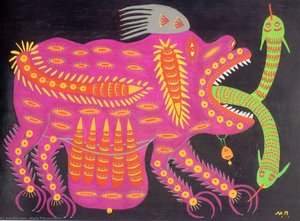
In the evocative landscape of 1954, Teofil Ociepska birthed a vision that transcends the boundaries of reality, inviting the viewer into a dreamscape where the prehistoric and the celestial converge. Mammoth. Saturn is not merely a depiction of a creature; it is a portal into the profound, mystical psyche of one of Poland's most significant self-taught primitivist masters. The painting presents a monumental mammoth, distinguished by its striking blue mane and tail, moving through a terrain that feels simultaneously ancient and otherworldly. As the beast utilizes its long trunk to grasp an unseen object, the presence of two small human figures provides a sense of scale that is both humbling and surreal. This encounter between the colossal and the mortal creates a tension that is central to Ociepka’s unique artistic language.
The composition breathes with the raw, uninhibited energy characteristic of Naive Art. Eschewing the rigid academic constraints of his era, Ociepka employs bold colors and simplified, flat forms to construct a narrative that feels as much like a folk legend as it does a cosmic event. The background, featuring sparse trees and a desert-like expanse, suggests a world stripped of modern complexity, focusing instead on the elemental essence of life and myth. For the discerning collector or interior designer, this piece offers a captivating focal point that commands attention through its vibrant palette and the sheer imaginative audacity of its subject matter.
Symbolism and the Occult Thread
To understand Mammoth. Saturn, one must look beneath the surface of its charming simplicity to find the threads of theosophy and occultism that wove through Ocieperka’s life. As a practitioner of mysticism, the artist often infused his landscapes with esoteric symbols, turning a simple scene of nature into a complex spiritual allegory. The title itself suggests a connection between the terrestrial mammoth and the celestial realm of Saturn, hinting at an astrological or cosmic significance that elevates the painting from a mere zoological study to a profound meditation on time and existence. The blue hues of the mammoth’s mane may serve as a bridge between the earthly ground and the infinite sky, symbolizing the union of the physical and the spiritual.
This layer of symbolic depth makes the artwork an extraordinary choice for those seeking pieces that provoke thought and conversation. It is a work that rewards repeated viewing, as each glance reveals new nuances in its dreamlike quality. The interplay between the massive, powerful beast and the fragile human figures serves as a poignant reminder of our place within the vast, often incomprehensible cycles of the universe. In an era of digital perfection, the soulful, hand-painted textures of Ociepka’s style offer a grounding, authentic emotional resonance that is increasingly rare.
An Essential Addition to the Sophisticated Collection
For those looking to curate a space with character and depth, a high-quality reproduction of this masterpiece provides an unparalleled opportunity. The painting's ability to harmonize bold, primary colors with a sense of quiet, spiritual wonder makes it incredibly versatile for various interior design aesthetics—from modern minimalist galleries to more eclectic, bohemian studies. It brings with it a sense of history and a connection to the rich tradition of Polish Primitivism, offering much more than mere decoration.
Investing in such a piece is an invitation to surround oneself with the sublime. Whether placed in a grand living area or a private library, Mammoth. Saturn acts as a window into a lost world of wonder. It captures the essence of a time when art was a direct expression of the soul's journey through the mysteries of the cosmos, making it a timeless treasure for any serious lover of fine art.
Ähnliche Kunstwerke


Über den Künstler
Teofil Ociepka (1891–1978) – Ein Pionier der polnischen Primitivismus
Teofil Antoni Jaksa Kwiatkowski, bekannt unter seinem Künstlernamen Teofil Ociepka, wurde am 22. April 1891 in Janów Śląski geboren und starb am 15. Januar 1978 in Bydgoszcz. Er gilt als einer der bedeutendsten polnischen Primitivisten und prägte damit eine einzigartige Ära der polnischen Kunstgeschichte. Seine künstlerische Entwicklung ist geprägt von autodidaktischem Lernen und tiefgreifendem Einfluss okkulistischer Ideen sowie einer besonderen Verbindung zur lokalen Volkskultur.Frühes Leben und Berufliche Tätigkeit
Ociepka begann seine berufliche Laufbahn mit lediglich fünfzehn Jahren, um nach dem Tod seines Vaters finanziell für seine Familie aufzutreten. Er arbeitete verschiedene Jobs aus und wurde schließlich Bergbauarbeiter im Giesche-Kohlewerk in Katowice, wo er bis zu seinem Ruhestand tätig blieb. Seine Militärdienstzeit während des Ersten Weltkriegs brachte ihm den Kontakt zum Okkultismus näher und insbesondere zur Philosophie von Athanasius Kircher und seinem Werk „Oedipus Ægyptiacus“. Auf Empfehlung seines Schweizer Mentors Philipp Hohmann trat Ociepka dem Rosenkreuzer-Orden bei und erhielt den Titel eines Meister der Geheimwissenschaften. Hohmanns Anleitung führte ihn zum Janowska Gemeinde, einer Gemeinschaft von Künstlern und Okkultisten, die sich besonders für die Darstellung des lokalen Lebens und Glaubenssystems interessierten. Diese Gemeinschaft beeinflusste maßgeblich seine künstlerische Vision und sein Werkstil.Künstlerischer Stil und Einflüsse
Ociepka entwickelte einen unverwechselbaren Stil, der durch Verwendung von kräftigen Farben und einfachen Flächen gekennzeichnet ist. Seine Gemälde zeichnen sich durch eine traumhafte Qualität aus und enthalten häufig symbolische Motive und Elemente okkulistischer Traditionen. Besonders stark beeinflusst wurde er von Nikifor Khrachevsky und Henri Rousseau, deren Werke ebenfalls den Prinzipien des Primitivismus verpflichtet sind. Diese Künstler prägten Ociepkas künstlerisches Verständnis und inspirierten ihn zu einer einzigartigen Darstellung der Natur und menschlichen Erfahrung. Seine Bilder reflektieren eine tiefgreifende Suche nach spiritueller Wahrheit und Schönheit.Bekannte Werke und Vermächtnis
Zu seinen bekanntesten Werken zählen „Der Garten“ und „Der Berg“. Diese Gemälde zeigen Ociepkas außergewöhnliche Fähigkeit zur Symbolik und Farbgebung und gelten als Schlüsselwerke des polnischen Primitivismus. Seine Kunst wurde von Kritikern wie Tadeusz Dobrowolski gewürdigt, der ihn als einen wichtigen Vertreter der modernen polnischen Kunst sah. Heute wird Ociepka als eine zentrale Figur der polnischen Kunstgeschichte betrachtet und seine Werke werden weiterhin intensiv studiert und gefeiert. Seine Gemälde finden sich in renommierten Museen wie dem Nationalmuseum Wrocław und dem Museum für Volksarchitektur Sanok und tragen zur Förderung des Verständnisses für die polnische Kultur und Kunst bei. Er bleibt ein beeindruckendes Beispiel für künstlerischen Ausdruck und spirituelle Inspiration.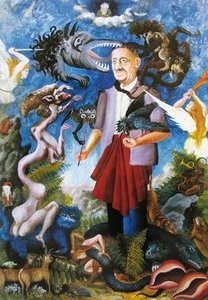
Teofil Ociepka
1891 - 1978 , Polen
Kurzinfos
- Artistic Movement Or Style: Primitivism
- Artists Or Movements Influenced By This Artist: ['Nikifor']
- Artists Who Influenced This Artist:
- Nikifor Khrachevsky
- Henri Rousseau
- Date Of Birth: April 22, 1891
- Date Of Death: January 15, 1978
- Full Name: Teofil Antoni Jaksa Kwiatkowski
- Nationality: Polnisch
- Notable Artworks:
- Der Garten
- Der Berg
- Place Of Birth: Janów Śląski, Polen
Ähnliche Artikel

Die Top 10 Gemälde in Schattierungen von 'Slate Blue': Kunst für Ihr Zuhause
Entdecken Sie die Top 10 Gemälde in faszinierenden 'Slate Blue' Tönen! Von Monet bis Manet – erleben Sie Kunstgeschichte und lassen Sie sich von Meisterwerken inspirieren. Hochwertige Kunstdrucke auf
The Allure of Azure: Exploring the Symbolic & Aesthetic Depths of Blue in Art History
Explore the rich history of blue in art! Discover its symbolism, from ancient pigments to modern masterpieces by Kandinsky & Seurat. Uncover the psychological impact and cultural meanings behind this captivating hue.
Stanisław Wyspiański: Symbolism, National Identity & the Polish Secession
Explore the life & work of Stanisław Wyspiański, a pivotal figure in Polish Symbolism and the Young Poland movement. Discover his iconic paintings, dramas, and stained glass designs reflecting national identity & artistic innovation.

Azure Visions: Exploring Representations of the Blue Dress in Western Art History
Explore the rich history of the blue dress in Western art! Discover its symbolism, from Renaissance masterpieces to modern interpretations by artists like Martin & Schiele. Uncover cultural meanings and artistic techniques.
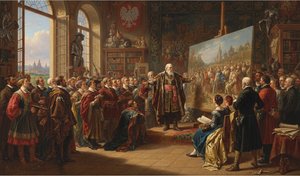
Jan Matejko: Nationales Narrativ und Identität im polnischen Gemälde des 19. Jahrhunderts
Entdecken Sie Jan Matejkos faszinierende Gemälde und ihren Einfluss auf die polnische nationale Identität im 19. Jahrhundert. Analysen, Schlüsselwerke & historischer Kontext – jetzt lesen!