 Vorschau anzeigen
 Versenden
 Teilen
 Details anzeigen

 Herunterladen
 Ähnliche Objekte
 Röntgenaufnahme
 Diashow
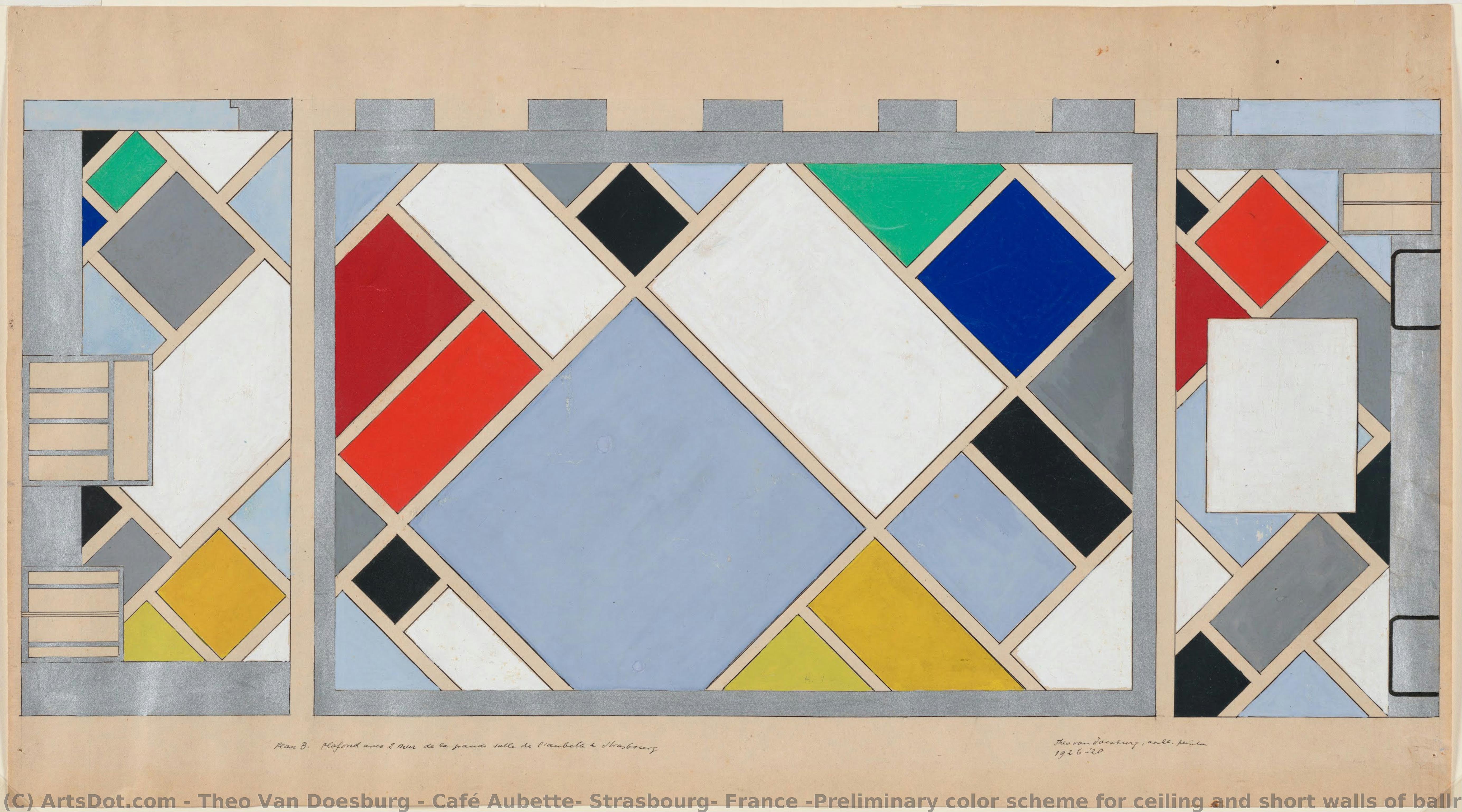
Café Aubette, Strasbourg, France (Preliminary color scheme for ceiling and short walls of ballroom)
 Gouache
- WallArt
- Neoplasticism
 1927
1927 27.0 x 62.0 cm
 Museum of Modern Art
 Weiterlesen
Giclée / Kunstdruck
Giclée- oder Leinwanddruck in Museumsqualität mit schneller Produktion und flexiblen Veredelungsoptionen. ( Handgemalte Reproduktion bestellen Bild kaufen)




P118B $10

P118H $10

P118W $10

P438Z $10

P508JH $12

P508YH $12

P805H $10

P805Z $10

P919BZ $10

P919G $10

P919XJ $10

P959ZH $10

P968JZ $12

W106C $8

W218G $10

W218JH $8

W218Y $10

W307PJ $10

W316G $10

W316PJ $8

W316Y $10

W398PJ $8

W4111J $10

W500HY $15

W500JH $15

W692G $12

W849H $8

W940BG $15

W953PJ $8




Wählen Sie aus unseren vordefinierten Formaten, die den ursprünglichen Proportionen des Kunstwerks entsprechen.

Sie können Ihre eigenen Maße eingeben, um ein bestimmtes Format oder einen speziellen Platz einzupassen. Wenn das von Ihnen gewählte Format nicht den Proportionen des Originalbildes entspricht, werden wir das Kunstwerk entweder beschneiden oder das Bild mit einem gespiegelten oder einfarbigen Rand erweitern. Ein digitaler Entwurf wird Ihnen zur Genehmigung zugesandt, bevor die Produktion beginnt.
Bitte beachten Sie, dass die Vorschau auf dem Bildschirm nicht den tatsächlichen Zuschnitt oder die Erweiterung widerspiegelt. Nur der Entwurf zeigt die endgültige Komposition präzise an.
Obwohl Sondermaße verfügbar sind, empfehlen wir die Auswahl eines Maßes aus der vordefinierten Liste, um die ursprünglichen Proportionen zu bewahren.
Weltweiter Versand () innerhalb von 2 Wochen statt der üblichen 4/5 Wochen. (27 August)

Kostenloser weltweiter Expressversand

Hochwertige Leinenleinwand

Umfassender Versicherungsschutz beim Versand

Zollgebühren-Rückerstattungsgarantie

Garantie für exakte Farbtreue

60 Tage Rückgaberecht (nur bei Mängeln)

100% Geld-zurück-Garantie

Mengenrabatt verfügbar
 Die Glasoption ist nur für Größen unter 110 cm verfügbar.

Café Aubette, Strasbourg, France (Preliminary color scheme for ceiling and short walls of ballroom)
Giclée / Kunstdruck
Format der Reproduktion
-


Gesamtpreis
$ 62
The Geometry of Memory: Exploring Theo van Doesburg's Vision
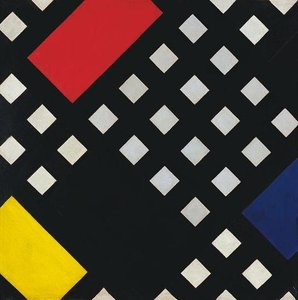
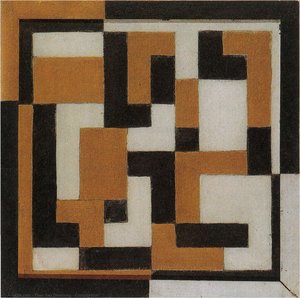
To stand before Theo van Doesburg’s "Café Aubette, Strasbourg, France (Preliminary color scheme for ceiling and short walls of ballroom)" is to step across the threshold of a dream—a meticulously planned vision rendered in pigment. This 1927 work is far more than a mere decorative study; it is an architectural manifesto translated onto canvas. Van Doesburg, a pioneer whose career was dedicated to stripping art down to its purest structural elements, invites us into the vibrant, yet rigorously controlled, world of Neoplasticism. The subject matter—a preliminary color scheme for a ballroom in Strasbourg—suggests a moment suspended between function and pure aesthetic theory. It speaks to the era's fascination with modernizing public spaces, where art was expected not just to hang on walls, but to become integral to the very experience of inhabiting a room.
A Symphony of Pure Abstraction
Observe the surface: it is a dazzling interplay of geometric forms. Squares and rectangles interlock with an almost obsessive precision, creating a mosaic-like tapestry that pulses with controlled energy. The palette itself—a bold dialogue between primary hues like red, blue, and yellow, grounded by the stabilizing presence of black, white, gray, and green—is nothing accidental. Van Doesburg was deeply invested in the belief that art should reflect universal, underlying harmonies rather than fleeting natural appearances. This abstraction is not cold; rather, it possesses a vibrant, almost joyous rhythm. It suggests an intellectual framework for beauty, where every line and every block of color has been placed with the weight of philosophical consideration.
Technique and Materiality: The Gouache Glow
The choice of medium—gouache on canvas—is crucial to understanding the painting's luminous quality. Gouache allows for opaque, flat fields of color that sit vibrantly against one another, enhancing the graphic impact of the composition. Unlike the subtle blending of oils, here the colors assert themselves with declarative strength. This technique perfectly serves the geometric mandate of De Stijl; there is no ambiguity in the edges, only clean, decisive boundaries. For those considering a reproduction for an interior space, this technical understanding is key: the resulting piece will offer the crisp, graphic punch necessary to anchor a room without overwhelming it.
Symbolism and Emotional Resonance
What does this geometric harmony evoke? It speaks of order emerging from potential chaos. In the wake of global upheaval, movements like De Stijl offered a visual language suggesting that underlying universal truths—mathematical, spiritual, or structural—could provide solace. The emotional impact is one of exhilarating clarity. It is stimulating without being chaotic; it is complex yet ultimately resolved. Owning this piece means embracing an aesthetic philosophy: the belief that structure itself can be profoundly beautiful. It transforms a mere wall treatment into a meditation on balance and proportion.
Integrating Art into Life
For the collector or designer, "Café Aubette" offers more than just decoration; it offers a conceptual anchor for a space. Imagine this pattern echoing in paneling, upholstery, or even stained glass—a continuous dialogue between fine art and architecture. It is a piece that demands attention while simultaneously providing a sense of calm intellectual rigor. It invites the viewer to pause, to look beyond the surface color, and appreciate the underlying logic that binds every vibrant square together.
Ähnliche Kunstwerke
Über den Künstler
Frühes Leben und Karriere
Theo van Doesburg, ein niederländischer Künstler, wurde am 30. August 1883 in Utrecht, Niederlande, geboren. Er ist vor allem bekannt als Gründer und Leiter der De Stijl-Bewegung, einer Bewegung des Neoplasticismus. Van Doesburgs frühe Arbeiten waren von Vincent van Gogh beeinflusst, sowohl in Stil als auch in seinem Themenspektrum.Die Entstehung des Neoplasticismus
Im Jahr 1913 erkannte Van Doesburg nach der Lektüre von Wassily Kandinskys "Rückblicke", dass es eine höhere, spirituellere Ebene in der Malerei gibt, die aus dem Geist und nicht aus dem alltäglichen Leben entspringt. Dies führte zur Entwicklung des Neoplasticismus, auch bekannt als De Stijl. Die Bewegung plädierte für reine Abstraktion und Universalität durch Reduktion auf die wesentlichen Elemente von Form und Farbe.Bemerkenswerte Werke und Kollaborationen
- Study for simultaneous compositions xxii, eine Bleistiftstudie für simultane Kompositionen, ist ein Beispiel für neoplasticistische Kunst. (Befindet sich im Kröller-Müller Museum, Otterlo, Niederlande)
- Van Doesburg arbeitete mit Piet Mondrian an verschiedenen Projekten zusammen, darunter die Zeitschrift De Stijl.
- Er arbeitete auch mit Georges Vantongerloo und Sophie Taeuber-Arp an der Gestaltung von Häusern für Künstler zusammen.
Vermächtnis und Einfluss
Van Doesburgs Werk hatte einen bedeutenden Einfluss auf die Entwicklung der modernen Kunst. Sein Vermächtnis ist in verschiedenen Bereichen der Kunst sichtbar, von der Architektur bis zur Malerei. Die Neoplasticismus-Bewegung beeinflusst Künstler bis heute.- Betrachten Sie Theo van Doesburgs Kunstwerke auf ArtsDot
- Erfahren Sie mehr über Theo van Doesburg auf Wikipedia
- Entdecken Sie Piet Mondrians Kunstwerke auf ArtsDot
- 30. August 1883: Theo van Doesburg wurde geboren
- 1913: Entwicklung des Neoplasticismus
- 7. März 1931: Verstarb
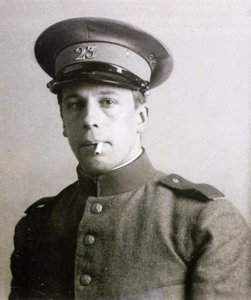
Theo van Doesburg
1883 - 1931 , Niederlande
Kurzinfos
- Beeinflusste Künstler: ['Vincent van Gogh']
- Bemerkenswerte Werke: ['Study for Simultaneous Compositions XX II']
- Geburtsdatum: 30. August 1883
- Geburtsort: Utrecht, Niederlande
- Künstlerische Bewegung: De Stijl, Neoplasticismus
- Nationalität: Niederländisch
- Sterbedatum: 7. März 1931
- Vollständiger Name: Theo van Doesburg
- Von Künstlern Beeinflusst:
- Wassily Kandinsky
- Piet Mondrian
Ähnliche Artikel

Rembrandts Meisterwerke: Die Top 25 Kunstwerke für Ihr Zuhause | ArtsDot
Entdecken Sie Rembrandts 25 berühmteste Kunstwerke! Tauchen Sie ein in die Welt des Barock, Licht und Schatten & historischer Porträts. Hochwertige Reproduktionen für Ihr Zuhause – jetzt auf ArtsDot.com!
Theo van Doesburg: Pionier des De Stijl und die Evolution des Neo-Plastizismus
Entdecken Sie die faszinierende Welt des De Stijl! Erfahren Sie mehr über Theo van Doesburg, Piet Mondrian und die revolutionäre Ästhetik des Neo-Plastizismus. Expertenwissen & historische Einblicke.

Frühniederländische Meisterwerke: 10 Gemälde, die eine Epoche prägten | ArtsDot
Entdecken Sie die 10 prägendsten Meisterwerke der Frühniederländischen Malerei! Von Jan van Eyck bis Rogier van der Weyden – erleben Sie Kunstgeschichte hautnah. Hochwertige Reproduktionen & Inspiration für Ihr Interieur auf ArtsDot.com.
Die emotionale Tiefe Van Goghs entschlüsseln: Meisterhafte Reproduktionen und künstlerische Analyse
Entdecken Sie die emotionale Tiefe von Vincent van Gogh! Hochwertige Reproduktionen & fundierte Analysen seiner Meisterwerke. Für Kunstsammler und Liebhaber.

Neoplasticism: A Radical Geometry of Utopian Vision – Origins, Principles, and Enduring Influence
Explore the revolutionary Neoplasticism movement – De Stijl – with ArtsDot. Discover Mondrian & van Doesburg's principles, influence on modern art, and how to collect key works. Expert insights for discerning art enthusiasts.