 Vorschau anzeigen
 Versenden
 Teilen
 Details anzeigen

 Herunterladen
 Ähnliche Objekte
 Röntgenaufnahme
 Diashow
The Cross and the World: Study for 'The Pilgrim of the World at the End of His Journey'


 Weiterlesen
Handgefertigte Ölreproduktion
Handgemaltes Ölgemälde auf Leinwand in Ihrer Wunschgröße und mit Rahmen, auf Bestellung von unseren Künstlern angefertigt. ( Druck bestellen Bild kaufen)




P118B $10

P118H $10

P118W $10

P438Z $10

P508JH $12

P508YH $12

P805H $10

P805Z $10

P919BZ $10

P919G $10

P919XJ $10

P959ZH $10

P968JZ $12

W106C $8

W218G $10

W218JH $8

W218Y $10

W307PJ $10

W316G $10

W316PJ $8

W316Y $10

W398PJ $8

W4111J $10

W500HY $15

W500JH $15

W692G $12

W849H $8

W940BG $15

W953PJ $8




Wählen Sie aus unseren vordefinierten Formaten, die den ursprünglichen Proportionen des Kunstwerks entsprechen.

Sie können Ihre eigenen Maße eingeben, um einen bestimmten Rahmen oder Platz auszufüllen. Wenn die gewählte Größe nicht den Proportionen des Originalbildes entspricht, werden wir das Kunstwerk entweder beschneiden oder das Gemälde durch zusätzliche, handgemalte Elemente erweitern. Ein digitales Mockup wird Ihnen zur Genehmigung zugesandt, bevor die Produktion beginnt.
Bitte beachten Sie, dass die Bildschirmvorschau nicht die tatsächliche Beschneidung oder Erweiterung widerspiegelt. Nur das Mockup zeigt die endgültige Komposition exakt an.
Obwohl Sondermaße verfügbar sind, empfehlen wir, eine Größe aus der vordefinierten Liste zu wählen, um die ursprünglichen Proportionen beizubehalten.
Nach der Bestellung wird das ArtsDot.com-Team dem Kunden Anweisungen per E-Mail zusenden und eine Mockup-Vorschau bereitstellen.
Weltweiter Versand () in nur 3 bis 4 Wochen statt der üblichen 5 Wochen. (22 August). Keine Kompromisse bei der Qualität.

Kostenloser weltweiter Expressversand

Hochwertige Leinenleinwand

Umfassender Versicherungsschutz beim Versand

Zollgebühren-Rückerstattungsgarantie

Garantie für exakte Farbtreue

60 Tage Rückgaberecht (nur bei Mängeln)

100% Geld-zurück-Garantie

Mengenrabatt verfügbar
 Die Glasoption ist nur für Größen unter 110 cm verfügbar.

The Cross and the World: Study for 'The Pilgrim of the World at the End of His Journey'
Art der Reproduktion
Format der Reproduktion
-


Gesamtpreis
$ 263
Beschreibung des Kunstwerks
The Cross and the World: A Study in Spiritual Landscape
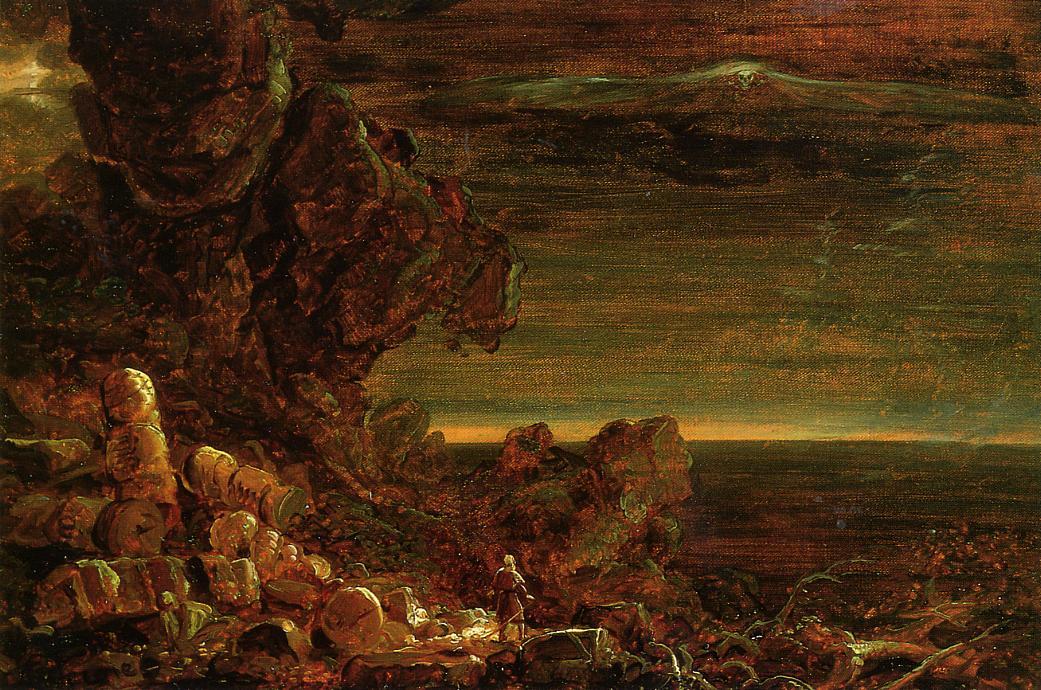
Thomas Cole’s “The Cross and the World: Study for ‘The Pilgrim of the World at the End of His Journey’,” painted in 1846, is more than just a depiction of a dramatic coastal scene; it's a profound meditation on humanity’s place within the vastness of nature and the enduring search for spiritual meaning. Created during a pivotal moment in American art history – the rise of the Hudson River School – this work exemplifies Cole’s mastery in blending Romantic sensibility with deeply rooted religious symbolism, offering a window into his own contemplative worldview.
- A Vision of the Sublime: The painting immediately commands attention with its turbulent atmosphere. A dark, storm-laden sky clashes dramatically with the serene expanse of the ocean below, creating a palpable sense of unease and awe – a quintessential element of the sublime that captivated Romantic artists.
- The Power of Naturalism: Cole’s meticulous observation of the natural world is evident in every detail, from the jagged texture of the rocky cliff face to the scattered boulders along the shoreline. This commitment to realism was revolutionary for its time, moving beyond purely idealized landscapes towards a more profound engagement with the American wilderness.
- Humanity's Scale: The inclusion of two figures – one positioned on the left and another in the center – subtly emphasizes the scale of the landscape and the vulnerability of human existence within it. These small forms invite contemplation about our relationship to the forces of nature and the larger mysteries of life.
Contextualizing Cole’s Masterpiece
To fully appreciate “The Cross and the World,” one must understand its place within the broader context of the Hudson River School. This movement, spearheaded by artists like Cole, sought to capture the grandeur and spiritual significance of the American landscape – particularly the untamed wilderness of the East Coast. Cole’s work directly responded to the anxieties of a rapidly industrializing nation, offering a nostalgic vision of an unspoiled America that resonated deeply with the public. His artistic choices were profoundly influenced by his own religious beliefs, reflecting a desire to reconcile faith and nature.
The painting's creation coincided with a period of intense philosophical debate regarding the role of humanity in relation to the natural world. Cole’s work can be seen as an early articulation of concerns about environmental degradation – a theme that would become increasingly relevant in subsequent centuries.
Symbolism and Artistic Technique
The title itself is laden with symbolic weight. “The Cross” represents spiritual guidance, redemption, and the enduring presence of faith, while "the World" embodies the challenges, temptations, and uncertainties faced by humankind. Cole’s masterful use of oil on canvas allows for a remarkable range of textures and tonal values, enhancing the emotional impact of the scene. The dramatic contrast between light and dark – the flashes of sunlight piercing through the storm clouds – further amplifies this effect.
- Color Palette: Cole’s palette is dominated by cool blues and grays, reflecting the moodiness of the weather and the vastness of the ocean. However, touches of warm ochre and brown in the rocks and cliffs provide a grounding element, connecting the scene to the earth.
- Compositional Balance: The composition is carefully balanced, with the cliff face acting as a visual anchor and the figures serving as points of focus within the expansive landscape.
A Timeless Reflection
"The Cross and the World" remains a powerful testament to Thomas Cole’s artistic vision and his profound engagement with spiritual and philosophical questions. It is a painting that invites viewers to contemplate their own place in the world, to appreciate the beauty and power of nature, and to seek solace in the face of life's uncertainties. This meticulously crafted reproduction captures not only the visual splendor of Cole’s original but also the enduring emotional resonance of this iconic work.
Ähnliche Kunstwerke
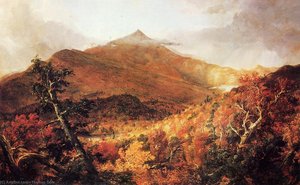
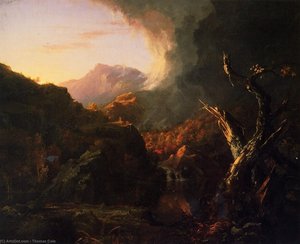
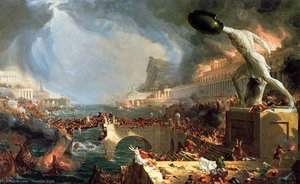
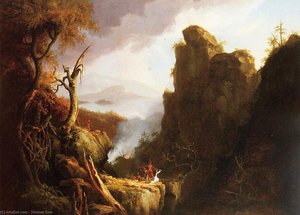
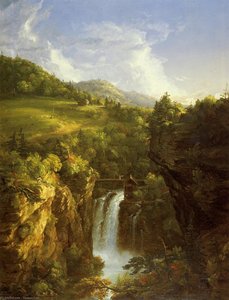
Über den Künstler
Frühes Leben und Karriere
Thomas Cole, ein in Großbritannien geborener amerikanischer Künstler, wurde am 1. Februar 1801 in Bolton le Moors, Lancashire geboren. Im Jahr 1818 wanderte er mit seiner Familie in die Vereinigten Staaten aus und ließ sich in Steubenville, Ohio, nieder. Mit 22 Jahren zog Cole nach Philadelphia und später im Jahr 1825 nach Catskill, New York, wo er bis 1847 mit seiner Frau und seinen Kindern lebte.Künstlerischer Stil und Einflüsse
Coles Werk zeichnet sich durch seine romantische Darstellung der amerikanischen Wildnis aus. Er war weitgehend Autodidakt als Maler und stützte sich auf Bücher und das Studium der Werke anderer Künstler. Im Jahr 1822 begann Cole als Porträtmaler zu arbeiten und verlagerte später seinen Schwerpunkt auf die Landschaftsmalerei. Seine Gemälde zeigten oft das Catskill Mountain House, den berühmten Kaaterskill Falls und zwei Ansichten von Cold Spring.Bemerkenswerte Werke
- The Course of Empire, eine fünfteilige Gemäldereihe, die Cole in den Jahren 1833-36 schuf, ist bemerkenswert dafür, dass sie beliebte amerikanische Gefühle der damaligen Zeit widerspiegelt.
- Eine Ansicht vom Mount Etna aus Taormina (78 x 120 Zoll Öl auf Leinwand) zeigt Coles Faszination für den höchsten aktiven Vulkan Europas.
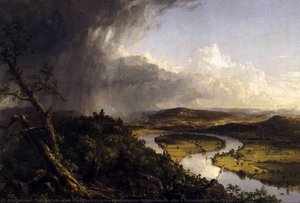
- The Oxbow (1836), das eine friedliche Landschaft zeigt, ist ein weiteres Beispiel für Coles Meisterschaft in der Landschaftsmalerei.
Museen und Sammlungen
Viele von Coles Werken finden sich in den folgenden Museen:- New York Historical Society: beherbergt Coles The Course of Empire-Reihe.
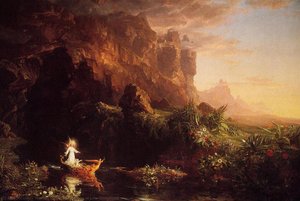
- National Gallery in Washington, D.C.: zeigt eine Version von The Voyage of Life.
- Munson-Williams-Proctor Arts Institute in Utica, New York: beherbergt eine weitere Version von The Voyage of Life.
- Allen Memorial Art Museum: zeigt Lake with Dead Trees (1825).
Vermächtnis und Einfluss
Coles Einfluss auf die amerikanische Kunst ist tiefgreifend. Er gilt als der Gründer der Hudson River School, einer Bewegung der amerikanischen Kunst des mittleren 19. Jahrhunderts, die im Hudson River Valley in New York entstand. Seine Arbeit hat Generationen von Künstlern inspiriert, darunter Asher B. Durand und Frederic Edwin Church. Empfohlene Lektüre: Weitere Werke von Thomas Cole:- Frederic Edwin Churchs Schoodic Peninsula from Mount Desert at Sunrise (zum Vergleich mit Coles Stil)
- Winslow Homers Kanus in Rapids, Saguenay River (Beispiel eines anderen amerikanischen Landschaftsmalers)
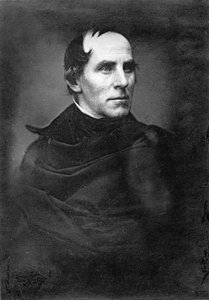
Thomas Cole
1801 - 1848 , Vereinigtes Königreich
Kurzinfos
- Bemerkenswerte Kunstwerke:
- Der Bogen
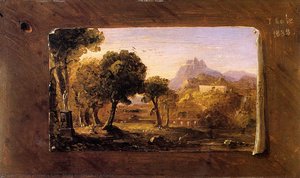
- Studie für Traum von Arcadia
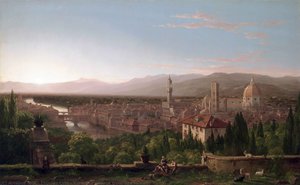
- Ansicht von Florenz
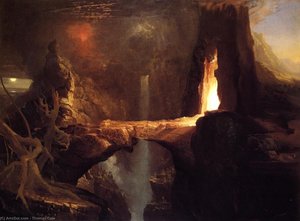
- Vertreibung. Mond und Kerzenschein
- Lake with Dead Trees
- The Course of Empire
- Geburtsdatum: 1. Februar 1801
- Geburtsort (Stadt Und Land): Bolton, Vereinigtes Königreich
- Künstler Oder Bewegungen, Die Von Diesem Künstler Beeinflusst Wurden:
- Asher B. Durand
- Frederic Edwin Church
- Künstlerische Bewegung Oder Stil: Hudson River School, Romantik
- Nationalität: Britisch-Amerikanisch
- Sterbedatum: 1848
- Vollständiger Name: Thomas Cole
Ähnliche Artikel
Die 10 Meisterwerke der Hudson River School: Kunst für Ihr Zuhause | ArtsDot
Entdecken Sie die 10 prägendsten Meisterwerke der Hudson River School! Erfahren Sie mehr über Thomas Cole, Frederic Church & Co. und ihre atemberaubenden Landschaftsbilder. Hochwertige Kunstdrucke für Ihr Zuhause – jetzt auf ArtsDot.com!
The Sublime Landscape: Exploring the Hudson River School Movement
Explore the captivating world of the Hudson River School! Discover the history, artists, and defining characteristics of this iconic American art movement. Learn about Romanticism's influence & find inspiration for your collection.
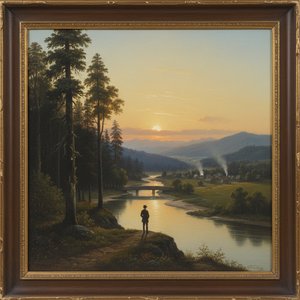
Robert Spencer: Luminism, Narrative & the American Landscape Tradition
Explore the captivating world of Luminism & the Hudson River School with our expert analysis. Discover the history, artists, and enduring beauty of 19th-century American landscape painting. Find museum-quality reproductions at ArtsDot.
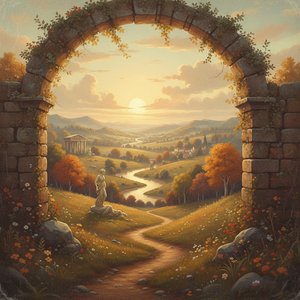
Echoes of Arcadia: Nostalgia & Transformation in Vintage Landscape Art
Explore the evocative world of vintage landscape art! Discover the history, artists & emotional power behind masterpieces from the Hudson River School & beyond. Expert insights for collectors & enthusiasts.
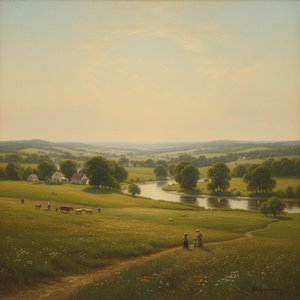
Thomas Worthington Whittredge und die Erfassung des amerikanischen Pastoralideals im Luminismus
Entdecken Sie das Werk von Thomas Worthington Whittredge und die Faszination des Luminismus! Analysieren Sie mit uns seine Gemälde, den Einfluss der Hudson River School und das amerikanische Pastoralideal. Expertenwissen & Hintergrundinformationen.