

 Vorschau anzeigen
 Versenden
 Teilen
 Details anzeigen

 Herunterladen
 Ähnliche Objekte
 Röntgenaufnahme
 Diashow
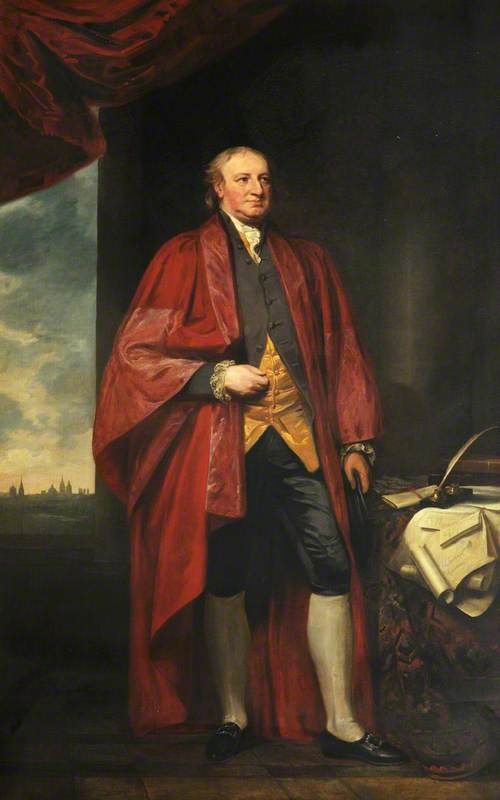
Sir Roger Newdigate (1719–1806), 5th Baronet (copy after George Romney)
 1792
1792 239.0 x 149.0 cm
 Universitätscollege
 Weiterlesen
Erwerben Sie ein hochauflösendes, optimiertes digitales Bild, das der Online-Vorschau weit überlegen ist.
Jede Datei wird von unseren hauseigenen Spezialisten mit modernsten Werkzeugen und fachmännischer manueller Retusche sorgfältig vorbereitet. Wir stellen sicher, dass jedes Bild eine außergewöhnliche Klarheit, präzise Farbgenauigkeit und feinste Details aufweist.
Die endgültige Datei wird innerhalb von 72 Stunden per E-Mail zugestellt und ist für den sofortigen Einsatz in professionellen, redaktionellen und Druckumgebungen optimiert. Es handelt sich um dieselbe Qualität, der führende Designstudios, Verlage und Galerien vertrauen.
Digitales Bild
Laden Sie eine hochauflösende Datei für die persönliche Präsentation, den Druck und kreative Projekte herunter. ( Druck bestellen Handgemalte Reproduktion bestellen)
In jeder Bestellung digitaler Bilder enthalten
Professionelle digitale Bereitstellung, garantiert
Wenn Sie sich für ArtsDot.com entscheiden, erhalten Sie nicht nur ein Bild – Sie erhalten ein professionell aufbereitetes digitales Kunstwerk, das mit höchster Präzision erstellt und durch eine Zufriedenheitsgarantie abgesichert wird. Hier ist alles, was automatisch mit Ihrer Bestellung geliefert wird:

Schnelle E-Mail-Zustellung
Ihre hochauflösende digitale Bilddatei wird Ihnen innerhalb von 72 Stunden nach der Bestellung per E-Mail zugestellt – bereit zur sofortigen Verwendung.

KI-optimierte digitale Datei
Ihre Kunstwerke werden professionell mithilfe fortschrittlicher KI-Tools und manueller Bearbeitung optimiert, um maximale Detailtreue, Klarheit und Farbgenauigkeit zu gewährleisten.

Lebenslanger kostenloser Neudruckservice
Datei versehentlich gelöscht oder verloren? Keine Sorge – wir senden sie Ihnen jederzeit kostenlos erneut zu.

Keine Einfuhrgebühren – jemals
Genießen Sie Ihr Kunstwerk sofort ohne Zollgebühren, Einfuhrabgaben oder Versandkosten – digitale Downloads sind immer steuerfrei.

Garantierte Farbtreue
Wir garantieren, dass Ihr digitales Bild mithilfe professioneller Werkzeuge und Farbmanagement die Originalfarben so präzise wie möglich wiedergibt.

60-Tage-Zufriedenheitsgarantie
Sollten Sie mit Ihrem digitalen Bild nicht zufrieden sein, werden wir es überarbeiten oder Ihnen innerhalb von 60 Tagen 100% erstatten – ohne Wenn und Aber.

100% Geld-zurück-Garantie
Nicht zufrieden? Erhalten Sie innerhalb von 60 Tagen nach Erhalt Ihrer digitalen Datei eine vollständige Rückerstattung – ohne Angabe von Gründen.

Rabatte bei Großbestellungen
3 Bilder kaufen, 10% sparen – 5 Bilder kaufen, 15% sparen – Ab 10 Bildern 20% sparen. Ideal für kreative Projekte, Galerien und Agenturen.
Ähnliche Kunstwerke









Biografie des Künstlers
A Pioneer of the Iron Road: The Life and Legacy of Thomas Kirby
In the heart of the nineteenth century, as the rhythmic pulse of the Industrial Revolution began to reshape the very landscape of Europe, a new kind of vision was emerging. Thomas Kirby (1814–1886), born in the coastal serenity of Cherbourg, Normandy, stood at the forefront of this transformation. While many of his contemporaries sought solace in the pastoral stillness of the countryside, Kirby found a profound, moving beauty in the steel and steam of the burgeoning railway era. His artistic journey was deeply rooted in classical tradition, having undergone a formative apprenticeship under the legendary Jean-François Millet. From Millet, the master of French rural life, Kirby inherited an unparalleled eye for meticulous detail and a reverence for the truth found in observation. Yet, where his mentor captured the quiet dignity of the peasant, Kirby turned his gaze toward the locomotive, blending a rigorous realism with a romantic idealism that celebrated the dawn of modern engineering.
Kirby’s development as an artist was marked by a unique synthesis of technical precision and atmospheric storytelling. He did not merely paint machines; he documented the architectural soul of a changing world. To achieve the level of accuracy for which he became renowned, Kirby immersed himself in the study of engineering principles. He painstakingly recreated the complex geometry of bridges, the shadowed depths of tunnels, and the bustling vitality of railway stations. This dedication allowed him to capture the tangible reality of Victorian progress, ensuring that every bolt, rail, and steam plume felt authentic to the viewer. His work served as a bridge between the old world of romantic landscapes and the new world of industrial dynamism, making him a vital chronicler of the era's technological triumphs.
Mastery of Motion and the Industrial Landscape
The breadth of Kirby’s oeuvre is staggering, comprising over 300 paintings that serve as an invaluable visual archive of nineteenth-century transportation infrastructure. His commissions from major railway companies across England and France allowed him to traverse the most significant arteries of European commerce, capturing the essence of both British and French progress. In his celebrated works, one can witness a masterful command of light and movement:
- The Bridge Over the River Avon: A breathtaking display of architectural grandeur, where Kirby utilizes atmospheric perspective to lend a sense of immense scale and structural weight to the crossing.
- The Station at Rouen: A vibrant tableau that captures the frantic, organized chaos of a French railway terminus, rendered with such realism that the viewer can almost hear the hiss of escaping steam.
- The Locomotive Engine: A testament to his ability to convey kinetic energy, using fluid brushstrokes to suggest the raw power and unstoppable momentum of the iron horse.
Beyond the mere documentation of steel, Kirby’s paintings possess a poetic quality that elevates them above simple technical illustrations. He understood that the railway was not just a mode of transport, but a symbol of human ambition and the shrinking of distances. Through his use of light—often capturing the way sunbeams pierce through station canopies or reflect off polished metal—he imbued these industrial scenes with a sense of wonder and even divinity. His ability to balance the cold, hard reality of iron with the soft, ephemeral qualities of atmosphere ensured that his work resonated emotionally with an audience caught between tradition and progress.
Historical Significance and Artistic Endurance
The historical importance of Thomas Kirby lies in his role as a visual historian of the Industrial Revolution. At a time when the world was being fundamentally rewired by tracks and rails, Kirby provided the definitive imagery for this transition. His paintings offer modern scholars an intimate look at the engineering feats and social shifts of the Victorian age. He captured the precise moment when the landscape ceased to be merely organic and began to incorporate the permanent, rhythmic structures of man-made industry.
Though his name may not carry the same immediate recognition as the masters of Impressionism, Kirby’s contribution to the genre of railway art is foundational. He paved the way for a specialized form of landscape painting that found beauty in the mechanical and the monumental. Today, his legacy lives on through the collections that house his works, reminding us of a time when the arrival of a train was not just a scheduled event, but a profound symbol of a world moving ever forward into the unknown.
thomas kirby
1814 - 1886
Kurzinfos
- Artistic Movement Or Style: Romanticism
- Artists Or Movements Influenced By This Artist: ['Jean-François Millet']
- Artists Who Influenced This Artist: ['George Romney']
- Date Of Birth: 1814
- Date Of Death: 1886
- Full Name: Thomas Kirby
- Nationality: British
- Notable Artworks: ['The Railway Station']
- Place Of Birth: Cherbourg

