 Vorschau anzeigen
 Versenden
 Teilen
 Details anzeigen

 Herunterladen
 Ähnliche Objekte
 Röntgenaufnahme
 Diashow
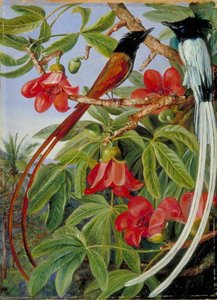
Birds of Paradise
 Oil
Oil- WallArt
- Realism
 1862
1862- 19th Century
 35.0 x 25.0 cm
 Yale Center for British Art
 Weiterlesen
Erwerben Sie ein hochauflösendes, optimiertes digitales Bild, das der Online-Vorschau weit überlegen ist.
Jede Datei wird von unseren hauseigenen Spezialisten mit modernsten Werkzeugen und fachmännischer manueller Retusche sorgfältig vorbereitet. Wir stellen sicher, dass jedes Bild eine außergewöhnliche Klarheit, präzise Farbgenauigkeit und feinste Details aufweist.
Die endgültige Datei wird innerhalb von 72 Stunden per E-Mail zugestellt und ist für den sofortigen Einsatz in professionellen, redaktionellen und Druckumgebungen optimiert. Es handelt sich um dieselbe Qualität, der führende Designstudios, Verlage und Galerien vertrauen.
Digitales Bild
Laden Sie eine hochauflösende Datei für die persönliche Präsentation, den Druck und kreative Projekte herunter. ( Druck bestellen Handgemalte Reproduktion bestellen)
In jeder Bestellung digitaler Bilder enthalten
Professionelle digitale Bereitstellung, garantiert
Wenn Sie sich für ArtsDot.com entscheiden, erhalten Sie nicht nur ein Bild – Sie erhalten ein professionell aufbereitetes digitales Kunstwerk, das mit höchster Präzision erstellt und durch eine Zufriedenheitsgarantie abgesichert wird. Hier ist alles, was automatisch mit Ihrer Bestellung geliefert wird:

Schnelle E-Mail-Zustellung
Ihre hochauflösende digitale Bilddatei wird Ihnen innerhalb von 72 Stunden nach der Bestellung per E-Mail zugestellt – bereit zur sofortigen Verwendung.

KI-optimierte digitale Datei
Ihre Kunstwerke werden professionell mithilfe fortschrittlicher KI-Tools und manueller Bearbeitung optimiert, um maximale Detailtreue, Klarheit und Farbgenauigkeit zu gewährleisten.

Lebenslanger kostenloser Neudruckservice
Datei versehentlich gelöscht oder verloren? Keine Sorge – wir senden sie Ihnen jederzeit kostenlos erneut zu.

Keine Einfuhrgebühren – jemals
Genießen Sie Ihr Kunstwerk sofort ohne Zollgebühren, Einfuhrabgaben oder Versandkosten – digitale Downloads sind immer steuerfrei.

Garantierte Farbtreue
Wir garantieren, dass Ihr digitales Bild mithilfe professioneller Werkzeuge und Farbmanagement die Originalfarben so präzise wie möglich wiedergibt.

60-Tage-Zufriedenheitsgarantie
Sollten Sie mit Ihrem digitalen Bild nicht zufrieden sein, werden wir es überarbeiten oder Ihnen innerhalb von 60 Tagen 100% erstatten – ohne Wenn und Aber.

100% Geld-zurück-Garantie
Nicht zufrieden? Erhalten Sie innerhalb von 60 Tagen nach Erhalt Ihrer digitalen Datei eine vollständige Rückerstattung – ohne Angabe von Gründen.

Rabatte bei Großbestellungen
3 Bilder kaufen, 10% sparen – 5 Bilder kaufen, 15% sparen – Ab 10 Bildern 20% sparen. Ideal für kreative Projekte, Galerien und Agenturen.
Details zum Sammlerstück
A Window into the Sublime: The Enchanting World of Thomas William Wood
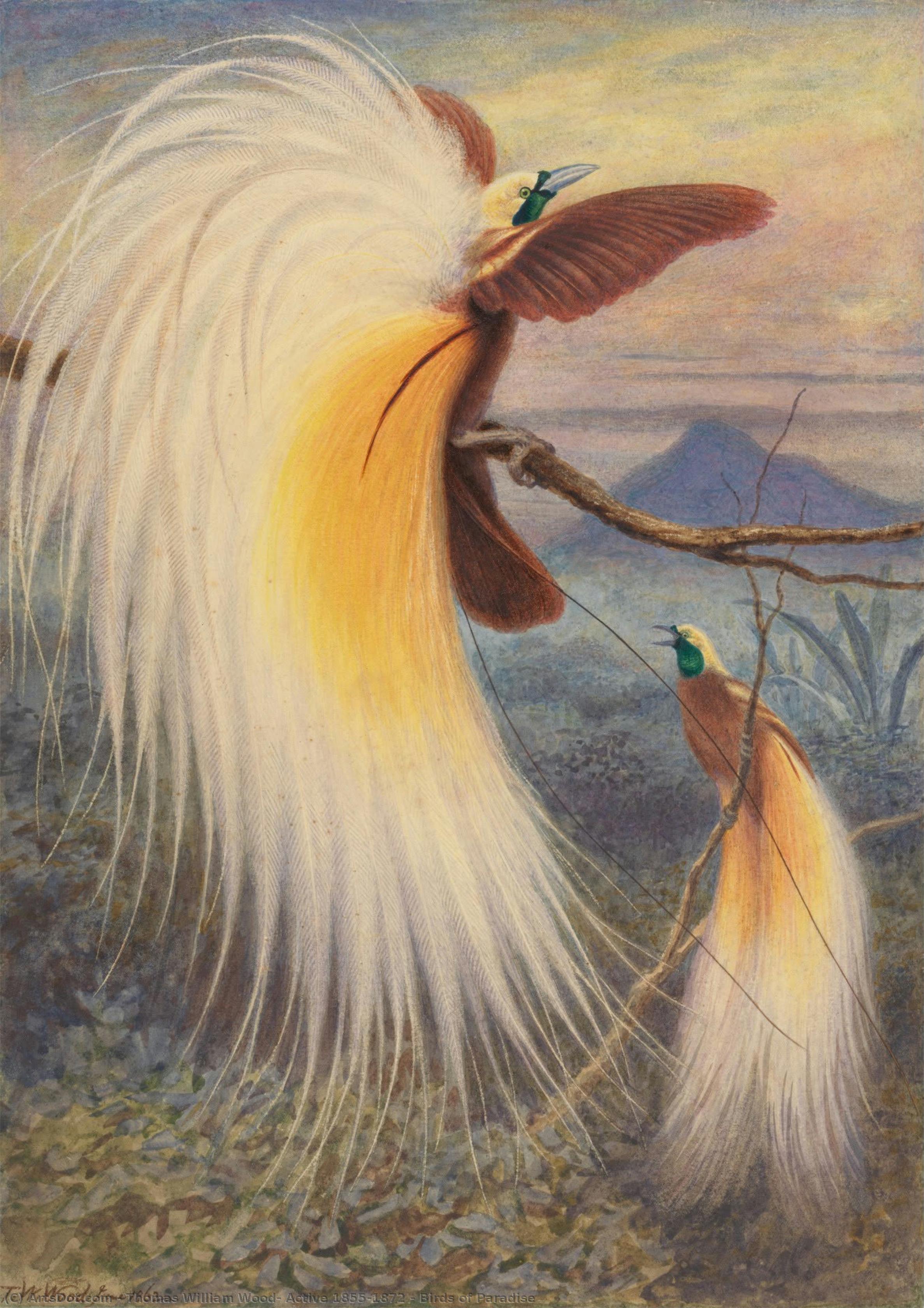
In the delicate dance of 19th-century naturalism, few works capture the quiet intimacy of the wild as tenderly as Thomas William Wood’s 1862 masterpiece, Birds of Paradise. This exquisite painting serves as a profound meditation on the harmony between fauna and the vast, untamed landscapes of our world. At first glance, the viewer is drawn into a private moment shared by two magnificent birds, perched upon a singular, weathered branch. Their positioning—facing one another in a silent, avian dialogue—creates an immediate emotional resonance, inviting us to witness a connection that feels both ancient and deeply personal. The composition is masterfully balanced, using the subjects to anchor a scene that stretches toward a breathtaking mountain range, where the distant peaks suggest a world of infinite mystery and grandeur.
The technique employed by Wood reflects the rigorous training he received at the Regent Street Polytechnic, blended with the soulful, light-drenched inspiration he gathered during his travels in Italy. Every brushstroke contributes to a rich, textured reality; one can almost feel the softness of the plumage and the ruggedness of the bark beneath the birds' claws. The artist utilizes a subtle interplay of light and shadow to breathe life into the landscape, allowing the distant mountains to recede into a soft, atmospheric haze while keeping the foreground subjects in sharp, captivating focus. This mastery of depth creates a sense of three-dimensionality that pulls the observer into the frame, making the painting feel less like a static image and more like a living, breathing window into a serene paradise.
Beyond its technical brilliance, Birds of Paradise carries a deep symbolic weight that continues to captivate collectors and decorators alike. In the Victorian era, birds were often viewed as messengers of the divine or symbols of the soul's longing for freedom. By placing these creatures against a backdrop of monumental mountains and the subtle presence of human observers in the distance, Wood explores the relationship between humanity and the sublime. The figures at the bottom-left corner act as surrogates for our own gaze, reminding us of our role as witnesses to the beauty of the natural order. For the discerning interior designer, this piece offers more than mere decoration; it provides a focal point of tranquility and intellectual depth, perfect for creating an atmosphere of sophisticated calm in a curated living space or a refined study.
Owning a reproduction of such a significant work allows one to bring the timeless elegance of the 19th-century British tradition into a modern home. Whether placed in a sunlit gallery or a cozy reading nook, the painting’s soft palette and evocative subject matter serve as a constant reminder of the enduring beauty found in nature's most quiet moments. It is an investment in emotion, a piece that speaks of peace, discovery, and the eternal allure of the wild.
Ähnliche Kunstwerke

Biografie des Künstlers
Early Life and Artistic Beginnings
Born in Ipswich, Suffolk, in 1877, Thomas William Wood’s artistic journey began not within the hallowed halls of a formal academy but amidst the vibrant landscapes of rural England. Details of his early childhood remain somewhat elusive, shrouded in the mists of late Victorian and Edwardian Britain, yet it is clear that an intimate connection with nature – specifically, the avian world – would profoundly shape his artistic vision. His formative years were spent absorbing the subtle shifts of light and shadow across fields and hedgerows, a foundation upon which he would later build his distinctive style.
Wood’s formal training took place at the Regent Street Polytechnic in London, a prestigious institution known for its emphasis on traditional artistic techniques. However, it was his time spent studying in Italy that proved particularly influential. The Italian landscapes – bathed in golden light and imbued with a sense of timeless beauty – ignited within him a passion for capturing fleeting moments of visual poetry. This exposure to the classical tradition combined with the burgeoning Impressionist movement would ultimately inform his unique approach to painting.
The Rise of a Portraitist and Animal Painter
Wood initially established himself as a portrait painter, quickly gaining recognition for his ability to capture the essence of his subjects – often distinguished members of British society. His portraits were characterized by a remarkable sensitivity to detail, an astute understanding of character, and a subtle use of color that conveyed both dignity and warmth. However, it was his growing fascination with birds, particularly exotic species like the Birds of Paradise, that would ultimately become the defining element of his artistic career.
The 1860s witnessed an explosion of interest in ornithology and the exotic, fueled by colonial expansion and advancements in travel. Wood expertly tapped into this cultural zeitgeist, producing a series of stunning paintings depicting these vibrant creatures – ‘Birds of Paradise’ (1862) stands as a particularly exquisite example of his skill. These works were not merely depictions of beauty; they were imbued with a sense of wonder and reverence for the natural world, reflecting a growing awareness of its fragility and inherent value.
Technique and Style: Light, Color, and Detail
Wood’s artistic style is often described as a harmonious blend of realism and Impressionism. He meticulously observed his subjects – whether human or animal – rendering them with astonishing accuracy and detail. Yet, he never allowed this technical precision to stifle his creative impulse. Instead, he employed loose brushstrokes, vibrant colors, and an emphasis on capturing the effects of light—particularly the dappled sunlight filtering through foliage—to create paintings that are both visually arresting and emotionally resonant.
His use of color was particularly noteworthy. He favored a rich palette of greens, blues, and browns, often juxtaposing them with flashes of brilliant scarlet, gold, and turquoise to highlight key features and create a sense of drama. He also demonstrated a masterful understanding of atmospheric perspective, using subtle gradations of tone to convey depth and distance.
Legacy and Historical Significance
Thomas William Wood’s career spanned several decades, during which he established himself as one of the leading animal painters of his time. His paintings are now held in prestigious collections worldwide, testament to their enduring appeal and artistic merit. He represents a fascinating intersection of Victorian sensibilities, scientific curiosity, and artistic innovation.
Wood’s work reflects the broader cultural shifts of the late 19th century – a period marked by both optimism and anxiety, progress and uncertainty. His paintings offer a glimpse into a world where the beauty of nature was increasingly valued alongside the achievements of industrial society. Furthermore, his dedication to capturing the essence of birds—often threatened by habitat loss and exploitation—can be interpreted as a subtle yet powerful statement about the importance of conservation.
While he may not be as widely celebrated as some of his contemporaries, Thomas William Wood’s legacy endures. His paintings continue to captivate viewers with their exquisite detail, vibrant colors, and profound sense of wonder—a reminder of the enduring power of art to illuminate our relationship with the natural world.