 Vorschau anzeigen
 Versenden
 Teilen
 Details anzeigen

 Herunterladen
 Ähnliche Objekte
 Röntgenaufnahme
 Diashow
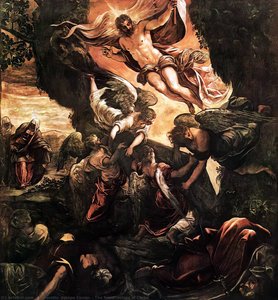
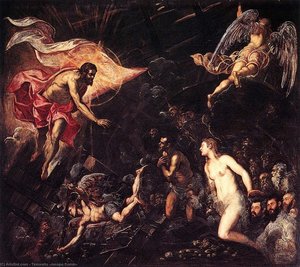
Die Auferstehung (Detail)


 Weiterlesen
Handgefertigte Ölreproduktion
Handgemaltes Ölgemälde auf Leinwand in Ihrer Wunschgröße und mit Rahmen, auf Bestellung von unseren Künstlern angefertigt. ( Druck bestellen Bild kaufen)




P118B $10

P118H $10

P118W $10

P438Z $10

P508JH $12

P508YH $12

P805H $10

P805Z $10

P919BZ $10

P919G $10

P919XJ $10

P959ZH $10

P968JZ $12

W106C $8

W218G $10

W218JH $8

W218Y $10

W307PJ $10

W316G $10

W316PJ $8

W316Y $10

W398PJ $8

W4111J $10

W500HY $15

W500JH $15

W692G $12

W849H $8

W940BG $15

W953PJ $8




Wählen Sie aus unseren vordefinierten Formaten, die den ursprünglichen Proportionen des Kunstwerks entsprechen.

Sie können Ihre eigenen Maße eingeben, um einen bestimmten Rahmen oder Platz auszufüllen. Wenn die gewählte Größe nicht den Proportionen des Originalbildes entspricht, werden wir das Kunstwerk entweder beschneiden oder das Gemälde durch zusätzliche, handgemalte Elemente erweitern. Ein digitales Mockup wird Ihnen zur Genehmigung zugesandt, bevor die Produktion beginnt.
Bitte beachten Sie, dass die Bildschirmvorschau nicht die tatsächliche Beschneidung oder Erweiterung widerspiegelt. Nur das Mockup zeigt die endgültige Komposition exakt an.
Obwohl Sondermaße verfügbar sind, empfehlen wir, eine Größe aus der vordefinierten Liste zu wählen, um die ursprünglichen Proportionen beizubehalten.
Nach der Bestellung wird das ArtsDot.com-Team dem Kunden Anweisungen per E-Mail zusenden und eine Mockup-Vorschau bereitstellen.
Weltweiter Versand () in nur 3 bis 4 Wochen statt der üblichen 5 Wochen. (20 August). Keine Kompromisse bei der Qualität.

Kostenloser weltweiter Expressversand

Hochwertige Leinenleinwand

Umfassender Versicherungsschutz beim Versand

Zollgebühren-Rückerstattungsgarantie

Garantie für exakte Farbtreue

60 Tage Rückgaberecht (nur bei Mängeln)

100% Geld-zurück-Garantie

Mengenrabatt verfügbar
 Die Glasoption ist nur für Größen unter 110 cm verfügbar.

Die Auferstehung (Detail)
Art der Reproduktion
Format der Reproduktion
-


Gesamtpreis
$ 263
Beschreibung des Kunstwerks
Die Erhebung Jesu – Ein dramatisches Meisterwerk von Jacopo Tintoretto
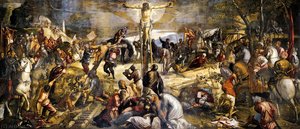
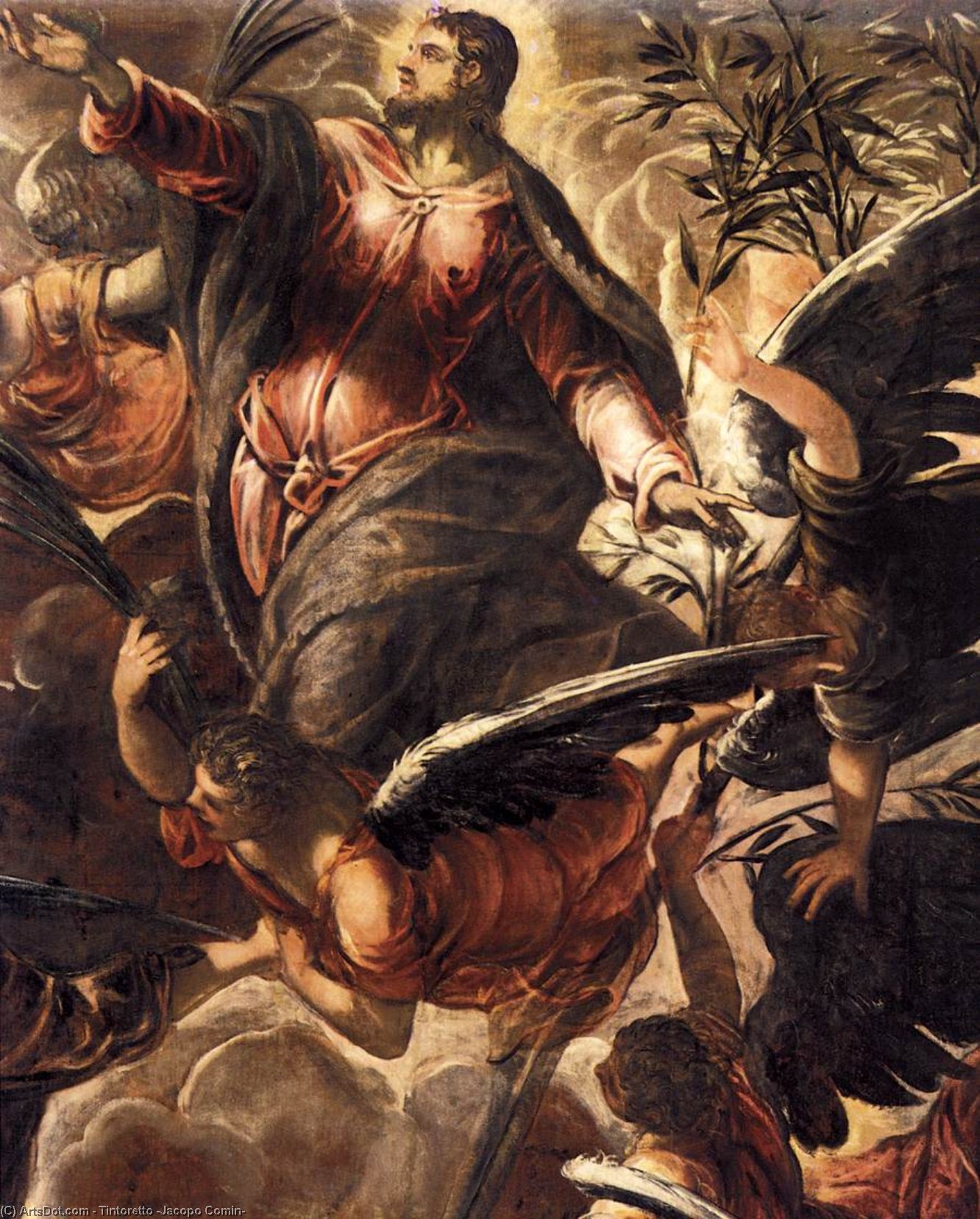
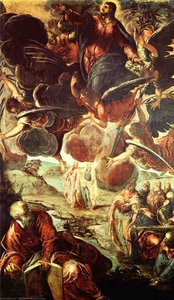
Jacopo Tintoretto’s “The Ascension” (Detail), painted in 1579, is not merely a depiction of a biblical event; it's a visceral experience. This remarkable work, brimming with dynamic movement and an almost theatrical intensity, transports the viewer directly into the heart of this pivotal moment in Christian faith. The painting captures the precise instant when Jesus, arms outstretched towards the heavens, is lifted by the powerful intervention of angels – a scene charged with spiritual energy and profound emotional resonance. The detail presented here offers a concentrated glimpse into this monumental composition, revealing the meticulous layering of paint and the artist’s masterful manipulation of light and shadow that are hallmarks of his distinctive style.
Tintoretto's Venetian Drama: A Revolutionary Approach
Born Jacopo Robusti in Venice around 1518, Tintoretto forged a path utterly unlike his contemporaries. He eschewed the traditional apprenticeship model, instead immersing himself in relentless study and experimentation. This independent spirit fueled an artistic evolution characterized by bold innovation and a dramatic flair that would come to define Venetian painting during the High Renaissance and early Baroque periods. Unlike many of his peers who focused on polished surfaces and subtle color palettes, Tintoretto embraced a more expressive approach – utilizing thick impasto, rapid brushstrokes, and a masterful command of chiaroscuro (the contrast between light and dark) to create an overwhelming sense of movement and drama. His studio was famously chaotic, with canvases stacked high and materials strewn about, mirroring the intensity of his creative process.
Symbolism and Spiritual Weight: Angels and the Dove
The composition of “The Ascension” is rich in symbolic detail. The multitude of angels, numbering at least thirteen, are not simply supporting figures; they represent divine power and the active participation of God’s messengers. Their varied poses – some reaching upwards with outstretched hands, others hovering above – contribute to the painting's dynamic energy and convey a sense of urgency and ascension. Notably, a small bird, likely a dove, is positioned near the upper left corner. The dove, a potent symbol of peace and divine grace, subtly reinforces the spiritual significance of the event. Tintoretto’s use of color further amplifies this symbolism; the vibrant blues and golds used to depict the heavens contrast sharply with the earthy tones of the earthly realm, emphasizing the transcendence taking place.
Technique and Emotional Impact: A Masterclass in Light and Movement
Tintoretto’s technique is breathtakingly evident in this detail. Observe how he builds up layers of paint to create a sense of depth and volume, particularly in the drapery of the angels' robes and the folds of Jesus’ garments. The use of *sfumato* – a subtle blurring of lines and edges – creates an atmospheric effect that envelops the scene, drawing the viewer into the drama. Crucially, Tintoretto employed a technique known as “alla prima,” meaning he painted directly onto the canvas without underdrawing, resulting in loose, expressive brushstrokes that contribute to the painting’s dynamism. The overall emotional impact is one of awe and reverence – a powerful reminder of faith, hope, and divine intervention. A high-quality reproduction captures not only the visual splendor but also the very spirit of this extraordinary masterpiece.
- Artist: Jacopo Tintoretto
- Date: 1579
- Medium: Oil on Canvas (Detail)
- Style: Venetian Renaissance/Early Baroque – characterized by dramatic lighting, dynamic composition, and expressive brushwork.
ArtsDot offers meticulously crafted reproductions of “The Ascension” (Detail), allowing you to experience the brilliance of Tintoretto’s vision in stunning detail. Each reproduction is created using archival-quality materials to ensure lasting beauty and authenticity.
Ähnliche Kunstwerke
Über den Künstler
Jacopo Tintoretto (1518–1594)
Frühes Leben und Ausbildung
- Geboren Jacopo Robusti in Venedig um Ende September oder Anfang Oktober 1518.
- Sein Vater, Battista Robusti, war Färber – daher der Spitzname „Tintoretto“ („kleiner Färber“).
- Details seiner formellen Ausbildung sind spärlich; Berichte deuten auf ein kurzes und erfolgloses Lehrverhältnis mit Tizian hin.
- Er lernte wahrscheinlich autodidaktisch, indem er sich durch Sektionen und Zeichnungen aus Gips- und Reliefskulpturen mit Anatomie beschäftigte.
Künstlerische Entwicklung & Stil
- Tintorettos Stil ist durch dramatische Kompositionen, energiegeladene Figuren und eine mutige Verwendung der Perspektive gekennzeichnet.
- Seine frühen Werke zeigen eine Mischung aus Einflüssen, darunter Tizian, Michelangelo und andere venezianische Meister.
- Er entwickelte eine besondere Technik mit schnellem Pinselstrich und innovativen Lichteffekten – wodurch er den Spitznamen „Il Furioso“ („der Wütende“) erhielt.
- Seine Arbeit entwickelte sich hin zu immer dynamischeren und emotional aufgeladenen Szenen, oft mit komplexen räumlichen Anordnungen.
Wichtige Werke & Leistungen
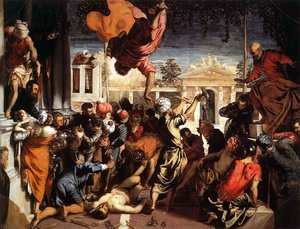
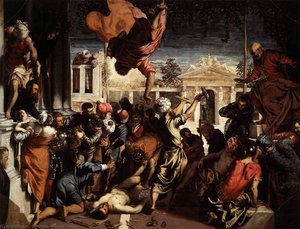
- Das Wunder des Heiligen Markus, der Sklaven befreit (1548): Ein kraftvolles Beispiel für seine dramatische Komposition und Perspektivkünste.
- Arbeiten an der Scuola Grande di San Rocco, Venedig: Dazu gehören „Die Unbefleckte Empfängnis“ und zahlreiche andere Gemälde, die seine Meisterschaft in Erzählung und Maßstab demonstrieren.
- Das letzte Abendmahl (1592–1594): Ein monumentales Werk, das seinen innovativen Ansatz für ein traditionelles Thema demonstriert.
- Zahlreiche religiöse und historische Gemälde für venezianische Kirchen und Paläste.
Einflüsse & Vermächtnis
- Er wurde von Tizians Farbgebung und Michelangelos dynamischer Figurentechnik beeinflusst.
- Tintorettos Werk schloss die Lücke zwischen der Renaissance und dem Barock, indem es spätere Künstler mit seinen dramatischen Kompositionen und ausdrucksstarken Pinselstrichen beeinflusste.
- Seine innovative Verwendung von Licht und Schatten warnt vor Techniken, die von Caravaggio und anderen Barockmeistern verwendet wurden.
- Er hinterließ ein umfangreiches Werk, das bis heute inspiriert und fesselt.
Historische Bedeutung
- Tintoretto war einer der drei großen venezianischen Maler des 16. Jahrhunderts, neben Tizian und Paolo Veronese.
- Er spielte eine entscheidende Rolle bei der Gestaltung der künstlerischen Landschaft Venedigs im späten Renaisanz.
- Sein Werk spiegelt den religiösen Eifer und die politischen Spannungen seiner Zeit wider.
- Tintorettos Vermächtnis als Meister der dramatischen Komposition und des ausdrucksstarken Gemäldes hält an, wodurch er seinen Platz als einer der wichtigsten Künstler der Geschichte festigt.
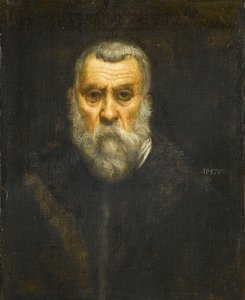
Tintoretto (Jacopo Comin)
1518 - 1594 , Italien
Kurzinfos
- Beeinflusste Künstler:
- Tizian
- Michelangelo
- Bemerkenswerte Werke:
- Das Wunder des Hl. Markus
- Die Himmelfahrt Mariä
- Letzte Abendmahl (San Giorgio)
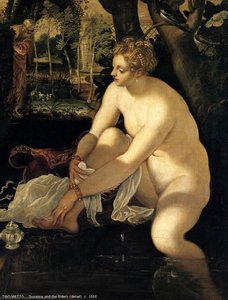
- Susanna und die Älteren
- Geburtsdatum: September/Oktober 1518
- Geburtsort: Venedig, Italien
- Künstlerische Richtung: Manierismus, Venezianische Schule
- Nationalität: Venezianisch
- Todatum: 31. Mai 1594
- Vollständiger Name: Jacopo Tintoretto
- Von Künstlern Beeinflusst:
- Bonifazio Veronese
- Paris Bordone
Ähnliche Artikel

Jacopo Tintoretto: Die 25 Meisterwerke des venezianischen Dramatikers | ArtsDot
Entdecken Sie die 25 Meisterwerke von Jacopo Tintoretto! Tauchen Sie ein in die dramatische Welt der venezianischen Renaissance. Hochwertige Kunst-Reproduktionen & Inspiration für Ihr Zuhause – jetzt auf ArtsDot.com.
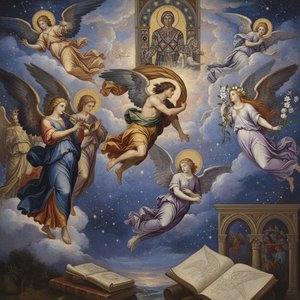
Celestial Messengers: Angels in Painting – A Historical & Artistic Exploration
Explore the captivating history of angels in painting! Discover symbolism, iconic Renaissance & Byzantine masterpieces, and renowned artists. Expert insights for art lovers & collectors at ArtsDot.
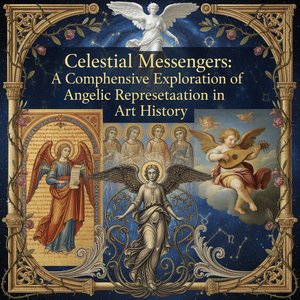
Celestial Messengers: A Comprehensive Exploration of Angelic Representation in Art History
Explore the captivating history of angels in art! Discover symbolism, iconic Renaissance masterpieces & renowned artists. Expert insights for art lovers & collectors at ArtsDot.

The Dramatic Flourish: Exploring the Baroque Movement's Enduring Legacy in Art History
Explore the dramatic world of Baroque art! Discover iconic artists like Caravaggio & Rubens, defining techniques, and its lasting impact on art history. Expert insights for collectors & enthusiasts at ArtsDot.

Barocke Pracht: Wie Sie Opulenz und Emotionen in zeitgenössische Innenräume bringen
Entdecken Sie die Pracht des Barock! Expertenratgeber für luxuriöse Innenräume mit barocken Elementen. Inspiration, Tipps & hochwertige Kunst bei .