 Vorschau anzeigen
 Versenden
 Teilen
 Details anzeigen

 Herunterladen
 Ähnliche Objekte
 Röntgenaufnahme
 Diashow
Adoration of the Magi
 Oil On Canvas
- WallArt
- High Renaissance
 1559
1559 223.0 x 120.0 cm
 Weiterlesen
Handgefertigte Ölreproduktion
Handgemaltes Ölgemälde auf Leinwand in Ihrer Wunschgröße und mit Rahmen, auf Bestellung von unseren Künstlern angefertigt. ( Druck bestellen Bild kaufen)




P118B $10

P118H $10

P118W $10

P438Z $10

P508JH $12

P508YH $12

P805H $10

P805Z $10

P919BZ $10

P919G $10

P919XJ $10

P959ZH $10

P968JZ $12

W106C $8

W218G $10

W218JH $8

W218Y $10

W307PJ $10

W316G $10

W316PJ $8

W316Y $10

W398PJ $8

W4111J $10

W500HY $15

W500JH $15

W692G $12

W849H $8

W940BG $15

W953PJ $8




Wählen Sie aus unseren vordefinierten Formaten, die den ursprünglichen Proportionen des Kunstwerks entsprechen.

Sie können Ihre eigenen Maße eingeben, um einen bestimmten Rahmen oder Platz auszufüllen. Wenn die gewählte Größe nicht den Proportionen des Originalbildes entspricht, werden wir das Kunstwerk entweder beschneiden oder das Gemälde durch zusätzliche, handgemalte Elemente erweitern. Ein digitales Mockup wird Ihnen zur Genehmigung zugesandt, bevor die Produktion beginnt.
Bitte beachten Sie, dass die Bildschirmvorschau nicht die tatsächliche Beschneidung oder Erweiterung widerspiegelt. Nur das Mockup zeigt die endgültige Komposition exakt an.
Obwohl Sondermaße verfügbar sind, empfehlen wir, eine Größe aus der vordefinierten Liste zu wählen, um die ursprünglichen Proportionen beizubehalten.
Nach der Bestellung wird das ArtsDot.com-Team dem Kunden Anweisungen per E-Mail zusenden und eine Mockup-Vorschau bereitstellen.
Weltweiter Versand () in nur 3 bis 4 Wochen statt der üblichen 5 Wochen. (24 August). Keine Kompromisse bei der Qualität.

Kostenloser weltweiter Expressversand

Hochwertige Leinenleinwand

Umfassender Versicherungsschutz beim Versand

Zollgebühren-Rückerstattungsgarantie

Garantie für exakte Farbtreue

60 Tage Rückgaberecht (nur bei Mängeln)

100% Geld-zurück-Garantie

Mengenrabatt verfügbar
 Die Glasoption ist nur für Größen unter 110 cm verfügbar.

Adoration of the Magi
Art der Reproduktion
Format der Reproduktion
-


Gesamtpreis
$ 263
Beschreibung des Kunstwerks
A Vision of Celestial Reverence: The Adoration of the Magi
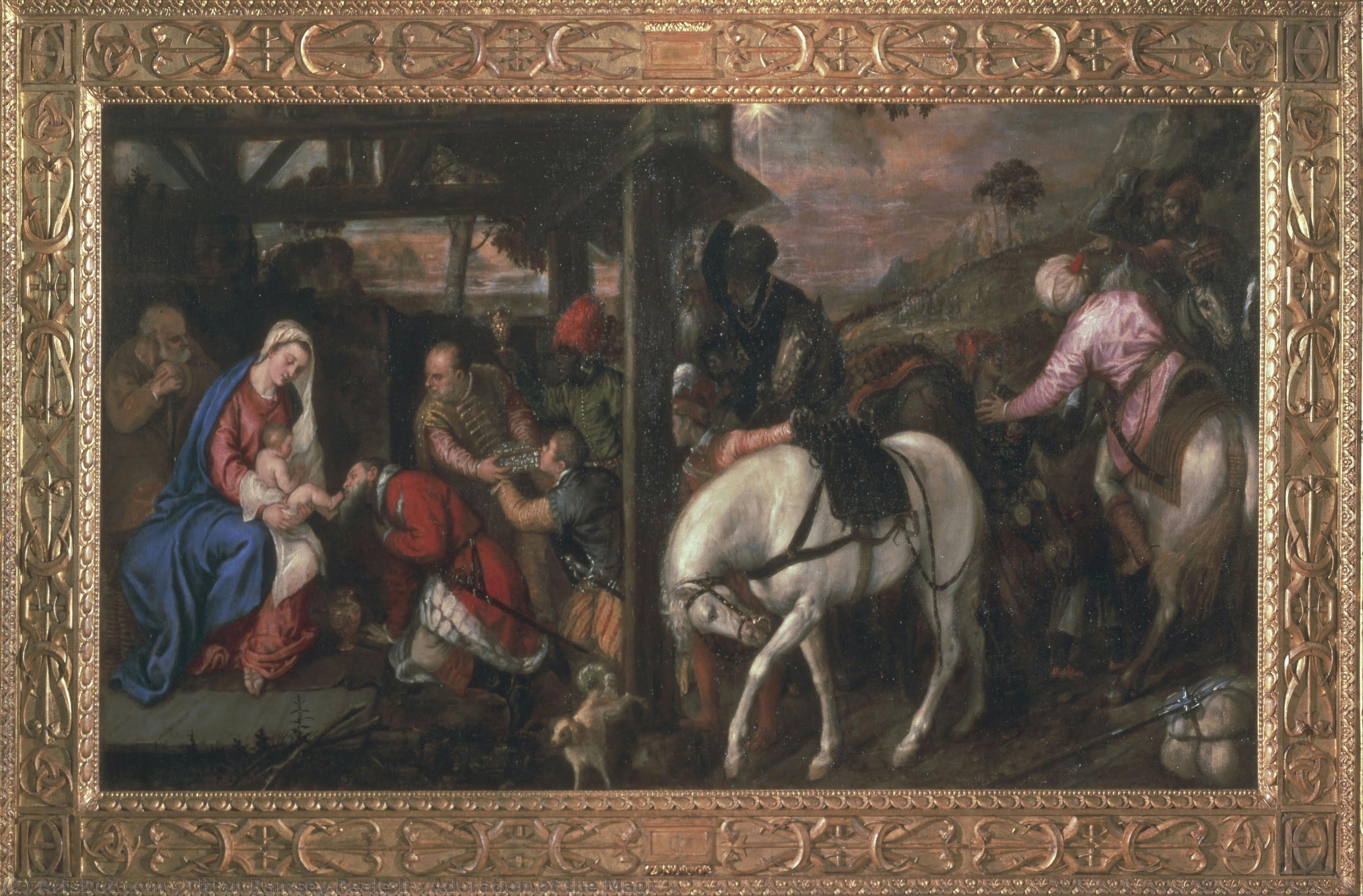
Titian Ramsay Peale II’s “Adoration of the Magi” isn't merely a painting; it’s a meticulously crafted window into a world where Renaissance ideals converge with a profound sense of spiritual wonder. Completed around 1560, this monumental work transcends its biblical subject matter to become a testament to the artist’s extraordinary skill and his deep engagement with the artistic traditions of Venice – a city he would later call home. The scene unfolds within a richly detailed interior, bathed in an ethereal light that seems to emanate from the heavens themselves. At the heart of this tableau stands Mary, Joseph, and the infant Jesus, surrounded by the awe-struck figures of the Magi, each rendered with breathtaking realism and imbued with distinct personalities.
Peale’s masterful technique is immediately apparent. He employs a complex layering of oil paint, building up textures and values to create an astonishing sense of depth and volume. The fabrics – the opulent robes of the Magi, the humble garments of Mary and Joseph – are rendered with meticulous attention to detail, showcasing the artist's deep understanding of material properties. Notice particularly the shimmering gold leaf used to highlight the gifts presented to the Christ Child; a deliberate nod to the lavishness associated with royalty and divinity. The composition is carefully balanced, guiding the viewer’s eye through the scene from the central figures towards the periphery, creating a dynamic yet harmonious arrangement.
Echoes of Titian and Venetian Grandeur
The painting's genesis lies firmly within the artistic lineage of Venice, a city renowned for its vibrant color palettes, dramatic lighting, and masterful depictions of religious subjects. Peale’s work bears unmistakable similarities to the paintings of Titian, particularly in his use of warm, saturated colors and his ability to capture the emotional intensity of the scene. However, Peale subtly diverges from his Venetian influences, injecting a distinctly Northern European sensibility into his approach – a characteristic that reflects his own upbringing within the artistic circles of Philadelphia. The influence of Charles Willson Peale’s legacy is also palpable; as the son of a prominent portraitist and museum founder, Titian Ramsay Peale II inherited a deep appreciation for observation, documentation, and the representation of human figures.
Furthermore, the painting's composition draws upon established iconography. The Magi, traditionally identified as Gaspar, Melchior, and Balthazar – representing the East, Europe, and Africa respectively – are depicted in their regal attire, presenting gifts of gold, frankincense, and myrrh. This imagery aligns with the biblical narrative but also carries symbolic weight, signifying the universal recognition of Christ’s divinity. The inclusion of a dog at the bottom left corner adds an element of earthly realism to the scene, grounding the divine encounter in the everyday world.
Symbolism and Emotional Resonance
Beyond its technical brilliance, “Adoration of the Magi” is rich in symbolic meaning. The painting speaks to themes of humility, reverence, and the arrival of salvation. Mary’s serene expression and Joseph’s protective stance convey a sense of profound faith and devotion. The Magi's gestures of adoration underscore the universality of Christ’s birth – a moment that transcends cultural boundaries and unites humanity in recognition of its divine savior. The painting evokes a powerful emotional response, inviting viewers to contemplate the miracle of Christmas and the enduring power of belief.
Titian Ramsay Peale II's "Adoration of the Magi" is more than just a beautiful artwork; it’s a window into a bygone era—a testament to the artistic legacy of Venice, the influence of Charles Willson Peale, and the enduring power of faith. Its meticulous detail, vibrant colors, and profound symbolism continue to captivate audiences today, solidifying its place as a masterpiece of Renaissance art.
Ähnliche Kunstwerke
Über den Künstler
**frühes Leben und künstlerische Anfänge**
Titian Ramsey Peale II, ein Name, der durch die Annalen der Kunstgeschichte hallt, aber von einem Hauch Geheimnis umgeben ist. Geboren 1799, war Peales frühes Leben von einer unaufhaltsamen Leidenschaft für die Künste geprägt, die ihn schließlich dazu führte, ein versierter Maler zu werden.**Künstlerische Beiträge und Stil**
Peales Werk, das durch seinen **Hochrenaissance**-Flair gekennzeichnet ist, zeigt seine Meisterschaft in Öl auf Holz und Leinwand. Bemerkenswerte Werke sind unter anderem:- Altar-Schrein mit vier Heiligen (125 x 72 cm, Öl auf Holz), ein Zeugnis seiner Hingabe an die religiöse Kunst.
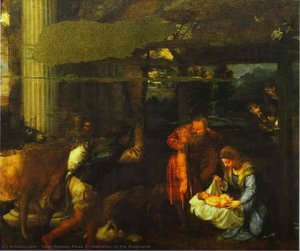
- Anbetung der Hirten (Palazzo Pitti, Florenz, Italien, **Hochrenaissance**, Öl auf Karton), das seine Fähigkeit widerspiegelt, ergreifende Momente einzufangen.
- Die Schönheit (89 x 76 cm, Palazzo Pitti, Florenz, Italien, **Hochrenaissance**, Öl auf Leinwand), ein Porträt, das Eleganz und Raffinesse ausstrahlt.
**Einflüsse und Vermächtnis**
Obwohl sein Leben nicht so gut dokumentiert ist wie das einiger Zeitgenossen, ist Peales Werk zweifellos von der **italienischen Hochrenaissance** beeinflusst, mit Hinweisen auf venezianische Farbismus. Sein Vermächtnis, das seine Zeit über die breite Anerkennung hinausging, wurde durch die Linse moderner Kunstkritik wiederentdeckt und neu geschätzt.**Wo man Peales Werke finden kann**
Für diejenigen, die sich tiefergehend mit Peales Oeuvre beschäftigen möchten, kann Titian Ramsey Peale II: Altar-Schrein mit vier Heiligen auf ArtsDot gefunden werden, zusammen mit anderen bemerkenswerten Werken. Die Uffizien-Galerie (Florenz, Italien) und die Pitti-Palast (Florenz, Italien) beherbergen ebenfalls seine Werke und bieten einen Einblick in die Welt des Künstlers.**Schlussfolgerung**
Titian Ramsey Peale II, eine enigmatische Figur der Kunstwelt, hinterlässt eine Kette von Meisterwerken, die weiterhin faszinieren und inspirieren. Durch ArtsDot und andere Ressourcen sind seine Werke heute zugänglicher denn je und laden eine neue Generation von Kunstinteressierten ein, seine Beiträge zur **Hochrenaissance**-Bewegung zu entdecken und wertzuschätzen.- Erforschen Sie weitere Werke von Peale II auf ArtsDot.
- Erfahren Sie mehr über andere einflussreiche Künstler wie Giulio Clovio, der für seine illuminierten Handschriften bekannt ist.
- Entdecken Sie die Museum Fine Art Society (Vereinigtes Königreich), eine führende Institution zur Förderung des Kunst-Erbes, auf ArtsDot.
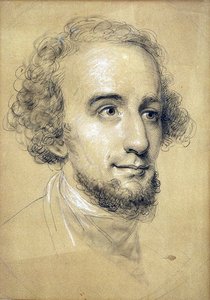
Tizian Ramsay Peale II
1799 - 1885 , Vereinigte Staaten von Amerika
Kurzinfos
- Beeinflusste Künstler: ['Tizian (venezianisch)']
- Bemerkenswerte Werke:
- Altar Schrein mit Vier Heiligen
- Anbetung der Hirten
- Die Schönheit
- Einflüsse: Italienische Hochrenaissance, Venezianischer Kolorismus
- Geburtsdatum: 1799
- Künstlerische Bewegung: Hochrenaissance
- Nationalität: Amerikanisch
- Todatum: 1885
- Vollständiger Name: Tizian Ramsay Peale II
Ähnliche Artikel

Titian Ramsay Peale: Präzision und künstlerische Innovation in der frühen amerikanischen botanischen Malerei
Entdecken Sie das Werk von Titian Ramsay Peale, einem Pionier der amerikanischen botanischen Malerei! Erfahren Sie mehr über seine präzisen Illustrationen, die Long-Expedition und seinen Beitrag zur Naturforschung. ArtsDot.

The Dramatic Flourish: Exploring the Baroque Movement's Enduring Legacy in Art History
Explore the dramatic world of Baroque art! Discover iconic artists like Caravaggio & Rubens, defining techniques, and its lasting impact on art history. Expert insights for collectors & enthusiasts at ArtsDot.

Barocke Pracht: Wie Sie Opulenz und Emotionen in zeitgenössische Innenräume bringen
Entdecken Sie die Pracht des Barock! Expertenratgeber für luxuriöse Innenräume mit barocken Elementen. Inspiration, Tipps & hochwertige Kunst bei .

Barock Meisterwerke: Die 10 prägendsten Kunstwerke für Ihr Zuhause |
Entdecken Sie die 10 prägendsten Meisterwerke des Barock! Caravaggio, Rembrandt & Co. – Erfahren Sie die Geschichten hinter ikonischen Gemälde und finden Sie hochwertige Kunst Reproduktionen für Ihr Zuhause auf .
Charles Willson Peale: Porträtmalerei, Aufklärungsideale und die Gestaltung amerikanischer Identität
Entdecken Sie das Leben und Werk von Charles Willson Peale – Porträtmaler, Naturforscher und Begründer des ersten amerikanischen Museums. Erfahren Sie mehr über seine Bedeutung für die Kunstgeschichte der USA und die Ideale der Aufklärung.