

 Vorschau anzeigen
 Versenden
 Teilen
 Details anzeigen

 Herunterladen
 Ähnliche Objekte
 Röntgenaufnahme
 Diashow
 Statistiken
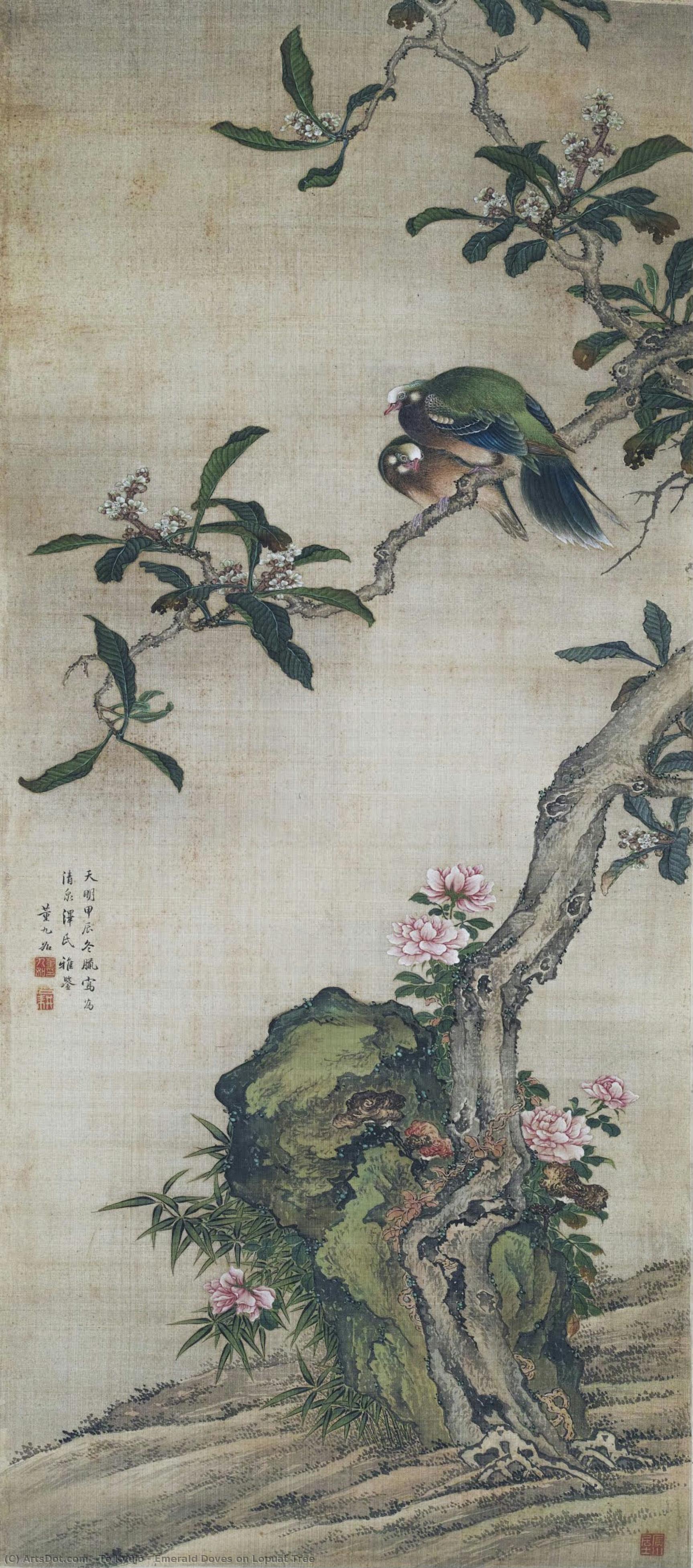
Emerald Doves on Lopuat Tree
 56.0 x 127.0 cm
 Kobe City Museum
 Weiterlesen
Erwerben Sie ein hochauflösendes, optimiertes digitales Bild, das der Online-Vorschau weit überlegen ist.
Jede Datei wird von unseren hauseigenen Spezialisten mit modernsten Werkzeugen und fachmännischer manueller Retusche sorgfältig vorbereitet. Wir stellen sicher, dass jedes Bild eine außergewöhnliche Klarheit, präzise Farbgenauigkeit und feinste Details aufweist.
Die endgültige Datei wird innerhalb von 72 Stunden per E-Mail zugestellt und ist für den sofortigen Einsatz in professionellen, redaktionellen und Druckumgebungen optimiert. Es handelt sich um dieselbe Qualität, der führende Designstudios, Verlage und Galerien vertrauen.
Digitales Bild
Laden Sie eine hochauflösende Datei für die persönliche Präsentation, den Druck und kreative Projekte herunter. ( Zu Druck wechseln Handgemalte Reproduktion bestellen)
In jeder Bestellung digitaler Bilder enthalten
Professionelle digitale Bereitstellung, garantiert
Wenn Sie sich für ArtsDot.com entscheiden, erhalten Sie nicht nur ein Bild – Sie erhalten ein professionell aufbereitetes digitales Kunstwerk, das mit höchster Präzision erstellt und durch eine Zufriedenheitsgarantie abgesichert wird. Hier ist alles, was automatisch mit Ihrer Bestellung geliefert wird:

Schnelle E-Mail-Zustellung
Ihre hochauflösende digitale Bilddatei wird Ihnen innerhalb von 72 Stunden nach der Bestellung per E-Mail zugestellt – bereit zur sofortigen Verwendung.

KI-optimierte digitale Datei
Ihre Kunstwerke werden professionell mithilfe fortschrittlicher KI-Tools und manueller Bearbeitung optimiert, um maximale Detailtreue, Klarheit und Farbgenauigkeit zu gewährleisten.

Lebenslanger kostenloser Neudruckservice
Datei versehentlich gelöscht oder verloren? Keine Sorge – wir senden sie Ihnen jederzeit kostenlos erneut zu.

Keine Einfuhrgebühren – jemals
Genießen Sie Ihr Kunstwerk sofort ohne Zollgebühren, Einfuhrabgaben oder Versandkosten – digitale Downloads sind immer steuerfrei.

Garantierte Farbtreue
Wir garantieren, dass Ihr digitales Bild mithilfe professioneller Werkzeuge und Farbmanagement die Originalfarben so präzise wie möglich wiedergibt.

100-Tage-Zufriedenheitsgarantie
Wenn Sie mit Ihrem digitalen Bild nicht zufrieden sind, werden wir es überarbeiten oder 100% innerhalb von 100 Tagen erstatten – ohne Wenn und Aber.

100% Geld-zurück-Garantie
Nicht zufrieden? Erhalten Sie innerhalb von 100 Tagen nach Erhalt Ihrer digitalen Datei eine vollständige Rückerstattung – ohne Wenn und Aber.

Rabatte bei Großbestellungen
3 Bilder kaufen, 10% sparen – 5 Bilder kaufen, 15% sparen – Ab 10 Bildern 20% sparen. Ideal für kreative Projekte, Galerien und Agenturen.
Ähnliche Kunstwerke










Biografie des Künstlers
The Legacy of the Tosa Master
In the heart of Kyoto, during the transformative era of the late sixteenth century, a painter emerged whose brushwork would embody the very essence of imperial elegance. tō kyūjō (東久城), born in 1546, was not merely an artist but a vital link in one of Japan's most prestigious artistic lineages: the Tosa school. As the son of Tosa Mitsunobu, the legendary founder of this illustrious tradition, kyūjō was raised within the refined atmosphere of the imperial court's official painters. His life and work represent a golden age of Japanese aesthetics, bridging the gap between the classical traditions of the past and the burgeoning energy of the Azuchi-Momoyama period.
The artistry of tō kyūjō was defined by a profound sense of grace and a meticulous attention to the natural world. His style, deeply rooted in the heritage of his father, drew significant inspiration from the delicate sensibilities of Chinese painting, blending imported techniques with a uniquely Japanese poetic vision. He possessed an extraordinary ability to breathe life into the smallest details, particularly through his mastery of kacho-ga, or bird and flower paintings. In his hands, a single petal or the curve of a bird's wing became a meditation on beauty and impermanence, rendered with subtle coloring and brushwork so fine it seemed to vibrate with life.
A Lineage of Refinement and Skill
To understand the significance of tō kyūjō, one must look at his role within the structural continuity of the Tosa school. He served as a crucial bridge between generations, inheriting the mantle of the courtly style from his father and passing it on to his son, Tosa Mitsumoto, who would eventually lead the school. This continuity ensured that the refined, aristocratic aesthetic—characterized by its clarity, elegance, and narrative precision—remained the standard for imperial patronage during a time of great political upheaval in Japan.
Beyond his celebrated paintings, kyūjō was also a master of calligraphy, an art form that requires the same rhythmic control and spiritual focus as his painterly compositions. This multidisciplinary mastery allowed him to approach every stroke with a holistic understanding of balance and space. His works, such as the evocative Emerald Doves on Lopuat Tree, showcase this ability to capture a fleeting moment of natural serenity through a sophisticated use of color and form.
Historical Significance and Enduring Influence
The period in which tō kyūjō lived, the Azuchi-Momoyama period (1573–1603), was an era of immense cultural flowering and transition. While other schools were beginning to experiment with more bold and dramatic styles, kyūjō remained a steadfast guardian of the classical Tosa elegance. His ability to maintain such high standards of refinement amidst the shifting tides of Japanese history solidified his reputation as one of the greatest masters of his time.
Today, the impact of his work resonates far beyond the borders of ancient Kyoto. His paintings serve as vital historical documents of a lost era of courtly splendor, and his influence can be traced through the centuries of Japanese art history. Because of his dedication to the delicate beauty of the natural world, his masterpieces continue to be cherished in prestigious museums and private collections across the globe, offering modern viewers a window into the soul of classical Japan.

tō kyūjō
1546 - 1616