 Vorschau anzeigen
 Versenden
 Teilen
 Details anzeigen

 Herunterladen
 Ähnliche Objekte
 Röntgenaufnahme
 Diashow
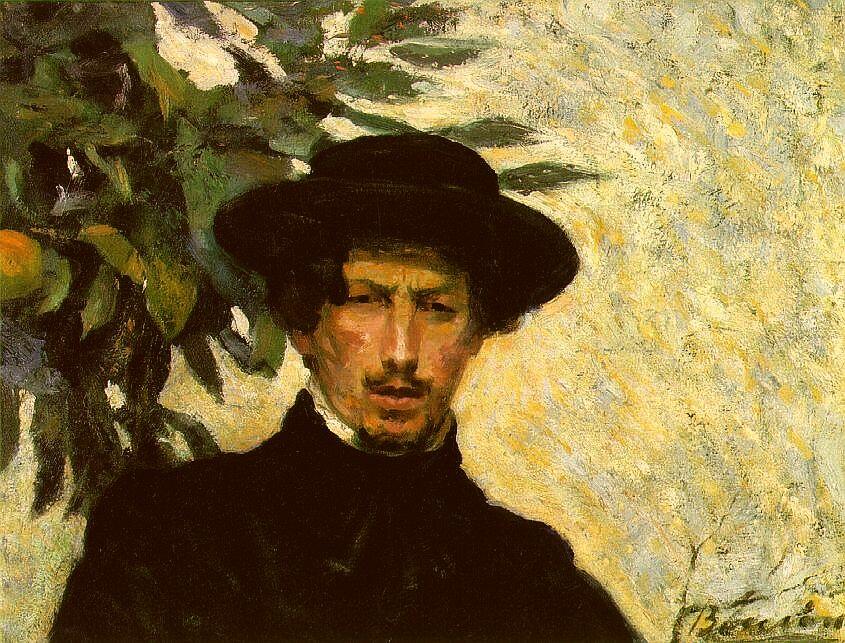
Self Portrait (also known as As a Young Man)


 Weiterlesen
Handgefertigte Ölreproduktion
Handgemaltes Ölgemälde auf Leinwand in Ihrer Wunschgröße und mit Rahmen, auf Bestellung von unseren Künstlern angefertigt. ( Druck bestellen Bild kaufen)




P118B $10

P118H $10

P118W $10

P438Z $10

P508JH $12

P508YH $12

P805H $10

P805Z $10

P919BZ $10

P919G $10

P919XJ $10

P959ZH $10

P968JZ $12

W106C $8

W218G $10

W218JH $8

W218Y $10

W307PJ $10

W316G $10

W316PJ $8

W316Y $10

W398PJ $8

W4111J $10

W500HY $15

W500JH $15

W692G $12

W849H $8

W940BG $15

W953PJ $8




Wählen Sie aus unseren vordefinierten Formaten, die den ursprünglichen Proportionen des Kunstwerks entsprechen.

Sie können Ihre eigenen Maße eingeben, um einen bestimmten Rahmen oder Platz auszufüllen. Wenn die gewählte Größe nicht den Proportionen des Originalbildes entspricht, werden wir das Kunstwerk entweder beschneiden oder das Gemälde durch zusätzliche, handgemalte Elemente erweitern. Ein digitales Mockup wird Ihnen zur Genehmigung zugesandt, bevor die Produktion beginnt.
Bitte beachten Sie, dass die Bildschirmvorschau nicht die tatsächliche Beschneidung oder Erweiterung widerspiegelt. Nur das Mockup zeigt die endgültige Komposition exakt an.
Obwohl Sondermaße verfügbar sind, empfehlen wir, eine Größe aus der vordefinierten Liste zu wählen, um die ursprünglichen Proportionen beizubehalten.
Nach der Bestellung wird das ArtsDot.com-Team dem Kunden Anweisungen per E-Mail zusenden und eine Mockup-Vorschau bereitstellen.
Weltweiter Versand () in nur 3 bis 4 Wochen statt der üblichen 5 Wochen. (26 August). Keine Kompromisse bei der Qualität.

Kostenloser weltweiter Expressversand

Hochwertige Leinenleinwand

Umfassender Versicherungsschutz beim Versand

Zollgebühren-Rückerstattungsgarantie

Garantie für exakte Farbtreue

60 Tage Rückgaberecht (nur bei Mängeln)

100% Geld-zurück-Garantie

Mengenrabatt verfügbar
 Die Glasoption ist nur für Größen unter 110 cm verfügbar.

Self Portrait (also known as As a Young Man)
Art der Reproduktion
Format der Reproduktion
-


Gesamtpreis
$ 263
Beschreibung des Kunstwerks
A Window into Becoming: The Introspective Soul of Boccioni
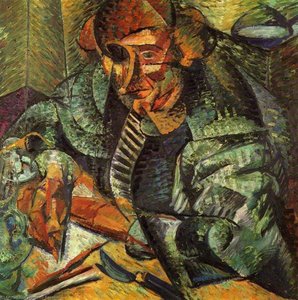
In the quiet moments before the storm of modernism erupted across Europe, Umberto Boccioni captured something profoundly intimate. His Self Portrait, often referred to as As a Young Man, serves as a rare, tender glimpse into the artist’s psyche during a pivotal period of self-discovery. Painted in 1905, long before he would become the fiery architect of the Italian Futurist movement, this work lacks the aggressive fragmentation and mechanical frenzy associated with his later masterpieces. Instead, it offers a contemplative stillness, a moment of pause where the artist looks back at himself through a lens of quiet introspection. For the collector or lover of fine art, this piece represents the beautiful tension between the stability of tradition and the burgeoning energy of a revolutionary spirit.
The composition is deceptively simple yet masterfully layered with symbolic depth. Boccioni depicts himself in a striking pose, his gaze meeting the viewer with an intensity that feels both vulnerable and resolute. He stands beside an apple tree, its branches heavy with the weight of ripening fruit—apples and oranges intermingling in a vibrant display of nature's bounty. This choice of backdrop is far from accidental; the tree serves as a powerful symbol of fertility, renewal, and the cyclical nature of life. The lushness of the fruit provides a colorful, organic contrast to the man’s steady presence, suggesting a harmony between the human spirit and the natural world that would soon be challenged by the industrial roar of the twentieth century.
Technique and the Prelude to Dynamism
While the painting does not yet embrace the radical Divisionism or the fractured planes of Futurism, one can already sense Boccioni’s experimental hand. Utilizing oil on canvas, the artist employs a technique that builds depth through careful layering, creating an illusion of volume while simultaneously acknowledging the flatness of the canvas. There is a deliberate softness to the contours, a subtle blurring of edges that hints at the instability and movement he would later champion. This painterly approach allows light to dance across the surfaces of the fruit and the fabric of his attire, imbuing the scene with a tactile, sensory quality that invites the viewer to step into the frame.
For those looking to integrate such a piece into a curated interior, the Self Portrait offers an unparalleled sense of character. It possesses a timeless elegance that complements both classical and contemporary settings. Whether placed in a sunlit study or a sophisticated gallery-style living space, the painting acts as a conversational anchor. It does not merely decorate a wall; it introduces a narrative of growth and transformation. To own a reproduction of this work is to possess a fragment of art history—a piece that captures the very moment an icon was forged in the crucible of his own youthful reflection.
Ähnliche Kunstwerke
Über den Künstler
frühe Jahre und Ausbildung
umberto boccioni, ein bedeutender italienischer Maler und Bildhauer, wurde am 19. Oktober 1882 in Reggio Calabria, Italien, geboren. Durch den Job seines Vaters wurde es zu häufigen Umzügen durch Italien, was Boccionis frühes Leben beeinflusste. Mit 15 Jahren ließ er sich in Catania, Sizilien, nieder, wo er seine Schulausbildung beendete. Später zog er nach Rom, um an der Accademia di Belle Arti di Roma's scuola libera del nudo und unter Giovanni Mataloni, einem Künstler im Stil der Libertät für Plakate, zu studieren.Die Futuristenbewegung
Boccionis innovativer Ansatz zur Form und zum Zerfall von Masse hatte einen erheblichen Einfluss auf die Kunstwelt. Er wurde zum Haupttheoretiker der Futuristenbewegung und unterschrieb das Manifesto dei Pittori Futuristi ("Manifest der futuristischen Maler") im Jahr 1910. Seine Werke werden von vielen öffentlichen Kunstmuseen besichert, darunter eine umfangreiche Retrospektive im Metropolitan Museum of Art in New York City im Jahr 1988.Bedeutende Werke und Vermächtnis
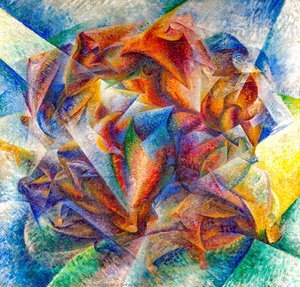
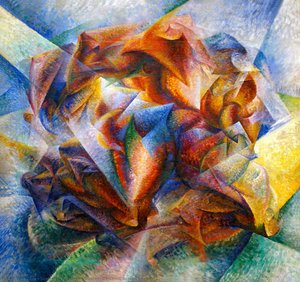
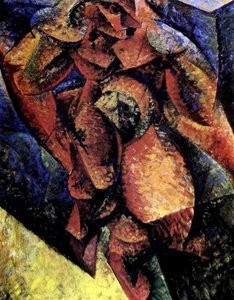
- Dynamik eines menschlichen Körpers (Futurismus, Öl auf Leinwand), ein Gemälde, das Boccionis einzigartigen Stil zeigt.
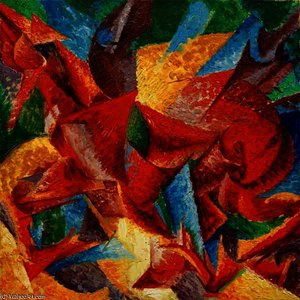
- Dimensionale Formen eines Pferdes (40 x 40 cm, Futurismus, Öl auf Leinwand), ein weiteres Beispiel für seinen innovativen Ansatz zur Form.
- Einzigartige Formen der Kontinuität im Raum (Futurismus, Bronze), eine Skulptur, die seinen Zerfall von fester Masse demonstriert.
Relevante Links von ArtsDot.com
- Gemälde von 'umberto boccioni' | umberto boccioni:dynamik eines menschlichen Körpers (Futurismus, Öl auf Leinwand,)
- Gemälde von 'umberto boccioni' | umberto boccioni:dimensionale Formen eines Pferdes (40 x 40 cm, Futurismus, Öl auf Leinwand,)
- Gemälde von 'umberto boccioni' | umberto boccioni:Löwen (Futurismus, Öl auf Leinwand,)
Wikipedia: umberto boccioni
umberto boccioni, ein einflussreicher italienischer Maler und Bildhauer. Er half, die revolutionäre Ästhetik der Futuristenbewegung als einer ihrer Hauptfiguren zu gestalten. Anmerkung: Dieser Artikel ist eine Übersetzung aus dem Italienischen, aber zu Analysezwecken wurde er ins Englische übersetzt. Die ursprüngliche Frage war auf Italienisch gestellt.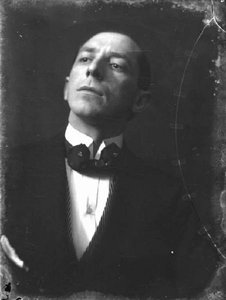
Umberto Boccioni
1882 - 1916 , Italien
Kurzinfos
- Beeinflusste Künstler:
- Giovanni Mataloni
- Giacomo Balla
- Bemerkenswerte Werke:
- Dynamismus eines Menschen
- Einzigartige Formen im Raum
- Die Stadt erhebt sich
- Dimensionale Pferdeformen
- Geburtsdatum: 19. Oktober 1882
- Geburtsort: Reggio Calabria, Italien
- Künstlerische Bewegung: Futurismus
- Nationalität: Italienisch
- Sterbedatum: 1916
- Vollständiger Name: Umberto Boccioni
- Von Künstlern Beeinflusst:
- Divisionismus
- Kubismus
Ähnliche Artikel
The Bountiful Still Life: Symbolism & Artistic Representation of Fruit Across Art History
Explore the rich history of still life painting & the symbolism of fruit across art movements. Discover masterpieces from Caravaggio to Cézanne with ArtsDot – expert guidance & museum-quality reproductions.
Silent Narratives: Exploring the Enduring Appeal of Still Life Painting Across Centuries
Explore the rich history of still life painting with ArtsDot. Discover Dutch Masters, decode vanitas symbolism & learn about collecting timeless art. Expert insights and museum-quality reproductions.

Paul Cézanne: Die 25 Meisterwerke des Impressionismus | ArtsDot
Entdecken Sie die 25 Meisterwerke von Paul Cézanne! Tauchen Sie ein in die Welt des Impressionismus und Postimpressionismus. Erfahren Sie mehr über seine Stillleben, Landschaften & berühmten Gemälde – jetzt hochwertige Kunstdrucke auf ArtsDot.com.
Carlo Carrà: Futuristische Visionen und metaphysische Transformationen der italienischen Malerei des frühen 20. Jahrhunderts
Entdecken Sie Carlo Carràs revolutionäre Kunst! Wir analysieren seine futuristischen Werke, die Entwicklung zur Metaphysik und seinen Einfluss auf die moderne Malerei. Expertenwissen & tiefe Einblicke.
The Enduring Appeal of Still Life: A Historical & Contemporary Exploration
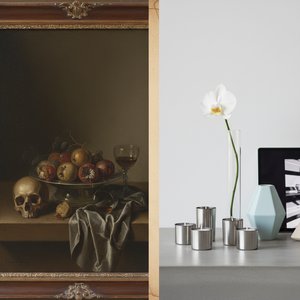
Explore the rich history & symbolism of still life painting with ArtsDot. Discover masterpieces from the Dutch Golden Age, learn about vanitas art, and find expert guidance for collecting timeless artworks.