 Vorschau anzeigen
 Versenden
 Teilen
 Details anzeigen

 Herunterladen
 Ähnliche Objekte
 Röntgenaufnahme
 Diashow
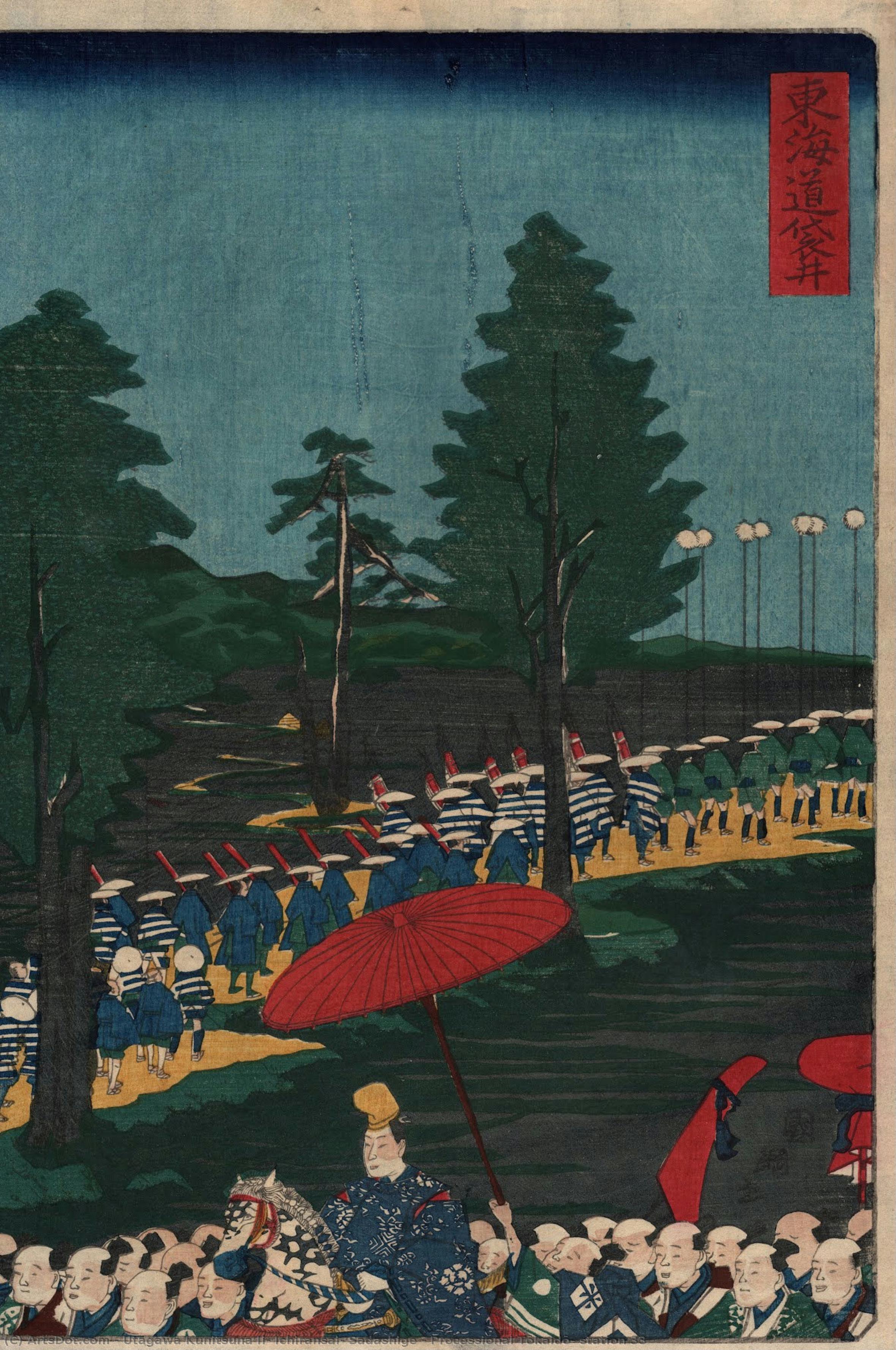
Processional Tōkaidō, station 33
 1863
1863 38.0 x 26.0 cm
 Bujalance Sammlung
 Weiterlesen
Erwerben Sie ein hochauflösendes, optimiertes digitales Bild, das der Online-Vorschau weit überlegen ist.
Jede Datei wird von unseren hauseigenen Spezialisten mit modernsten Werkzeugen und fachmännischer manueller Retusche sorgfältig vorbereitet. Wir stellen sicher, dass jedes Bild eine außergewöhnliche Klarheit, präzise Farbgenauigkeit und feinste Details aufweist.
Die endgültige Datei wird innerhalb von 72 Stunden per E-Mail zugestellt und ist für den sofortigen Einsatz in professionellen, redaktionellen und Druckumgebungen optimiert. Es handelt sich um dieselbe Qualität, der führende Designstudios, Verlage und Galerien vertrauen.
Digitales Bild
Laden Sie eine hochauflösende Datei für die persönliche Präsentation, den Druck und kreative Projekte herunter. ( Druck bestellen Handgemalte Reproduktion bestellen)
In jeder Bestellung digitaler Bilder enthalten
Professionelle digitale Bereitstellung, garantiert
Wenn Sie sich für ArtsDot.com entscheiden, erhalten Sie nicht nur ein Bild – Sie erhalten ein professionell aufbereitetes digitales Kunstwerk, das mit höchster Präzision erstellt und durch eine Zufriedenheitsgarantie abgesichert wird. Hier ist alles, was automatisch mit Ihrer Bestellung geliefert wird:

Schnelle E-Mail-Zustellung
Ihre hochauflösende digitale Bilddatei wird Ihnen innerhalb von 72 Stunden nach der Bestellung per E-Mail zugestellt – bereit zur sofortigen Verwendung.

KI-optimierte digitale Datei
Ihre Kunstwerke werden professionell mithilfe fortschrittlicher KI-Tools und manueller Bearbeitung optimiert, um maximale Detailtreue, Klarheit und Farbgenauigkeit zu gewährleisten.

Lebenslanger kostenloser Neudruckservice
Datei versehentlich gelöscht oder verloren? Keine Sorge – wir senden sie Ihnen jederzeit kostenlos erneut zu.

Keine Einfuhrgebühren – jemals
Genießen Sie Ihr Kunstwerk sofort ohne Zollgebühren, Einfuhrabgaben oder Versandkosten – digitale Downloads sind immer steuerfrei.

Garantierte Farbtreue
Wir garantieren, dass Ihr digitales Bild mithilfe professioneller Werkzeuge und Farbmanagement die Originalfarben so präzise wie möglich wiedergibt.

60-Tage-Zufriedenheitsgarantie
Sollten Sie mit Ihrem digitalen Bild nicht zufrieden sein, werden wir es überarbeiten oder Ihnen innerhalb von 60 Tagen 100% erstatten – ohne Wenn und Aber.

100% Geld-zurück-Garantie
Nicht zufrieden? Erhalten Sie innerhalb von 60 Tagen nach Erhalt Ihrer digitalen Datei eine vollständige Rückerstattung – ohne Angabe von Gründen.

Rabatte bei Großbestellungen
3 Bilder kaufen, 10% sparen – 5 Bilder kaufen, 15% sparen – Ab 10 Bildern 20% sparen. Ideal für kreative Projekte, Galerien und Agenturen.
Ähnliche Kunstwerke







Biografie des Künstlers
The Elusive Brush: Unraveling the Life and Art of Utagawa Kunitsuna Ii
Utagawa Kunitsuna Ii, a name that echoes through the annals of late Edo period ukiyo-e, remains a figure shrouded in intriguing mystery. Also known as Ichiransai Sadashige, his life is documented with frustrating sparseness, making him a compelling subject for art historians and enthusiasts alike. Born sometime during the early to mid-19th century – precise dates remain elusive – Kunitsuna Ii flourished primarily between 1840 and 1870, a period of significant social and artistic transition in Japan. Unlike many of his contemporaries whose lives are richly detailed through diaries and apprenticeships records, Kunitsuna’s origins are largely unknown. This lack of biographical information contributes to the unique allure surrounding his work; each print feels like a fragment of a larger, untold story. He was active during the late Edo period and early Meiji era, witnessing firsthand the decline of the shogunate and the rapid modernization that followed.A Master of Bijin-ga: Portraits of Beauty in a Changing World
Kunitsuna Ii is most celebrated for his exquisite bijin-ga – portraits of beautiful women. His depictions are characterized by an exceptional sensitivity to detail, particularly in the rendering of fabrics and hairstyles, reflecting the prevailing fashions of the time. He wasn’t merely replicating appearances; he captured a sense of inner life, a subtle emotionality that distinguished his work from more formulaic portrayals. While many ukiyo-e artists focused on idealized beauty or theatrical roles, Kunitsuna often presented women in everyday settings, engaged in quiet activities like reading, playing musical instruments, or simply enjoying the scenery. This focus on relatable moments resonated with a burgeoning middle class eager for depictions of contemporary life. His prints frequently feature interior scenes, showcasing the refined tastes and domestic comforts of urban dwellers. The delicate balance between realism and idealization is a hallmark of his style, creating images that are both captivatingly beautiful and subtly evocative.Influences and Artistic Development
Pinpointing Kunitsuna’s artistic lineage proves challenging due to the limited documentation surrounding his early career. However, scholars believe he was heavily influenced by earlier masters of bijin-ga such as Kitagawa Utamaro and Keisai Eisen. He absorbed their techniques for portraying feminine grace and elegance but developed a distinctive style that set him apart. His work demonstrates a keen understanding of color theory, employing sophisticated palettes to create atmospheric effects and highlight the textures of fabrics and skin tones. He also appears to have been influenced by the emerging trends in Western art, particularly in his use of perspective and shading – though he never fully abandoned the traditional conventions of ukiyo-e. His prints from the later part of his career show a growing experimentation with composition and subject matter, suggesting a willingness to push boundaries within the established artistic framework.Major Achievements and Historical Significance
While Kunitsuna Ii may not have achieved the widespread fame of some of his contemporaries like Hokusai or Hiroshige, his contributions to ukiyo-e are significant. He produced a prolific body of work – hundreds of prints depicting a diverse range of subjects, primarily focused on women but also including landscapes and historical scenes.- His series focusing on the “Eight Views of Omi” demonstrate his skill in landscape composition.
- Prints illustrating contemporary life provide valuable insights into the social customs and fashions of the late Edo period.
- The exceptional quality of his color printing techniques ensured that his images retained their vibrancy and beauty over time.