

 Vorschau anzeigen
 Versenden
 Teilen
 Details anzeigen

 Herunterladen
 Ähnliche Objekte
 Röntgenaufnahme
 Diashow
 Statistiken
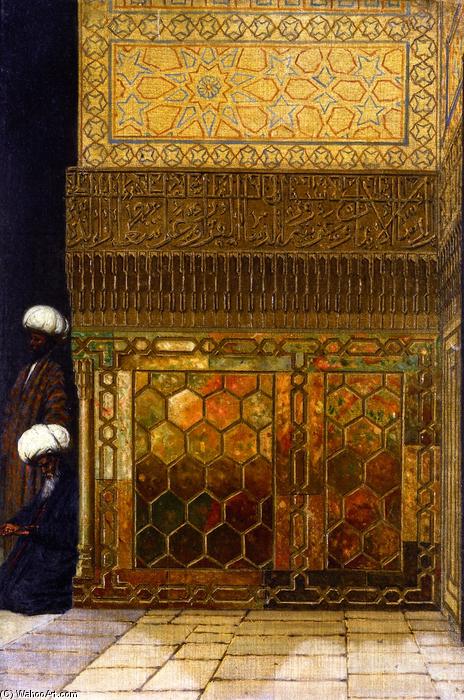
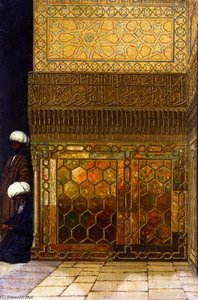
Corner in the Gur-Emir Mausoleum


 Weiterlesen
Handgefertigte Ölreproduktion
Handgemaltes Ölgemälde auf Leinwand in Ihrer Wunschgröße und mit Rahmen, auf Bestellung von unseren Künstlern angefertigt. ( Zu Druck wechseln Zum digitalen Bild wechseln)




































Wählen Sie aus unseren vordefinierten Formaten, die den ursprünglichen Proportionen des Kunstwerks entsprechen.

Sie können Ihre eigenen Maße eingeben, um einen bestimmten Rahmen oder Platz auszufüllen. Wenn die gewählte Größe nicht den Proportionen des Originalbildes entspricht, werden wir das Kunstwerk entweder beschneiden oder das Gemälde durch zusätzliche, handgemalte Elemente erweitern. Ein digitales Mockup wird Ihnen zur Genehmigung zugesandt, bevor die Produktion beginnt.
Bitte beachten Sie, dass die Bildschirmvorschau nicht die tatsächliche Beschneidung oder Erweiterung widerspiegelt. Nur das Mockup zeigt die endgültige Komposition exakt an.
Obwohl Sondermaße verfügbar sind, empfehlen wir, eine Größe aus der vordefinierten Liste zu wählen, um die ursprünglichen Proportionen beizubehalten.
Nach der Bestellung wird das ArtsDot.com-Team dem Kunden Anweisungen per E-Mail zusenden und eine Mockup-Vorschau bereitstellen.
Weltweiter Versand () in nur 3 bis 4 Wochen statt der üblichen 5 Wochen. (13 September). Keine Kompromisse bei der Qualität.

Kostenloser weltweiter Expressversand

Hochwertige Leinenleinwand

Umfassender Versicherungsschutz beim Versand

Zollgebühren-Rückerstattungsgarantie

Garantie für exakte Farbtreue

100-Tage-Rückgaberecht (nur bei Mängeln)

100% Geld-zurück-Garantie

Mengenrabatt verfügbar
 Die Glasoption ist nur für Größen unter 110 cm verfügbar.

Corner in the Gur-Emir Mausoleum
Art der Reproduktion
Format der Reproduktion
-


Gesamtpreis
$ 263
Ähnliche Kunstwerke
Über den Künstler
A Life Etched in Conflict: Vasily Vereshchagin and the Brutality of War
Vasily Vasilievich Vereshchagin, born in 1842 near Cherepovets, Russia, was not merely a painter; he was a chronicler of conflict, an artist who dared to depict war not as glorious spectacle but as a harrowing and often senseless tragedy. His early life offered little indication of the path he would take. Coming from a family with deep roots in military service – his grandfather had fought under Suvorov, and his father was a retired officer – Vasily initially pursued a career at the Naval Academy in St. Petersburg. However, a passion for art soon superseded naval ambitions, leading him to study at the Imperial Academy of Arts, where he quickly distinguished himself with his talent for detail and composition. His formal training provided a solid foundation, but it was his experiences on the battlefields of Central Asia that would irrevocably shape his artistic vision.From Caucasus to Turkestan: Witnessing the Realities of Imperial Expansion
Vereshchagin’s career truly began with his participation in Russia's military campaigns in the Caucasus and, more significantly, in Turkestan (Central Asia) during the 1860s and 70s. Unlike many artists who romanticized warfare from a distance, Vereshchagin *lived* it. He volunteered for active service, immersing himself in the harsh realities of desert combat, enduring scorching heat, brutal skirmishes, and witnessing the suffering of both soldiers and civilians. This firsthand exposure fundamentally altered his perspective. He wasn’t interested in depicting triumphant generals or heroic charges; instead, he focused on the grim aftermath of battle – piles of skulls, abandoned weaponry, desolate landscapes littered with corpses. His paintings from this period, such as “The Apotheosis of War” (1871), a chilling depiction of a pyramid of skulls beneath a blood-red sky, were shocking in their stark realism and anti-war sentiment. These works weren’t celebrations of conquest; they were indictments of it. He meticulously researched the cultures he encountered, striving for accuracy in his depictions of Central Asian people and environments, adding another layer of complexity to his work beyond simply portraying violence.Technique as Testimony: A Master of Realism
Vereshchagin’s artistic technique was instrumental in conveying the brutal truth he sought to represent. He possessed an extraordinary ability to render detail with almost photographic precision, yet his paintings were far from mere reproductions of reality. He employed a restrained palette, often dominated by earthy tones and muted colors, which heightened the sense of desolation and despair. His brushwork was deliberate and controlled, creating surfaces that felt both tangible and emotionally charged. He wasn’t afraid to depict the grotesque – decaying bodies, wounded soldiers, the stark emptiness of death – but he did so with a profound respect for his subjects. He aimed not to sensationalize violence but to force viewers to confront its consequences. His use of light and shadow was particularly effective in creating dramatic contrasts and emphasizing the psychological impact of war on those who experienced it. He also incorporated elements of ethnographic detail, showcasing the customs and traditions of the people affected by conflict, further humanizing his subjects and challenging simplistic narratives of imperial dominance.Beyond Turkestan: Expanding Themes and Lasting Legacy
While Central Asia remained a central focus throughout much of his career, Vereshchagin’s artistic interests expanded over time. He traveled extensively, visiting Egypt, Syria, Palestine, and Japan, incorporating these experiences into his work. He painted scenes from biblical history, landscapes imbued with spiritual significance, and portraits that captured the dignity and resilience of diverse cultures. However, even in these seemingly unrelated subjects, the themes of suffering, mortality, and the human cost of conflict often resurfaced. His later works, such as those depicting the siege of Plevna during the Russo-Turkish War (1877-78), continued to challenge conventional representations of warfare, earning him both acclaim and controversy. Vereshchagin’s unflinching portrayal of war made him a controversial figure in his time. While some praised his courage and honesty, others accused him of being overly pessimistic and unpatriotic. Despite the criticism, he remained steadfast in his commitment to depicting the truth as he saw it. He died in 1904 aboard the battleship *Petropavlovsk* during the Russo-Japanese War, a fitting end for an artist who dedicated his life to documenting the realities of conflict. His legacy extends far beyond his technical skill; he remains a powerful voice against war and a testament to the enduring power of art to bear witness to human suffering.Influences and Historical Significance
Vereshchagin’s work stands somewhat apart from traditional artistic movements, though it shares affinities with Realism and Naturalism in its commitment to depicting life as it is. He was influenced by the Barbizon school's emphasis on plein air painting and their focus on capturing the natural world, but he diverged from their idyllic landscapes by focusing on the harsh realities of war-torn environments. He also drew inspiration from ethnographic studies and travel literature, which informed his accurate depictions of diverse cultures. His historical significance lies in his pioneering role as a war artist who rejected romanticized narratives and instead offered a brutally honest portrayal of conflict’s human cost.- His paintings challenged the prevailing glorification of warfare prevalent in 19th-century art.
- He paved the way for future generations of artists to explore themes of trauma, loss, and the psychological impact of war.
- His work continues to resonate today as a powerful reminder of the enduring consequences of conflict and the importance of seeking peace.
Ähnliche Artikel
Victor Vasnetsov: Myth, Nationalism & the Revival of Russian Fairy Tale Painting
Explore the captivating world of Victor Vasnetsov, a co-founder of Russian folklorist painting. Discover his iconic works, influence on national identity, and lasting legacy in this expert guide.
Ivan Bilibin: A Synthesis of Folklore, Modernism & National Identity in Russian Illustration
Explore the enchanting world of Ivan Bilibin, a master Russian illustrator who synthesized folklore, Art Nouveau & national identity. Discover his iconic fairy tale illustrations and legacy with ArtsDot.
The Enduring Appeal of Geometric Patterns in Art: A Historical & Contemporary Exploration
Explore the captivating history of geometric abstraction in art, from ancient roots to contemporary masters. Expert insights for collectors & enthusiasts. Discover key artists, movements & investment potential.
Geometric Design in Art: A Historical Survey & Contemporary Appeal for Collectors
Explore the enduring legacy of geometric abstraction! Discover key artists, historical movements & investment insights for discerning art collectors. Expert guidance from ArtsDot.

Geometrische Abstraktion: Die 10 Meisterwerke, die Kunstgeschichte prägten | ArtsDot.com
Entdecken Sie die 10 Meisterwerke der geometrischen Abstraktion! Von Kandinsky bis Mondrian – erleben Sie die Geschichte, Farben & Formen dieser revolutionären Kunstrichtung. Hochwertige Kunstreproduktionen auf ArtsDot.com