Vorschau anzeigen
 Versenden
 Teilen
 Details anzeigen

 Herunterladen
 Ähnliche Objekte
 Röntgenaufnahme
 Diashow
 Statistiken
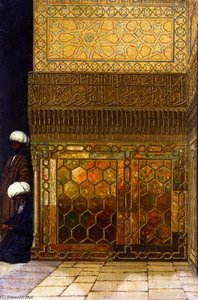
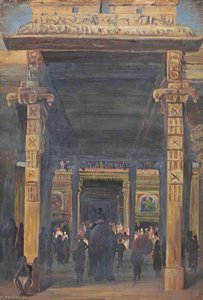
Entrance to a Temple in Nikko

 Weiterlesen
Erwerben Sie ein hochauflösendes, optimiertes digitales Bild, das der Online-Vorschau weit überlegen ist.
Jede Datei wird von unseren hauseigenen Spezialisten mit modernsten Werkzeugen und fachmännischer manueller Retusche sorgfältig vorbereitet. Wir stellen sicher, dass jedes Bild eine außergewöhnliche Klarheit, präzise Farbgenauigkeit und feinste Details aufweist.
Die endgültige Datei wird innerhalb von 72 Stunden per E-Mail zugestellt und ist für den sofortigen Einsatz in professionellen, redaktionellen und Druckumgebungen optimiert. Es handelt sich um dieselbe Qualität, der führende Designstudios, Verlage und Galerien vertrauen.
Digitales Bild
Laden Sie eine hochauflösende Datei für die persönliche Präsentation, den Druck und kreative Projekte herunter. ( Zu Druck wechseln Handgemalte Reproduktion bestellen)
In jeder Bestellung digitaler Bilder enthalten
Professionelle digitale Bereitstellung, garantiert
Wenn Sie sich für ArtsDot.com entscheiden, erhalten Sie nicht nur ein Bild – Sie erhalten ein professionell aufbereitetes digitales Kunstwerk, das mit höchster Präzision erstellt und durch eine Zufriedenheitsgarantie abgesichert wird. Hier ist alles, was automatisch mit Ihrer Bestellung geliefert wird:

Schnelle E-Mail-Zustellung
Ihre hochauflösende digitale Bilddatei wird Ihnen innerhalb von 72 Stunden nach der Bestellung per E-Mail zugestellt – bereit zur sofortigen Verwendung.

KI-optimierte digitale Datei
Ihre Kunstwerke werden professionell mithilfe fortschrittlicher KI-Tools und manueller Bearbeitung optimiert, um maximale Detailtreue, Klarheit und Farbgenauigkeit zu gewährleisten.

Lebenslanger kostenloser Neudruckservice
Datei versehentlich gelöscht oder verloren? Keine Sorge – wir senden sie Ihnen jederzeit kostenlos erneut zu.

Keine Einfuhrgebühren – jemals
Genießen Sie Ihr Kunstwerk sofort ohne Zollgebühren, Einfuhrabgaben oder Versandkosten – digitale Downloads sind immer steuerfrei.

Garantierte Farbtreue
Wir garantieren, dass Ihr digitales Bild mithilfe professioneller Werkzeuge und Farbmanagement die Originalfarben so präzise wie möglich wiedergibt.

100-Tage-Zufriedenheitsgarantie
Wenn Sie mit Ihrem digitalen Bild nicht zufrieden sind, werden wir es überarbeiten oder 100% innerhalb von 100 Tagen erstatten – ohne Wenn und Aber.

100% Geld-zurück-Garantie
Nicht zufrieden? Erhalten Sie innerhalb von 100 Tagen nach Erhalt Ihrer digitalen Datei eine vollständige Rückerstattung – ohne Wenn und Aber.

Rabatte bei Großbestellungen
3 Bilder kaufen, 10% sparen – 5 Bilder kaufen, 15% sparen – Ab 10 Bildern 20% sparen. Ideal für kreative Projekte, Galerien und Agenturen.
Ähnliche Kunstwerke
Biografie des Künstlers
A Life Etched in Conflict: Vasily Vereshchagin and the Brutality of War
Vasily Vasilievich Vereshchagin, born in 1842 near Cherepovets, Russia, was not merely a painter; he was a chronicler of conflict, an artist who dared to depict war not as glorious spectacle but as a harrowing and often senseless tragedy. His early life offered little indication of the path he would take. Coming from a family with deep roots in military service – his grandfather had fought under Suvorov, and his father was a retired officer – Vasily initially pursued a career at the Naval Academy in St. Petersburg. However, a passion for art soon superseded naval ambitions, leading him to study at the Imperial Academy of Arts, where he quickly distinguished himself with his talent for detail and composition. His formal training provided a solid foundation, but it was his experiences on the battlefields of Central Asia that would irrevocably shape his artistic vision.From Caucasus to Turkestan: Witnessing the Realities of Imperial Expansion
Vereshchagin’s career truly began with his participation in Russia's military campaigns in the Caucasus and, more significantly, in Turkestan (Central Asia) during the 1860s and 70s. Unlike many artists who romanticized warfare from a distance, Vereshchagin *lived* it. He volunteered for active service, immersing himself in the harsh realities of desert combat, enduring scorching heat, brutal skirmishes, and witnessing the suffering of both soldiers and civilians. This firsthand exposure fundamentally altered his perspective. He wasn’t interested in depicting triumphant generals or heroic charges; instead, he focused on the grim aftermath of battle – piles of skulls, abandoned weaponry, desolate landscapes littered with corpses. His paintings from this period, such as “The Apotheosis of War” (1871), a chilling depiction of a pyramid of skulls beneath a blood-red sky, were shocking in their stark realism and anti-war sentiment. These works weren’t celebrations of conquest; they were indictments of it. He meticulously researched the cultures he encountered, striving for accuracy in his depictions of Central Asian people and environments, adding another layer of complexity to his work beyond simply portraying violence.Technique as Testimony: A Master of Realism
Vereshchagin’s artistic technique was instrumental in conveying the brutal truth he sought to represent. He possessed an extraordinary ability to render detail with almost photographic precision, yet his paintings were far from mere reproductions of reality. He employed a restrained palette, often dominated by earthy tones and muted colors, which heightened the sense of desolation and despair. His brushwork was deliberate and controlled, creating surfaces that felt both tangible and emotionally charged. He wasn’t afraid to depict the grotesque – decaying bodies, wounded soldiers, the stark emptiness of death – but he did so with a profound respect for his subjects. He aimed not to sensationalize violence but to force viewers to confront its consequences. His use of light and shadow was particularly effective in creating dramatic contrasts and emphasizing the psychological impact of war on those who experienced it. He also incorporated elements of ethnographic detail, showcasing the customs and traditions of the people affected by conflict, further humanizing his subjects and challenging simplistic narratives of imperial dominance.Beyond Turkestan: Expanding Themes and Lasting Legacy
While Central Asia remained a central focus throughout much of his career, Vereshchagin’s artistic interests expanded over time. He traveled extensively, visiting Egypt, Syria, Palestine, and Japan, incorporating these experiences into his work. He painted scenes from biblical history, landscapes imbued with spiritual significance, and portraits that captured the dignity and resilience of diverse cultures. However, even in these seemingly unrelated subjects, the themes of suffering, mortality, and the human cost of conflict often resurfaced. His later works, such as those depicting the siege of Plevna during the Russo-Turkish War (1877-78), continued to challenge conventional representations of warfare, earning him both acclaim and controversy. Vereshchagin’s unflinching portrayal of war made him a controversial figure in his time. While some praised his courage and honesty, others accused him of being overly pessimistic and unpatriotic. Despite the criticism, he remained steadfast in his commitment to depicting the truth as he saw it. He died in 1904 aboard the battleship *Petropavlovsk* during the Russo-Japanese War, a fitting end for an artist who dedicated his life to documenting the realities of conflict. His legacy extends far beyond his technical skill; he remains a powerful voice against war and a testament to the enduring power of art to bear witness to human suffering.Influences and Historical Significance
Vereshchagin’s work stands somewhat apart from traditional artistic movements, though it shares affinities with Realism and Naturalism in its commitment to depicting life as it is. He was influenced by the Barbizon school's emphasis on plein air painting and their focus on capturing the natural world, but he diverged from their idyllic landscapes by focusing on the harsh realities of war-torn environments. He also drew inspiration from ethnographic studies and travel literature, which informed his accurate depictions of diverse cultures. His historical significance lies in his pioneering role as a war artist who rejected romanticized narratives and instead offered a brutally honest portrayal of conflict’s human cost.- His paintings challenged the prevailing glorification of warfare prevalent in 19th-century art.
- He paved the way for future generations of artists to explore themes of trauma, loss, and the psychological impact of war.
- His work continues to resonate today as a powerful reminder of the enduring consequences of conflict and the importance of seeking peace.