

 Versenden
 Teilen
 Details anzeigen

 Herunterladen
 Ähnliche Objekte
 Diashow
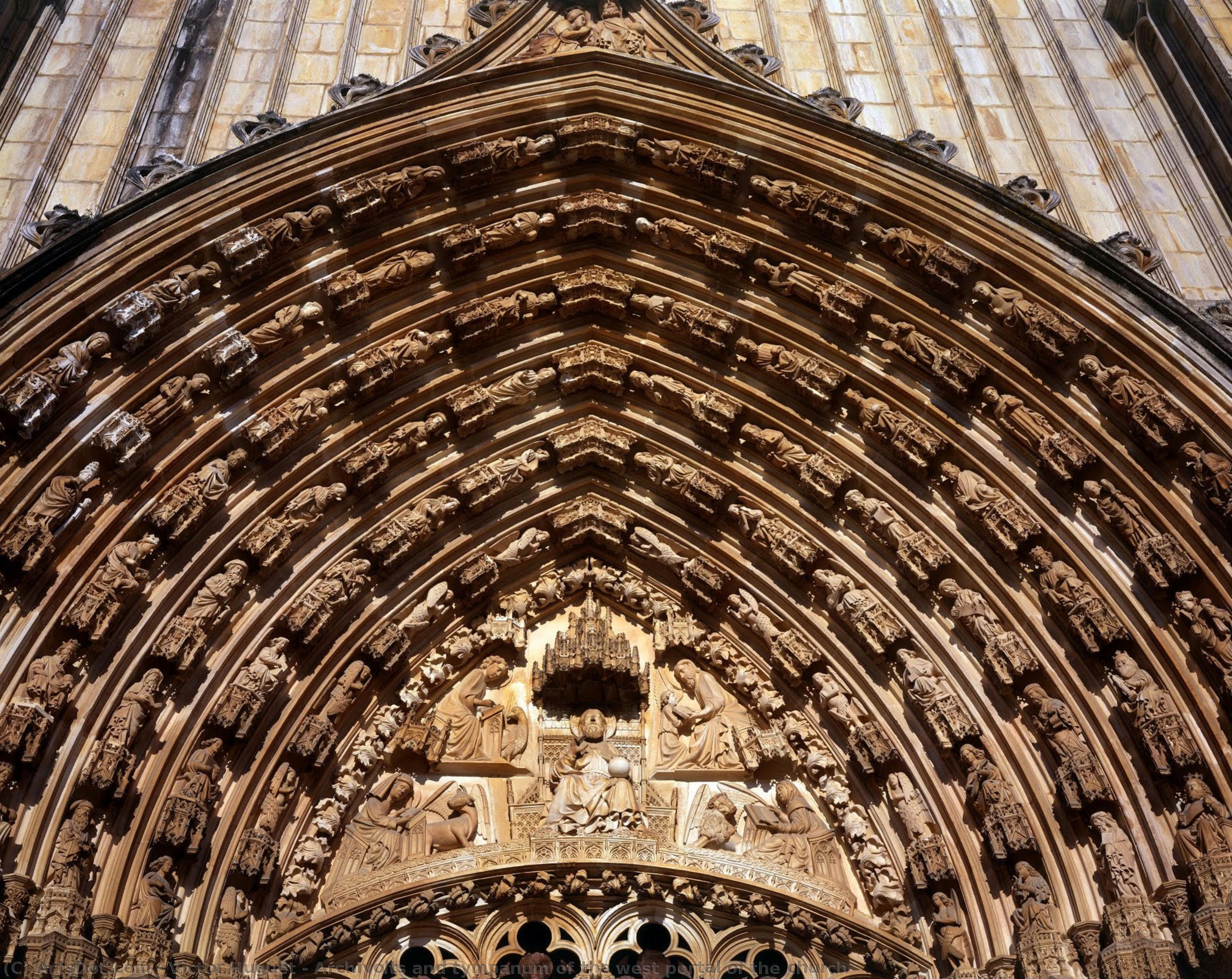
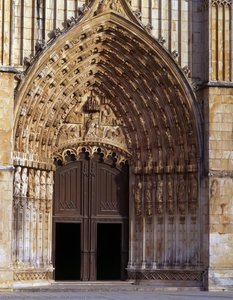
Archivolts and tympanum of the west portal of the church


 Weiterlesen
Giclée / Kunstdruck
Giclée- oder Leinwanddruck in Museumsqualität mit schneller Produktion und flexiblen Veredelungsoptionen. ( Handgemalte Reproduktion bestellen Bild kaufen)




































Wählen Sie aus unseren vordefinierten Formaten, die den ursprünglichen Proportionen des Kunstwerks entsprechen.

Sie können Ihre eigenen Maße eingeben, um ein bestimmtes Format oder einen speziellen Platz einzupassen. Wenn das von Ihnen gewählte Format nicht den Proportionen des Originalbildes entspricht, werden wir das Kunstwerk entweder beschneiden oder das Bild mit einem gespiegelten oder einfarbigen Rand erweitern. Ein digitaler Entwurf wird Ihnen zur Genehmigung zugesandt, bevor die Produktion beginnt.
Bitte beachten Sie, dass die Vorschau auf dem Bildschirm nicht den tatsächlichen Zuschnitt oder die Erweiterung widerspiegelt. Nur der Entwurf zeigt die endgültige Komposition präzise an.
Obwohl Sondermaße verfügbar sind, empfehlen wir die Auswahl eines Maßes aus der vordefinierten Liste, um die ursprünglichen Proportionen zu bewahren.
Weltweiter Versand () innerhalb von 2 Wochen statt der üblichen 4/5 Wochen. (7 September)

Kostenloser weltweiter Expressversand

Hochwertige Leinenleinwand

Umfassender Versicherungsschutz beim Versand

Zollgebühren-Rückerstattungsgarantie

Garantie für exakte Farbtreue

100-Tage-Rückgaberecht (nur bei Mängeln)

100% Geld-zurück-Garantie

Mengenrabatt verfügbar
 Die Glasoption ist nur für Größen unter 110 cm verfügbar.

Archivolts and tympanum of the west portal of the church
Giclée / Kunstdruck
Format der Reproduktion
-


Gesamtpreis
$ 62
A Portal to the Divine: The Architectural Majesty of the West Portal
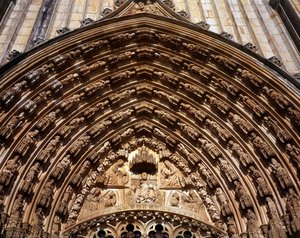
In the silent, hallowed corridors of history, few structures command as much reverence as the west portal of this ancient church. Captured in a striking monochrome study, the Archivolts and tympanum serve as more than mere architectural boundaries; they are a profound threshold between the earthly realm and the celestial. The image reveals an intricate dance of stone and shadow, where every carved curve and sculpted figure tells a story of devotion. As one gazes upon the rhythmic patterns of the archivolts—those concentric arches that frame the entrance—one feels the weight of centuries. The meticulous craftsmanship suggests a period where art was not merely decorative but was a vital, breathing language used to communicate the divine mysteries to the faithful.
The composition is a masterclass in texture and depth. Through the lens of high-contrast photography, the stone surfaces emerge with a tactile intensity that invites the viewer to reach out and touch the weathered grain. The statues, positioned strategically throughout the archway, act as silent sentinels. From the figure peering from the upper reaches to the more grounded presence at the base, these sculptural elements create a vertical narrative of spiritual ascent. This interplay of light and dark—the chiaroscuro of stone—emphasizes the deep relief of the carvings, lending a dramatic, almost theatrical quality to the cathedral's facade that remains captivating even in the absence of color.
Symbolism and the Language of Stone
To study this portal is to read a sacred text written in granite and limestone. The tympanum, the semi-circular space nestled within the arch, serves as the focal point for theological storytelling. In such works, every shape and pattern is imbued with intentionality; the geometric precision of the carvings reflects the perceived order of the universe, while the figurative elements provide a human connection to the divine. For the art enthusiast or collector, this piece offers a window into the medieval psyche, where architecture was designed to evoke awe, humility, and a sense of eternal continuity.
The historical context of such a structure, dating back to the mid-15th century, places it at a fascinating crossroads of artistic evolution. It represents an era where the heavy, grounded Romanesque traditions were meeting the more soaring, light-filled aspirations of the Gothic spirit. This tension is palpable in the way the weight of the stone is balanced by the delicate, lace-like intricacy of the ornamentation. For those looking to integrate such a powerful aesthetic into a contemporary interior, this work provides an anchor of historical gravity and sophisticated elegance.
An Inspiration for the Discerning Collector
For interior designers and collectors of fine art reproductions, the Archivolts and tympanum offers a unique opportunity to introduce architectural grandeur into a modern space. A high-quality reproduction of this work does not merely decorate a wall; it transforms a room into a gallery of contemplation. The monochromatic palette makes it an incredibly versatile choice, pairing seamlessly with minimalist, classical, or even industrial decor styles. It brings a sense of permanence and intellectual depth to any setting.
Owning a piece that captures such monumental detail allows one to possess a fragment of the sublime. Whether placed in a quiet study, a grand foyer, or a curated living space, this artwork serves as a conversation piece that transcends time. It invites guests to pause, to look closer at the intricate carvings, and to reflect on the enduring human desire to create beauty that reaches toward the heavens. In every shadow and every carved line, there is an invitation to rediscover the majesty of the past.
Ähnliche Kunstwerke


Über den Künstler
The Visionary of Light and Stone: The Life of Victor Huguet
Victor Pierre Huguet, a name that resonates with the quiet majesty of a cathedral’s shadow and the vibrant warmth of an Egyptian sun, was a master of the French Orientalist tradition. Born on May 1, 1835, in the historic town of Le Lude, Huguet’s life unfolded against the backdrop of a France undergoing profound metamorphosis. From the industrial pulse of his early years to the political shifts of the Second French Empire and the Third Republic, his existence was inextricably linked to the changing tides of European history. He was not merely a chronicler of landscapes but a painter who sought to capture the very soul of the places he visited, bridging the gap between the rigorous classical traditions of his training and the burgeoning experimental spirit of modern art.
His artistic foundation was laid in the vibrant atmosphere of Lyon, where the early influences of local masters instilled in him a deep respect for craftsmanship. This period of formative education provided the technical scaffolding upon which he would later build his complex narratives. His journey took him to the École supérieure des beaux-arts de Marseille, where he studied under Émile Loubon. It was here that Huguet began to master the art of landscape painting, learning to capture the grandeur of mountainous vistas and the delicate serenity of rural life with a precision that hinted at his future greatness. This early mastery of light and form would become the hallmark of his later, more exotic explorations.
A Journey Through the Orient and the Crimean Shadows
The true awakening of Huguet’s creative spirit occurred far from the familiar landscapes of France. In 1852, a pivotal voyage to Egypt irrevocably altered his artistic trajectory, introducing him to a world of dazzling light, ancient textures, and cultures that stood in stark contrast to the European tradition. This expedition was not a solitary endeavor; accompanied by Jean-Baptiste Henri Durand-Brager, he witnessed the unfolding drama of the Crimean War through a painterly lens. These experiences infused his work with an ethnographic depth, allowing him to depict the Middle East and North Africa not as mere exotic backdrops, but as living, breathing entities rich with history and dignity.
Upon returning to Paris, Huguet sought further refinement under the legendary Orientalist Eugène Fromentin. This mentorship was crucial, as it allowed him to absorb the nuances of Realism while maintaining a profound sensitivity to emotional expression. By 1859, his talent had earned him simultaneous debuts at the Salon in Marseille and the prestigious Paris Salon, marking his arrival as a significant figure in the art world. His ability to blend the meticulous detail of architectural studies with the atmospheric allure of Eastern scenes created a unique stylistic signature that captivated audiences across Europe.
The Architecture of Devotion and Historical Legacy
Huguet’s oeuvre is characterized by an extraordinary duality: the ability to render the heavy, enduring permanence of stone alongside the ephemeral dance of light. His works often focus on the threshold between the mundane and the sacred. In masterpieces such as West portal of the church, he invites the viewer to stand before a Gothic-inspired archway where every carved archivolt and sculpted figure tells a story of ancient devotion. He possessed a rare gift for making stone appear to breathe, using a sophisticated interplay of light and shadow to create a sense of three-dimensional depth that draws the observer into the hallowed silence of the cathedral interior.
Beyond his architectural studies, Huguet’s legacy is found in his profound respect for the cultural tapestries of the East. Whether depicting the heraldic grandeur of royal coats of arms or the quiet moments of life outside a mosque, his work remains a testament to his insatiable curiosity and empathetic vision. His contributions to the Orientalist movement helped define an era of exploration through art, leaving behind a collection of works that serve as windows into both the physical landscapes and the spiritual essences of a bygone age. Today, his paintings remain vital links to the 19th-century imagination, reminding us of a time when the brush was a primary tool for discovering the unknown.
Kurzinfos
- Artistic Movement Or Style: Orientalism
- Artists Or Movements Influenced By This Artist: ['Romanticism']
- Artists Who Influenced This Artist:
- Eugène Fromentin
- Émile Loubon
- Date Of Birth: May 1, 1835
- Date Of Death: August 16, 1902
- Full Name: Victor Pierre Huguet
- Nationality: French
- Notable Artworks:
- The Noble Ravine
- Arabs Outside the Mosque
- Place Of Birth: Le Lude, France
Ähnliche Artikel
Die Top 10 Gemälde im Steinzeitton: Meisterwerke für Ihr Zuhause |
Entdecken Sie die Top 10 Gemälde, die von erdigen Steintönen geprägt sind! Von Klassikern bis zur Moderne – erfahren Sie die Geschichten berühmter Künstler und lassen Sie sich für Ihr Interieur inspirieren. Hochwertige Reproduktionen auf
Benjamin West: Transatlantische Ambitionen und die Gestaltung der amerikanischen Kunst
Entdecken Sie das faszinierende Leben und Werk von Benjamin West, dem Pionier der amerikanischen Kunst! Erfahren Sie mehr über seinen Einfluss auf den Neoklassizismus und die Förderung junger Künstler in Europa. Jetzt lesen!

Charles Marion Russell: Der Romantische Chronist des Wilden Westens – Leben, Werk und Vermächtnis eines Cowboy-Künstlers
Entdecken Sie das Leben und Werk von Charles Marion Russell, dem berühmtesten Cowboy-Künstler des amerikanischen Westens. Erfahren Sie mehr über seine ikonischen Gemälde, sein Vermächtnis und wo Sie seine Kunst bewundern können.
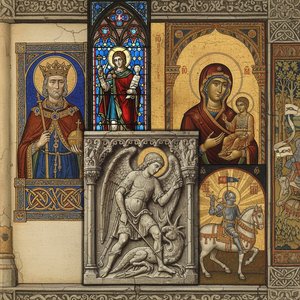
Illuminating Faith & Power: A Journey Through Medieval Art (c. 500 – c. 1500)
Explore the rich history of Medieval Art (c. 500 – c. 1500) with ArtsDot. Discover Byzantine mosaics, Gothic cathedrals & Renaissance masterpieces. Expert insights & museum-quality reproductions.

Henry Farny: Romantic Visions of the American West & Indigenous Life
Explore the evocative paintings of Henry Farny, renowned for his romantic realism & depictions of Native American life in the 19th-century West. Discover his legacy and key artworks at ArtsDot.