 Vorschau anzeigen
 Versenden
 Teilen
 Details anzeigen

 Herunterladen
 Ähnliche Objekte
 Röntgenaufnahme
 Diashow
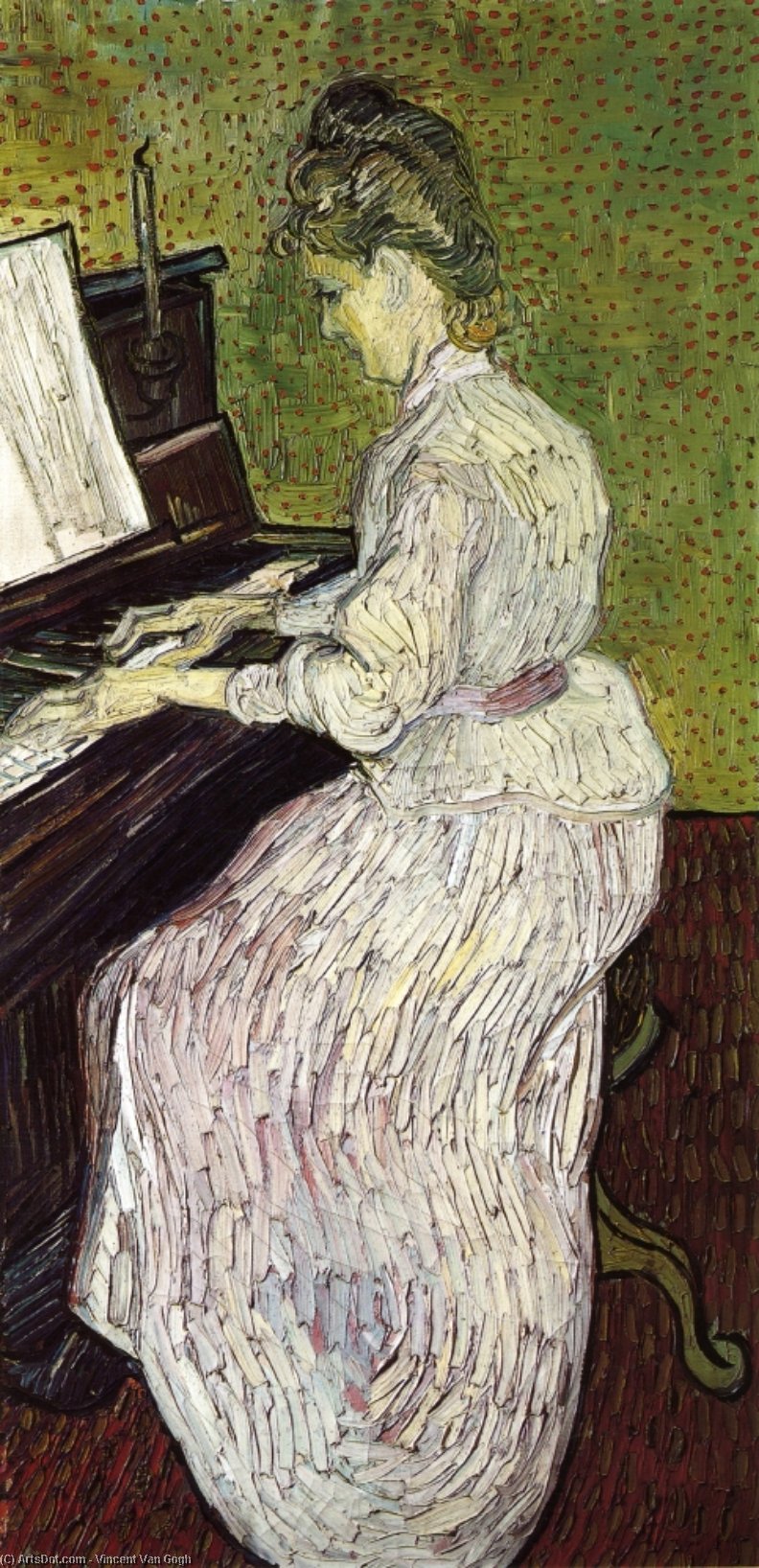
Marguerite Gachet at the Piano
 Öl auf Leinwand
- Wandkunst
- Post-Impressionism
 1890
1890 102.0 x 50.0 cm
 Weiterlesen
Handgefertigte Ölreproduktion
Handgemaltes Ölgemälde auf Leinwand in Ihrer Wunschgröße und mit Rahmen, auf Bestellung von unseren Künstlern angefertigt. ( Druck bestellen Bild kaufen)




P118B $10

P118H $10

P118W $10

P438Z $10

P508JH $12

P508YH $12

P805H $10

P805Z $10

P919BZ $10

P919G $10

P919XJ $10

P959ZH $10

P968JZ $12

W106C $8

W218G $10

W218JH $8

W218Y $10

W307PJ $10

W316G $10

W316PJ $8

W316Y $10

W398PJ $8

W4111J $10

W500HY $15

W500JH $15

W692G $12

W849H $8

W940BG $15

W953PJ $8




Wählen Sie aus unseren vordefinierten Formaten, die den ursprünglichen Proportionen des Kunstwerks entsprechen.

Sie können Ihre eigenen Maße eingeben, um einen bestimmten Rahmen oder Platz auszufüllen. Wenn die gewählte Größe nicht den Proportionen des Originalbildes entspricht, werden wir das Kunstwerk entweder beschneiden oder das Gemälde durch zusätzliche, handgemalte Elemente erweitern. Ein digitales Mockup wird Ihnen zur Genehmigung zugesandt, bevor die Produktion beginnt.
Bitte beachten Sie, dass die Bildschirmvorschau nicht die tatsächliche Beschneidung oder Erweiterung widerspiegelt. Nur das Mockup zeigt die endgültige Komposition exakt an.
Obwohl Sondermaße verfügbar sind, empfehlen wir, eine Größe aus der vordefinierten Liste zu wählen, um die ursprünglichen Proportionen beizubehalten.
Nach der Bestellung wird das ArtsDot.com-Team dem Kunden Anweisungen per E-Mail zusenden und eine Mockup-Vorschau bereitstellen.
Weltweiter Versand () in nur 3 bis 4 Wochen statt der üblichen 5 Wochen. (24 August). Keine Kompromisse bei der Qualität.

Kostenloser weltweiter Expressversand

Hochwertige Leinenleinwand

Umfassender Versicherungsschutz beim Versand

Zollgebühren-Rückerstattungsgarantie

Garantie für exakte Farbtreue

60 Tage Rückgaberecht (nur bei Mängeln)

100% Geld-zurück-Garantie

Mengenrabatt verfügbar
 Die Glasoption ist nur für Größen unter 110 cm verfügbar.

Marguerite Gachet at the Piano
Art der Reproduktion
Format der Reproduktion
-


Gesamtpreis
$ 263
Beschreibung des Kunstwerks
A Moment Frozen in Time: Marguerite Gachet at the Piano
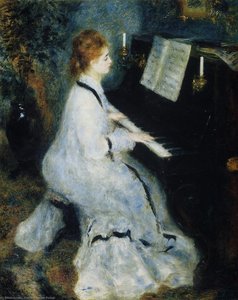
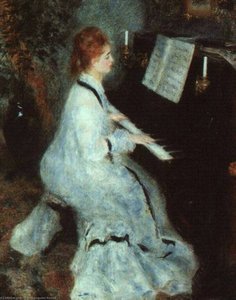
Vincent van Gogh’s “Marguerite Gachet at the Piano” isn't merely a portrait; it’s a carefully constructed tableau of domestic tranquility and quiet contemplation, rendered with the artist’s signature intensity. Painted in 1890 during his final months in Auvers-sur-Oise, France, this intimate scene captures Marguerite Gachet, the daughter of Dr. Paul Gachet, seated at a piano within the doctor's meticulously cultivated garden. The painting immediately draws the viewer into a space of serene beauty—a haven of muted blues and greens punctuated by the warm glow of an unseen light source. It’s a study in contrasts: the vibrant energy of Van Gogh’s brushwork against the stillness of the subject, the outward composure of Marguerite juxtaposed with the unspoken complexities hinted at within her gaze.
Van Gogh's masterful use of Post-Impressionist technique is immediately apparent. Bold, directional strokes define the forms – the curves of the piano, the folds of Marguerite’s dress, and the delicate tracery of the foliage behind her. He employs a broken color palette, layering hues to create depth and luminosity. The blues dominate, evoking the cool shade of the garden undergrowth, while touches of yellow and green suggest warmth and vitality. Notice how he builds up the texture of the piano keys with short, choppy brushstrokes, imbuing them with a sense of tactile reality. This deliberate manipulation of color and form isn’t simply decorative; it's an emotional expression, reflecting Van Gogh’s own turbulent inner state.
The Gachet Family and a Portrait of Peace
Understanding the context surrounding “Marguerite Gachet at the Piano” is crucial to appreciating its significance. Dr. Paul Gachet was a physician and art collector who had befriended Van Gogh during his stay in Auvers-sur-Oise, offering him a much-needed respite from the pressures of Paris. Marguerite herself became a frequent subject of Van Gogh’s work, representing a connection to family and stability amidst his own struggles with mental illness. The painting isn't just a likeness; it’s an attempt to capture a fleeting moment of grace within a household filled with both warmth and underlying melancholy. The garden setting, meticulously rendered by Van Gogh, was a central feature of the Gachet estate – a place of beauty and contemplation for the family.
Symbolism in a Simple Scene
Beyond its immediate depiction, “Marguerite Gachet at the Piano” is rich with symbolic meaning. The piano itself represents harmony, order, and domesticity—qualities that Van Gogh often sought to capture but rarely found within his own life. Marguerite’s posture – poised yet relaxed, her hands resting lightly on the keys – suggests a quiet confidence and inner peace. However, her gaze, directed slightly off-camera, hints at a deeper awareness, perhaps of the artist's presence or the fragility of the moment. The surrounding garden, with its abundance of flowers and foliage, symbolizes life, growth, and renewal—themes that resonate throughout Van Gogh’s oeuvre.
A Legacy of Emotion and Technique
“Marguerite Gachet at the Piano” is a testament to Van Gogh's extraordinary ability to convey emotion through color, brushwork, and composition. It resides within the Kunstmuseum Basel, a fitting home for this poignant portrait that continues to captivate viewers with its beauty and emotional depth. Reproductions of this iconic work offer an accessible way to experience Van Gogh’s genius firsthand, bringing this intimate scene into any space. Consider commissioning a hand-painted reproduction – a faithful recreation capturing the artist's unique style and the painting's enduring power—to add a touch of timeless elegance and emotional resonance to your home or office.
Size: 102 x 50 cm
Date: 1890
Artist: vincent willem van gogh
Birth Year: 1853
Death Year: 1890
Birth City: Zundert
Birth Country: Netherlands
Ähnliche Kunstwerke
Über den Künstler
Vincent van Gogh: Leben, Kunst und Vermächtnis
Frühes Leben und Einflüsse
- Geboren am 30. März 1853 in Groot-Zundert, Niederlande, war Vincent Willem van Gogh der älteste von sechs Kindern.
- Sein Vater, Theodorus van Gogh, war ein Protestantischer Pfarrer, und seine Erziehung wurde stark von Religion geprägt.
- Frühe Interessen umfassten Zeichnen, aber er verfolgte verschiedene Karrieren, bevor er sich dem Kunstschaffen widmete. Er arbeitete als Kunsthändler, Lehrer und Missionar.
- Wichtige Einflüsse: Zu den frühen Einflüssen gehörten niederländische Meister wie Rembrandt van Rijn und Frans Hals, sowie zeitgenössische französische Maler wie Jean-François Millet und Camille Corot.
Künstlerische Entwicklung & Stil
- Van Gogh begann 1880 ernsthaft zu malen, größtenteils autodidaktisch.
- Seine frühen Werke konzentrierten sich auf die Darstellung des Lebens von Bauern und Arbeitern und spiegelten seine Empathie für die Arbeiterklasse wider.
- Ein Umzug nach Paris im Jahr 1886 ermöglichte ihm den Kontakt mit Impressionismus und Post-Impressionismus, was zu einem helleren Farbstahl und Experimenten mit neuen Techniken führte.
- Besonderer Stil: Van Gogh entwickelte einen hochindividuellen Stil, der durch kräftige Farben, ausdrucksstarke Pinselstriche und emotionale Intensität gekennzeichnet ist. Er verwendete oft Impasto – dicke Farbschichten – um Textur zu erzeugen und Gefühle auszudrücken.
Wichtige Perioden & Werke
- Die niederländische Periode (1880-1886): Konzentrierte sich auf dunkle, erdige Töne und Darstellungen des ländlichen Lebens. Bedeutende Werke sind The Potato Eaters.
- Die Pariser Periode (1886-1888): Experimente mit impressionistischen Techniken und helleren Farben.
- Die Arleser Periode (1888-1889): Eine Periode intensiver Kreativität, die von lebendigen Landschaften, Porträts und Stillleben geprägt war. Wichtige Werke sind Sunflowers, The Night Café, und Starry Night Over the Rhône.
- Saint-Rémy & Auvers-sur-Oise (1889-1890): Nach einem Nervenzusammenbruch wurde Van Gogh freiwillig in eine Anstalt in Saint-Rémy eingeliefert. Seine letzten Jahre waren von fortgesetzter künstlerischer Produktion, aber auch zunehmender emotionaler Belastung geprägt. Bedeutende Werke sind The Starry Night und Porträts von Dr. Gachet.
Wichtige Errungenschaften & Anerkennung
- Trotz der Kämpfe mit psychischen Erkrankungen und der Ablehnung während seines Lebens schuf Van Gogh in über einem Jahrzehnt mehr als 2.100 Kunstwerke – etwa 860 Ölgemälde.
- Sein Werk hatte einen tiefgreifenden Einfluss auf die Entwicklung der modernen Kunst, insbesondere des Expressionismus und des Fauvismus.
- Posthume Ruhm: Die Anerkennung kam nach seinem Tod im Jahr 1890. Seine Werke erfreuten sich in den frühen 20er Jahren zunehmender Beliebtheit und wurden zu einigen der bekanntesten und wertvollsten Kunstwerke der Welt.
Historische Bedeutung & Vermächtnis
- Van Goghs Kunst berührt die Menschen bis heute aufgrund seiner emotionalen Ehrlichkeit, lebendigen Farben und der kraftvollen Darstellung menschlicher Erfahrungen.
- Er gilt als eine der wichtigsten Figuren in der Geschichte der westlichen Kunst und inspiriert seit Generationen Künstler.
- Seine Lebensgeschichte ist zu einem Symbol des “leidenden Künstlers” geworden, obwohl diese Erzählung oft seine Hingabe, Geschicklichkeit und künstlerische Vision überschattet.
- Museen auf der ganzen Welt, darunter das Van Gogh Museum in Amsterdam, zeigen sein Werk und feiern sein bleibendes Vermächtnis.
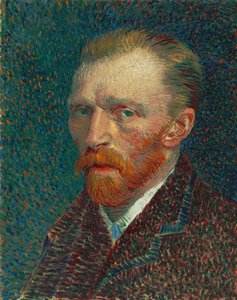
vincent willem van gogh
1853 - 1890 , Niederlande
Kurzinfos
- Artistic Movement Or Style: Post-Impressionismus
- Artists Or Movements Influenced By This Artist:
- Expressionismus
- Fauvismus
- Artists Who Influenced This Artist:
- Rembrandt
- Millet
- Date Of Birth: 30. März 1853
- Date Of Death: 29. Juli 1890
- Full Name: Vincent Willem van Gogh
- Nationality: Niederländer
- Notable Artworks:
- Sternennacht
- Sonnenblumen
- Place Of Birth: Zundert, Niederlande
Ähnliche Artikel
Postimpressionismus: Die 10 Meisterwerke, die eine Ära prägten –
Entdecken Sie die 10 Meisterwerke des Postimpressionismus! Van Gogh, Cézanne & Co. – ihre Geschichten, Techniken und zeitlose Schönheit. Kunstdrucke in Museumsqualiät auf . Jetzt entdecken!

Die Top 10 Gemälde in Schattierungen von 'Slate Blue': Kunst für Ihr Zuhause
Entdecken Sie die Top 10 Gemälde in faszinierenden 'Slate Blue' Tönen! Von Monet bis Manet – erleben Sie Kunstgeschichte und lassen Sie sich von Meisterwerken inspirieren. Hochwertige Kunstdrucke auf
Die emotionale Tiefe Van Goghs entschlüsseln: Meisterhafte Reproduktionen und künstlerische Analyse
Entdecken Sie die emotionale Tiefe von Vincent van Gogh! Hochwertige Reproduktionen & fundierte Analysen seiner Meisterwerke. Für Kunstsammler und Liebhaber.
Jenseits des Impressionismus: Die emotionale Tiefe der postimpressionistischen Malerei
Entdecken Sie die emotionale Tiefe des Postimpressionismus! Analysieren Sie Cézanne, van Gogh, Gauguin & Seurat. Expertenwissen über Kunstgeschichte und Einfluss auf die Moderne.
Impressionismus Meisterwerke: Die Top 10 Kunstwerke für Ihr Zuhause | ArtsDot
Entdecken Sie die Top 10 Meisterwerke des Impressionismus! Von Monet bis Renoir – erfahren Sie die Geschichten hinter berühmten Gemälden, Techniken & Farben. Hochwertige Kunstdrucke auf ArtsDot.com.