 Vorschau anzeigen
 Versenden
 Teilen
 Details anzeigen

 Herunterladen
 Ähnliche Objekte
 Röntgenaufnahme
 Diashow
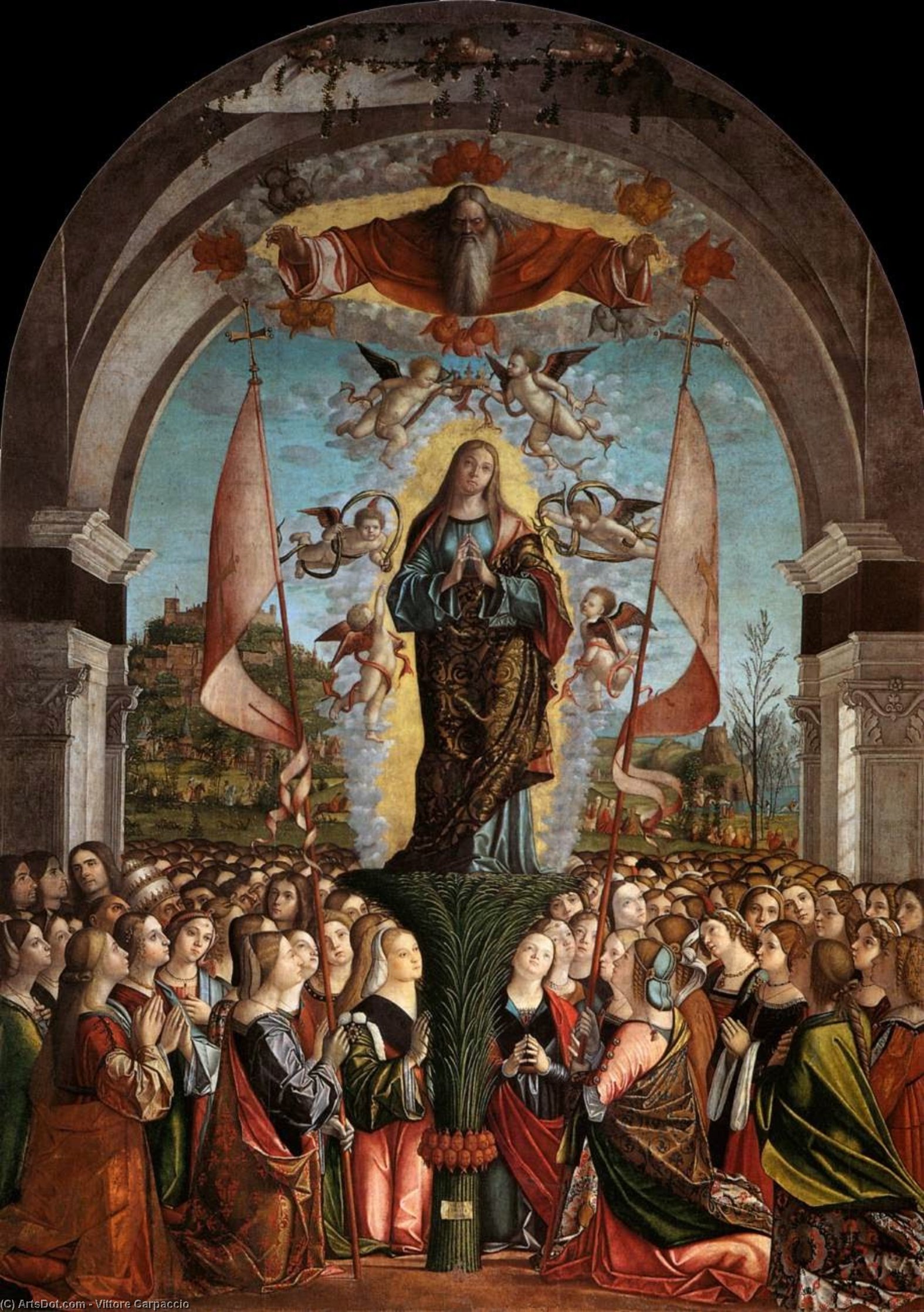
Apotheosis of St Ursula
 Oil On Canvas
- WallArt
- Early Renaissance
 1491
1491 481.0 x 336.0 cm
 Gallerie dell’Accademia
 Weiterlesen
Handgefertigte Ölreproduktion
Handgemaltes Ölgemälde auf Leinwand in Ihrer Wunschgröße und mit Rahmen, auf Bestellung von unseren Künstlern angefertigt. ( Druck bestellen Bild kaufen)




P118B $10

P118H $10

P118W $10

P438Z $10

P508JH $12

P508YH $12

P805H $10

P805Z $10

P919BZ $10

P919G $10

P919XJ $10

P959ZH $10

P968JZ $12

W106C $8

W218G $10

W218JH $8

W218Y $10

W307PJ $10

W316G $10

W316PJ $8

W316Y $10

W398PJ $8

W4111J $10

W500HY $15

W500JH $15

W692G $12

W849H $8

W940BG $15

W953PJ $8




Wählen Sie aus unseren vordefinierten Formaten, die den ursprünglichen Proportionen des Kunstwerks entsprechen.

Sie können Ihre eigenen Maße eingeben, um einen bestimmten Rahmen oder Platz auszufüllen. Wenn die gewählte Größe nicht den Proportionen des Originalbildes entspricht, werden wir das Kunstwerk entweder beschneiden oder das Gemälde durch zusätzliche, handgemalte Elemente erweitern. Ein digitales Mockup wird Ihnen zur Genehmigung zugesandt, bevor die Produktion beginnt.
Bitte beachten Sie, dass die Bildschirmvorschau nicht die tatsächliche Beschneidung oder Erweiterung widerspiegelt. Nur das Mockup zeigt die endgültige Komposition exakt an.
Obwohl Sondermaße verfügbar sind, empfehlen wir, eine Größe aus der vordefinierten Liste zu wählen, um die ursprünglichen Proportionen beizubehalten.
Nach der Bestellung wird das ArtsDot.com-Team dem Kunden Anweisungen per E-Mail zusenden und eine Mockup-Vorschau bereitstellen.
Weltweiter Versand () in nur 3 bis 4 Wochen statt der üblichen 5 Wochen. (22 August). Keine Kompromisse bei der Qualität.

Kostenloser weltweiter Expressversand

Hochwertige Leinenleinwand

Umfassender Versicherungsschutz beim Versand

Zollgebühren-Rückerstattungsgarantie

Garantie für exakte Farbtreue

60 Tage Rückgaberecht (nur bei Mängeln)

100% Geld-zurück-Garantie

Mengenrabatt verfügbar
 Die Glasoption ist nur für Größen unter 110 cm verfügbar.

Apotheosis of St Ursula
Art der Reproduktion
Format der Reproduktion
-


Gesamtpreis
$ 1913
Beschreibung des Kunstwerks
The Divine Coronation – An Exploration of Vittore Carpaccio’s ‘Apotheosis of St Ursula’
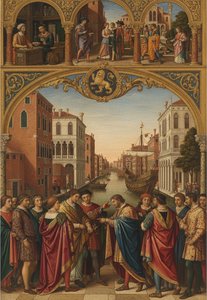
Vittore Carpaccio's “Apotheosis of St. Ursula,” painted in 1491, isn’t merely a religious depiction; it’s a meticulously crafted tableau of faith, power, and the profound beauty of Renaissance artistry. This monumental work, now housed within the Gallerie dell’Accademia in Venice, transports the viewer to a lavishly rendered scene of the Virgin Mary crowning her granddaughter, St. Ursula, amidst an array of angels and kneeling figures – a testament to both Marian devotion and the burgeoning artistic confidence of the Venetian school. Carpaccio, deeply influenced by Antonello da Messina's mastery of light and form, eschewed the prevailing trends of his time, opting instead for a style characterized by a quiet dignity and a remarkable attention to detail that sets this piece apart.
The composition itself is remarkably complex, layered with figures and architectural elements that create a sense of both grandeur and intimacy. The arched niche, reminiscent of a church interior, serves as the stage for this sacred event. Carpaccio’s use of perspective, though not entirely adhering to strict mathematical rules, generates a convincing illusion of depth – achieved through careful layering of forms and overlapping draperies rather than relying solely on linear convergence. Notice how the light, originating primarily from above, dramatically illuminates Mary and Christ at the center, casting intricate shadows that add richness and volume to the scene.
A Master of Narrative Detail: Carpaccio’s Venetian Style
Carpaccio's distinctive style is immediately recognizable through his meticulous rendering of textures and fabrics. The flowing robes of the figures are depicted with an astonishing level of realism, each fold and pleat meticulously rendered to convey weight and movement. This dedication to detail extends to the architectural elements as well – from the intricate carvings on the columns to the delicate patterns adorning the arches. He employs a technique known as *sfumato*, subtly blending colors and softening edges to create an atmosphere of ethereal beauty, characteristic of Venetian painting at this time.
The artist’s choice of color palette is equally noteworthy. Warm tones – golds, reds, and browns – dominate the scene, evoking a sense of reverence and majesty. The halo surrounding Mary's head, rendered in shimmering gold leaf, draws the viewer's eye to the central figure, while the vibrant hues of the robes contribute to the overall richness and splendor of the composition. Symbolism is woven throughout the painting; the cross held by Christ represents his sacrifice, the palm branches signify victory and royalty bestowed upon Mary, and the angels flanking them embody divine grace.
Historical Context & Symbolism
“Apotheosis of St. Ursula” was created during a period of significant religious and artistic transformation in Venice. The city’s thriving merchant class had amassed considerable wealth, fueling a surge in patronage for the arts. Carpaccio's work reflects this prosperity, showcasing the lavishness and grandeur that characterized Venetian society. The painting also aligns with the broader context of Renaissance art, which sought to revive classical ideals while simultaneously exploring new artistic techniques and approaches. The depiction of St. Ursula, a legendary figure revered for her unwavering faith and virtue, served as an inspiration for artists throughout Europe.
Furthermore, Carpaccio’s work is deeply rooted in the tradition of *sacra conversazione*, a popular genre that depicted religious scenes with multiple figures engaged in conversation or prayer. This approach allowed artists to convey complex theological ideas in a visually engaging manner. The inclusion of numerous saints and angels underscores the universality of faith and the interconnectedness of the divine realm.
A Timeless Vision: Reproduction & Artistic Legacy
Today, “Apotheosis of St. Ursula” stands as a testament to Carpaccio’s artistic genius and a remarkable example of Venetian Renaissance painting. Reproductions offer an accessible way to experience the beauty and complexity of this masterpiece, bringing its rich symbolism and evocative atmosphere into any space. Whether adorning a grand salon or a smaller study, a high-quality reproduction can serve as a constant reminder of the enduring power of faith, art, and human creativity.
Ähnliche Kunstwerke

Über den Künstler
Frühes Leben und Ausbildung
Vittore Carpaccio, ein bedeutender italienischer Maler, wurde um 1465 in Venedig geboren. Er studierte unter der Anleitung von Gentile Bellini, einem renommierten Künstler der venezianischen Schule. Diese Lehrzeit legte den Grundstein für Carpaccis späteren Erfolg.Künstlerischer Stil und Einflüsse
Carpaccis Stil war durch seine konservative Natur gekennzeichnet, wobei er minimale Einflüsse von den Humanisten-Trends zeigte, die die italienische Renaissance-Malerei zu seiner Lebzeiten veränderten. Seine Arbeit wurde von Antonello da Messinas Stil und der frühen niederländischen Kunst beeinflusst. Diese einzigartige Mischung aus Stilen führte zu einem unverwechselbaren Ansatz für die venezianische Malerei.Bemerkenswerte Werke
- Die Legende vom Heiligen Ursula, ein Zyklus von neun Gemälden, ist Carpaccis berühmtestes Werk. Diese Serie, die sich heute in der Gallerie dell'Accademia befindet, zeigt seine Meisterschaft in der Erzählmalerei.
- Das Altarbild zur Herrlichkeit des Heiligen Ursula (1491) demonstriert Carpaccis Geschick darin, Licht und Farbe einzufangen, was an den Stil von Giovanni Bellini erinnert.
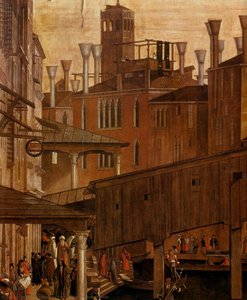
- Das Wunder der Reliquie des Kreuzes an der Rialtobrücke (1494) unterstreicht Carpaccis Fähigkeit, Komposition und Erzählung in Einklang zu bringen.
Karrierehöhepunkte und Vermächtnis
- Carpaccis Hauptwerke wurden zwischen 1490 und 1519 geschaffen, was ihn zu einem der frühen Meister der venezianischen Renaissance zählt.
- Sein orientalistischer Stil, wie in St. Georg taufte die Seleniten zu sehen ist, spiegelt eine neue Faszination für den Levante wider.
- Carpaccis Werk wurde im Vergleich zu seinen Zeitgenossen wie Giovanni Bellini oder Giorgione etwas übersehen.
Referenzen und weiterführende Informationen
Entdecken Sie mehr über Vittore Carpaccio und die venezianische Schule auf ArtsDot.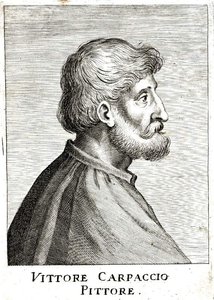
Vittore Carpaccio
1465 - 1526 , Italien
Kurzinfos
- Bemerkenswerte Werke:
- Die Legende vom Heiligen Ursula
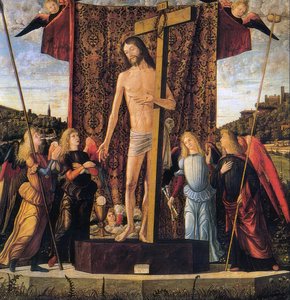
- Gloria des Hl. Ursula Altarpiece
- Wunder der Kreuzreliquie am Rialto
- Christus mit den Symbolen der Kreuzigung
- Geburtsdatum: ca. 1465
- Geburtsort (Stadt, Land): Venedig, Italien
- Künstler Oder Bewegungen, Die Von Diesem Künstler Beeinflusst Wurden:
- Giovanni Bellini
- Giorgione
- Künstler, Die Diesen Künstler Beeinflussten:
- Gentile Bellini
- Antonello da Messina
- Künstlerische Bewegung/Stil: Venezianische Renaissance
- Nationalität: Italienisch
- Todatum: 1526
- Vollständiger Name: Vittore Carpaccio
Ähnliche Artikel
Vittore Carpaccio: Venezianische Renaissance und die Poetik des Details
Entdecken Sie die faszinierende Welt Vittore Carpaccios! Analysieren Sie mit uns seine einzigartige venezianische Renaissance-Malerei, den St.-Georgs-Zyklus und seinen Einfluss auf die Kunstgeschichte. Expertenwissen & Detailreichtum.

Öl auf Leinwand: Eine historische und technische Erkundung eines zeitlosen künstlerischen Mediums
Entdecken Sie die faszinierende Welt der Ölmalerei! Von historischen Techniken bis zur modernen Anwendung – wir bieten Expertenwissen, Restaurierungstipps und hochwertige Reproduktionen. Jetzt informieren!

The Enduring Legacy of Oil on Canvas: Technique, History & Aesthetic Impact
Explore the rich history & techniques of oil painting – from Renaissance masters to Impressionism. Discover pigments, layering methods, and why this timeless medium endures. Expert insights for artists & art enthusiasts.

The Enduring Power of Painting: A Historical & Contemporary Exploration of Form and Emotion
Explore the rich history & enduring techniques of oil painting with ArtsDot. Discover masterpieces, learn about art collecting, and find authentic handmade reproductions crafted by skilled artists.

El Greco: Die 25 Meisterwerke – Kunst für Ihr Zuhause | ArtsDot
Entdecken Sie die 25 bedeutendsten Meisterwerke von El Greco! Erleben Sie die spirituelle Tiefe und den dramatischen Stil des griechischen Malers. Hochwertige Kunstdrucke & Inspiration für Ihr Zuhause auf ArtsDot.com.