 Vorschau anzeigen
 Versenden
 Teilen
 Details anzeigen

 Herunterladen
 Ähnliche Objekte
 Röntgenaufnahme
 Diashow
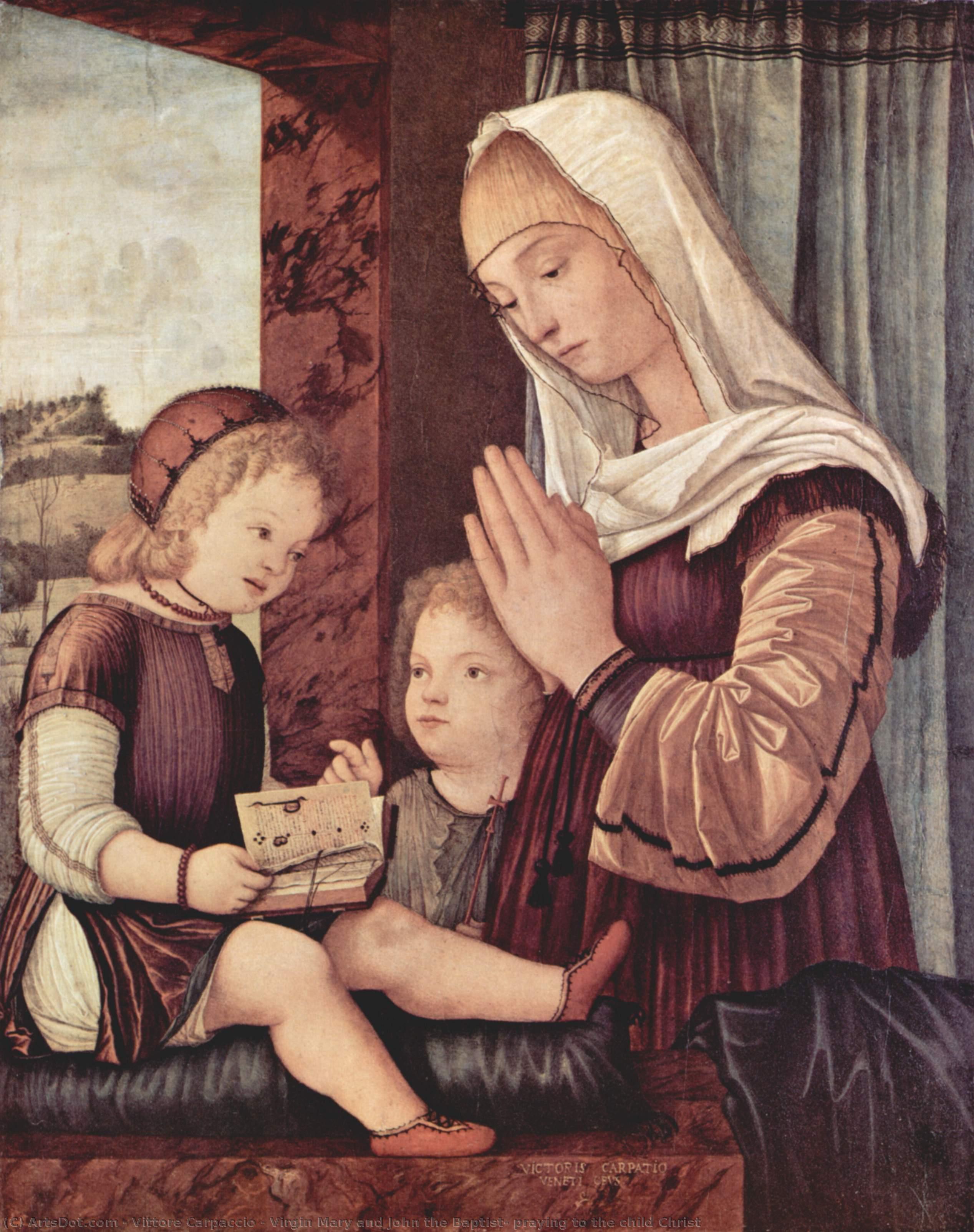
Virgin Mary and John the Baptist, praying to the child Christ
 Oil
Oil- WallArt
- Early Renaissance
 1500
1500- Renaissance
 69.0 x 54.0 cm
 Städel Museum
 Weiterlesen
Handgefertigte Ölreproduktion
Handgemaltes Ölgemälde auf Leinwand in Ihrer Wunschgröße und mit Rahmen, auf Bestellung von unseren Künstlern angefertigt. ( Druck bestellen Bild kaufen)




P118B $10

P118H $10

P118W $10

P438Z $10

P508JH $12

P508YH $12

P805H $10

P805Z $10

P919BZ $10

P919G $10

P919XJ $10

P959ZH $10

P968JZ $12

W106C $8

W218G $10

W218JH $8

W218Y $10

W307PJ $10

W316G $10

W316PJ $8

W316Y $10

W398PJ $8

W4111J $10

W500HY $15

W500JH $15

W692G $12

W849H $8

W940BG $15

W953PJ $8




Wählen Sie aus unseren vordefinierten Formaten, die den ursprünglichen Proportionen des Kunstwerks entsprechen.

Sie können Ihre eigenen Maße eingeben, um einen bestimmten Rahmen oder Platz auszufüllen. Wenn die gewählte Größe nicht den Proportionen des Originalbildes entspricht, werden wir das Kunstwerk entweder beschneiden oder das Gemälde durch zusätzliche, handgemalte Elemente erweitern. Ein digitales Mockup wird Ihnen zur Genehmigung zugesandt, bevor die Produktion beginnt.
Bitte beachten Sie, dass die Bildschirmvorschau nicht die tatsächliche Beschneidung oder Erweiterung widerspiegelt. Nur das Mockup zeigt die endgültige Komposition exakt an.
Obwohl Sondermaße verfügbar sind, empfehlen wir, eine Größe aus der vordefinierten Liste zu wählen, um die ursprünglichen Proportionen beizubehalten.
Nach der Bestellung wird das ArtsDot.com-Team dem Kunden Anweisungen per E-Mail zusenden und eine Mockup-Vorschau bereitstellen.
Weltweiter Versand () in nur 3 bis 4 Wochen statt der üblichen 5 Wochen. (27 August). Keine Kompromisse bei der Qualität.

Kostenloser weltweiter Expressversand

Hochwertige Leinenleinwand

Umfassender Versicherungsschutz beim Versand

Zollgebühren-Rückerstattungsgarantie

Garantie für exakte Farbtreue

60 Tage Rückgaberecht (nur bei Mängeln)

100% Geld-zurück-Garantie

Mengenrabatt verfügbar
 Die Glasoption ist nur für Größen unter 110 cm verfügbar.

Virgin Mary and John the Baptist, praying to the child Christ
Art der Reproduktion
Format der Reproduktion
-


Gesamtpreis
$ 263
A Moment of Divine Serenity
In the quietude of a meticulously rendered Venetian interior, Vittore Carpaccio invites us into a sacred space where time seems to suspend itself. His masterpiece, "Virgin Mary and John the Baptist, praying to the child Christ," is far more than a mere religious depiction; it is an intimate window into the soul of the High Renaissance. As we gaze upon the scene, we find the Virgin Mary and Saint John the Baptist kneeling in profound, silent devotion before the Christ Child. The atmosphere is heavy with a sense of peace, yet charged with the spiritual weight of the moment. Soft, ethereal light spills from a window draped in delicate fabric, bathing the holy figures in a luminous glow that seems to emanate from within the divine subjects themselves.
The composition is a masterclass in balance and harmony, reflecting the humanist ideals that flourished in Venice around 1500. Carpaccio does not rely on dramatic, sweeping gestures to convey emotion; instead, he utilizes a subtle, grounded arrangement. In the foreground, two young children are caught in a moment of innocent curiosity, engaged with a book that serves as a poignant symbol of both intellectual awakening and the unfolding of divine wisdom. This juxtaposition of the profound sanctity of the kneeling adults with the playful, scholarly innocence of the children creates a narrative depth that resonates with viewers across centuries, making it an ideal centerpiece for those seeking to bring a sense of contemplative grace into a sophisticated living space.
The Mastery of Venetian Technique
To behold this work is to appreciate the technical brilliance of the Venetian school. Carpaccio, a student of Gentile Bellini, achieved a unique stylistic synthesis that bridged the gap between the meticulous detail of Early Netherlandish painting and the burgeoning atmospheric innovations of his Italian contemporaries. His technique is characterized by an extraordinary precision in brushwork and a sophisticated use of chiarosc_uro. By masterfully manipulating light and shadow, he sculpts the figures within the architectural space, giving them a tangible, three-dimensional presence that feels remarkably lifelike.
The artist’s palette is a testament to the richness of oil painting during this era. He employs subtle gradations of color to create textures that are almost tactile—from the heavy folds of the window drapery to the smooth, porcelain skin of the Christ Child. Unlike the more flamboyant and experimental styles of Giorgione or Bellini, Carpaccio’s approach remains beautifully conservative, favoring a clear, luminous realism that emphasizes clarity and devotion. For the discerning collector or interior designer, this painting offers a timeless aesthetic; its balanced tones and classical structure allow it to integrate seamlessly into both traditional and contemporary decor, providing an anchor of historical elegance.
A Legacy of Devotion and Detail
Beyond its visual splendor, the painting serves as a profound historical document of the Venetian Renaissance. It captures a period when art was deeply intertwined with religious iconography and the burgeoning spirit of humanist scholarship. Every element within the frame—the simple wooden bench, the architectural precision, the symbolic presence of the children—contributes to a larger narrative of spiritual continuity and the sanctity of domestic life. Carpaccio’s ability to weave these complex layers of meaning into a single, cohesive image is what elevates this work from a religious icon to a universal masterpiece of human emotion.
Owning a hand-painted reproduction of this caliber allows one to inhabit this world of serene devotion daily. It is an invitation to pause, to reflect, and to find beauty in the quietest moments of existence. Whether placed in a sunlit study or a grand formal hall, this depiction of the Holy Family serves as a constant reminder of the enduring power of faith, innocence, and the sublime artistry of the Italian masters.
Ähnliche Kunstwerke
Über den Künstler
Frühes Leben und Ausbildung
Vittore Carpaccio, ein bedeutender italienischer Maler, wurde um 1465 in Venedig geboren. Er studierte unter der Anleitung von Gentile Bellini, einem renommierten Künstler der venezianischen Schule. Diese Lehrzeit legte den Grundstein für Carpaccis späteren Erfolg.Künstlerischer Stil und Einflüsse
Carpaccis Stil war durch seine konservative Natur gekennzeichnet, wobei er minimale Einflüsse von den Humanisten-Trends zeigte, die die italienische Renaissance-Malerei zu seiner Lebzeiten veränderten. Seine Arbeit wurde von Antonello da Messinas Stil und der frühen niederländischen Kunst beeinflusst. Diese einzigartige Mischung aus Stilen führte zu einem unverwechselbaren Ansatz für die venezianische Malerei.Bemerkenswerte Werke
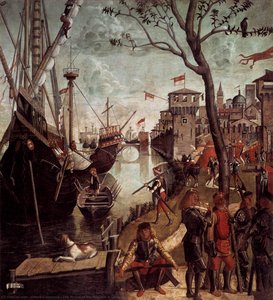
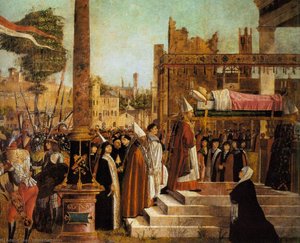
- Die Legende vom Heiligen Ursula, ein Zyklus von neun Gemälden, ist Carpaccis berühmtestes Werk. Diese Serie, die sich heute in der Gallerie dell'Accademia befindet, zeigt seine Meisterschaft in der Erzählmalerei.
- Das Altarbild zur Herrlichkeit des Heiligen Ursula (1491) demonstriert Carpaccis Geschick darin, Licht und Farbe einzufangen, was an den Stil von Giovanni Bellini erinnert.
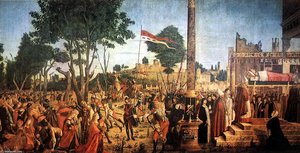
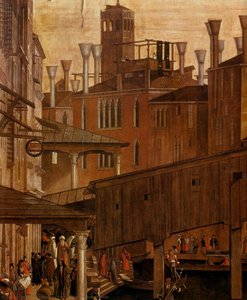
- Das Wunder der Reliquie des Kreuzes an der Rialtobrücke (1494) unterstreicht Carpaccis Fähigkeit, Komposition und Erzählung in Einklang zu bringen.
Karrierehöhepunkte und Vermächtnis
- Carpaccis Hauptwerke wurden zwischen 1490 und 1519 geschaffen, was ihn zu einem der frühen Meister der venezianischen Renaissance zählt.
- Sein orientalistischer Stil, wie in St. Georg taufte die Seleniten zu sehen ist, spiegelt eine neue Faszination für den Levante wider.
- Carpaccis Werk wurde im Vergleich zu seinen Zeitgenossen wie Giovanni Bellini oder Giorgione etwas übersehen.
Referenzen und weiterführende Informationen
Entdecken Sie mehr über Vittore Carpaccio und die venezianische Schule auf ArtsDot.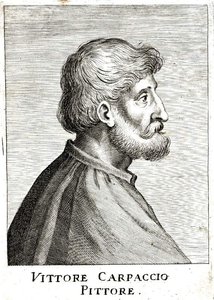
Vittore Carpaccio
1465 - 1526 , Italien
Kurzinfos
- Bemerkenswerte Werke:
- Die Legende vom Heiligen Ursula
- Gloria des Hl. Ursula Altarpiece
- Wunder der Kreuzreliquie am Rialto
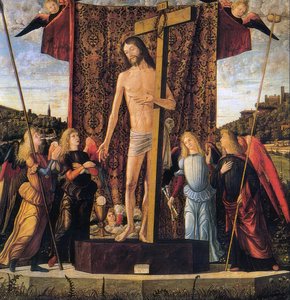
- Christus mit den Symbolen der Kreuzigung
- Geburtsdatum: ca. 1465
- Geburtsort (Stadt, Land): Venedig, Italien
- Künstler Oder Bewegungen, Die Von Diesem Künstler Beeinflusst Wurden:
- Giovanni Bellini
- Giorgione
- Künstler, Die Diesen Künstler Beeinflussten:
- Gentile Bellini
- Antonello da Messina
- Künstlerische Bewegung/Stil: Venezianische Renaissance
- Nationalität: Italienisch
- Todatum: 1526
- Vollständiger Name: Vittore Carpaccio
Ähnliche Artikel

John Constable: Die 25 Meisterwerke des englischen Landschaftsgenies – ArtsDot
Entdecken Sie die 25 Meisterwerke von John Constable! Erleben Sie englische Landschaftsmalerei vom Hay Wain bis zur Stour Valley. Hochwertige Reproduktionen & Kunst für Ihr Zuhause auf ArtsDot.com.

John Singer Sargent: Die 25 Meisterwerke des Porträts – Kunst für Ihr Zuhause | ArtsDot
Entdecken Sie die 25 Meisterwerke von John Singer Sargent! Tauchen Sie ein in die Welt der Porträtmalerei, des Impressionismus & der Belle Époque. Hochwertige Kunstdrucke & Reproduktionen für Ihr Zuhause – jetzt auf ArtsDot.com!
Vittore Carpaccio: Venezianische Renaissance und die Poetik des Details
Entdecken Sie die faszinierende Welt Vittore Carpaccios! Analysieren Sie mit uns seine einzigartige venezianische Renaissance-Malerei, den St.-Georgs-Zyklus und seinen Einfluss auf die Kunstgeschichte. Expertenwissen & Detailreichtum.
Jacob Henricus Maris: Meister des niederländischen Stimmungsrealismus und der intimen Landschaft
Entdecken Sie das Werk von Jacob Henricus Maris, einem Meister des niederländischen Stimmungsrealismus! Erfahren Sie mehr über seine Landschaftsmalerei, Einflüsse und berühmte Gemälde. Jetzt lesen & inspirieren lassen!
Gwen John: Intimität, Moderne und die stille Kraft der walisischen Porträtkunst
Entdecken Sie das faszinierende Werk von Gwen John – einer Pionierin der walisischen Moderne. Erfahren Sie mehr über ihre einzigartigen Porträts, ihren Stil und ihr Vermächtnis in der Kunstgeschichte.