

 Vorschau anzeigen
 Versenden
 Teilen
 Details anzeigen

 Herunterladen
 Ähnliche Objekte
 Röntgenaufnahme
 Diashow
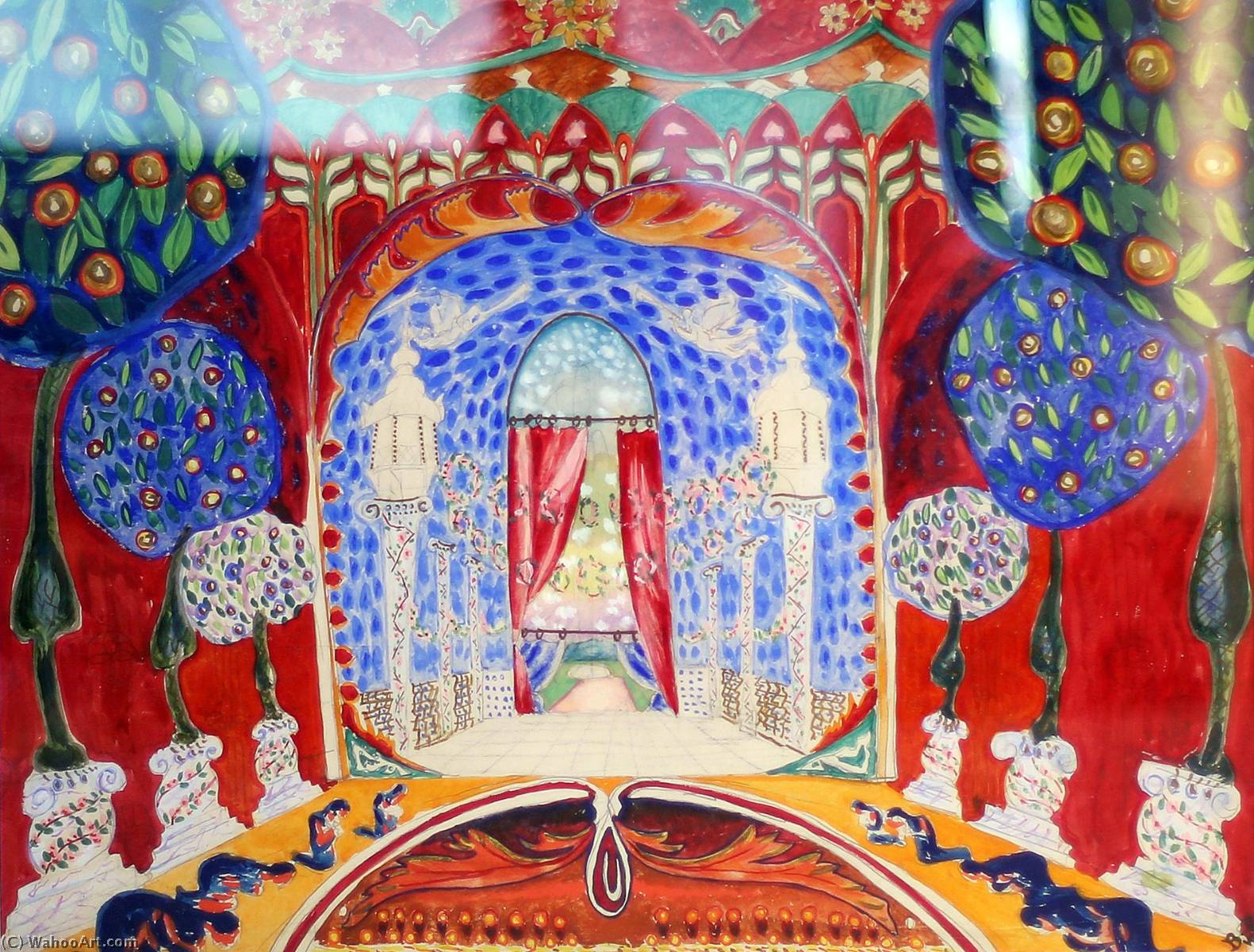
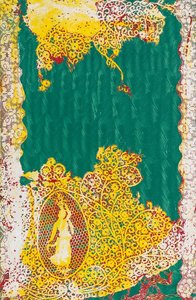
Drop curtain of the Scene
 Weiterlesen
Handgefertigte Ölreproduktion
Handgemaltes Ölgemälde auf Leinwand in Ihrer Wunschgröße und mit Rahmen, auf Bestellung von unseren Künstlern angefertigt. ( Druck bestellen Bild kaufen)




































Wählen Sie aus unseren vordefinierten Formaten, die den ursprünglichen Proportionen des Kunstwerks entsprechen.

Sie können Ihre eigenen Maße eingeben, um einen bestimmten Rahmen oder Platz auszufüllen. Wenn die gewählte Größe nicht den Proportionen des Originalbildes entspricht, werden wir das Kunstwerk entweder beschneiden oder das Gemälde durch zusätzliche, handgemalte Elemente erweitern. Ein digitales Mockup wird Ihnen zur Genehmigung zugesandt, bevor die Produktion beginnt.
Bitte beachten Sie, dass die Bildschirmvorschau nicht die tatsächliche Beschneidung oder Erweiterung widerspiegelt. Nur das Mockup zeigt die endgültige Komposition exakt an.
Obwohl Sondermaße verfügbar sind, empfehlen wir, eine Größe aus der vordefinierten Liste zu wählen, um die ursprünglichen Proportionen beizubehalten.
Nach der Bestellung wird das ArtsDot.com-Team dem Kunden Anweisungen per E-Mail zusenden und eine Mockup-Vorschau bereitstellen.
Weltweiter Versand () in nur 3 bis 4 Wochen statt der üblichen 5 Wochen. (1 September). Keine Kompromisse bei der Qualität.

Kostenloser weltweiter Expressversand

Hochwertige Leinenleinwand

Umfassender Versicherungsschutz beim Versand

Zollgebühren-Rückerstattungsgarantie

Garantie für exakte Farbtreue

60 Tage Rückgaberecht (nur bei Mängeln)

100% Geld-zurück-Garantie

Mengenrabatt verfügbar
 Die Glasoption ist nur für Größen unter 110 cm verfügbar.

Drop curtain of the Scene
Art der Reproduktion
Format der Reproduktion
-


Gesamtpreis
$ 263
Ähnliche Kunstwerke






Über den Künstler
A Life Painted in Avant-Garde Hues: Vladimir Baranov-Rossiné
Vladimir Davidovich Baranov-Rossiné, a name resonating with the dynamism of Cubo-Futurism and the tragic echoes of 20th-century upheaval, was an artist whose life embodied the spirit of innovation cut short by unimaginable brutality. Born Shulim Wolf Leib Baranov in 1888 in Velyka Lepetykha, Kherson Governorate (present-day Ukraine), his journey traversed the artistic landscapes of Russia, France, and Norway before culminating in the horrors of Auschwitz in January 1944. He wasn’t merely a painter; he was an inventor, a pioneer of synaesthetic art, and a figure whose contributions extended beyond the canvas into the realms of military technology and performance. His early education at the School of the Society for the Furthering of the Arts in St. Petersburg laid the foundation for his formal training at the Imperial Academy of Arts, though his rebellious spirit led to expulsion after only a year. This dismissal didn’t deter him; instead, it propelled him into the burgeoning avant-garde circles of Kyiv, where he exhibited with the group Zveno alongside David and Wladimir Burliuk, artists who would become pivotal figures in Russian Modernism.From La Ruche to the Russian Vanguard
The allure of Paris drew Baranov-Rossiné in 1910, and he found himself immersed within the vibrant community of La Ruche – a legendary artist’s colony teeming with talent. Here, amongst contemporaries like Alexander Archipenko and Sonia Delaunay-Terk, his artistic voice began to solidify. He embraced Cubo-Futurism, dissecting forms and exploring fragmented perspectives that reflected the accelerating pace of modern life. His paintings from this period demonstrate a keen understanding of color theory and composition, hinting at the synaesthetic explorations that would later define his most ambitious work. The outbreak of World War I prompted a return to Russia in 1914, followed by a period spent in Norway where he continued to exhibit, maintaining a connection to the artistic world despite the escalating conflict. Upon his definitive return to Russia in 1918, Baranov-Rossiné became deeply involved with the revolutionary art scene, participating in exhibitions organized by Mir Iskusstva (World of Art) and the Jewish Society for the Furthering of the Arts alongside luminaries like El Lissitzky and David Shterenberg. This period marked a peak in his artistic activity, as he sought to integrate his work into the new social order.The Optophonic Piano: A Synthesis of Senses
Baranov-Rossiné’s most groundbreaking achievement was undoubtedly the creation of the ‘Optophonic Piano,’ first presented in 1924 at the Bolshoi Theatre in Moscow. This wasn't simply a musical instrument; it was a synaesthetic machine designed to translate sound into light, color, and texture – a holistic sensory experience. The piano utilized a complex system of keys and mechanisms that triggered not only notes but also corresponding visual projections, creating an immersive environment where music could be *seen* as well as heard. This invention reflected his deep fascination with the interconnectedness of the senses and foreshadowed later developments in multimedia art and performance. He envisioned a future where art transcended traditional boundaries, engaging all aspects of human perception. Beyond this ambitious project, Baranov-Rossiné’s inventive mind led him to explore practical applications of color theory, most notably in the field of military camouflage.Camouflage and Tragedy: A Final Chapter
Driven by his experimentation with color, Baranov-Rossiné developed a revolutionary technique for military camouflage, known as the Cameleon process or pointillist dynamic camouflage, which he marketed alongside Robert Delaunay. This wasn’t merely about blending into the environment; it involved creating patterns that disrupted visual perception, making objects harder to detect. He even patented a “photochromometer” for analyzing precious stones and a machine for producing fizzy drinks – demonstrating his diverse range of interests and skills. However, this period of innovation was tragically cut short. In 1925, he emigrated back to France, seeking artistic freedom and opportunity. The shadow of World War II loomed large, and in 1943, during the German occupation, Baranov-Rossiné was arrested and deported to Auschwitz. He perished there in January 1944, a victim of the Holocaust, his vibrant life extinguished by hatred and intolerance.A Legacy Rediscovered
Vladimir Baranov-Rossiné’s legacy extends far beyond his tragically abbreviated career. His Cubo-Futurist paintings offer a compelling glimpse into the artistic ferment of the early 20th century, while his Optophonic Piano stands as a testament to his visionary spirit and pioneering exploration of synaesthetic art. His innovative camouflage techniques, though often overlooked, represent a significant contribution to military technology. Today, there is a growing recognition of his importance within the broader context of Russian Avant-Garde and Parisian Modernism. His story serves as a poignant reminder of the fragility of artistic expression in times of conflict and the enduring power of creativity to transcend boundaries – even in the face of unimaginable darkness. His work continues to inspire artists and thinkers, urging us to explore the interconnectedness of senses, challenge conventional perceptions, and remember those whose voices were silenced too soon.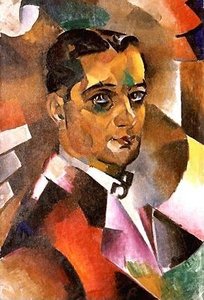
vladimir davidovich baranov rossine
1888 - 1944
Kurzinfos
- Artistic Movement Or Style: Post-Impressionism
- Artists Or Movements Influenced By This Artist:
- Expressionism
- Van Gogh's work
- Artists Who Influenced This Artist:
- Eugène Delacroix
- Edgar Degas
- Paul Gauguin
- Date Of Birth: March 30, 1853
- Date Of Death: July 29, 1890
- Full Name: Vincent Willem van Gogh
- Nationality: Dutch
- Notable Artworks:
- Sunflowers
- Bedroom in Arles
- Starry Night
- Wheatfield with Crows
- Place Of Birth: Ghent, Belgium

