

 Vorschau anzeigen
 Versenden
 Teilen
 Details anzeigen

 Herunterladen
 Ähnliche Objekte
 Röntgenaufnahme
 Diashow
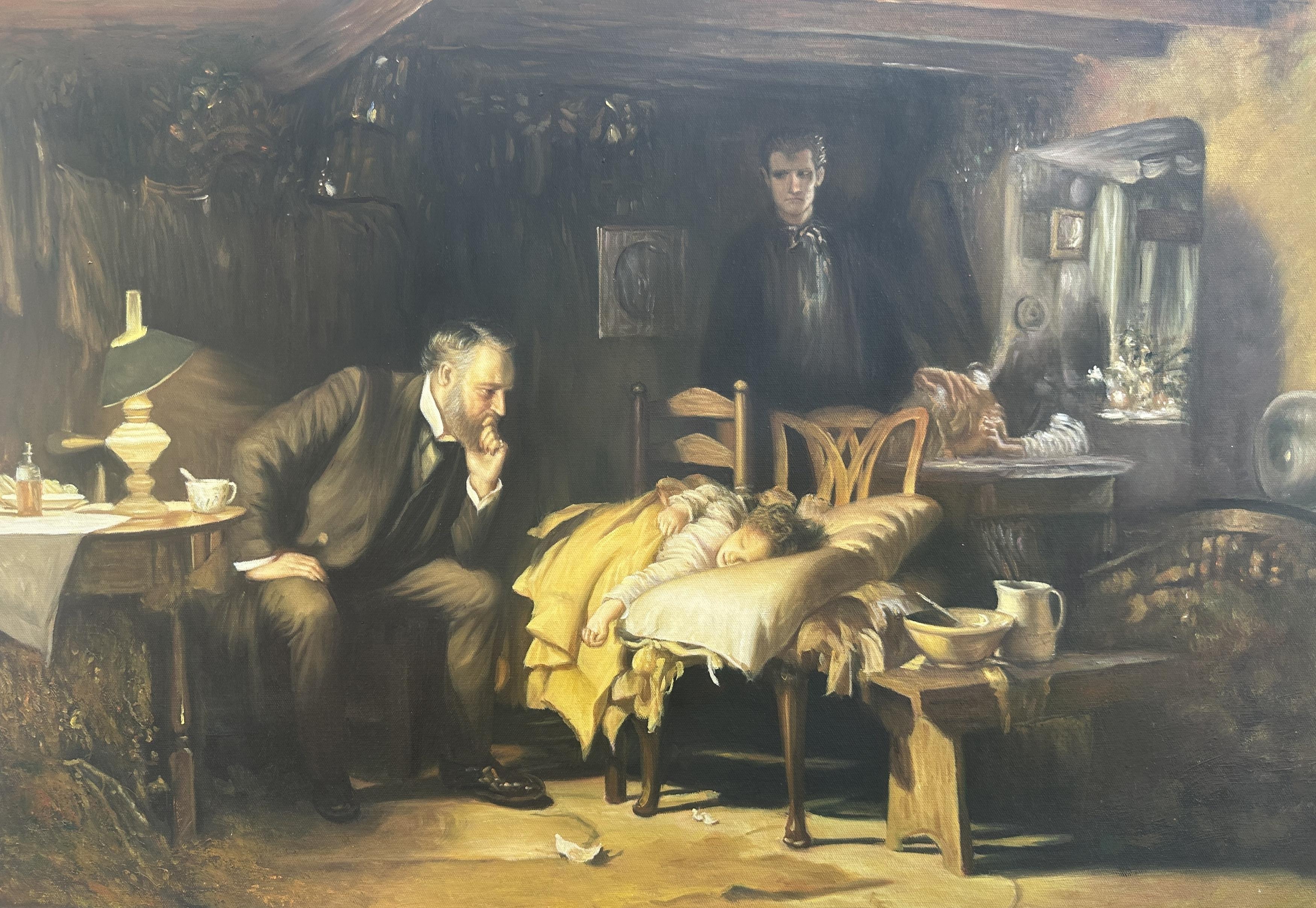
The Doctor - Sir Samuel Luke Fildes


 Weiterlesen
Ölgemälde mit Lager-Rabatt verfügbar
Handgemaltes Ölgemälde auf Lager und versandbereit; Rahmen können beim Checkout hinzugefügt werden. ()





































Kostenloser weltweiter Expressversand

Hochwertige Leinenleinwand

Umfassender Versicherungsschutz beim Versand

Zollgebühren-Rückerstattungsgarantie

Garantie für exakte Farbtreue

60 Tage Rückgaberecht (nur bei Mängeln)

100% Geld-zurück-Garantie

Mengenrabatt verfügbar
 Die Glasoption ist nur für Größen unter 110 cm verfügbar.

The Doctor - Sir Samuel Luke Fildes
Ölgemälde mit Lager-Rabatt verfügbar
Format der Reproduktion
-


Expressversand inklusive
Expressversand weltweit. Eine Woche. (4 August).
Inklusive
Gesamtpreis
$ 129
Beschreibung des Kunstwerks
Ähnliche Kunstwerke

Über den Künstler
Denis Fildes: A Chronicle of Victorian Life and Beyond
The name Denis Fildes resonates deeply within the annals of British art, primarily for his evocative portrayals of Victorian England – a period teeming with social change, industrial progress, and profound human experience. Born in Liverpool in 1889, Fildes’s artistic journey wasn't merely one of technical skill; it was profoundly shaped by his family history, his keen observations of the world around him, and a burgeoning sense of social responsibility. His lineage held echoes of both artistic talent and political activism, notably through his grandmother, Mary Fildes, a prominent figure in the reform movement. This familial influence subtly informed his approach to art, imbuing it with an empathetic understanding of the struggles faced by ordinary people.
Fildes’s early years were marked by immersion in the vibrant, yet often challenging, atmosphere of Liverpool's port city. The sights and sounds of maritime life – the bustling docks, the crowded tenements, and the faces of those working tirelessly to sustain themselves – provided a rich tapestry for his nascent artistic sensibilities. This formative experience, coupled with formal training at Warrington School of Art and later at the South Kensington and Royal Academy Schools, laid the groundwork for his distinctive style. Crucially, he found himself deeply influenced by Frederick Walker, a leading figure in the social realist movement, whose emphasis on depicting everyday life with honesty and compassion resonated profoundly with Fildes’s own burgeoning artistic vision.
The Illustrator's Voice: Early Years at *The Graphic*
Fildes’s career gained significant momentum through his work as an illustrator for *The Graphic*, a pioneering illustrated newspaper edited by William Luson Thomas. This role wasn’t simply a job; it was a deliberate immersion in the spirit of social reform that permeated the publication. *The Graphic* sought to use visual imagery to raise awareness about pressing societal issues, and Fildes quickly became recognized for his ability to capture the stark realities of poverty and injustice with remarkable sensitivity. His illustrations weren’t merely decorative; they were powerful statements designed to elicit empathy and inspire action.
A particularly poignant example of this early work is “Houseless and Hungry” (1869), a woodcut depicting the plight of London's homeless population seeking refuge in the workhouse. This image, commissioned by Charles Dickens himself, became an instant sensation, capturing the nation’s attention and solidifying Fildes’s reputation as a socially conscious artist. The collaboration with Dickens was a watershed moment, demonstrating the power of illustration to amplify social commentary and influence public opinion. Following this success, Fildes continued to produce a prolific body of work for *The Graphic* and other leading periodicals, consistently addressing themes of poverty, labor conditions, and social inequality.
Painting Beyond Illustration: Portraits and Venetian Visions
While his illustrations brought him widespread recognition, Fildes harbored a desire to move beyond the constraints of the print medium. By the early 1870s, he began to dedicate himself more fully to oil painting, establishing himself as a skilled genre painter with a distinctive style. His paintings often explored themes of domestic life, social interaction, and human emotion – subjects that mirrored his earlier work but were now rendered with greater depth and nuance.
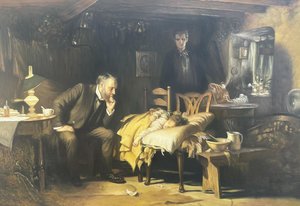
Fildes’s artistic development took another significant turn when he spent several years in Venice, immersing himself in the city's vibrant culture and artistic traditions. This period profoundly influenced his style, leading to a shift towards brighter colors, looser brushwork, and a heightened sense of atmosphere. His Venetian paintings – such as “The Doctor” (1891) and "An Al-fresco Toilette" (1889) – capture the beauty and charm of the city while also subtly hinting at the underlying social complexities.
Royal Recognition and Legacy
Fildes’s artistic achievements were ultimately recognized by the Royal Academy, which elected him as an Associate Academician in 1879 and a Royal Academician in 1887. He was knighted by King Edward VII in 1906, a testament to his distinguished service to British art and culture. Throughout his career, Fildes produced a vast body of work – portraits of royalty, notable figures, and intimate glimpses into everyday life – that continues to be admired for its realism, emotional depth, and social significance.
His legacy extends beyond the individual artworks he created. Fildes’s commitment to depicting the realities of Victorian society helped to raise awareness about pressing social issues and contributed to a broader understanding of the lives of ordinary people. Lieutenant Commander Denis Quentin Fildes (1889–1975), his son, also followed in his father's footsteps as an Olympic fencer, solicitor and company secretary. Another son had a distinguished naval career. His work remains a valuable window into the past, offering insights into the social, cultural, and artistic landscape of Victorian England.
denis fildes
1889 - 1974
Kurzinfos
- Artistic Movement Or Style: Social realism, Portraiture
- Artists Or Movements Influenced By This Artist: ['Van Gogh']
- Artists Who Influenced This Artist: ['Frederick Walker']
- Date Of Birth: Oct 3, 1843
- Date Of Death: Feb 28, 1927
- Full Name: Samuel Luke Fildes
- Nationality: British
- Notable Artworks:
- The Casual Ward
- The Widower
- The Village Wedding
- Place Of Birth: Liverpool, UK
Ähnliche Artikel

Romantic Realism's Finest: 10 Masterpieces for Your Home | ArtsDot
Explore 10 defining masterpieces of Romantic Realism! Discover Courbet, Millet & Daumier's powerful paintings—capturing emotion and social realities. Find museum-quality reproductions for your home at ArtsDot.com.
Acryl auf Papier: Zeitgenössischer Ausdruck und die Renaissance einer modernen Leinwand
Entdecken Sie die faszinierende Welt der Acrylmalerei auf Papier! Expertenwissen über Techniken, Künstler und den wachsenden Wert zeitgenössischer Kunst. Jetzt informieren & sammeln.
Marianne North: Die 25 schönsten Blumenmalereien der viktorianischen Reisenden | ArtsDot
Entdecken Sie die 25 schönsten Werke der viktorianischen Blumenmalerin Marianne North! Erleben Sie ihre exotischen Reisebilder & botanischen Illustrationen. Hochwertige Kunst Reproduktionen für Ihr Zuhause auf ArtsDot.com.

Dante Gabriel Rossetti: Die 25 Meisterwerke des Präraffelitismus | ArtsDot
Entdecken Sie die 25 schönsten Gemälde von Dante Gabriel Rossetti! Tauchen Sie ein in die Welt der Präraffeliten, symbolistischer Kunst & viktorianischer Romantik. Hochwertige Reproduktionen für Ihr Zuhause – jetzt bei ArtsDot.com!
Samuel Luke Fildes: Capturing Victorian Life Through Narrative & Social Realism
Explore the poignant world of Samuel Luke Fildes, a master of Victorian Social Realism. Discover his iconic paintings like 'The Doctor' and delve into his artistic journey with ArtsDot.

