 Vorschau anzeigen
 Versenden
 Teilen
 Details anzeigen

 Herunterladen
 Ähnliche Objekte
 Röntgenaufnahme
 Diashow
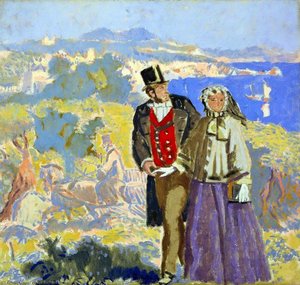
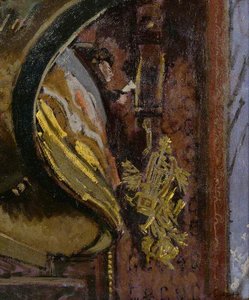
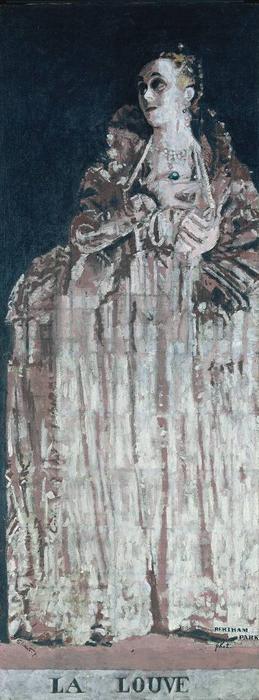
Miss Gwen Frangcon-Davies as Isabella of France


 Weiterlesen
Giclée / Kunstdruck
Giclée- oder Leinwanddruck in Museumsqualität mit schneller Produktion und flexiblen Veredelungsoptionen. ( Handgemalte Reproduktion bestellen Bild kaufen)




P118B $10

P118H $10

P118W $10

P438Z $10

P508JH $12

P508YH $12

P805H $10

P805Z $10

P919BZ $10

P919G $10

P919XJ $10

P959ZH $10

P968JZ $12

W106C $8

W218G $10

W218JH $8

W218Y $10

W307PJ $10

W316G $10

W316PJ $8

W316Y $10

W398PJ $8

W4111J $10

W500HY $15

W500JH $15

W692G $12

W849H $8

W940BG $15

W953PJ $8




Wählen Sie aus unseren vordefinierten Formaten, die den ursprünglichen Proportionen des Kunstwerks entsprechen.

Sie können Ihre eigenen Maße eingeben, um ein bestimmtes Format oder einen speziellen Platz einzupassen. Wenn das von Ihnen gewählte Format nicht den Proportionen des Originalbildes entspricht, werden wir das Kunstwerk entweder beschneiden oder das Bild mit einem gespiegelten oder einfarbigen Rand erweitern. Ein digitaler Entwurf wird Ihnen zur Genehmigung zugesandt, bevor die Produktion beginnt.
Bitte beachten Sie, dass die Vorschau auf dem Bildschirm nicht den tatsächlichen Zuschnitt oder die Erweiterung widerspiegelt. Nur der Entwurf zeigt die endgültige Komposition präzise an.
Obwohl Sondermaße verfügbar sind, empfehlen wir die Auswahl eines Maßes aus der vordefinierten Liste, um die ursprünglichen Proportionen zu bewahren.
Weltweiter Versand () innerhalb von 2 Wochen statt der üblichen 4/5 Wochen. (4 September)

Kostenloser weltweiter Expressversand

Hochwertige Leinenleinwand

Umfassender Versicherungsschutz beim Versand

Zollgebühren-Rückerstattungsgarantie

Garantie für exakte Farbtreue

60 Tage Rückgaberecht (nur bei Mängeln)

100% Geld-zurück-Garantie

Mengenrabatt verfügbar
 Die Glasoption ist nur für Größen unter 110 cm verfügbar.

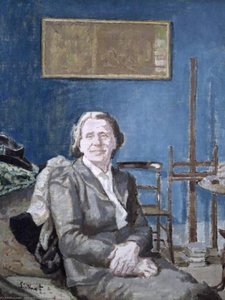
Miss Gwen Frangcon-Davies as Isabella of France
Giclée / Kunstdruck
Format der Reproduktion
-


Gesamtpreis
$ 62
A Shadowed Portrait: Miss Gwen Frangcon-Davies as Isabella of France
Walter Richard Sickert’s “Miss Gwen Frangcon-Davies as Isabella of France,” painted in 1932, isn't merely a portrait; it’s a carefully constructed tableau vivant—a captured moment suspended between performance and reality. The canvas breathes with the smoky atmosphere of a rehearsal room, hinting at the drama unfolding just beyond the frame. At its heart stands Gwen Frangcon-Davies, an actress poised in her elaborate costume as the French queen Isabella, a figure both regal and vulnerable, caught in a fleeting instant of anticipation.
Sickert’s masterful technique immediately draws the eye. He employs a muted palette—deep browns, ochres, and greys—creating a sense of intimacy and shadow that dominates the scene. The lighting is theatrical, casting dramatic pools of light and deep recesses, reminiscent of the stage itself. Sickert's brushwork is loose and expressive, eschewing meticulous detail in favor of capturing the essence of the subject and the mood of the space. Notice how he uses broken color to suggest texture—the velvet of the gown, the sheen of the jewels, the worn wood of the surrounding furniture. This deliberate ambiguity invites the viewer to actively participate in constructing the scene.
The Camden Town Group and a World of Shadows
To fully appreciate “Isabella,” it’s crucial to understand Sickert's place within the Camden Town Group, a circle of artists who rejected the academic traditions of the Royal Academy and sought to depict modern London life with unflinching honesty. This group, centered around the bohemian district of Camden Town, embraced a darker aesthetic—a fascination with urban decay, poverty, and the marginalized figures that populated the city’s underbelly. Sickert's work reflects this sensibility; he wasn't interested in idealized beauty but rather in capturing the gritty reality of his subjects.
The painting’s context is particularly revealing. 1932 was a time of social and political upheaval, marked by the Great Depression and rising anxieties about modernity. Sickert’s choice to portray an actress preparing for a theatrical performance speaks to this broader cultural climate—a world where illusion and reality were increasingly intertwined. The painting subtly explores themes of identity, performance, and the constructed nature of selfhood.
Symbolism in the Details
Beyond its immediate visual impact, “Miss Gwen Frangcon-Davies as Isabella of France” is rich with symbolic detail. The queen’s pose—a slight tilt of her head, a hand resting lightly on a baby—suggests both power and vulnerability. The presence of the unseen man, presumably a stagehand or fellow actor, adds another layer of complexity to the scene. The inscription “La Louve” (the she-wolf) at the bottom of the painting alludes to Isabella’s reputation as a ruthless and cunning ruler—a fitting emblem for a woman navigating the demanding world of the theatre.
Furthermore, the setting itself—a rehearsal room filled with props and furniture—is laden with symbolic meaning. It represents the space where identities are constructed and performances are rehearsed, highlighting the artificiality of both art and social roles. The shadows that envelop the scene contribute to a sense of mystery and intrigue, inviting viewers to contemplate the hidden depths beneath the surface.
A Timeless Portrait of Performance
“Miss Gwen Frangcon-Davies as Isabella of France” is more than just a portrait; it’s a captivating meditation on performance, identity, and the complexities of human relationships. Sickert's masterful technique, combined with his keen eye for detail and his understanding of the cultural context, creates an image that continues to resonate with viewers today. It’s a poignant reminder of the power of art to capture fleeting moments of beauty and drama—and to reveal the hidden truths beneath the surface of everyday life.
Ähnliche Kunstwerke

Über den Künstler
Frühes Leben und Ausbildung
Walter Richard Sickert, ein deutschamerikanischer britischer Maler, wurde am 31. Mai 1860 in München, Königreich Bayern, geboren. Seine Familie ließ sich 1868 in England nieder, nachdem das Herzogtum Schleswig-Holstein von Deutschland annektiert worden war. Sickerts frühe Ausbildung fand an der University College School und der King’s College School statt, wo er bis zum 18. Lebensjahr studierte.Künstlerische Entwicklung
Sickerts künstlerischer Weg begann mit einer kurzen Tätigkeit als Schauspieler, gefolgt von seiner Einschreibung an der Slade School im Jahr 1881. Später wurde er Schüler von James Abbott McNeill Whistler, der seine Arbeit maßgeblich beeinflusste. Sickerts früheste Gemälde waren kleine tonalistische Studien, die nach Whistlers Vorbild „alla prima“ aus der Natur gemalt wurden.Bemerkenswerte Werke und Kontroversen
Sickerts erste größere Werke, die in den späten 1880er Jahren entstanden, stellten Szenen aus Londoner Musikhall-Lokalen dar. Eines seiner bemerkenswertesten Gemälde, Katie Lawrence at Gatti’s, löste Kontroversen aus, da es eine bekannte Musikhall-Sängerin darstellte, die von Kritikern als „hässlich und vulgär“ bezeichnet wurde.Zusammenarbeit mit der Camden Town Group
Sickert war ein wichtiger Einfluss auf distinctiv britische Stile der Avantgarde-Kunst im 20. Jahrhundert. Er trat 1888 der New English Art Club bei, einer Gruppe von französisch beeinflussten realistischen Künstlern, und wurde später Mitglied der Camden Town Group.Vermächtnis
Sickerts Werk ist in verschiedenen Museen zu finden, darunter das Museum Kunstsalon Franke Schenk, das Werke aus dem 16. bis zum 20. Jahrhundert zeigt. Sein Vermächtnis geht über seine eigene Kunst hinaus und beeinflusst britische Stile der Avantgarde-Kunst in der Mitte und im späten 20. Jahrhundert.- Betrachten Sie Sickerts Gemälde auf ArtsDot: Walter Richard Sickert
- Erfahren Sie mehr über die Camden Town Group auf Wikipedia: Wyndham Lewis
- Entdecken Sie die Sammlung des Museum Kunstsalon Franke Schenk auf ArtsDot: Das Museum Kunstsalon Franke Schenk
- Erfahren Sie mehr über Sickerts Leben und Werk auf Wikipedia: Walter Sickert
- 31. Mai 1860: Geburt in München, Königreich Bayern
- 1888: Beitritt zum New English Art Club
- 1903-04: Entwicklung eines unverwechselbaren Ansatzes für mehrfigurige Tableaus während seiner letzten Malreise nach Venedig
Schlussfolgerung
Walter Richard Sickerts bahnbrechende Arbeit in der britischen Avantgarde-Kunst hat ihre Spuren in der Kunstwelt hinterlassen. Sein Vermächtnis inspiriert und beeinflusst weiterhin Künstler, was ihn zu einer entscheidenden Figur in der Geschichte der modernen Kunst macht.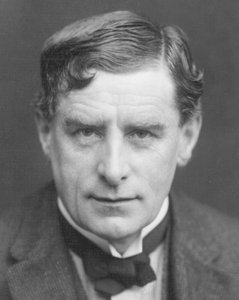
Walter Richard Sickert
1860 - 1942 , Deutschland
Kurzinfos
- Beeinflusste Künstler: ['James Abbott McNeill Whistler']
- Bemerkenswerte Werke:
- Katie Lawrence at Gatti’s
- Gaieté Montparnasse
- Geburtsdatum: 31. Mai 1860
- Geburtsort: München, Deutschland
- Künstlerische Richtung: Postimpressionismus
- Nationalität: Deutsch-Britisch
- Sterbedatum: 22. Januar 1942
- Vollständiger Name: Walter Richard Sickert
- Von Künstlern Beeinflusst: ['Degas']
Ähnliche Artikel
Walter Sickert: A Shadowy Realism & the Modern British Canvas
Explore the life & work of Walter Sickert, a pivotal British painter bridging Impressionism to Modernism. Discover his evocative scenes of London life, controversial legacy, and lasting influence on 20th-century art.
Arthur B. Davies: Pioniergeist des amerikanischen Modernismus und die kosmopolitische Ästhetik
Entdecken Sie Arthur B. Davies, einen Pionier der amerikanischen Moderne und Schlüsselfigur der Armory Show. Erfahren Sie mehr über seinen Einfluss auf die Kunstgeschichte, seine Sammlung und sein einzigartiges Œuvre. Expertenwissen & hochwertige Reproduktionen.
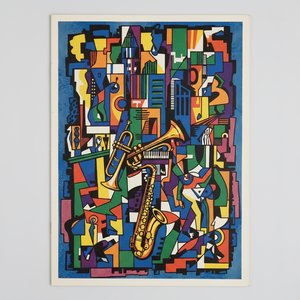
Stuart Davis: Modernistische Abstraktion und der lebendige Geist des Jazz-Zeitalters
Entdecken Sie Stuart Davis' revolutionäre abstrakte Malerei und seinen Einfluss auf die amerikanische Kunst des Jazz-Zeitalters. Expertenanalyse, Hintergrundinformationen & Sammlerperspektiven.
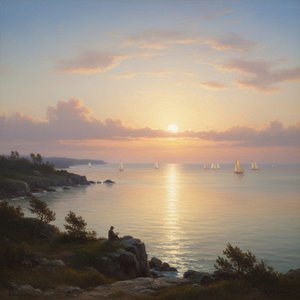
William Trost Richards: Luminismus, Spiritualität und die amerikanische Landschaftstradition
Entdecken Sie das Werk von William Trost Richards und die faszinierende Welt des Luminismus! Erfahren Sie mehr über seine einzigartige Aquarelltechnik, spirituelle Tiefe & Einfluss auf die amerikanische Landschaftsmalerei. Jetzt lesen!
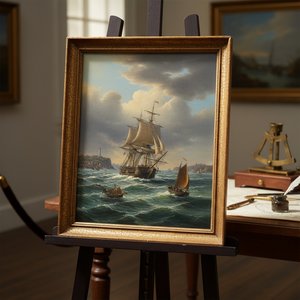
Samuel Walters: Capturing Victorian Maritime Life with Precision & Artistry
Explore the exquisite maritime paintings of Samuel Walters (1811-1882). Discover his mastery of detail, historical scenes & influence on Victorian art. Learn about collecting his works and find high-quality reproductions at ArtsDot.