 Vorschau anzeigen
 Versenden
 Teilen
 Details anzeigen

 Herunterladen
 Ähnliche Objekte
 Röntgenaufnahme
 Diashow
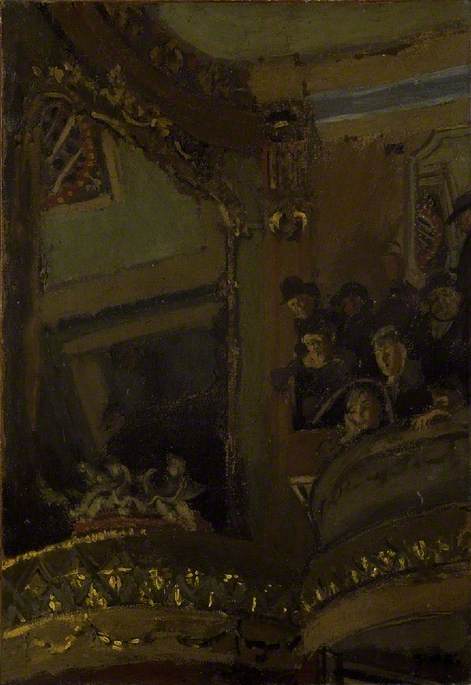
The Old Bedford Music Hall
 Oil
Oil- WallArt
- Impressionistic Realism
 1895
1895- 19th Century
 55.0 x 38.0 cm
 Fitzwilliam-Museum
 Weiterlesen
Handgefertigte Ölreproduktion
Handgemaltes Ölgemälde auf Leinwand in Ihrer Wunschgröße und mit Rahmen, auf Bestellung von unseren Künstlern angefertigt. ( Druck bestellen Bild kaufen)




P118B $10

P118H $10

P118W $10

P438Z $10

P508JH $12

P508YH $12

P805H $10

P805Z $10

P919BZ $10

P919G $10

P919XJ $10

P959ZH $10

P968JZ $12

W106C $8

W218G $10

W218JH $8

W218Y $10

W307PJ $10

W316G $10

W316PJ $8

W316Y $10

W398PJ $8

W4111J $10

W500HY $15

W500JH $15

W692G $12

W849H $8

W940BG $15

W953PJ $8




Wählen Sie aus unseren vordefinierten Formaten, die den ursprünglichen Proportionen des Kunstwerks entsprechen.

Sie können Ihre eigenen Maße eingeben, um einen bestimmten Rahmen oder Platz auszufüllen. Wenn die gewählte Größe nicht den Proportionen des Originalbildes entspricht, werden wir das Kunstwerk entweder beschneiden oder das Gemälde durch zusätzliche, handgemalte Elemente erweitern. Ein digitales Mockup wird Ihnen zur Genehmigung zugesandt, bevor die Produktion beginnt.
Bitte beachten Sie, dass die Bildschirmvorschau nicht die tatsächliche Beschneidung oder Erweiterung widerspiegelt. Nur das Mockup zeigt die endgültige Komposition exakt an.
Obwohl Sondermaße verfügbar sind, empfehlen wir, eine Größe aus der vordefinierten Liste zu wählen, um die ursprünglichen Proportionen beizubehalten.
Nach der Bestellung wird das ArtsDot.com-Team dem Kunden Anweisungen per E-Mail zusenden und eine Mockup-Vorschau bereitstellen.
Weltweiter Versand () in nur 3 bis 4 Wochen statt der üblichen 5 Wochen. (26 August). Keine Kompromisse bei der Qualität.

Kostenloser weltweiter Expressversand

Hochwertige Leinenleinwand

Umfassender Versicherungsschutz beim Versand

Zollgebühren-Rückerstattungsgarantie

Garantie für exakte Farbtreue

60 Tage Rückgaberecht (nur bei Mängeln)

100% Geld-zurück-Garantie

Mengenrabatt verfügbar
 Die Glasoption ist nur für Größen unter 110 cm verfügbar.

The Old Bedford Music Hall
Art der Reproduktion
Format der Reproduktion
-


Gesamtpreis
$ 263
Beschreibung des Kunstwerks
A Window Into Victorian Leisure: Walter Richard Sickert’s “The Old Bedford Music Hall”
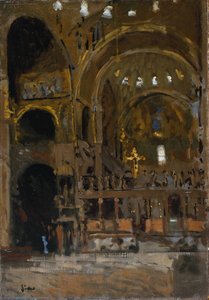
Walter Richard Sickert's "The Old Bedford Music Hall," painted in 1895, isn’t merely a depiction of a music hall; it’s a carefully constructed tableau that encapsulates the spirit of Victorian London – a city brimming with theatrical ambition and social aspiration. More than just capturing an architectural space, Sickert delves into the psychological landscape of its occupants, presenting a portrait not only of the building itself but also of the human experience within it.The Scene: A Moment Frozen in Time
The painting portrays Wilton’s Music Hall, London's oldest surviving Grand Music Hall, bathed in muted light that lends an air of solemn grandeur to the interior. Rows upon rows of chairs occupy the space, populated by figures absorbed in watching a performance – perhaps opera or ballet – judging by the presence of a curtain concealing the stage. Sickert’s meticulous attention to detail extends beyond the visible faces; he captures subtle gestures and postures that convey unspoken emotions—a flicker of amusement here, a furrowed brow there—suggesting a complex interplay of thoughts and feelings amongst those assembled. The balcony above adds another layer of visual interest, hinting at social hierarchy and elevating the gaze of the audience members.Style and Technique: Impressionistic Echoes
Sickert’s artistic approach leans heavily into impressionism, albeit tempered with a distinctly personal vision. Unlike the vibrant hues favored by Monet or Renoir, Sickert employs a predominantly monochrome palette—primarily shades of grey and brown—creating an atmosphere of subdued contemplation. However, he skillfully utilizes tonal variations to sculpt form and texture, achieving remarkable depth and realism despite the lack of color. Thick brushstrokes contribute to the painting's materiality, conveying a sense of immediacy and capturing the ephemeral quality of light and shadow. This technique isn’t simply about accurate representation; it’s about evoking feeling—a quiet reverence for tradition and an awareness of the passage of time.Historical Context: Victorian Society and Artistic Expression
“The Old Bedford Music Hall” emerges from a pivotal moment in British cultural history – the late Victorian era, characterized by rapid industrialization, social reform movements, and a burgeoning fascination with art and entertainment. Music halls served as vital spaces for socializing and indulging in leisure activities, offering an escape from the pressures of urban life. Sickert’s decision to depict this setting reflects the broader artistic preoccupation with capturing everyday life and exploring psychological states. Furthermore, his stylistic choices align with the modernist impulse to challenge academic conventions and prioritize subjective experience—a movement that would soon propel British art into new directions.Symbolism Beyond Decoration: A Reflection of Victorian Values
The painting’s stillness isn't accidental; it symbolizes a deliberate pause in the frenetic pace of Victorian society. The music hall itself represents stability, heritage, and the enduring power of tradition—values deeply ingrained within the Victorian ethos. Yet, Sickert subtly introduces an element of melancholy into the composition. The muted colors and contemplative gazes of the audience members hint at a yearning for beauty and contemplation amidst the bustle of daily life. Ultimately, “The Old Bedford Music Hall” serves as a poignant reminder that even in moments of outward activity, there exists an inner world rich with emotion and memory—a realm that Sickert expertly conveys through his masterful technique and evocative imagery.Emotional Impact: Capturing the Soul of London
Sickert’s artwork transcends mere visual representation; it succeeds in transporting the viewer back to Victorian London, capturing its atmosphere of dignified leisure and artistic introspection. The painting's quiet solemnity invites contemplation on themes of social connection, cultural heritage, and the human condition—elements that continue to resonate with audiences today. It is a testament to Sickert’s ability to distill complex emotions into a single frame, cementing “The Old Bedford Music Hall” as an enduring symbol of Victorian artistic achievement and its profound psychological insight.Ähnliche Kunstwerke

Über den Künstler
Frühes Leben und Ausbildung
Walter Richard Sickert, ein deutschamerikanischer britischer Maler, wurde am 31. Mai 1860 in München, Königreich Bayern, geboren. Seine Familie ließ sich 1868 in England nieder, nachdem das Herzogtum Schleswig-Holstein von Deutschland annektiert worden war. Sickerts frühe Ausbildung fand an der University College School und der King’s College School statt, wo er bis zum 18. Lebensjahr studierte.Künstlerische Entwicklung
Sickerts künstlerischer Weg begann mit einer kurzen Tätigkeit als Schauspieler, gefolgt von seiner Einschreibung an der Slade School im Jahr 1881. Später wurde er Schüler von James Abbott McNeill Whistler, der seine Arbeit maßgeblich beeinflusste. Sickerts früheste Gemälde waren kleine tonalistische Studien, die nach Whistlers Vorbild „alla prima“ aus der Natur gemalt wurden.Bemerkenswerte Werke und Kontroversen
Sickerts erste größere Werke, die in den späten 1880er Jahren entstanden, stellten Szenen aus Londoner Musikhall-Lokalen dar. Eines seiner bemerkenswertesten Gemälde, Katie Lawrence at Gatti’s, löste Kontroversen aus, da es eine bekannte Musikhall-Sängerin darstellte, die von Kritikern als „hässlich und vulgär“ bezeichnet wurde.Zusammenarbeit mit der Camden Town Group
Sickert war ein wichtiger Einfluss auf distinctiv britische Stile der Avantgarde-Kunst im 20. Jahrhundert. Er trat 1888 der New English Art Club bei, einer Gruppe von französisch beeinflussten realistischen Künstlern, und wurde später Mitglied der Camden Town Group.Vermächtnis
Sickerts Werk ist in verschiedenen Museen zu finden, darunter das Museum Kunstsalon Franke Schenk, das Werke aus dem 16. bis zum 20. Jahrhundert zeigt. Sein Vermächtnis geht über seine eigene Kunst hinaus und beeinflusst britische Stile der Avantgarde-Kunst in der Mitte und im späten 20. Jahrhundert.- Betrachten Sie Sickerts Gemälde auf ArtsDot: Walter Richard Sickert
- Erfahren Sie mehr über die Camden Town Group auf Wikipedia: Wyndham Lewis
- Entdecken Sie die Sammlung des Museum Kunstsalon Franke Schenk auf ArtsDot: Das Museum Kunstsalon Franke Schenk
- Erfahren Sie mehr über Sickerts Leben und Werk auf Wikipedia: Walter Sickert
- 31. Mai 1860: Geburt in München, Königreich Bayern
- 1888: Beitritt zum New English Art Club
- 1903-04: Entwicklung eines unverwechselbaren Ansatzes für mehrfigurige Tableaus während seiner letzten Malreise nach Venedig
Schlussfolgerung
Walter Richard Sickerts bahnbrechende Arbeit in der britischen Avantgarde-Kunst hat ihre Spuren in der Kunstwelt hinterlassen. Sein Vermächtnis inspiriert und beeinflusst weiterhin Künstler, was ihn zu einer entscheidenden Figur in der Geschichte der modernen Kunst macht.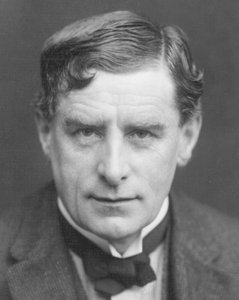
Walter Richard Sickert
1860 - 1942 , Deutschland
Kurzinfos
- Beeinflusste Künstler: ['James Abbott McNeill Whistler']
- Bemerkenswerte Werke:
- Katie Lawrence at Gatti’s
- Gaieté Montparnasse
- Geburtsdatum: 31. Mai 1860
- Geburtsort: München, Deutschland
- Künstlerische Richtung: Postimpressionismus
- Nationalität: Deutsch-Britisch
- Sterbedatum: 22. Januar 1942
- Vollständiger Name: Walter Richard Sickert
- Von Künstlern Beeinflusst: ['Degas']
Ähnliche Artikel
Harmonies on Canvas: Exploring the Visual Representation of Music in Art History
Explore the fascinating history of music's visual representation in art! From ancient symbolism to modern abstraction, discover how artists have captured sound and emotion on canvas. Expert insights & stunning examples.

The Subdued Resonance: Exploring Emotional Depth & Artistic Nuance within Muted Color Palettes
Explore the captivating world of muted colors in art & design! Discover historical context, psychological effects, techniques, and inspiration for creating serene spaces. Elevate your aesthetic with ArtsDot.

James Abbott McNeill Whistler: Die 25 Meisterwerke für Ihr Zuhause | ArtsDot
Entdecken Sie die 25 Meisterwerke von James Abbott McNeill Whistler! Von den berühmten Nocturnes bis zu ikonischen Porträts – erleben Sie Ästhetizismus, Impressionismus & Tonalismus. Hochwertige Reproduktionen auf ArtsDot.com.

The Subdued Palette: Exploring Emotional Resonance & Aesthetic Impact in Muted Artworks
Explore the power of muted colors in art! Discover the history, psychology & techniques behind serene palettes. Find inspiration & expert advice for creating emotionally resonant spaces with ArtsDot.
Gainsboro-Töne in der Meistermalerei: Die 10 berühmtesten Gemälde für Ihr Zuhause
Entdecken Sie die 10 berühmtesten Gemälde, geprägt von den eleganten Gainsboro-Tönen! Erfahren Sie mehr über Thomas Gainsborough & Meisterwerke des Rokoko. Hochwertige Kunstdrucke für Ihr Zuhause – jetzt auf ArtsDot.com!