 Vorschau anzeigen
 Versenden
 Teilen
 Details anzeigen

 Herunterladen
 Ähnliche Objekte
 Röntgenaufnahme
 Diashow
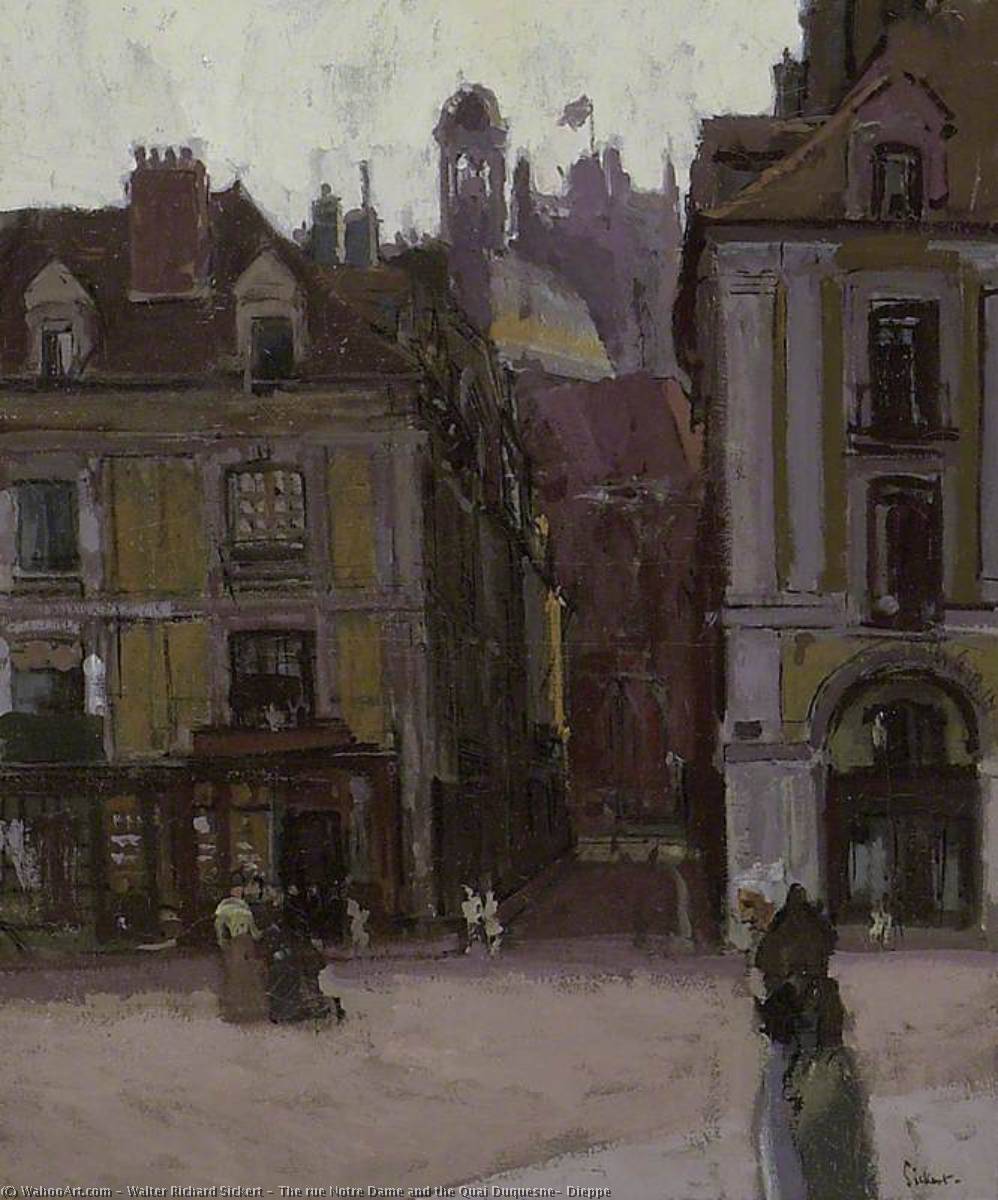
The rue Notre Dame and the Quai Duquesne, Dieppe
 Oil On Canvas
- WallArt
- Impressionistic Realism
 1900
1900 61.0 x 51.0 cm
 Ashmolean Museum of Art and Archaeology
 Weiterlesen
Handgefertigte Ölreproduktion
Handgemaltes Ölgemälde auf Leinwand in Ihrer Wunschgröße und mit Rahmen, auf Bestellung von unseren Künstlern angefertigt. ( Druck bestellen Bild kaufen)




P118B $10

P118H $10

P118W $10

P438Z $10

P508JH $12

P508YH $12

P805H $10

P805Z $10

P919BZ $10

P919G $10

P919XJ $10

P959ZH $10

P968JZ $12

W106C $8

W218G $10

W218JH $8

W218Y $10

W307PJ $10

W316G $10

W316PJ $8

W316Y $10

W398PJ $8

W4111J $10

W500HY $15

W500JH $15

W692G $12

W849H $8

W940BG $15

W953PJ $8




Wählen Sie aus unseren vordefinierten Formaten, die den ursprünglichen Proportionen des Kunstwerks entsprechen.

Sie können Ihre eigenen Maße eingeben, um einen bestimmten Rahmen oder Platz auszufüllen. Wenn die gewählte Größe nicht den Proportionen des Originalbildes entspricht, werden wir das Kunstwerk entweder beschneiden oder das Gemälde durch zusätzliche, handgemalte Elemente erweitern. Ein digitales Mockup wird Ihnen zur Genehmigung zugesandt, bevor die Produktion beginnt.
Bitte beachten Sie, dass die Bildschirmvorschau nicht die tatsächliche Beschneidung oder Erweiterung widerspiegelt. Nur das Mockup zeigt die endgültige Komposition exakt an.
Obwohl Sondermaße verfügbar sind, empfehlen wir, eine Größe aus der vordefinierten Liste zu wählen, um die ursprünglichen Proportionen beizubehalten.
Nach der Bestellung wird das ArtsDot.com-Team dem Kunden Anweisungen per E-Mail zusenden und eine Mockup-Vorschau bereitstellen.
Weltweiter Versand () in nur 3 bis 4 Wochen statt der üblichen 5 Wochen. (24 August). Keine Kompromisse bei der Qualität.

Kostenloser weltweiter Expressversand

Hochwertige Leinenleinwand

Umfassender Versicherungsschutz beim Versand

Zollgebühren-Rückerstattungsgarantie

Garantie für exakte Farbtreue

60 Tage Rückgaberecht (nur bei Mängeln)

100% Geld-zurück-Garantie

Mengenrabatt verfügbar
 Die Glasoption ist nur für Größen unter 110 cm verfügbar.

The rue Notre Dame and the Quai Duquesne, Dieppe
Art der Reproduktion
Format der Reproduktion
-


Gesamtpreis
$ 263
Beschreibung des Kunstwerks
Walter Richard Sickert: A Vision of Urban Decay and Artistic Innovation
Walter Richard Sickert (1860–1942) stands as an enigmatic figure in British art history—a painter who wrestled with shadows and light, forging a distinctive path between Impressionism’s shimmering surfaces and the burgeoning anxieties of Modernism. His oeuvre is characterized by a preoccupation with the gritty realities of London life, capturing scenes of music halls, pubs, and backstreets with unsettling precision and psychological depth. Unlike many of his contemporaries, Sickert eschewed grand narratives or idealized landscapes; instead, he focused on distilling emotion from mundane observations, creating images that resonate with an enduring sense of melancholy and unease.- Subject Matter: Sickert’s canvases frequently depict urban environments—particularly London—populated by marginalized figures: musicians, prostitutes, laborers, and drunks. These subjects weren't merely decorative elements; they served as conduits for exploring themes of social alienation and psychological vulnerability.
- Style: His style is often described as “shadowy realism,” prioritizing tonal modulation and atmospheric perspective over meticulous detail. Sickert deliberately blurred outlines and flattened planes, rejecting the illusionistic conventions favored by Impressionists like Monet and Renoir. This stylistic choice reflected his belief that art should convey emotion rather than simply reproducing appearances.
- Technique: Sickert employed a distinctive layering technique—often applying thin glazes over underpaintings—to achieve subtle gradations of color and texture. He meticulously studied the effects of light on surfaces, striving to capture fleeting moments of illumination within darkened interiors. This painstaking approach demanded considerable patience and skill, resulting in paintings that possess an almost palpable sense of stillness.
The Rue Notre Dame and the Quai Duquesne, Dieppe: A Study in Atmosphere
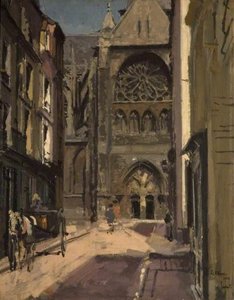
“The rue Notre Dame and the Quai Duquesne, Dieppe,” painted in 1899–1900, exemplifies Sickert’s artistic vision. Executed in oil on canvas, this artwork depicts a bustling street scene overlooking Dieppe harbor—a location chosen by Sickert for its atmospheric qualities and visual drama. The painting captures the muted hues of twilight, conveying a palpable sense of solitude amidst the activity of passersby. Photo Description: The painting is a street scene featuring a group of people walking down the street in front of buildings. The buildings have many windows and appear to be old-fashioned. There are at least 12 people visible in the image, with some closer to the foreground and others further back. They seem to be going about their daily activities or possibly attending an event. The street is lined with various objects such as a bench located near the center of the scene, a handbag placed on the ground close to one of the people, and a clock mounted on a wall in the background. The overall atmosphere of the painting suggests a bustling urban environment where people are engaged in their daily routines or socializing with others.Symbolism and Emotional Resonance
Sickert’s art isn't merely about depicting what he sees; it’s about conveying what he feels—a preoccupation with darkness, decay, and psychological complexity. “The rue Notre Dame and the Quai Duquesne” embodies this ethos through its muted palette and ambiguous composition. The figures in the painting are rendered without discernible emotion, their faces obscured by shadows, suggesting a profound sense of detachment and isolation. This deliberate lack of expressive gesture contributes to the artwork’s haunting beauty—a testament to Sickert's ability to evoke feelings of melancholy and contemplation.Legacy and Influence
Walter Richard Sickert remains an artist whose work continues to fascinate scholars and collectors alike. His rejection of conventional artistic conventions paved the way for subsequent generations of British painters, establishing him as a pivotal figure in the transition from Impressionism to Modernism. “The rue Notre Dame and the Quai Duquesne,” alongside his other paintings—particularly those exploring London’s underworld—serves as an enduring reminder of Sickert's singular artistic vision: one rooted in observation, emotion, and a masterful command of tonal modulation—a legacy that continues to inspire artists today.Ähnliche Kunstwerke
Über den Künstler
Frühes Leben und Ausbildung
Walter Richard Sickert, ein deutschamerikanischer britischer Maler, wurde am 31. Mai 1860 in München, Königreich Bayern, geboren. Seine Familie ließ sich 1868 in England nieder, nachdem das Herzogtum Schleswig-Holstein von Deutschland annektiert worden war. Sickerts frühe Ausbildung fand an der University College School und der King’s College School statt, wo er bis zum 18. Lebensjahr studierte.Künstlerische Entwicklung
Sickerts künstlerischer Weg begann mit einer kurzen Tätigkeit als Schauspieler, gefolgt von seiner Einschreibung an der Slade School im Jahr 1881. Später wurde er Schüler von James Abbott McNeill Whistler, der seine Arbeit maßgeblich beeinflusste. Sickerts früheste Gemälde waren kleine tonalistische Studien, die nach Whistlers Vorbild „alla prima“ aus der Natur gemalt wurden.Bemerkenswerte Werke und Kontroversen
Sickerts erste größere Werke, die in den späten 1880er Jahren entstanden, stellten Szenen aus Londoner Musikhall-Lokalen dar. Eines seiner bemerkenswertesten Gemälde, Katie Lawrence at Gatti’s, löste Kontroversen aus, da es eine bekannte Musikhall-Sängerin darstellte, die von Kritikern als „hässlich und vulgär“ bezeichnet wurde.Zusammenarbeit mit der Camden Town Group
Sickert war ein wichtiger Einfluss auf distinctiv britische Stile der Avantgarde-Kunst im 20. Jahrhundert. Er trat 1888 der New English Art Club bei, einer Gruppe von französisch beeinflussten realistischen Künstlern, und wurde später Mitglied der Camden Town Group.Vermächtnis
Sickerts Werk ist in verschiedenen Museen zu finden, darunter das Museum Kunstsalon Franke Schenk, das Werke aus dem 16. bis zum 20. Jahrhundert zeigt. Sein Vermächtnis geht über seine eigene Kunst hinaus und beeinflusst britische Stile der Avantgarde-Kunst in der Mitte und im späten 20. Jahrhundert.- Betrachten Sie Sickerts Gemälde auf ArtsDot: Walter Richard Sickert
- Erfahren Sie mehr über die Camden Town Group auf Wikipedia: Wyndham Lewis
- Entdecken Sie die Sammlung des Museum Kunstsalon Franke Schenk auf ArtsDot: Das Museum Kunstsalon Franke Schenk
- Erfahren Sie mehr über Sickerts Leben und Werk auf Wikipedia: Walter Sickert
- 31. Mai 1860: Geburt in München, Königreich Bayern
- 1888: Beitritt zum New English Art Club
- 1903-04: Entwicklung eines unverwechselbaren Ansatzes für mehrfigurige Tableaus während seiner letzten Malreise nach Venedig
Schlussfolgerung
Walter Richard Sickerts bahnbrechende Arbeit in der britischen Avantgarde-Kunst hat ihre Spuren in der Kunstwelt hinterlassen. Sein Vermächtnis inspiriert und beeinflusst weiterhin Künstler, was ihn zu einer entscheidenden Figur in der Geschichte der modernen Kunst macht.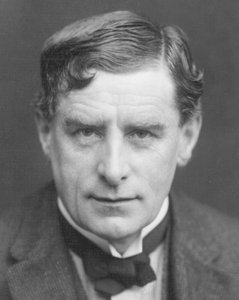
Walter Richard Sickert
1860 - 1942 , Deutschland
Kurzinfos
- Beeinflusste Künstler: ['James Abbott McNeill Whistler']
- Bemerkenswerte Werke:
- Katie Lawrence at Gatti’s
- Gaieté Montparnasse
- Geburtsdatum: 31. Mai 1860
- Geburtsort: München, Deutschland
- Künstlerische Richtung: Postimpressionismus
- Nationalität: Deutsch-Britisch
- Sterbedatum: 22. Januar 1942
- Vollständiger Name: Walter Richard Sickert
- Von Künstlern Beeinflusst: ['Degas']
Ähnliche Artikel
Walter Sickert: A Shadowy Realism & the Modern British Canvas
Explore the life & work of Walter Sickert, a pivotal British painter bridging Impressionism to Modernism. Discover his evocative scenes of London life, controversial legacy, and lasting influence on 20th-century art.
Robert Bevan: Pioneering British Post-Impressionism & the Camden Town Group's Intimate Vision
Explore the life & work of Robert Bevan, a pioneer of British Post-Impressionism and founding member of the Camden Town Group. Discover his vibrant landscapes and lasting impact on early 20th-century art.
Philip Wilson Steer: Der Impressionismus und die britische Lebensweise – Eine künstlerische Entdeckung
Entdecken Sie Philip Wilson Steer, einen Pionier des britischen Impressionismus! Erfahren Sie mehr über sein Leben, seine Werke und seinen Einfluss auf die Kunstgeschichte. Expertenwissen & detaillierte Analysen.
Meisterwerke der National Gallery London: 25 Kunstikonen für Ihr Zuhause | ArtsDot
Entdecken Sie die 25 berühmtesten Gemälde der National Gallery London! Von Van Gogh bis Monet – erfahren Sie die Geschichten hinter ikonischen Meisterwerken, Kunststile & Techniken. Hochwertige Reproduktionen für Ihr Zuhause auf ArtsDot.com.
Walter Greaves: A Study in Victorian Realism & the Social Landscape of British Art
Explore the life & work of Walter Greaves, a key Victorian realist painter influenced by Whistler. Discover his London streetscapes, portraits, and enduring legacy. Learn about art appraisal & reproduction options at ArtsDot.