 Vorschau anzeigen
 Versenden
 Teilen
 Details anzeigen

 Herunterladen
 Ähnliche Objekte
 Röntgenaufnahme
 Diashow
 Statistiken
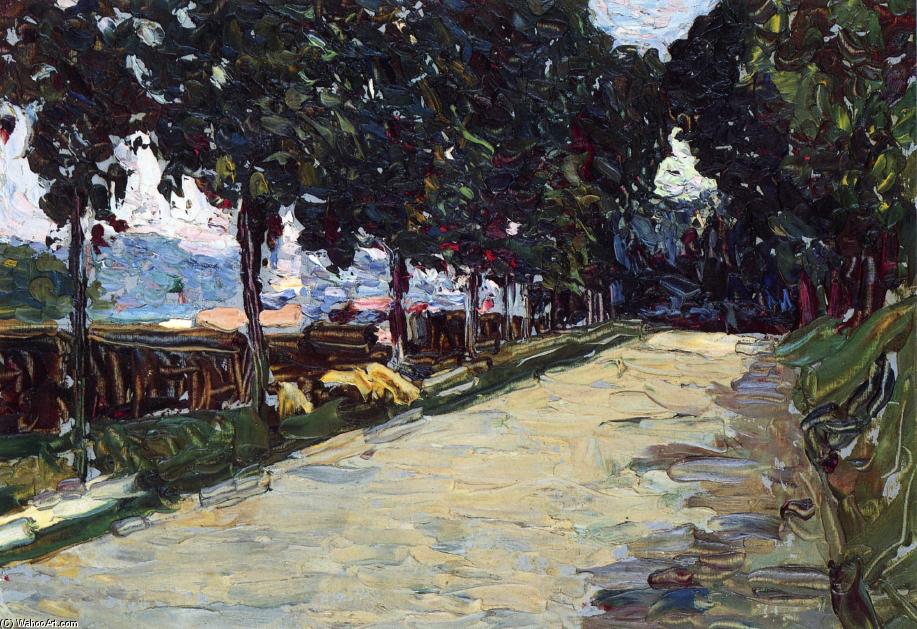
Park of St. Cloud


 Weiterlesen
Handgefertigte Ölreproduktion
Handgemaltes Ölgemälde auf Leinwand in Ihrer Wunschgröße und mit Rahmen, auf Bestellung von unseren Künstlern angefertigt. ( Zu Druck wechseln Zum digitalen Bild wechseln)




P118B $10

P118H $10

P118W $10

P438Z $10

P508JH $12

P508YH $12

P805H $10

P805Z $10

P919BZ $10

P919G $10

P919XJ $10

P959ZH $10

P968JZ $12

W106C $8

W218G $10

W218JH $8

W218Y $10

W307PJ $10

W316G $10

W316PJ $8

W316Y $10

W398PJ $8

W4111J $10

W500HY $15

W500JH $15

W692G $12

W849H $8

W940BG $15

W953PJ $8




Wählen Sie aus unseren vordefinierten Formaten, die den ursprünglichen Proportionen des Kunstwerks entsprechen.

Sie können Ihre eigenen Maße eingeben, um einen bestimmten Rahmen oder Platz auszufüllen. Wenn die gewählte Größe nicht den Proportionen des Originalbildes entspricht, werden wir das Kunstwerk entweder beschneiden oder das Gemälde durch zusätzliche, handgemalte Elemente erweitern. Ein digitales Mockup wird Ihnen zur Genehmigung zugesandt, bevor die Produktion beginnt.
Bitte beachten Sie, dass die Bildschirmvorschau nicht die tatsächliche Beschneidung oder Erweiterung widerspiegelt. Nur das Mockup zeigt die endgültige Komposition exakt an.
Obwohl Sondermaße verfügbar sind, empfehlen wir, eine Größe aus der vordefinierten Liste zu wählen, um die ursprünglichen Proportionen beizubehalten.
Nach der Bestellung wird das ArtsDot.com-Team dem Kunden Anweisungen per E-Mail zusenden und eine Mockup-Vorschau bereitstellen.
Weltweiter Versand () in nur 3 bis 4 Wochen statt der üblichen 5 Wochen. (10 September). Keine Kompromisse bei der Qualität.

Kostenloser weltweiter Expressversand

Hochwertige Leinenleinwand

Umfassender Versicherungsschutz beim Versand

Zollgebühren-Rückerstattungsgarantie

Garantie für exakte Farbtreue

100-Tage-Rückgaberecht (nur bei Mängeln)

100% Geld-zurück-Garantie

Mengenrabatt verfügbar
 Die Glasoption ist nur für Größen unter 110 cm verfügbar.

Park of St. Cloud
Art der Reproduktion
Format der Reproduktion
-


Gesamtpreis
$ 263
Wassily Kandinsky’s ‘Park of St. Cloud’: A Journey Through Color and Spirit
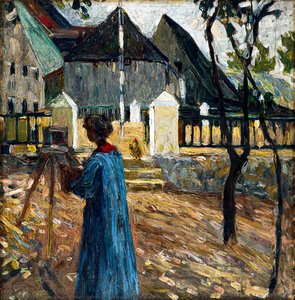
Wassily Kandinsky's "Park of St. Cloud," painted in 1906, is more than just a depiction of a park landscape; it’s a profound exploration of emotion and spirituality rendered through the nascent stages of his revolutionary artistic vision. Created during a pivotal moment in his career – following a transformative encounter with Impressionism and Wagner – this work exemplifies Kandinsky's burgeoning interest in abstraction, foreshadowing the monumental shift he would later bring to the art world. The painting captures a tranquil scene within St. Cloud Park, likely near Munich where Kandinsky was actively developing his style, utilizing a restrained yet powerful palette of earthy greens, browns, and yellows punctuated by vibrant touches of red and pink. The composition guides the viewer’s eye down a central path, emphasizing a sense of movement and progression – a subtle symbolism that resonates with the journey of artistic discovery itself.
Technique and Style: The Seeds of Expressionism
- Impasto Texture: Kandinsky’s deliberate application of thick, visible brushstrokes—a technique known as impasto—creates a tactile surface that practically vibrates with energy. This wasn't simply about representation; it was about conveying the raw emotion and subjective experience of the scene.
- Linear Perspective & Organic Forms: While employing linear perspective to establish depth, Kandinsky deliberately disrupts traditional realism with organic shapes – rounded trees and foliage – reflecting his desire to move beyond mere imitation towards a more symbolic language.
- Post-Impressionist Roots: The painting firmly roots itself in the Post-Impressionist movement, particularly influenced by Monet’s exploration of light and color, but quickly diverges into something far more ambitious.
Symbolism and Emotional Resonance
The “Park of St. Cloud” is rich with symbolic potential. The central path can be interpreted as a journey – both literal and metaphorical – representing the artist’s own quest for spiritual understanding through art. The trees, enduring symbols of nature's resilience and wisdom, stand as silent witnesses to this internal exploration. The inclusion of two dogs adds an element of domestic tranquility and perhaps represents companionship or loyalty—themes frequently explored in Kandinsky’s work. The muted color palette, despite its vibrancy, evokes a sense of quiet contemplation and the beauty found within simplicity.
Historical Context: A Turning Point
Painted in 1906, “Park of St. Cloud” sits at a crucial juncture in Kandinsky’s artistic development. Following his initial exposure to Impressionism, he was actively seeking new ways to express inner emotions and spiritual ideas through color and form. This work demonstrates the early stages of his move away from representational art towards abstraction, a process that would ultimately lead him to become one of the pioneers of abstract expressionism. It’s a testament to his willingness to challenge conventions and forge a completely new path for modern art.
Collecting ‘Park of St. Cloud’: A Window into Kandinsky's Soul
A hand-painted reproduction of “Park of St. Cloud” offers more than just a beautiful image; it’s an opportunity to own a piece of artistic history, a tangible connection to one of the most influential figures in modern art. The meticulous detail and vibrant colors faithfully recreate Kandinsky's expressive style, bringing his vision to life within your space. This artwork is ideal for collectors seeking to enrich their collections with pieces that embody innovation, emotion, and the enduring power of artistic expression.
Ähnliche Kunstwerke
Über den Künstler
Wassily Wassilyevich Kandinsky: Ein Pionier der Abstraktion
- Geboren: 16. Dezember 1866, Moskau, Russland
- Gestorben: 13. Dezember 1944
- Nationalität: Russisch
Frühes Leben und künstlerische Entwicklung
- Kandinskys frühes Leben war von einer vielfältigen Ausbildung geprägt, zunächst studierte er Rechts- und Wirtschaftswissenschaften an der Universität Moskau.
- Mit 30 Jahren wandte er sich der Kunst zu und schrieb sich an der Münchner Akademie unter Franz von Stuck ein. Dieser Wechsel bedeutete ein tiefes Engagement für künstlerischen Ausdruck.
- Seine frühen Werke wurden von russischer Volkskunst beeinflusst, insbesondere durch seine ethnografische Forschungsreise in die Region Wologda im Jahr 1889.
- Er entwickelte ein Interesse an der Farbsymbolik und Psychologie, was grundlegende Elemente seiner späteren abstrakten Kompositionen wurde.
Wichtige künstlerische Perioden und Stile
- Früh-Expressionismus: Gekennzeichnet durch lebendige Farben und emotionale Intensität, wie in "Papeln (Poplars)" (1902) zu sehen ist.
- Übergang zur Abstraktion: Kandinsky löste sich allmählich von der gegenständlichen Kunst und erforschte das Verhältnis zwischen Farbe, Form und Emotion.
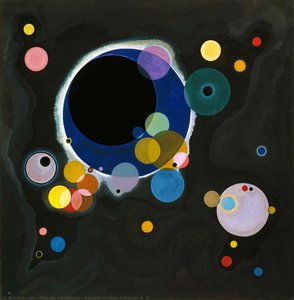
- Geometrische Abstraktion: Diese Periode sah einen Fokus auf geometrischen Formen und Kompositionen, wie in "Several Circles" (140 x 140 cm) dargestellt.
- Spirituelle Abstraktion: Kandinsky glaubte, dass die Kunst spirituelle Wahrheiten durch nicht-gegenständliche Formen ausdrücken konnte. Seine Werke zielten darauf ab, Emotionen und innere Erfahrungen hervorzurufen, anstatt externe Realität darzustellen.
Einfluss und Vermächtnis
- Bauhaus-Einfluss: Als Dozent an der Bauhausschule in Deutschland beeinflusste Kandinsky Generationen von Künstlern mit seinen Theorien über Farbe, Form und Abstraktion nachhaltig.
- Theoretische Schriften: Seine Schriften, insbesondere "Über das Geistige in der Kunst", artikulierten seine künstlerische Philosophie und trugen wesentlich zur Entwicklung der abstrakten Kunsttheorie bei.
- Einfluss auf die moderne Kunst: Kandinsky gilt weithin als Pionier der abstrakten Kunst und ebnete den Weg für zahlreiche nachfolgende Bewegungen und Künstler.
- Museumsbestände: Seine Werke befinden sich in wichtigen Museen weltweit, darunter die Tretjakow-Galerie in Moskau, die sein monumentales Werk "Komposition VII" beherbergt.
Bemerkenswerte Werke
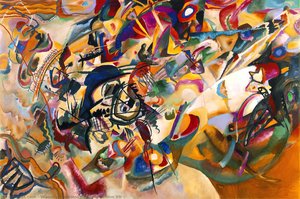
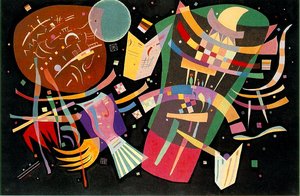
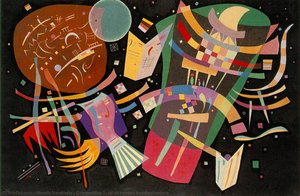
- Komposition VII: Ein großformatiges abstraktes Werk, das als Höhepunkt von Kandinskys künstlerischer Entwicklung gilt.
- Schwarzes Quadrat (in Zusammenarbeit mit Kasimir Malewitsch): Ein bahnbrechendes Werk in der Geschichte der Abstraktion, das eine radikale Abkehr von traditionellen Kunstformen darstellt.
- Several Circles: Demonstriert seine innovative Verwendung geometrischer Formen und lebendiger Farben zur Schaffung dynamischer Kompositionen.
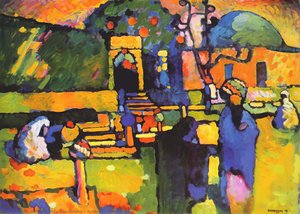
- Murnau mit einer Kirche: Balanciert abstrakte Elemente mit gegenständlicher Bildsprache und zeigt seinen sich entwickelnden Stil.
- Ein intimes Fest: Ein späteres Werk mit geometrischer Abstraktion und mehrschichtiger Impastopastechnik, die seine fortgesetzte Erforschung spiritueller Themen widerspiegelt.
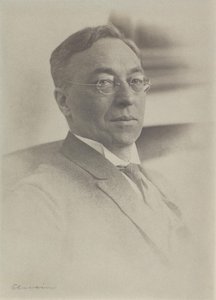
Wassily Wassilyevich Kandinsky
1866 - 1944 , Russland
Kurzinfos
- Artistic Movement Or Style: Abstrakter Expressionismus
- Date Of Birth: 16. Dezember 1866
- Date Of Death: 13. Dezember 1944
- Full Name: Wassily Wassilyevich Kandinsky
- Nationality: Russisch
- Notable Artworks:
- Komposition VII
- Schwarzes Quadrat
- Mehrere Kreise
- Murnau mit Kirche
- Ein Intimes Fest
- Place Of Birth: Moskau, Russland
Ähnliche Artikel
Kandinsky: Die 25 Meisterwerke des Abstrakten – Kunst für Ihr Zuhause | ArtsDot
Entdecken Sie die 25 bedeutendsten Gemälde von Wassily Kandinsky! Tauchen Sie ein in die Welt der abstrakten Kunst, des Expressionismus und der Farbkomposition. Hochwertige Kunstdrucke & Inspiration für Ihr Zuhause auf ArtsDot.com.

Romantische Landschaften: Die 10 Meisterwerke, die eine Epoche prägten | ArtsDot
Entdecken Sie die 10 Meisterwerke der Romantischen Landschaftsmalerei! Von Caspar David Friedrich bis Turner – erleben Sie die Kunst, Emotion & Natur. Hochwertige Reproduktionen auf ArtsDot.com

John Constable: Die 25 Meisterwerke des englischen Landschaftsgenies – ArtsDot
Entdecken Sie die 25 Meisterwerke von John Constable! Erleben Sie englische Landschaftsmalerei vom Hay Wain bis zur Stour Valley. Hochwertige Reproduktionen & Kunst für Ihr Zuhause auf ArtsDot.com.

Giclée Prints: Archival Quality & Aesthetic Nuances for the Discerning Collector
Explore the world of giclée prints with ArtsDot. Learn about archival quality, aesthetic nuances & investment potential. Expert guidance for discerning art collectors seeking museum-quality reproductions and lasting value.

Katsushika Hokusai: Die 25 Meisterwerke des Ukiyo-e – Kunst für Ihr Zuhause | ArtsDot
Entdecken Sie die 25 Meisterwerke von Katsushika Hokusai! Tauchen Sie ein in die Welt des Ukiyo-e, berühmte Holzschnitte wie 'Die große Welle' & Fuji-Ansichten. Hochwertige Kunstdrucke für Ihr Zuhause – jetzt auf ArtsDot.com!