

 Vorschau anzeigen
 Versenden
 Teilen
 Details anzeigen

 Herunterladen
 Ähnliche Objekte
 Röntgenaufnahme
 Diashow
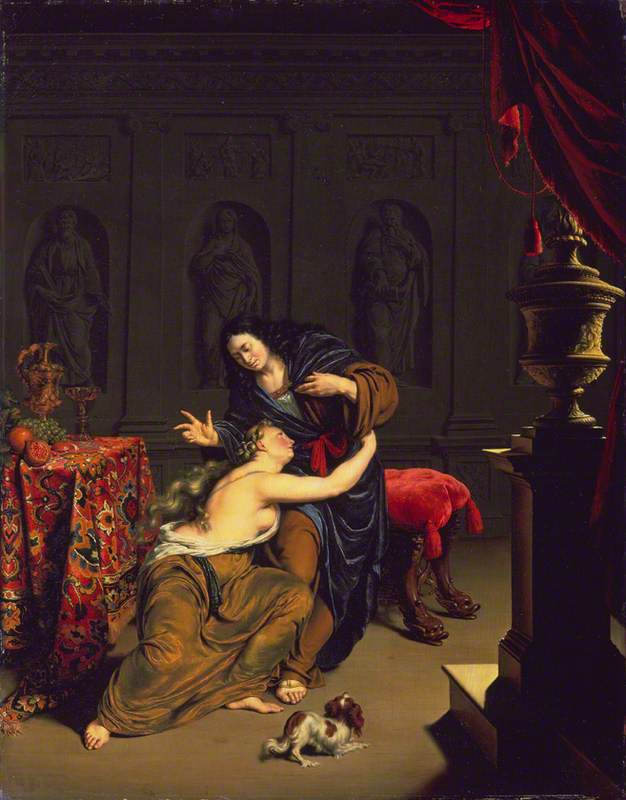
Joseph and Potiphar's Wife
 Oil
Oil- WallArt
- Dutch Baroque
 1691
1691- Early Modern
 48.0 x 37.0 cm
 Die Wallace Collection
 Weiterlesen
Erwerben Sie ein hochauflösendes, optimiertes digitales Bild, das der Online-Vorschau weit überlegen ist.
Jede Datei wird von unseren hauseigenen Spezialisten mit modernsten Werkzeugen und fachmännischer manueller Retusche sorgfältig vorbereitet. Wir stellen sicher, dass jedes Bild eine außergewöhnliche Klarheit, präzise Farbgenauigkeit und feinste Details aufweist.
Die endgültige Datei wird innerhalb von 72 Stunden per E-Mail zugestellt und ist für den sofortigen Einsatz in professionellen, redaktionellen und Druckumgebungen optimiert. Es handelt sich um dieselbe Qualität, der führende Designstudios, Verlage und Galerien vertrauen.
Digitales Bild
Laden Sie eine hochauflösende Datei für die persönliche Präsentation, den Druck und kreative Projekte herunter. ( Druck bestellen Handgemalte Reproduktion bestellen)
In jeder Bestellung digitaler Bilder enthalten
Professionelle digitale Bereitstellung, garantiert
Wenn Sie sich für ArtsDot.com entscheiden, erhalten Sie nicht nur ein Bild – Sie erhalten ein professionell aufbereitetes digitales Kunstwerk, das mit höchster Präzision erstellt und durch eine Zufriedenheitsgarantie abgesichert wird. Hier ist alles, was automatisch mit Ihrer Bestellung geliefert wird:

Schnelle E-Mail-Zustellung
Ihre hochauflösende digitale Bilddatei wird Ihnen innerhalb von 72 Stunden nach der Bestellung per E-Mail zugestellt – bereit zur sofortigen Verwendung.

KI-optimierte digitale Datei
Ihre Kunstwerke werden professionell mithilfe fortschrittlicher KI-Tools und manueller Bearbeitung optimiert, um maximale Detailtreue, Klarheit und Farbgenauigkeit zu gewährleisten.

Lebenslanger kostenloser Neudruckservice
Datei versehentlich gelöscht oder verloren? Keine Sorge – wir senden sie Ihnen jederzeit kostenlos erneut zu.

Keine Einfuhrgebühren – jemals
Genießen Sie Ihr Kunstwerk sofort ohne Zollgebühren, Einfuhrabgaben oder Versandkosten – digitale Downloads sind immer steuerfrei.

Garantierte Farbtreue
Wir garantieren, dass Ihr digitales Bild mithilfe professioneller Werkzeuge und Farbmanagement die Originalfarben so präzise wie möglich wiedergibt.

60-Tage-Zufriedenheitsgarantie
Sollten Sie mit Ihrem digitalen Bild nicht zufrieden sein, werden wir es überarbeiten oder Ihnen innerhalb von 60 Tagen 100% erstatten – ohne Wenn und Aber.

100% Geld-zurück-Garantie
Nicht zufrieden? Erhalten Sie innerhalb von 60 Tagen nach Erhalt Ihrer digitalen Datei eine vollständige Rückerstattung – ohne Angabe von Gründen.

Rabatte bei Großbestellungen
3 Bilder kaufen, 10% sparen – 5 Bilder kaufen, 15% sparen – Ab 10 Bildern 20% sparen. Ideal für kreative Projekte, Galerien und Agenturen.
Details zum Sammlerstück
Joseph and Potiphar's Wife: A Study in Baroque Elegance
Willem van Mieris’ “Joseph and Potiphar’s Wife” (1691) transcends mere depiction; it embodies the very spirit of Leiden’s fijnschilders’ movement, representing a pinnacle of Dutch Baroque artistic achievement. Born into a lineage steeped in artistic tradition—his father, Frans van Mieris the Elder—was himself a celebrated genre painter who established a formidable reputation for capturing the subtleties of upper-class society—a legacy that profoundly influenced Willem's formative years and instilled within him an unwavering dedication to upholding his father’s esteemed position as Leiden’s foremost fijnschilder.
The painting captures a pivotal moment from Genesis, portraying Joseph resisting Potiphar’s wife’s advances. Mieris meticulously renders the scene with remarkable detail—a hallmark of Baroque artistry—focusing on capturing not just visual accuracy but also conveying an atmosphere of restrained emotion and psychological complexity. The composition is dominated by two women engaged in a tense interaction, their postures conveying unspoken desires and anxieties. Three dogs punctuate the space, adding to the sense of unease and highlighting the pervasive presence of judgment.
- Style: Baroque – Characterized by dramatic lighting, opulent ornamentation, and idealized figures, reflecting the influence of Italian Mannerism and Caravaggio’s theatrical style.
- Technique: Mieris employed a masterful glazing technique—a layering of translucent paint—to achieve luminous surfaces and subtle tonal variations, creating an illusionistic depth that draws the viewer into the scene.
- Historical Context: Painted during the Golden Age of Dutch art (c. 1600-1700), “Joseph and Potiphar’s Wife” reflects the prevailing fascination with biblical narratives and their exploration of moral dilemmas.
Symbolism permeates the artwork. The dogs represent vigilance and divine judgment, mirroring the biblical narrative's emphasis on righteousness and transgression. The vases serve as decorative elements but also symbolize purity and refinement—values prized within Dutch aristocratic culture. Even the chair in the background contributes to the overall sense of grandeur and formality.
More than just a visual representation of scripture, “Joseph and Potiphar’s Wife” speaks to universal themes of temptation, desire, and moral responsibility. Mieris' ability to convey these emotions with understated grace elevates the painting beyond mere illustration, transforming it into an enduring testament to Baroque artistic excellence—a piece that continues to captivate audiences centuries later.
Ähnliche Kunstwerke



Biografie des Künstlers
Willem van Mieris (1662 - 1747): The Master of Elegant Detail
Willem van Mieris (1662-1747) stands as a pivotal figure in the Leiden fijnschilders’ movement, embodying the culmination of Dutch Baroque artistic ideals. Born in Leiden on June 3rd, 1662, he descended from a lineage steeped in artistic tradition—his father, Frans van Mieris the Elder (1635-1681), was himself a celebrated genre painter who had established a formidable reputation for capturing the nuances of upper-class society. This familial legacy profoundly shaped Willem’s formative years and instilled within him an unwavering dedication to upholding his father's esteemed position as Leiden’s foremost fijnschilder—a commitment that would define his entire artistic career.- Early Training & Influences:
- Frans van Mieris the Elder’s profound impact on Willem’s technique and aesthetic sensibilities cannot be overstated. Guided by the tutelage of his father, Willem honed his skills under the watchful eye of Gerrit Dou (1613-1675), a master of chiaroscuro and meticulous observation—a stylistic approach that would become synonymous with Leiden fijnschilders.
The Leiden Tradition & Pieter Post’s Vision
Willem van Mieris's artistic trajectory was inextricably linked to the broader intellectual currents of his time. The influence of Pieter Post (1659-1734), a Dutch art theoretician and humanist, proved particularly transformative. Post championed the notion that genre painters should transcend mere representation—rather, they ought to elevate their subjects through classical ideals of beauty and proportion. This conviction spurred Willem to meticulously analyze sculptural masterpieces from antiquity, incorporating their compositional principles into his paintings.A Career Defined by Patronage & Artistic Innovation
Willem’s professional life unfolded amidst a landscape of considerable artistic patronage—he secured commissions from prominent figures such as Madam Oortmans and Pieter de la Court van der Voort, cementing his reputation as one of Leiden's most sought-after artists. Notably, he served as Dean of the Guild of Saint Luke in 1693, demonstrating not only his artistic prowess but also his engagement with the intellectual and social fabric of Leiden.Style & Technique: The Pursuit of Perfection
Willem van Mieris’s distinctive style—characterized by an unparalleled attention to detail and a masterful command of chiaroscuro—represented the apex of Leiden fijnschilders' artistic ambition. Like his father, Willem meticulously studied the works of Gerrit Dou, adopting his technique and stylistic approach. He skillfully rendered textures and surfaces with remarkable accuracy, capturing subtle nuances that breathed life into his subjects. Furthermore, he frequently employed classical poses borrowed from sculptures by Francis van Bossuit—a deliberate gesture aimed at elevating genre painting to the level of monumental art.Legacy & Historical Significance
Willem van Mieris’s oeuvre comprises a vast collection of genre scenes and portraits, reflecting the tastes and sensibilities of his era. His paintings offer invaluable insights into Dutch society during the Baroque period—depicting opulent interiors, refined costumes, and psychologically astute portrayals of human character. Willem's enduring influence extends beyond his artistic achievements; he established Leiden’s Drawing Academy alongside Jacob Toorenvliet and Carel de Moor, fostering a new generation of artists committed to upholding the Leiden tradition—a legacy that continues to resonate within Dutch art history today.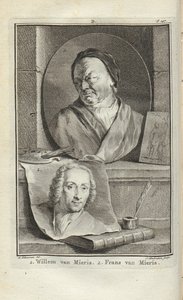
Willem Van Mieris
1662 - 1747 , Niederlande
Kurzinfos
- Artistic Movement Or Style: Fijnschilders
- Artists Or Movements Influenced By This Artist: ['Antike Skulptur']
- Artists Who Influenced This Artist:
- Gerard Dou
- Frans van Mieris der Ältere
- Date Of Birth: Leiden, Niederlande (1662)
- Date Of Death: 1747
- Full Name: Willem van Mieris
- Nationality: Niederländisch
- Notable Artworks:
- Die Kartoffelesser
- Allegorie der Vergänglichkeit
- Place Of Birth: Leiden

