

 Vorschau anzeigen
 Versenden
 Teilen
 Details anzeigen

 Herunterladen
 Ähnliche Objekte
 Röntgenaufnahme
 Diashow
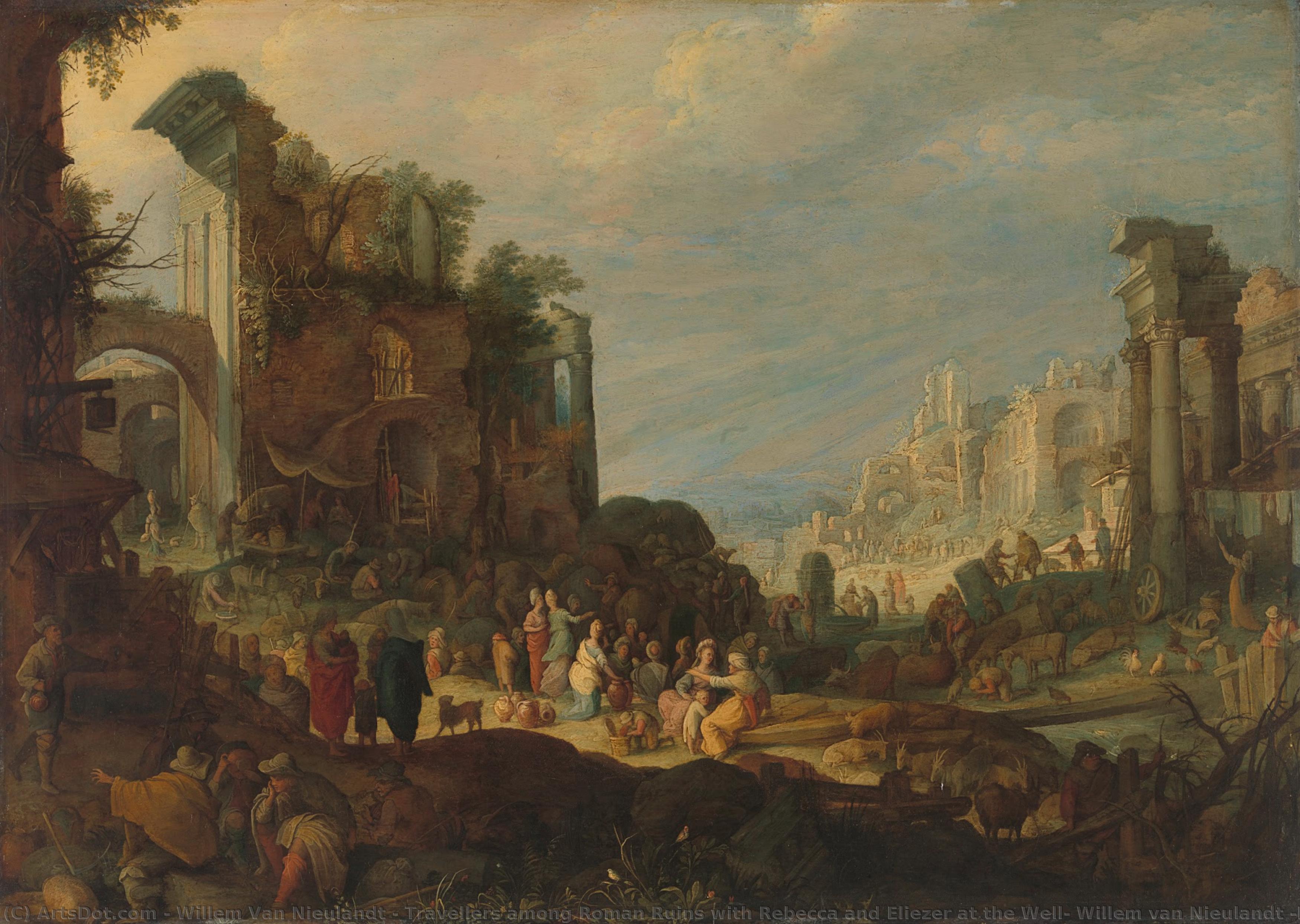
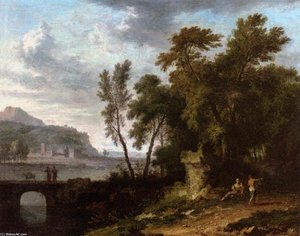
Travellers among Roman Ruins with Rebecca and Eliezer at the Well, Willem van Nieulandt (II) (attributed to), c. 1602 - c. 1605


 Weiterlesen
Erwerben Sie ein hochauflösendes, optimiertes digitales Bild, das der Online-Vorschau weit überlegen ist.
Jede Datei wird von unseren hauseigenen Spezialisten mit modernsten Werkzeugen und fachmännischer manueller Retusche sorgfältig vorbereitet. Wir stellen sicher, dass jedes Bild eine außergewöhnliche Klarheit, präzise Farbgenauigkeit und feinste Details aufweist.
Die endgültige Datei wird innerhalb von 72 Stunden per E-Mail zugestellt und ist für den sofortigen Einsatz in professionellen, redaktionellen und Druckumgebungen optimiert. Es handelt sich um dieselbe Qualität, der führende Designstudios, Verlage und Galerien vertrauen.
Digitales Bild
Laden Sie eine hochauflösende Datei für die persönliche Präsentation, den Druck und kreative Projekte herunter. ( Druck bestellen Handgemalte Reproduktion bestellen)
In jeder Bestellung digitaler Bilder enthalten
Professionelle digitale Bereitstellung, garantiert
Wenn Sie sich für ArtsDot.com entscheiden, erhalten Sie nicht nur ein Bild – Sie erhalten ein professionell aufbereitetes digitales Kunstwerk, das mit höchster Präzision erstellt und durch eine Zufriedenheitsgarantie abgesichert wird. Hier ist alles, was automatisch mit Ihrer Bestellung geliefert wird:

Schnelle E-Mail-Zustellung
Ihre hochauflösende digitale Bilddatei wird Ihnen innerhalb von 72 Stunden nach der Bestellung per E-Mail zugestellt – bereit zur sofortigen Verwendung.

KI-optimierte digitale Datei
Ihre Kunstwerke werden professionell mithilfe fortschrittlicher KI-Tools und manueller Bearbeitung optimiert, um maximale Detailtreue, Klarheit und Farbgenauigkeit zu gewährleisten.

Lebenslanger kostenloser Neudruckservice
Datei versehentlich gelöscht oder verloren? Keine Sorge – wir senden sie Ihnen jederzeit kostenlos erneut zu.

Keine Einfuhrgebühren – jemals
Genießen Sie Ihr Kunstwerk sofort ohne Zollgebühren, Einfuhrabgaben oder Versandkosten – digitale Downloads sind immer steuerfrei.

Garantierte Farbtreue
Wir garantieren, dass Ihr digitales Bild mithilfe professioneller Werkzeuge und Farbmanagement die Originalfarben so präzise wie möglich wiedergibt.

60-Tage-Zufriedenheitsgarantie
Sollten Sie mit Ihrem digitalen Bild nicht zufrieden sein, werden wir es überarbeiten oder Ihnen innerhalb von 60 Tagen 100% erstatten – ohne Wenn und Aber.

100% Geld-zurück-Garantie
Nicht zufrieden? Erhalten Sie innerhalb von 60 Tagen nach Erhalt Ihrer digitalen Datei eine vollständige Rückerstattung – ohne Angabe von Gründen.

Rabatte bei Großbestellungen
3 Bilder kaufen, 10% sparen – 5 Bilder kaufen, 15% sparen – Ab 10 Bildern 20% sparen. Ideal für kreative Projekte, Galerien und Agenturen.
Ähnliche Kunstwerke
Biografie des Künstlers
The Architect of Illusion: The Multifaceted Legacy of Willem van Nieulandt
Willem van Nieulandt, a name that resonates with the intellectual vigor of the Dutch Golden Age, was far more than a mere practitioner of the brush. Born around 1584 in the vibrant artistic hub of Antwerp, he emerged as a true Renaissance man—a poet, playwright, engraver, and painter whose work bridged the gap between visual splendor and literary depth. His life was a tapestry woven from the threads of various European cultures, shaped by the religious upheavals of his era and a profound, lifelong obsession with the grandeur of classical antiquity. To study Van Nieulandt is to witness a mind attempting to reconstruct the lost glory of Rome through the delicate medium of light, shadow, and ink.
The foundations of his artistry were laid in an environment steeped in tradition. As the son of the painter Adrien van Nieulandt the elder, Willem was immersed in the language of art from infancy. However, the shifting political tides of the late 16th century—specifically the siege of Antwerp and the ensuing religious tensions between Catholics and Protestants—forced his family to relocate to Amsterdam. It was here that his formal training began, under the guidance of Roelant Savery. This early period instilled in him a meticulous attention to detail and a mastery of the stylistic currents flowing through the Dutch Republic. Yet, the true metamorphosis of his soul occurred when he embarked on a transformative pilgrimage to Rome in 1607. Seeking the mentorship of the renowned Paulus Bril, Van Nieulandt did not merely learn new techniques; he absorbed the very essence of the Italianate spirit.
Ruins and Reverie: The Symbiosis of Landscape and Lore
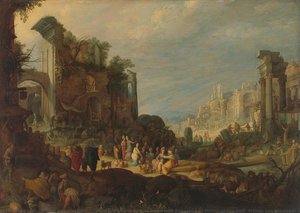
In the sun-drenched landscapes of Italy, Van Nieulandt found his true calling. He became a master of the capriccio—a style of painting that blends real architectural fragments with imaginative compositions to create a dreamlike, idealized reality. His works often feature the skeletal remains of Roman temples, crumbling forums, and weathered monuments, not as mere subjects of decay, but as vessels for profound emotional truths. Through his eyes, a broken column was not just stone; it was a poignant symbol of the passage of time and the inevitable decline of even the mightiest empires. This fascination with the classical past allowed him to infuse his landscapes with a sense of melancholy and contemplation that resonated deeply with the humanist ideals of his age.
What truly distinguishes Van Nieulatesque compositions is the way he enlivened these silent ruins with human drama. His canvases frequently serve as stages for biblical narratives, mythological encounters, or contemporary figures lost in thought amidst the debris of history. One might find a scene from Genesis, such as Rebecca offering water to Eliezer, set against the backdrop of the Roman Forum. By placing timeless human stories within the context of ancient architectural decay, he created a powerful dialogue between the eternal and the ephemeral. His ability to weave intricate narratives into his landscapes transformed his paintings from simple vistas into complex, multi-layered meditations on faith, memory, and the human condition.
A Lasting Impression on the Golden Age
Beyond the canvas, Van Nieulandt’s influence extended into the very fabric of Northern European literature and printmaking. As a celebrated poet and playwright in the Habsburg Netherlands, he possessed a unique ability to articulate the intellectual zeitgeist of the early 17th century. His engravings further expanded his reach, allowing his precise, detailed visions of Roman grandeur to circulate widely throughout Europe. This versatility ensured that his artistic voice was heard not only by those who admired fine painting but also by the scholars and literati who shaped the cultural landscape of his time.
The historical significance of Willem van Nieulandt lies in his role as a bridge between eras. He carried the torch of classical humanism into the burgeoning era of the Dutch Golden Age, blending the nostalgic reverence for antiquity with the emerging realism of Northern European art. Though he passed away around 1635, his legacy remains etched in the architectural fragments and poetic verses he left behind. He remains a vital figure for any student of art history, representing a rare moment in time when the poet's pen and the painter's brush worked in perfect, haunting harmony to capture the fleeting beauty of a world in transition.
willem van nieulandt
1584 - 1635
Kurzinfos
- Artistic Movement Or Style: Italianate Ruins
- Artists Or Movements Influenced By This Artist: ['Renaissance Painting']
- Artists Who Influenced This Artist: ['Roelant Savery']
- Date Of Death: 1635
- Full Name: Willem van Nieulandt
- Nationality: Dutch
- Notable Artworks: ['The Ruins of Pompeii']
- Place Of Birth: Antwerp

