Vorschau anzeigen
 Versenden
 Teilen
 Details anzeigen

 Herunterladen
 Ähnliche Objekte
 Röntgenaufnahme
 Diashow
 Statistiken
The House of Death
 Aquatint
- WallArt
- Romantic Age
 19th Century
 48.0 x 61.0 cm
 Weiterlesen
Handgefertigte Ölreproduktion
Handgemaltes Ölgemälde auf Leinwand in Ihrer Wunschgröße und mit Rahmen, auf Bestellung von unseren Künstlern angefertigt. ( Zu Druck wechseln Zum digitalen Bild wechseln)




P118B $10

P118H $10

P118W $10

P438Z $10

P508JH $12

P508YH $12

P805H $10

P805Z $10

P919BZ $10

P919G $10

P919XJ $10

P959ZH $10

P968JZ $12

W106C $8

W218G $10

W218JH $8

W218Y $10

W307PJ $10

W316G $10

W316PJ $8

W316Y $10

W398PJ $8

W4111J $10

W500HY $15

W500JH $15

W692G $12

W849H $8

W940BG $15

W953PJ $8
Wählen Sie aus unseren vordefinierten Formaten, die den ursprünglichen Proportionen des Kunstwerks entsprechen.

Sie können Ihre eigenen Maße eingeben, um einen bestimmten Rahmen oder Platz auszufüllen. Wenn die gewählte Größe nicht den Proportionen des Originalbildes entspricht, werden wir das Kunstwerk entweder beschneiden oder das Gemälde durch zusätzliche, handgemalte Elemente erweitern. Ein digitales Mockup wird Ihnen zur Genehmigung zugesandt, bevor die Produktion beginnt.
Bitte beachten Sie, dass die Bildschirmvorschau nicht die tatsächliche Beschneidung oder Erweiterung widerspiegelt. Nur das Mockup zeigt die endgültige Komposition exakt an.
Obwohl Sondermaße verfügbar sind, empfehlen wir, eine Größe aus der vordefinierten Liste zu wählen, um die ursprünglichen Proportionen beizubehalten.
Nach der Bestellung wird das ArtsDot.com-Team dem Kunden Anweisungen per E-Mail zusenden und eine Mockup-Vorschau bereitstellen.
Weltweiter Versand () in nur 3 bis 4 Wochen statt der üblichen 5 Wochen. (15 September). Keine Kompromisse bei der Qualität.

Kostenloser weltweiter Expressversand

Hochwertige Leinenleinwand

Umfassender Versicherungsschutz beim Versand

Zollgebühren-Rückerstattungsgarantie

Garantie für exakte Farbtreue

100-Tage-Rückgaberecht (nur bei Mängeln)

100% Geld-zurück-Garantie

Mengenrabatt verfügbar
 Die Glasoption ist nur für Größen unter 110 cm verfügbar.

The House of Death
Art der Reproduktion
Format der Reproduktion
-


Gesamtpreis
$ 263
The Haunting Tableau of Mortality
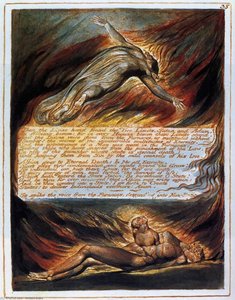
In the chilling depths of William Blake’s The House of Death, viewers are thrust into a liminal space where the boundaries between life and the afterlife dissolve. The composition is dominated by a visceral, central figure—a man with long, flowing hair and a beard, his arms outstretched in a pose reminiscent of crucifixion. This striking image serves as the emotional anchor of the piece, evoking an immediate sense of sacrifice and vulnerability. He is not alone in this spectral realm; he is flanked by figures that embody the spectrum of human response to the divine and the terminal. To one side, a figure gazes downward with an expression steeped in sorrow and pity, while another stands with a rigid, unwavering resolve. Above this dramatic assembly, a solitary bird hovers near the upper corner, its presence acting as a silent, symbolic sentinel that hints at themes of resurrection and the possibility of divine intervention amidst the darkness.
Technical Mastery and the Play of Light
To achieve such profound psychological depth, Blake utilized the intricate technique of aquatint printing, a method that allows for a remarkable range of tonal variations. Through the careful application of wax resist and acid etching, Blake was able to manipulate light and shadow with extraordinary precision. This creates a surface characterized by a unique luminosity, where the stark white background does not merely represent empty space, but rather a blinding, spiritual void that pushes the central figures into sharp, dramatic relief. The meticulous rendering of musculature and the nuanced facial expressions demonstrate a commitment to psychological realism, ensuring that the symbolic elements of the work are grounded in a tangible, human reality. For the collector or interior designer, this technique offers a piece with immense visual texture, capable of commanding attention through its subtle gradations of grey and light.
A Romantic Vision of the Sublime
Emerging from the height of the Romantic movement, The House of Death captures the era's intense fascination with the sublime—the intersection of beauty and terror. Blake’s work reflects the broader cultural anxieties of the early 19th century, a period grappling with profound shifts in spiritual belief and the encroaching shadows of industrialization. The painting operates as more than a mere depiction of mortality; it is an exploration of judgment and spiritual transformation. By weaving together elements of fear, hope, and transcendence, Blake invites the observer to contemplate the weight of existence and the mystery of what lies beyond. This artwork stands as a powerful testament to the visionary power of the human imagination, making it an evocative choice for those seeking to bring a sense of profound history and intellectual depth into a curated space.
Ähnliche Kunstwerke
Über den Künstler
ein Leben, das von einem kreativen Geist geprägt ist
William Blake, ein visionärer Künstler, Dichter und Grafiker, hat eine unvergessliche Spur in der Kunstwelt hinterlassen. Geboren in London am 28. November 1757 und gestorben am 12. August 1827, war Blakes Leben ein Beweis für seinen tiefgreifenden kreativen Geist.Frühes Leben und Einflüsse
Blakes frühe Jahre waren von einer tiefen Verbindung zur Kunst geprägt. Sein Vater, William Blake Sr., ein Hosier, und seine Mutter, Catherine Wright, beeinflussten seine spirituellen und künstlerischen Neigungen. Dies führte zu seiner Lehre bei Francisco Bartolozzi, einem Kupferstecher.Künstlerische Entwicklung und bedeutende Werke
Blakes künstlerischer Weg führte durch verschiedene Medien wie Malerei, Poesie und Grafik. Zu seinen bekanntesten Werken gehören:- The Tyger (1795) - Ein Meisterwerk der romantischen Literatur, das Blakes einzigartige Mischung aus Mystik und Realität zeigt.
- The Sickle (1803) - Ein eindringliches Beispiel für seine Druckkunstfähigkeiten, das seine tiefe Verbindung zur Natur widerspiegelt.
- The Ghost of a Flea (ca. 1819–1820) - Ein Beweis für Blakes innovativen Ansatz in der Kunst, der die Grenzen zwischen Realität und Fantasie verwischt.
Museen mit Blakes Werken
- Blake Museum, Vereinigtes Königreich - Ein Muss für jeden Blake-Enthusiasten, das eine umfangreiche Sammlung seiner Werke beherbergt. [https://ArtsDot.com/@/william-blake](https://ArtsDot.com/@/william-blake)
- Fulham Public Library, Vereinigtes Königreich - Obwohl es sich nicht ausschließlich um ein Blake-Museum handelt, beherbergt es mehrere seiner bemerkenswerten Werke und bietet so eine einzigartige Perspektive auf die britische Kunst. [https://ArtsDot.com/@@/a@d3bma9-discovering-the-artworks-of-fulham-public-library-united-kingdom](https://ArtsDot.com/@@/a@d3bma9-discovering-the-artworks-of-fulham-public-library-united-kingdom)
Vermächtnis und Einfluss
Blakes Einfluss auf die britische Kunst ist unbestreitbar. Seine einzigartige Mischung aus Mystik, Prophezeiung und Vorstellungskraft hat Generationen von Künstlern inspiriert. Als Vorläufer der Romantik hat Blakes Werk bis heute eine einfache Kategorisierung verwehrt und ihn zu einem Grundstein der britischen Literatur und Kunst gemacht.Weitere Informationen
Für mehr über William Blake und seine Werke erfahren Sie: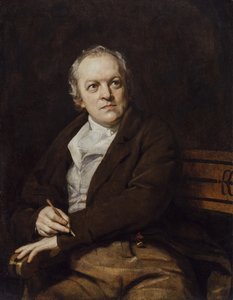
William Blake
1757 - 1827 , Vereinigtes Königreich
Kurzinfos
- Beeinflusste Künstler:
- Dante Gabriel Rossetti
- William Holman Hunt
- Bemerkenswerte Werke:
- The Tyger
- Das Sichelwerk
- Der Geist der Wahrheit
- Einflussreiche Künstler:
- Raphael
- Michelangelo
- Geburtsdatum: 1757-11-28
- Geburtsort: London, Vereinigtes Königreich
- Künstlerische Bewegung: Romantik
- Nationalität: Britisch
- Todatum: 1827-08-12
- Vollständiger Name: William Blake
Ähnliche Artikel
Sir William Blake Richmond: Ästhetizismus und Symbolismus – Eine Vision zwischen Präraffaelitismus und Renaissance-Ideal
Entdecken Sie das faszinierende Werk von Sir William Blake Richmond – ein Pionier des Ästhetizismus und Symbolismus. Erfahren Sie mehr über seine Mosaiken in St. Paul’s Cathedral, seinen Einfluss auf die Arts and Crafts Bewegung und sein Vermächtnis als Slade Professor.

Romantische Landschaften: Die 10 Meisterwerke, die eine Epoche prägten | ArtsDot
Entdecken Sie die 10 Meisterwerke der Romantischen Landschaftsmalerei! Von Caspar David Friedrich bis Turner – erleben Sie die Kunst, Emotion & Natur. Hochwertige Reproduktionen auf ArtsDot.com

John Varley I: Intimate Observation & the British Romantic Landscape
Explore the serene landscapes of John Varley I, a key figure in British Romanticism. Discover his unique watercolour style, collaboration with William Blake & lasting artistic legacy. Learn about collecting Varley's work.

William Blake: Romantische Vision und mystischer Genius der Imagination
Entdecken Sie das faszinierende Werk von William Blake – einem revolutionären Künstler und Dichter der Romantik. Erfahren Sie mehr über seine mystischen Visionen, einzigartige Techniken und bleibenden Einfluss auf Kunst und Literatur.

10 Meisterwerke des Romantischen Realismus: Wenn Emotion auf Wahrheit trifft
Entdecken Sie 10 Meisterwerke des Romantischen Realismus. Erleben Sie die emotionale Tiefe von Künstlern wie Constable und Friedrich – perfekt als Inspiration für Ihre Kunstsammlung oder Wandgestaltung. Finden Sie museale Reproduktionen auf ArtsDot.com.