 Vorschau anzeigen
 Versenden
 Teilen
 Details anzeigen

 Herunterladen
 Ähnliche Objekte
 Röntgenaufnahme
 Diashow
 Statistiken
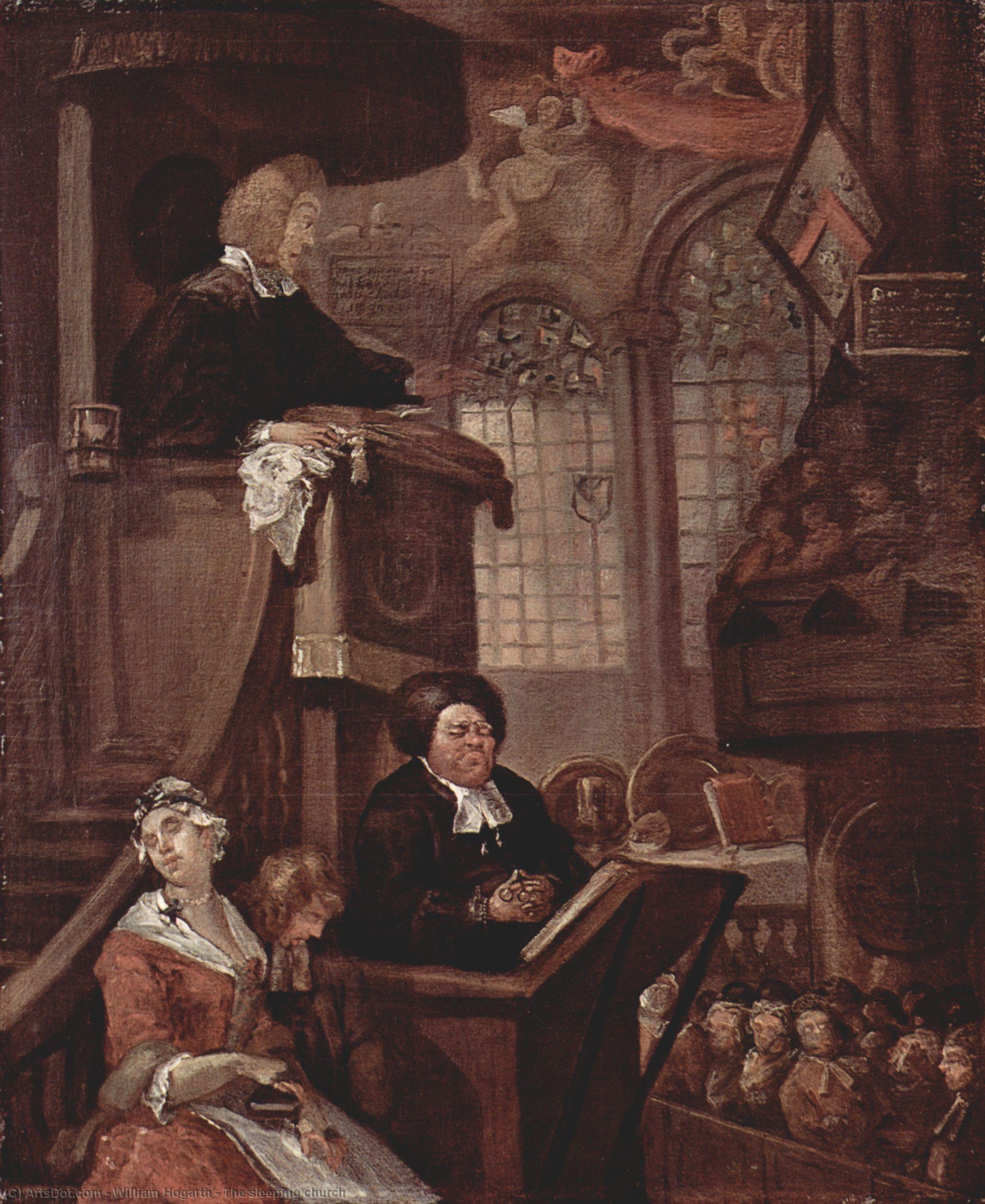
The sleeping church
 British Rococo
 1729
1729 53.0 x 44.0 cm
 Weiterlesen
Giclée / Kunstdruck
Giclée- oder Leinwanddruck in Museumsqualität mit schneller Produktion und flexiblen Veredelungsoptionen. ( Handgemalte Reproduktion bestellen Zum digitalen Bild wechseln)




P118B $10

P118H $10

P118W $10

P438Z $10

P508JH $12

P508YH $12

P805H $10

P805Z $10

P919BZ $10

P919G $10

P919XJ $10

P959ZH $10

P968JZ $12

W106C $8

W218G $10

W218JH $8

W218Y $10

W307PJ $10

W316G $10

W316PJ $8

W316Y $10

W398PJ $8

W4111J $10

W500HY $15

W500JH $15

W692G $12

W849H $8

W940BG $15

W953PJ $8




Wählen Sie aus unseren vordefinierten Formaten, die den ursprünglichen Proportionen des Kunstwerks entsprechen.

Sie können Ihre eigenen Maße eingeben, um ein bestimmtes Format oder einen speziellen Platz einzupassen. Wenn das von Ihnen gewählte Format nicht den Proportionen des Originalbildes entspricht, werden wir das Kunstwerk entweder beschneiden oder das Bild mit einem gespiegelten oder einfarbigen Rand erweitern. Ein digitaler Entwurf wird Ihnen zur Genehmigung zugesandt, bevor die Produktion beginnt.
Bitte beachten Sie, dass die Vorschau auf dem Bildschirm nicht den tatsächlichen Zuschnitt oder die Erweiterung widerspiegelt. Nur der Entwurf zeigt die endgültige Komposition präzise an.
Obwohl Sondermaße verfügbar sind, empfehlen wir die Auswahl eines Maßes aus der vordefinierten Liste, um die ursprünglichen Proportionen zu bewahren.
Weltweiter Versand () innerhalb von 2 Wochen statt der üblichen 4/5 Wochen. (11 September)

Kostenloser weltweiter Expressversand

Hochwertige Leinenleinwand

Umfassender Versicherungsschutz beim Versand

Zollgebühren-Rückerstattungsgarantie

Garantie für exakte Farbtreue

100-Tage-Rückgaberecht (nur bei Mängeln)

100% Geld-zurück-Garantie

Mengenrabatt verfügbar
 Die Glasoption ist nur für Größen unter 110 cm verfügbar.

The sleeping church
Giclée / Kunstdruck
Format der Reproduktion
-


Gesamtpreis
$ 62
A Window into Georgian Morality: Exploring Hogarth’s “The Sleeping Church”
William Hogarth's "The Sleeping Church," completed in 1729, transcends mere depiction; it serves as a meticulously crafted commentary on the social and moral landscape of Georgian England. More than just capturing a scene within a church building—though the architectural detail is undeniably impressive—the painting delves into the complexities of human behavior and societal hypocrisy, cementing Hogarth’s reputation as one of the era's most astute observers. This artwork isn’t simply beautiful; it’s profoundly unsettling in its unflinching portrayal of complacency amidst spiritual aspiration.- Subject Matter: The composition centers around a congregation gathered within a church, presenting a tableau of everyday life interwoven with religious observance. Notably prominent is a man slumped on a bench, seemingly asleep while clutching a book – an image that immediately confronts viewers with questions about devotion and moral responsibility.
- Style & Technique: Hogarth’s style exemplifies Rococo influences blended with Neoclassical precision. He employs chiaroscuro—the dramatic interplay of light and shadow—to sculpt the figures and create depth, drawing inspiration from Caravaggio's masterful use of illumination. The meticulous detail evident in every brushstroke underscores his commitment to realism, aiming not merely to represent what is seen but to convey a deeper psychological truth.
Historical Context: Enlightenment Values Under Scrutiny
“The Sleeping Church” emerged during the Enlightenment, a period characterized by intellectual ferment and a burgeoning interest in reason and empirical observation. However, Hogarth wasn’t simply celebrating these advancements; he was actively challenging them. The painting critiques the perceived moral failings of the upper classes – those who profess faith but fail to live up to its ideals. It speaks directly to anxieties surrounding social reform and questions whether outward piety truly translates into genuine virtue. Consider the man asleep—a symbol of spiritual apathy, a stark contrast to the solemn faces of his fellow worshippers. This juxtaposition powerfully communicates Hogarth’s critique of societal hypocrisy.Symbolism & Narrative Depth
Beyond its immediate visual impact, “The Sleeping Church” is laden with symbolic significance. The clock hanging on the wall serves as a reminder of time passing and the urgency of moral action – or inaction. The books scattered around represent knowledge and learning, yet they are ignored by the slumbering figure, highlighting the importance of applying intellectual understanding to ethical conduct. Hogarth’s masterful storytelling elevates the painting beyond a simple depiction; it invites viewers to contemplate profound questions about faith, morality, and the responsibilities inherent in upholding societal values.Emotional Resonance & Artistic Legacy
The enduring power of “The Sleeping Church” lies in its ability to evoke a visceral emotional response. The unsettling stillness of the scene juxtaposed with the palpable sense of moral decay creates an atmosphere of discomfort and contemplation. Hogarth’s work continues to resonate today because it confronts us with timeless themes – the tension between appearance and reality, the struggle for virtue amidst societal pressures. It stands as a testament to his genius as both an artist and a social commentator, securing its place among the most influential paintings of the Georgian era and inspiring countless reproductions that strive to capture the essence of Hogarth’s unforgettable vision.Ähnliche Kunstwerke
Über den Künstler
frühes Leben und Einflüsse
William Hogarth, ein vielseitiger englischer Künstler, wurde am 10. November 1697 in London geboren. Sein frühes Leben war geprägt von seiner Lehre beim Graveur Ellis Gamble in Leicester Fields, wo er seine Fähigkeiten im Bereich der Werbeplakatinlagen entwickelte. Diese Erfahrung beeinflusste seinen künstlerischen Ton erheblich und trug zu seinem oft scharfen, kritischen Stil bei.Künstlerische Karriere
Hogarths kreativer Horizont umspannte realistische Porträts bis hin zu bahnbrechenden, humorvollen Bildreihen, die als "moderne moralische Themen" bezeichnet wurden. Er ist berühmt für seine Werke A Harlot's Progress, A Rake's Progress und Marriage a-la-Mode. Sein unverwechselbarer Stil war so einflussreich, dass ähnliche satirische politische Illustrationen oft als "hogarthian" bezeichnet werden.Bekannte Werke und ihre Bedeutung
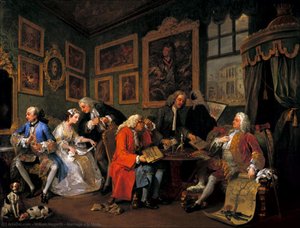
- The Marriage Contract (Klassizismus, Öl auf Leinwand): Dieses Gemälde zeigt Hogarths Meisterschaft in der Satire und kritisiert die gesellschaftlichen Narrative seiner Zeit. [https://ArtsDot.com/@@/8bwmb6-william-hogarth-the-marriage-contract](https://ArtsDot.com/@@/8bwmb6-william-hogarth-the-marriage-contract)
- A Harlot's Progress (satirische Kunst, Holzschnitt): Diese Reihe von Gemälden ist ein Beweis für Hogarths Fähigkeit, die menschliche Form mit Anmut und Kraft einzufangen und oft explizit sexuelle Inhalte zu integrieren. [https://ArtsDot.com/@/william-hogarth](https://ArtsDot.com/@/william-hogarth)
Vermächtnis und Einfluss
Hogarths Kunst erlangte immense Popularität und wurde durch Drucke massenproduziert, was ihn zum bedeutendsten englischen Künstler seiner Zeit machte. Charles Lamb, der Essayist, bemerkte berühmt, dass Hogarths Bilder wie Bücher waren, die man lesen musste, anstatt sie nur anzusehen.Museen und Sammlungen
Das British Museum, mit seiner umfangreichen Sammlung von kulturellen Kunstobjekten und Antiquitäten, ist eine bedeutende Institution im Vereinigten Königreich. [https://en.wikipedia.org/wiki/british_museum](https://en.wikipedia.org/wiki/british_museum) Obwohl es sich nicht speziell auf Hogarths Werk konzentriert, repräsentiert es den breiteren Kontext der britischen Kunst und Kultur.Fazit
William Hogarths Vermächtnis als satirischer Künstler beeinflusst weiterhin die Kunstwelt. Seine Werke, wie The Marriage Contract und A Harlot's Progress, sind nicht nur für ihren künstlerischen Wert, sondern auch für ihre scharfe Kritik an gesellschaftlichen Narrativen von Bedeutung. Entdecken Sie Hogarths weiteres Werk unter [https://ArtsDot.com/@/william-hogarth](https://ArtsDot.com/@/william-hogarth).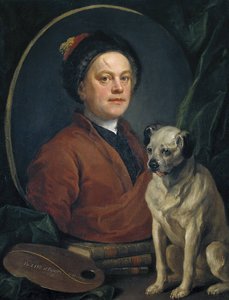
William Hogarth
1697 - 1764 , Vereinigtes Königreich
Kurzinfos
- Beeinflusste Künstler:
- James Gillray
- George Cruikshank
- Bemerkenswerte Werke:
- A Harlot's Progress
- A Rake's Progress
- Marriage A-la-Mode
- The Marriage Contract
- Geburtsdatum: 10. November 1697
- Geburtsort: London, Vereinigtes Königreich
- Künstlerische Bewegung: Satirische Kunst, Realismus
- Künstlerische Einflüsse:
- Niederländische Genremalerei
- Französische Karikatur
- Jonathan Swift, Henry Fielding
- Nationalität: Britisch
- Vollständiger Name: William Hogarth
Ähnliche Artikel
John Hoppner: Porträtmalerei, Mäzenatentum und die Inszenierung britischer Identität im späten Georgischen Zeitalter
Entdecken Sie das Werk von John Hoppner, einem Meister der britischen Porträtmalerei des späten Georgischen Zeitalters. Erfahren Sie mehr über seine Technik, sein Mäzenatentum und die Inszenierung gesellschaftlicher Identität. Exklusive Reproduktionen bei ArtsDot.
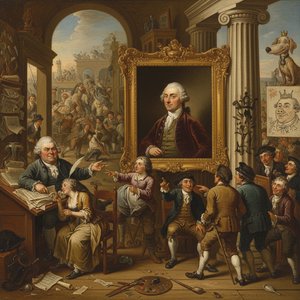
William Hogarth: Satire als Spiegel der Gesellschaft – Eine Neubewertung des Begründers moderner britischer Kunst
Entdecken Sie William Hogarths satirische Meisterwerke! Eine tiefgehende Analyse seiner Gesellschaftskritik im London des 18. Jahrhunderts. Erfahren Sie mehr über seine Kunst und seinen bleibenden Einfluss.
Die 10 Meisterwerke des Neoklassizismus: Kunst für Ihr Zuhause |
Entdecken Sie die 10 Meisterwerke des Neoklassizismus! Von David bis Canova – erleben Sie Kunstgeschichte, elegante Ästhetik & zeitlose Schönheit. Hochwertige Reproduktionen auf .
The Enduring Legacy of Classicism: Principles, Evolution & Influence in Western Art
Explore the enduring legacy of Classicism in Western art! Discover its historical context, key principles, iconic masterpieces & lasting influence. Learn about Renaissance and Neoclassical movements with ArtsDot.
Timeless Resonance: Exploring Classic Vibe in Art – A Historical & Aesthetic Analysis
Explore the rich history & enduring aesthetic of Classicism art! Discover key movements, iconic artists like Raphael & David, and its lasting influence on Western art. Deepen your appreciation today.