 Vorschau anzeigen
 Versenden
 Teilen
 Details anzeigen

 Herunterladen
 Ähnliche Objekte
 Röntgenaufnahme
 Diashow
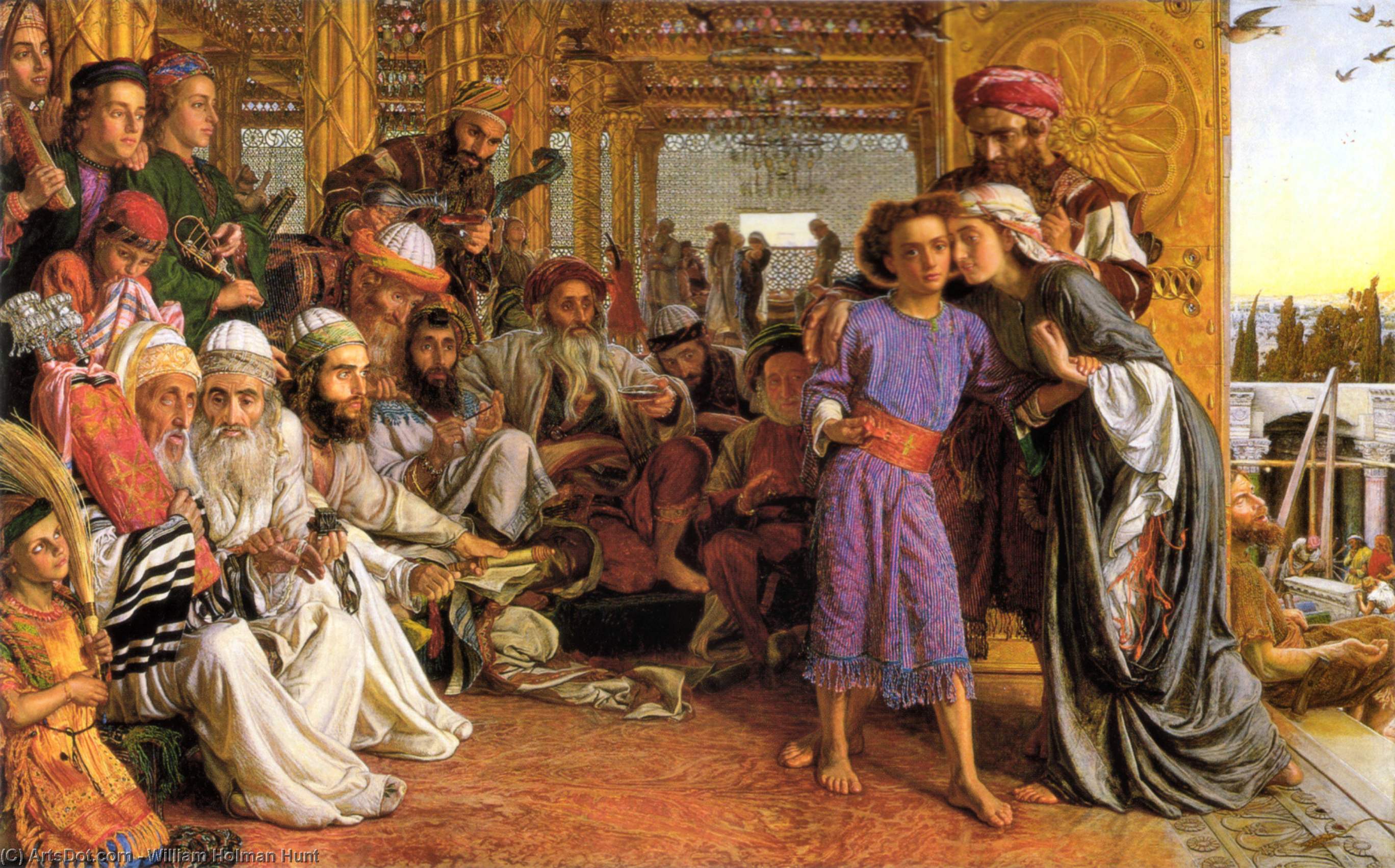
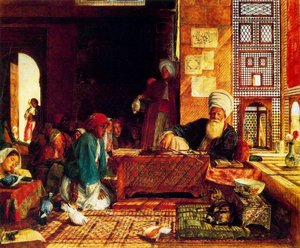
The Finding of the Saviour in the Temple
 Oil On Canvas
- WallArt
- Pre-Raphaelite Brotherhood
 1862
1862- 19th Century
 70.0 x 45.0 cm
 Birmingham Museum und Kunstgalerie
 Weiterlesen
Giclée / Kunstdruck
Giclée- oder Leinwanddruck in Museumsqualität mit schneller Produktion und flexiblen Veredelungsoptionen. ( Handgemalte Reproduktion bestellen Bild kaufen)




P118B $10

P118H $10

P118W $10

P438Z $10

P508JH $12

P508YH $12

P805H $10

P805Z $10

P919BZ $10

P919G $10

P919XJ $10

P959ZH $10

P968JZ $12

W106C $8

W218G $10

W218JH $8

W218Y $10

W307PJ $10

W316G $10

W316PJ $8

W316Y $10

W398PJ $8

W4111J $10

W500HY $15

W500JH $15

W692G $12

W849H $8

W940BG $15

W953PJ $8




Wählen Sie aus unseren vordefinierten Formaten, die den ursprünglichen Proportionen des Kunstwerks entsprechen.

Sie können Ihre eigenen Maße eingeben, um ein bestimmtes Format oder einen speziellen Platz einzupassen. Wenn das von Ihnen gewählte Format nicht den Proportionen des Originalbildes entspricht, werden wir das Kunstwerk entweder beschneiden oder das Bild mit einem gespiegelten oder einfarbigen Rand erweitern. Ein digitaler Entwurf wird Ihnen zur Genehmigung zugesandt, bevor die Produktion beginnt.
Bitte beachten Sie, dass die Vorschau auf dem Bildschirm nicht den tatsächlichen Zuschnitt oder die Erweiterung widerspiegelt. Nur der Entwurf zeigt die endgültige Komposition präzise an.
Obwohl Sondermaße verfügbar sind, empfehlen wir die Auswahl eines Maßes aus der vordefinierten Liste, um die ursprünglichen Proportionen zu bewahren.
Weltweiter Versand () innerhalb von 2 Wochen statt der üblichen 4/5 Wochen. (24 August)

Kostenloser weltweiter Expressversand

Hochwertige Leinenleinwand

Umfassender Versicherungsschutz beim Versand

Zollgebühren-Rückerstattungsgarantie

Garantie für exakte Farbtreue

60 Tage Rückgaberecht (nur bei Mängeln)

100% Geld-zurück-Garantie

Mengenrabatt verfügbar
 Die Glasoption ist nur für Größen unter 110 cm verfügbar.

The Finding of the Saviour in the Temple
Giclée / Kunstdruck
Format der Reproduktion
-


Gesamtpreis
$ 62
Sammlerstück-Beschreibung
The Finding of the Saviour in the Temple: A Pre-Raphaelite Masterpiece
William Holman Hunt’s “The Finding of the Saviour in the Temple” is more than just a depiction of a biblical scene; it's a profound meditation on faith, innocence, and the enduring power of maternal love. Completed in 1862, this oil-on-canvas painting, measuring 70 x 45 cm, immediately arrests the viewer with its meticulous detail and evocative atmosphere – hallmarks of the Pre-Raphaelite Brotherhood’s artistic vision. Hunt sought to recreate not merely a historical event but a moment imbued with spiritual significance, reflecting his deep religious convictions and a desire to reconnect art with the sincerity he believed had been lost in contemporary practice.
A Return to Authenticity: The Pre-Raphaelite Style
Painted during the height of the Pre-Raphaelite movement, “The Finding of the Saviour” embodies its core principles. Rejecting the idealized forms and artificiality of academic art, Hunt meticulously researched the scene, consulting biblical texts and historical accounts to ensure accuracy. The painting’s vibrant colors – rich reds, blues, and golds – are applied with a deliberate, almost tactile quality, reflecting the Brotherhood's commitment to detailed observation and a rejection of diluted pigments. Notice the painstaking rendering of fabrics, the individual strands of hair, and the subtle variations in skin tones; these elements contribute to an unparalleled sense of realism that was revolutionary for its time.
- Technique: Oil on canvas, executed with meticulous brushwork and a focus on naturalism.
- Color Palette: Rich, saturated colors reflecting the Pre-Raphaelite emphasis on vibrant hues.
- Composition: A carefully constructed scene designed to evoke emotion and convey spiritual meaning.
Symbolic Layers: Faith, Innocence, and Maternal Devotion
The composition of “The Finding of the Saviour” is laden with symbolic significance. The central figures – Mary and Jesus – represent innocence and divine grace. The gathering of onlookers, depicted in varying states of surprise and reverence, symbolizes the universal impact of this pivotal moment. The inclusion of children within the scene underscores the vulnerability and purity associated with faith. Hunt’s deliberate choice to portray a realistic, unidealized depiction of human emotion—the wonder, the confusion, the burgeoning belief—elevates the painting beyond a simple biblical narrative into a timeless exploration of humanity's spiritual journey.
Historical Context and Artistic Influence
Created in 1862, “The Finding of the Saviour” reflects the broader intellectual and artistic currents of the Victorian era. Hunt was deeply influenced by the writings of John Ruskin and Thomas Carlyle, who championed a return to moral seriousness and a reverence for nature and craftsmanship. This influence is evident in the painting’s meticulous detail, its emphasis on spiritual truth, and its rejection of superficial beauty. The work stands as a testament to Hunt's unwavering commitment to his artistic vision and his desire to create art that would inspire contemplation and faith.
This exceptional reproduction captures every nuance of Hunt’s original masterpiece, offering an unparalleled opportunity to experience the profound beauty and spiritual depth of this iconic Pre-Raphaelite work.
Ähnliche Kunstwerke

Über den Künstler
Frühes Leben und Karriere
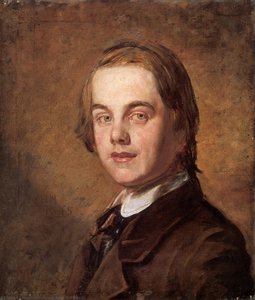
William Holman Hunt, ein bedeutender englischer Maler, wurde am 2. April 1827 in Cheapside, London, geboren. Er ist vor allem bekannt als einer der Gründer der Präraffaelitenbewegung, einer Gruppe, die danach strebte, die Kunst zu beleben, indem sie detaillierte Beobachtungen der Naturwelt betonte.Bemerkenswerte Werke und Stil
Holmans Gemälde zeichnen sich durch ihre Detailgenauigkeit, lebendigen Farben und aufwendige Symbolik aus. Zu seinen bemerkenswertesten Werken gehören:- Das Licht der Welt (1851-1853), jetzt in der Kapelle des Keble College, Oxford, England
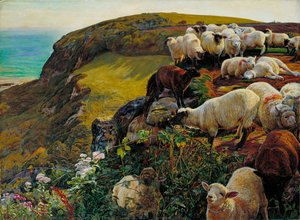
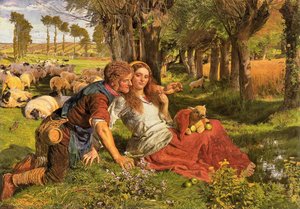
- Der pachtweise Hirte (1851), eine Szene des modernen ländlichen Lebens
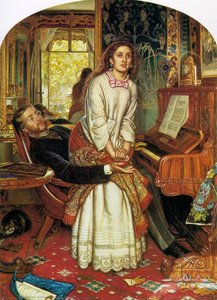
- Das Erwachen des Gewissens, das seine frühe Erfolgs mit intensiv naturalistischen Szenen zeigt
- Der Sündenbock, Die Auffindung des Erlösers im Tempel und Der Schatten des Todes, gemalt während seiner Reisen ins Heilige Land auf der Suche nach genauen topographischen und ethnographischen Materialien
Persönliches Leben und späte Jahre
Holman Hunt heiratete zweimal, zuerst Fanny Waugh, die Modell für mehrere seiner Werke war, darunter Isabella und der Basilikumtopf. Nach ihrem Tod schuf er ihr ein Denkmal in Fiesole. Seine zweite Frau war Edith, Fannys Schwester, die er aufgrund britischer Gesetze gegen die Heirat einer verstorbenen Ehefrau's Schwester im Ausland heiratete. Holmans späte Jahre waren von nachlassendem Sehvermögen geprägt, was ihn zwang, das Malen aufzugeben. Er vollendete seine letzten großen Werke mit Hilfe seines Assistenten Edward Robert Hughes. Holman Hunt starb am 7. September 1910 und wurde in der St.-Paulus-Kathedrale, London, begraben.Vermächtnis
Holman Hunt veröffentlichte 1905 eine Autobiografie und wurde im selben Jahr vom König Edward VII. zum Mitglied des Order of Merit ernannt. Sein persönliches Leben wurde später in Diana Holman-hunts Buch Mein Großvater, sein Leben und seine Lieben dokumentiert. Sehen Sie sich Williams Holman Hunts Kunstwerke auf ArtsDot an Wichtige Daten:- 2. April 1827: geboren in Cheapside, London
- 1851-1853: malte Das Licht der Welt
- 7. September 1910: starb und wurde in der St.-Paulus-Kathedrale, London, begraben
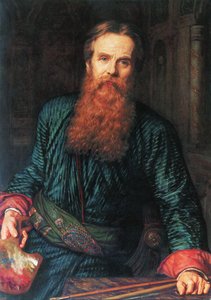
William Holman Hunt
1827 - 1910 , Vereinigtes Königreich
Kurzinfos
- Beeinflusste Künstler: ['Dante Gabriel Rossetti']
- Bemerkenswerte Werke:
- Das Licht der Welt
- Der Schäferling
- Das Erwachen des Gewissens
- Der Sündenbock
- Die Wiederfindung Jesu im Tempel
- Der Schatten des Todes
- Geburtsdatum: 2. April 1827
- Geburtsort: Cheapside, Vereinigtes Königreich
- Künstlerische Bewegung: Präraffaeliten
- Künstlerische Einflüsse:
- John Everett Millais
- John Ruskin
- Nationalität: Britisch
- Todatum: 7. September 1910
- Vollständiger Name: William Holman Hunt
Ähnliche Artikel
Dante Gabriel Rossetti: Die 25 Meisterwerke des Präraffelitismus | ArtsDot
Entdecken Sie die 25 schönsten Gemälde von Dante Gabriel Rossetti! Tauchen Sie ein in die Welt der Präraffeliten, symbolistischer Kunst & viktorianischer Romantik. Hochwertige Reproduktionen für Ihr Zuhause – jetzt bei ArtsDot.com!
Sir John Everett Millais: Präraffaelitische Revolution und viktorianische Erzählkunst
Entdecken Sie das Leben und Werk von Sir John Everett Millais, einem Pionier der Präraffaeliten! Detaillierte Analysen seiner Gemälde, Einblicke in die viktorianische Kunstszene und seine bleibende Bedeutung. Jetzt lesen!
The Pre-Raphaelite Brotherhood: Rebellion, Romance & Medieval Revival
Explore the captivating world of the Pre-Raphaelite Brotherhood! Discover their rebellious spirit, iconic masterpieces & lasting influence on art history. Learn about Rossetti, Millais & more.
Arthur Hughes: Pre-Raphaelite Visions of Beauty & Melancholy
Explore the captivating world of Arthur Hughes (1832-1915), a leading Pre-Raphaelite painter. Discover his dreamy landscapes, poetic narratives & iconic Victorian artworks. Learn about his life, style & collecting today.
Ford Madox Brown: Pre-Raphaelite Visionary & Victorian Social Commentary
Explore the life & art of Ford Madox Brown, a pivotal Pre-Raphaelite painter renowned for his powerful social commentary and masterpiece 'Work'. Discover his lasting influence on British art history.