

 Vorschau anzeigen
 Versenden
 Teilen
 Details anzeigen

 Herunterladen
 Ähnliche Objekte
 Röntgenaufnahme
 Diashow
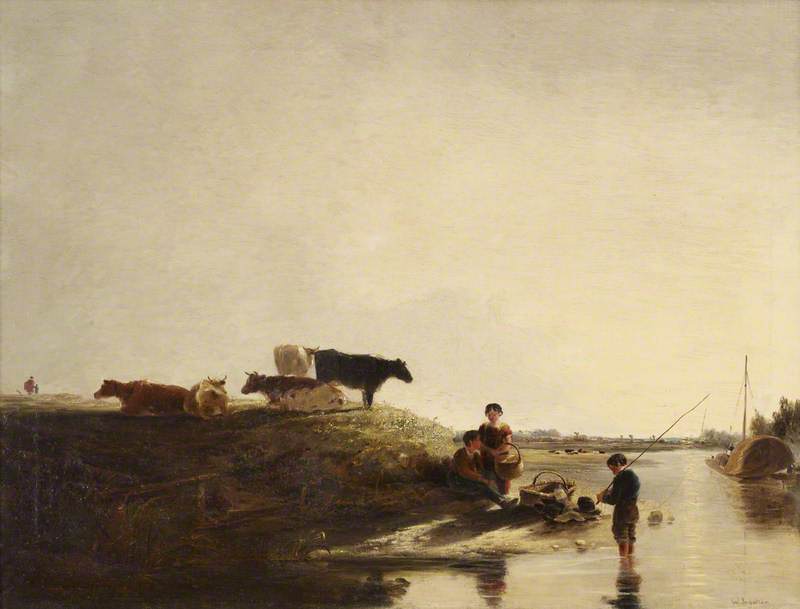
View near Windsor, with Cows and Fishermen
 1821
1821 64.0 x 85.0 cm
 National Trust
 Weiterlesen
Erwerben Sie ein hochauflösendes, optimiertes digitales Bild, das der Online-Vorschau weit überlegen ist.
Jede Datei wird von unseren hauseigenen Spezialisten mit modernsten Werkzeugen und fachmännischer manueller Retusche sorgfältig vorbereitet. Wir stellen sicher, dass jedes Bild eine außergewöhnliche Klarheit, präzise Farbgenauigkeit und feinste Details aufweist.
Die endgültige Datei wird innerhalb von 72 Stunden per E-Mail zugestellt und ist für den sofortigen Einsatz in professionellen, redaktionellen und Druckumgebungen optimiert. Es handelt sich um dieselbe Qualität, der führende Designstudios, Verlage und Galerien vertrauen.
Digitales Bild
Laden Sie eine hochauflösende Datei für die persönliche Präsentation, den Druck und kreative Projekte herunter. ( Druck bestellen Handgemalte Reproduktion bestellen)
In jeder Bestellung digitaler Bilder enthalten
Professionelle digitale Bereitstellung, garantiert
Wenn Sie sich für ArtsDot.com entscheiden, erhalten Sie nicht nur ein Bild – Sie erhalten ein professionell aufbereitetes digitales Kunstwerk, das mit höchster Präzision erstellt und durch eine Zufriedenheitsgarantie abgesichert wird. Hier ist alles, was automatisch mit Ihrer Bestellung geliefert wird:

Schnelle E-Mail-Zustellung
Ihre hochauflösende digitale Bilddatei wird Ihnen innerhalb von 72 Stunden nach der Bestellung per E-Mail zugestellt – bereit zur sofortigen Verwendung.

KI-optimierte digitale Datei
Ihre Kunstwerke werden professionell mithilfe fortschrittlicher KI-Tools und manueller Bearbeitung optimiert, um maximale Detailtreue, Klarheit und Farbgenauigkeit zu gewährleisten.

Lebenslanger kostenloser Neudruckservice
Datei versehentlich gelöscht oder verloren? Keine Sorge – wir senden sie Ihnen jederzeit kostenlos erneut zu.

Keine Einfuhrgebühren – jemals
Genießen Sie Ihr Kunstwerk sofort ohne Zollgebühren, Einfuhrabgaben oder Versandkosten – digitale Downloads sind immer steuerfrei.

Garantierte Farbtreue
Wir garantieren, dass Ihr digitales Bild mithilfe professioneller Werkzeuge und Farbmanagement die Originalfarben so präzise wie möglich wiedergibt.

60-Tage-Zufriedenheitsgarantie
Sollten Sie mit Ihrem digitalen Bild nicht zufrieden sein, werden wir es überarbeiten oder Ihnen innerhalb von 60 Tagen 100% erstatten – ohne Wenn und Aber.

100% Geld-zurück-Garantie
Nicht zufrieden? Erhalten Sie innerhalb von 60 Tagen nach Erhalt Ihrer digitalen Datei eine vollständige Rückerstattung – ohne Angabe von Gründen.

Rabatte bei Großbestellungen
3 Bilder kaufen, 10% sparen – 5 Bilder kaufen, 15% sparen – Ab 10 Bildern 20% sparen. Ideal für kreative Projekte, Galerien und Agenturen.
Ähnliche Kunstwerke









Biografie des Künstlers
Early Life and Artistic Beginnings
William Ingalton, born in 1794 in the humble village of Worplesdon, Surrey, emerged from a background far removed from the world of art. The son of a shoemaker, his early life offered little indication of the serene landscapes that would eventually define his legacy. Yet, fate—or perhaps an innate artistic sensibility—led him towards a path of observation and representation. He settled for a considerable period in Eton, a location that profoundly shaped his artistic focus. It was here, amidst the historic buildings and picturesque countryside, that Ingalton began to capture the essence of domestic life and rustic scenes with growing skill. His initial foray into the art world occurred between 1816 and 1826, during which he regularly contributed works to exhibitions at the Royal Academy and other prominent London venues. This period marked his formal introduction to a wider audience and established him as a painter of quiet English charm. In 1821, he further demonstrated his dedication to capturing Eton’s beauty by publishing a series of lithographed views, offering a glimpse into the idyllic world that captivated his imagination.A Shift in Focus: From Painter to Builder
The trajectory of Ingalton's career took an unexpected turn around 1826 when declining health forced him to relinquish his full-time artistic practice. This wasn’t, however, a complete abandonment of creativity but rather a redirection of it. He transitioned into the role of architect and builder, establishing himself in Windsor. This change reveals a fascinating interplay between his artistic eye and practical skills—a sensitivity to form and space that translated seamlessly from canvas to construction. While no longer actively painting, Ingalton continued to reside at Clewer, maintaining a connection to the landscapes he once so diligently depicted. Later in life, he moved to the Isle of Wight, where he passed away in 1866, leaving behind a body of work that, though not extensive, holds a unique place within the tradition of English landscape painting.Themes and Style: Capturing Rural Tranquility
Ingalton’s paintings are characterized by their gentle realism and evocative portrayal of the English countryside. He possessed an exceptional ability to capture the nuances of light and atmosphere, imbuing his scenes with a sense of tranquility and peace. His subjects often centered around everyday life—cows grazing in meadows, fishermen at work on the Thames, or views of iconic landmarks like Eton College Chapel and Windsor Castle. He wasn’t interested in grand historical narratives or dramatic compositions; instead, he found beauty in the ordinary. His style is best described as a blend of topographical accuracy and romantic sensibility. While his depictions are grounded in observable reality, they also possess a certain poetic quality—a soft focus and harmonious color palette that elevates them beyond mere documentation. The influence of artists like John Constable can be detected in his treatment of light and landscape, though Ingalton’s work maintains its own distinct character.Major Works and Lasting Legacy
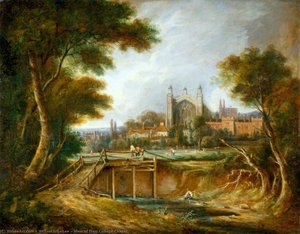
Although a comprehensive catalogue raisonné of Ingalton's works remains elusive, several paintings stand out as representative examples of his artistic achievement. “View of the Thames near Eton” exemplifies his mastery of capturing the river’s serene beauty, while “View of Eton College Chapel” showcases his skill in rendering architectural details with precision and sensitivity. “View near Windsor, with Cows and Fishermen” perfectly encapsulates his fondness for rustic scenes and everyday life. These paintings, along with others from his period of active exhibition, offer a valuable insight into the English landscape during the early 19th century. While he may not be as widely recognized as some of his contemporaries, Ingalton’s work continues to resonate with collectors and art enthusiasts who appreciate its quiet charm and understated beauty. His paintings serve as a testament to the enduring appeal of rural England and the power of observation in capturing its essence.Historical Significance and Rediscovery
William Ingalton's place within the broader context of 19th-century British art is that of a skilled observer and chronicler of a changing landscape. He lived during a period of significant social and economic upheaval, yet his paintings largely eschew any overt commentary on these changes. Instead, he focused on preserving a vision of rural tranquility—a nostalgic glimpse into a world that was rapidly disappearing.- His work provides valuable insight into the everyday life and landscapes of Eton and Windsor during the early 19th century.
- Ingalton’s transition from painter to builder highlights the interconnectedness of artistic disciplines in this period.
- The rediscovery of his paintings in recent years has shed new light on a previously overlooked artist, adding another layer to our understanding of British landscape painting.
William Ingalton
1794 - 1866

