

 Vorschau anzeigen
 Versenden
 Teilen
 Details anzeigen

 Herunterladen
 Ähnliche Objekte
 Röntgenaufnahme
 Diashow
 Statistiken
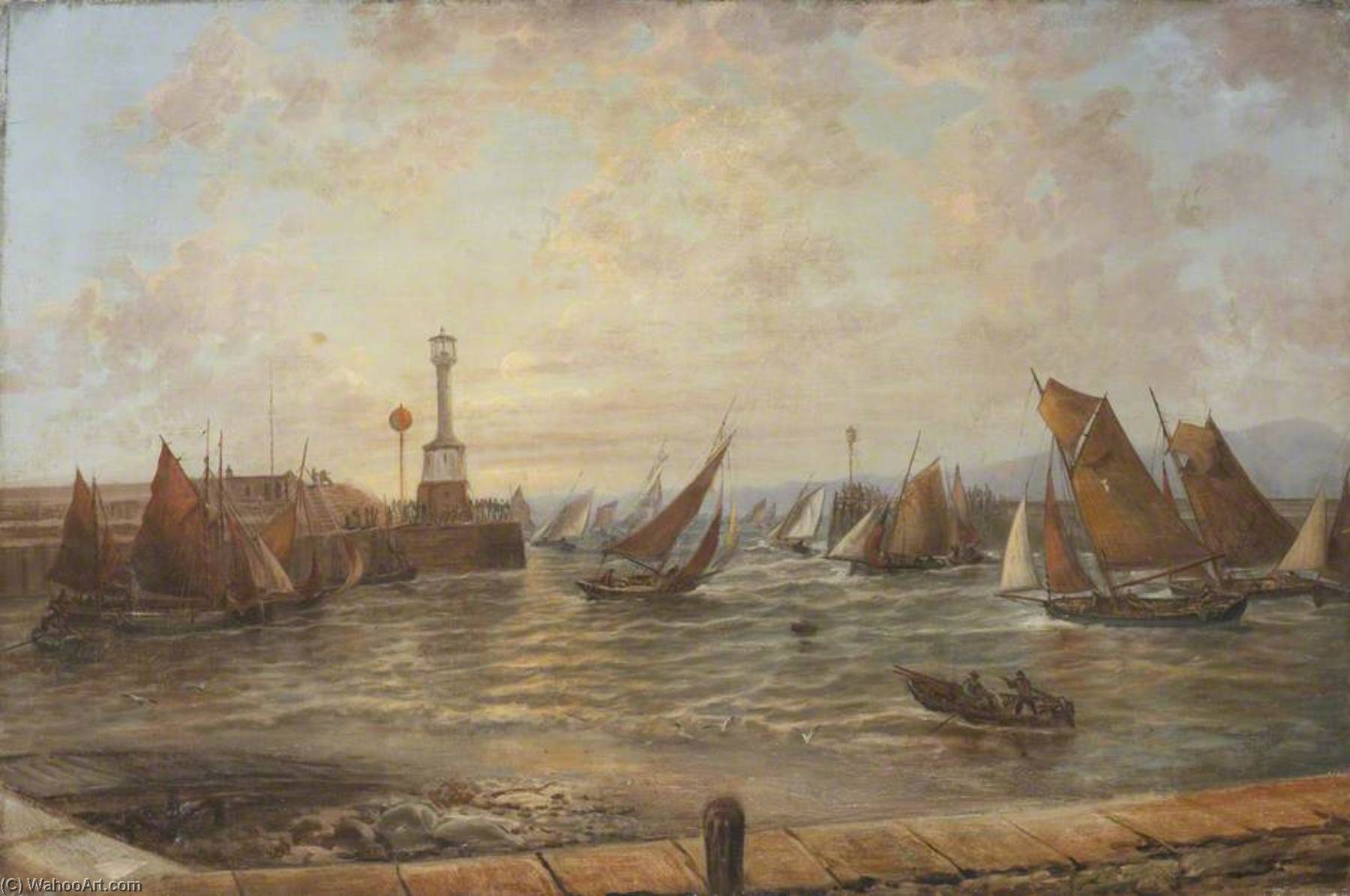
Herring Fishing Boats Leaving Port
 1889
1889 52.0 x 77.0 cm
 Weiterlesen
Giclée / Kunstdruck
Giclée- oder Leinwanddruck in Museumsqualität mit schneller Produktion und flexiblen Veredelungsoptionen. ( Handgemalte Reproduktion bestellen Zum digitalen Bild wechseln)




































Wählen Sie aus unseren vordefinierten Formaten, die den ursprünglichen Proportionen des Kunstwerks entsprechen.

Sie können Ihre eigenen Maße eingeben, um ein bestimmtes Format oder einen speziellen Platz einzupassen. Wenn das von Ihnen gewählte Format nicht den Proportionen des Originalbildes entspricht, werden wir das Kunstwerk entweder beschneiden oder das Bild mit einem gespiegelten oder einfarbigen Rand erweitern. Ein digitaler Entwurf wird Ihnen zur Genehmigung zugesandt, bevor die Produktion beginnt.
Bitte beachten Sie, dass die Vorschau auf dem Bildschirm nicht den tatsächlichen Zuschnitt oder die Erweiterung widerspiegelt. Nur der Entwurf zeigt die endgültige Komposition präzise an.
Obwohl Sondermaße verfügbar sind, empfehlen wir die Auswahl eines Maßes aus der vordefinierten Liste, um die ursprünglichen Proportionen zu bewahren.
Weltweiter Versand () innerhalb von 2 Wochen statt der üblichen 4/5 Wochen. (10 September)

Kostenloser weltweiter Expressversand

Hochwertige Leinenleinwand

Umfassender Versicherungsschutz beim Versand

Zollgebühren-Rückerstattungsgarantie

Garantie für exakte Farbtreue

100-Tage-Rückgaberecht (nur bei Mängeln)

100% Geld-zurück-Garantie

Mengenrabatt verfügbar
 Die Glasoption ist nur für Größen unter 110 cm verfügbar.

Herring Fishing Boats Leaving Port
Giclée / Kunstdruck
Format der Reproduktion
-


Gesamtpreis
$ 62
Historical Context
The painting depicts a scene from a bygone era, where herring fishing boats are leaving port, presumably to begin their daily catch. The presence of a lighthouse in the background adds to the overall atmosphere of the scene, suggesting that this is an active maritime area where sailors rely on it for guidance and safety. The Maryport Maritime Museum is home to an impressive collection of maritime-themed artworks, including other notable pieces by William Mitchell, such as Tantallon Castle Last Man from the Wreck.Artistic Style
William Mitchell's style is characterized by his attention to detail and ability to capture the play of light on water. In Herring Fishing Boats Leaving Port, he uses a range of colors to convey the sense of movement and energy in the scene. The brushstrokes are bold and expressive, adding to the overall sense of dynamism in the painting. For more information on William Mitchell's style and other notable works, visit ArtsDot.com.- Oil on canvas is the medium used to create this masterpiece, which adds to its texture and depth.
- The painting's size, 52 x 77 cm, makes it an intimate and detailed work that invites the viewer to explore its intricacies.
- Other notable artists, such as Edouard Manet, have also explored maritime themes in their work, including The Harbour at Bordeaux, which can be found on ArtsDot.com.
The Herring Fishing Boats Leaving Port painting is a testament to William Mitchell's skill as a maritime artist, and its beauty and historical significance make it a must-see for anyone interested in art and history.
Ähnliche Kunstwerke









Über den Künstler
A Legacy Carved in Concrete and Vision
William Mitchell (1925 – 2020) stands as a monumental figure in the landscape of mid-century art, a sculptor whose work bridged the gap between the raw, industrial strength of Brutalist architecture and the delicate, lyrical rhythms of the natural world. Born in Dunedin, Otago, on November 29, 1925, Mitchell’s creative journey was one of profound transformation and geographical breadth. While his roots were firmly planted in New Zealand, his artistic soul was shaped by the winds of international modernism. His early encounters with the transformative power of concrete in London during the late 1940s and early 1950s provided him with a new vocabulary—one where heavy, structural forms could be manipulated to convey deep human emotion and complex spatial ideas.
The development of Mitchell’s aesthetic was far from linear; it was a sophisticated synthesis of diverse global influences. Following his formative years in the United Kingdom, he sought further refinement through postgraduate research at Yale University in the mid-1950s. This period in America was pivotal, exposing him to the rigorous geometric abstraction of American modernism. Under the guidance of luminaries such as Josef Albers and Kenneth Clark, Mitchell began to weave together the disciplined principles of the Bauhaus with the dreamlike, organic textures of European Surrealism. This unique duality allowed him to master the art of "buildability," creating works that were not merely decorative but were structurally integrated into the very fabric of the environments they inhabited.
The Poetry of Form and Material
Mitchell’s mastery lay in his ability to breathe life into seemingly inert materials. He became renowned for his large-scale concrete murals and public works, utilizing glass reinforced concrete (GRC) to create heavily modelled surfaces that possessed a tactile, almost skin-like quality. His technique was characterized by a distinctive language of texture; he did not merely cast shapes but sculpted them with an intimacy that belied the industrial nature of his medium. Through these textured surfaces, he explored themes of memory, place, and social responsibility, turning urban landscapes into galleries of contemplative art.
His most significant achievements are often found in the public sphere, where his sculptures engage directly with the movement of people and the passage of time. Notable examples of his enduring impact include:
- The Stone (1967): A commissioned piece for the Christchurch Botanic Gardens that exemplifies his ability to harmonize heavy sculptural forms with the organic beauty of a botanical setting.
- The Gathering: A striking concrete contribution to the Auckland Civic Square project, which demonstrates his skill in creating powerful visual statements that resonate within urban social hubs.
- Large-scale Concrete Murals: His pioneering use of GRC allowed for the creation of intricate, stylized narratives that transformed the facades of mid-century buildings into monumental works of art.
Historical Significance and Enduring Resonance
As the decades progressed, Mitchell’s work became a cornerstone of the mid-century movement, particularly in his ability to anticipate the growing global interest in public art during the 1960s and 70s. He was a pioneer who understood that art should not be confined to the sterile walls of a museum but should instead inhabit the streets, parks, and plazas where life unfolds. His work challenged the perceived coldness of Brutalism, proving that concrete could be as expressive and evocative as clay or marble.
Though many of his works faced periods of neglect as architectural tastes shifted, a modern resurgence in appreciation has brought his legacy back to the forefront of art historical discourse. Today, William Mitchell is recognized not just as a sculptor of stone and cement, but as a visionary who captured the essence of an era. His ability to blend the monumental with the intimate ensures that his contribution to the sculptural canon remains as enduring and textured as the very surfaces he so masterfully shaped.
william mitchell
1925 - 2020
Kurzinfos
- Artistic Movement Or Style: Abstract Expressionism
- Artists Or Movements Influenced By This Artist: ['Pre-Raphaelitism']
- Artists Who Influenced This Artist:
- Wadsworth
- Nicholson
- Date Of Death: 2020
- Full Name: William Mitchell
- Nationality: French
- Notable Artworks:
- Herring Fishing Boats Leaving Port
- Charles L Mitchell
- Place Of Birth: Nice, France