

 Vorschau anzeigen
 Versenden
 Teilen
 Details anzeigen

 Herunterladen
 Ähnliche Objekte
 Röntgenaufnahme
 Diashow
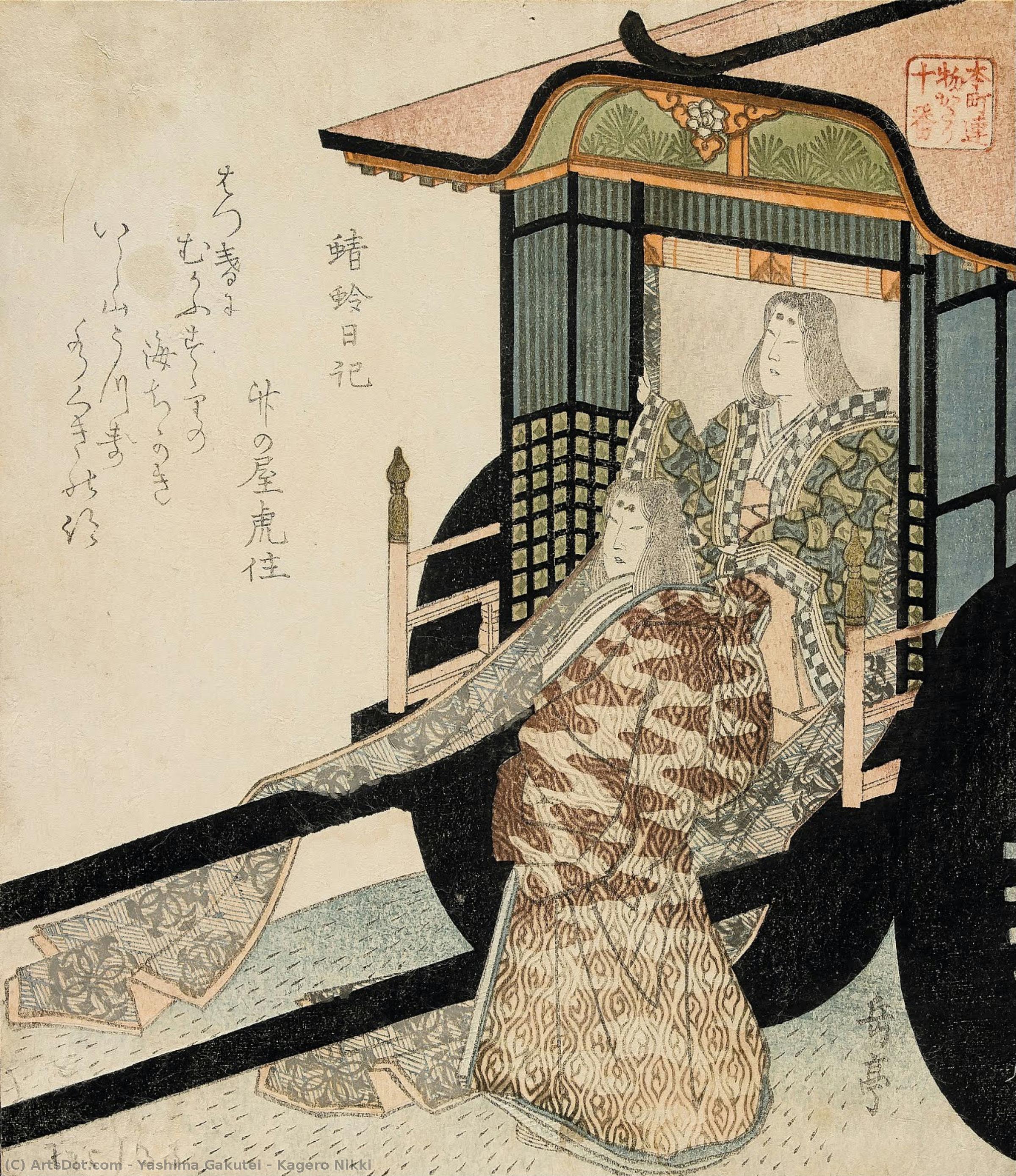
Kagero Nikki

 Weiterlesen
Erwerben Sie ein hochauflösendes, optimiertes digitales Bild, das der Online-Vorschau weit überlegen ist.
Jede Datei wird von unseren hauseigenen Spezialisten mit modernsten Werkzeugen und fachmännischer manueller Retusche sorgfältig vorbereitet. Wir stellen sicher, dass jedes Bild eine außergewöhnliche Klarheit, präzise Farbgenauigkeit und feinste Details aufweist.
Die endgültige Datei wird innerhalb von 72 Stunden per E-Mail zugestellt und ist für den sofortigen Einsatz in professionellen, redaktionellen und Druckumgebungen optimiert. Es handelt sich um dieselbe Qualität, der führende Designstudios, Verlage und Galerien vertrauen.
Digitales Bild
Laden Sie eine hochauflösende Datei für die persönliche Präsentation, den Druck und kreative Projekte herunter. ( Druck bestellen Handgemalte Reproduktion bestellen)
In jeder Bestellung digitaler Bilder enthalten
Professionelle digitale Bereitstellung, garantiert
Wenn Sie sich für ArtsDot.com entscheiden, erhalten Sie nicht nur ein Bild – Sie erhalten ein professionell aufbereitetes digitales Kunstwerk, das mit höchster Präzision erstellt und durch eine Zufriedenheitsgarantie abgesichert wird. Hier ist alles, was automatisch mit Ihrer Bestellung geliefert wird:

Schnelle E-Mail-Zustellung
Ihre hochauflösende digitale Bilddatei wird Ihnen innerhalb von 72 Stunden nach der Bestellung per E-Mail zugestellt – bereit zur sofortigen Verwendung.

KI-optimierte digitale Datei
Ihre Kunstwerke werden professionell mithilfe fortschrittlicher KI-Tools und manueller Bearbeitung optimiert, um maximale Detailtreue, Klarheit und Farbgenauigkeit zu gewährleisten.

Lebenslanger kostenloser Neudruckservice
Datei versehentlich gelöscht oder verloren? Keine Sorge – wir senden sie Ihnen jederzeit kostenlos erneut zu.

Keine Einfuhrgebühren – jemals
Genießen Sie Ihr Kunstwerk sofort ohne Zollgebühren, Einfuhrabgaben oder Versandkosten – digitale Downloads sind immer steuerfrei.

Garantierte Farbtreue
Wir garantieren, dass Ihr digitales Bild mithilfe professioneller Werkzeuge und Farbmanagement die Originalfarben so präzise wie möglich wiedergibt.

100-Tage-Zufriedenheitsgarantie
Wenn Sie mit Ihrem digitalen Bild nicht zufrieden sind, werden wir es überarbeiten oder 100% innerhalb von 100 Tagen erstatten – ohne Wenn und Aber.

100% Geld-zurück-Garantie
Nicht zufrieden? Erhalten Sie innerhalb von 100 Tagen nach Erhalt Ihrer digitalen Datei eine vollständige Rückerstattung – ohne Wenn und Aber.

Rabatte bei Großbestellungen
3 Bilder kaufen, 10% sparen – 5 Bilder kaufen, 15% sparen – Ab 10 Bildern 20% sparen. Ideal für kreative Projekte, Galerien und Agenturen.
Ähnliche Kunstwerke









Biografie des Künstlers
A Life Immersed in Poetry and Print: The World of Yashima Gakutei
Yashima Gakutei, a name perhaps less immediately recognizable than that of his celebrated teacher Hokusai, nevertheless occupies a significant niche within the vibrant landscape of 19th-century Japanese *ukiyo-e* art. Born in Osaka around 1786 – though precise dates remain elusive – Gakutei’s life was one woven with threads of artistic apprenticeship, literary passion, and a keen eye for capturing the subtleties of everyday beauty. His origins were somewhat unconventional; he was the illegitimate son of Hirata, a samurai serving under the Tokugawa shogunate, and later adopted into the Yashima clan, hence his chosen name. This background perhaps instilled in him a certain detachment from rigid societal norms, allowing for a more playful and individualistic approach to his art.Apprenticeship and Artistic Development
Gakutei’s artistic journey began with formal training under two prominent masters: Totoya Hokkei and Katsushika Hokusai. Both were influential figures in the *ukiyo-e* world, but they offered distinct perspectives that shaped Gakutei's style. Hokkei was known for his meticulous technique and refined depictions of nature, while Hokusai revolutionized landscape printing with his iconic series like “Thirty-Six Views of Mount Fuji.” Gakutei absorbed these lessons, developing a remarkable skill in woodblock printing itself – praised by critics for its technical precision and delicate embossing. However, he didn’t simply replicate the styles of his teachers; instead, he forged his own path, becoming particularly renowned for *surimono* prints and *kyōka* poetry. He spent considerable time working in Osaka, fulfilling private commissions for these exquisitely crafted woodblock prints, often incorporating his own literary works into the designs.The Fusion of Art and Verse: Kyōka and Surimono
What truly set Gakutei apart was his mastery of *kyōka*, a form of humorous Japanese poetry characterized by its wit, satire, and often playful subversion of traditional themes. He wasn’t merely illustrating existing poems; he *wrote* them, then seamlessly integrated them into his artwork. This fusion of art and verse is particularly evident in his *surimono* prints – luxurious, privately commissioned works intended for gifting among connoisseurs. These prints weren't mass-produced like many other *ukiyo-e* pieces; they were small, intimate objects designed to be appreciated for their artistic merit and clever wordplay. Gakutei’s *surimono* often depicted scenes of daily life, seasonal motifs, or classical literary references, all imbued with his characteristic humor and poetic sensibility. The quality of his printing was exceptional, showcasing a level of detail and finesse that surpassed even that of Hokkei.Beyond the Small Print: Illustrations and Translations
While *surimono* prints represent the core of Gakutei’s artistic legacy, he wasn't limited to this genre. He also undertook larger projects, demonstrating a versatility often overlooked in discussions of his work. Notably, he illustrated an entire book, the *Kyōka Suikoden*, based on the classic Chinese novel *Suikoden* (Water Margin). This undertaking required significant artistic effort and showcased his ability to create narrative sequences through woodblock prints. Furthermore, Gakutei undertook a complete Japanese translation of *Journey to the West*, another monumental work of Chinese literature, accompanying it with his own illustrations. These projects reveal a scholar’s mind alongside that of an artist – a deep engagement with literary tradition and a desire to bring these stories to a wider audience through visual interpretation. He also created rare landscape and seascape prints, though less common than his other works, demonstrating his range as a pupil of Hokusai.A Lasting Legacy: Gakutei’s Place in Ukiyo-e History
Yashima Gakutei died in 1868, leaving behind a body of work that, while not as extensive as some of his contemporaries, is nonetheless highly valued by collectors and scholars. His contributions to *ukiyo-e* art lie not only in the technical brilliance of his prints but also in the unique fusion of poetry and imagery he achieved. He represents a fascinating intersection of artistic skill, literary talent, and cultural awareness. While overshadowed by the fame of Hokusai, Gakutei’s work offers a compelling glimpse into the refined world of Edo-period Japan – a world where art wasn't just about visual representation but also about wit, elegance, and the power of words. His legacy continues to inspire appreciation for the subtleties of *surimono* prints and the enduring beauty of Japanese woodblock artistry.
Yashima Gakutei
1868