 Vorschau anzeigen
 Versenden
 Teilen
 Details anzeigen

 Herunterladen
 Ähnliche Objekte
 Röntgenaufnahme
 Diashow
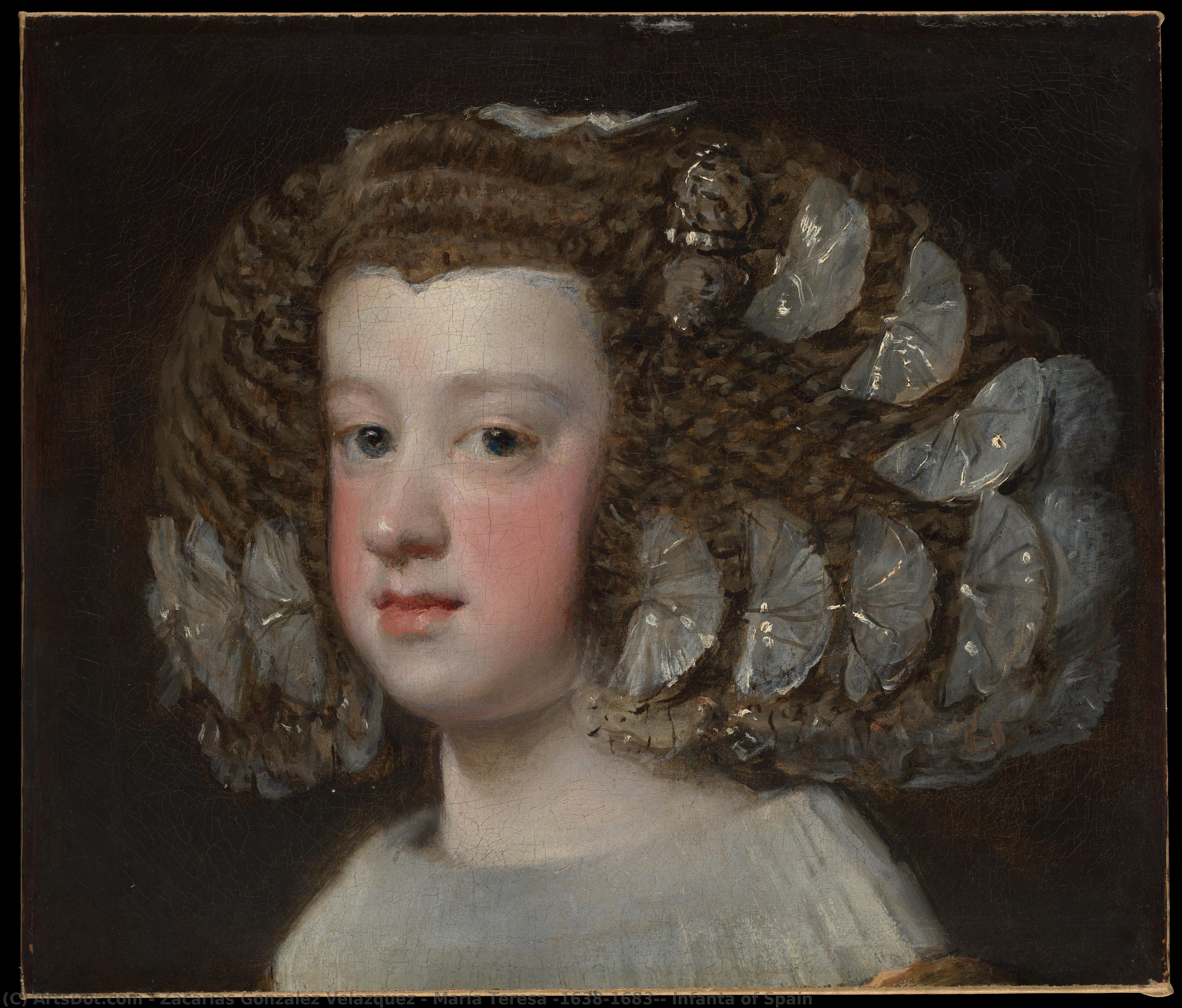
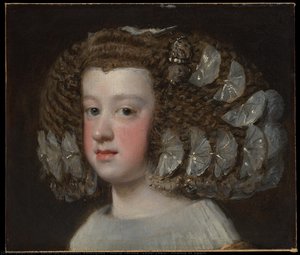
María Teresa (1638–1683), Infanta of Spain
 Oil On Canvas
- WallArt
- Baroque
 1651
1651- Early Modern
 34.0 x 40.0 cm
 Metropolitan Museum of Art
 Weiterlesen
Handgefertigte Ölreproduktion
Handgemaltes Ölgemälde auf Leinwand in Ihrer Wunschgröße und mit Rahmen, auf Bestellung von unseren Künstlern angefertigt. ( Druck bestellen Bild kaufen)




P118B $10

P118H $10

P118W $10

P438Z $10

P508JH $12

P508YH $12

P805H $10

P805Z $10

P919BZ $10

P919G $10

P919XJ $10

P959ZH $10

P968JZ $12

W106C $8

W218G $10

W218JH $8

W218Y $10

W307PJ $10

W316G $10

W316PJ $8

W316Y $10

W398PJ $8

W4111J $10

W500HY $15

W500JH $15

W692G $12

W849H $8

W940BG $15

W953PJ $8




Wählen Sie aus unseren vordefinierten Formaten, die den ursprünglichen Proportionen des Kunstwerks entsprechen.

Sie können Ihre eigenen Maße eingeben, um einen bestimmten Rahmen oder Platz auszufüllen. Wenn die gewählte Größe nicht den Proportionen des Originalbildes entspricht, werden wir das Kunstwerk entweder beschneiden oder das Gemälde durch zusätzliche, handgemalte Elemente erweitern. Ein digitales Mockup wird Ihnen zur Genehmigung zugesandt, bevor die Produktion beginnt.
Bitte beachten Sie, dass die Bildschirmvorschau nicht die tatsächliche Beschneidung oder Erweiterung widerspiegelt. Nur das Mockup zeigt die endgültige Komposition exakt an.
Obwohl Sondermaße verfügbar sind, empfehlen wir, eine Größe aus der vordefinierten Liste zu wählen, um die ursprünglichen Proportionen beizubehalten.
Nach der Bestellung wird das ArtsDot.com-Team dem Kunden Anweisungen per E-Mail zusenden und eine Mockup-Vorschau bereitstellen.
Weltweiter Versand () in nur 3 bis 4 Wochen statt der üblichen 5 Wochen. (31 August). Keine Kompromisse bei der Qualität.

Kostenloser weltweiter Expressversand

Hochwertige Leinenleinwand

Umfassender Versicherungsschutz beim Versand

Zollgebühren-Rückerstattungsgarantie

Garantie für exakte Farbtreue

60 Tage Rückgaberecht (nur bei Mängeln)

100% Geld-zurück-Garantie

Mengenrabatt verfügbar
 Die Glasoption ist nur für Größen unter 110 cm verfügbar.

María Teresa (1638–1683), Infanta of Spain
Art der Reproduktion
Format der Reproduktion
-


Gesamtpreis
$ 263
A Royal Presence Captured in Time
In the quiet majesty of this mid-17th-century portrait, we encounter the youthful gaze of María Teresa, the Infanta of Spain, a figure whose very existence was a cornerstone of European diplomacy. Painted in 1651 by ZacarIS González Velázquez, the work captures a moment of profound stillness and regal grace. The subject is presented with an ethereal elegance, her face illuminated against a deep, dramatic black background that pushes her presence toward the viewer with startling intimacy. Clad in a luminous white dress that seems to catch a phantom light, she wears a crown that signifies her divine right, while delicate pearls adorn her, symbolizing purity and the immense wealth of the Spanish Habsburg court. The composition, though originally part of a larger bust-length study, retains an arresting power that commands the room, making it an ideal centerpiece for those looking to infuse their interiors with a sense of historical grandeur and aristocratic poise.
The technique employed in this oil on canvas is a masterclass in the Spanish Baroque tradition, characterized by a meticulous attention to texture and light. The artist utilizes a soft, painterly approach to render the delicate butterfly ribbons within her wig, creating a tactile sensation that invites the eye to linger on the intricate details of her attire. There is a subtle interplay between the heavy, opulent fabrics of her gown and the translucent quality of her skin, achieved through masterful layering of glazes. This contrast creates a sense of three-dimensionality that breathes life into the canvas. For the discerning collector or interior designer, such a piece offers more than mere decoration; it provides a window into an era where every brushstroke was intended to communicate status, stability, and the enduring legacy of a royal bloodline.
A Legacy of Diplomacy and Artistry
Beyond its aesthetic brilliance, the portrait serves as a poignant historical document. As the daughter of King Philip IV, María Teresa’s image was not merely a personal likeness but a political instrument. These portraits circulated throughout the courts of Europe, acting as visual ambassadors for her beauty and suitability as a royal bride. Her eventual marriage to Louis XIV of France in 1660 solidified a powerful political alliance, forever linking the fates of Spain and France. To possess a reproduction of this work is to hold a piece of the complex tapestry of European history, where art and politics were inextricably entwined.
The emotional impact of the painting lies in its ability to bridge the centuries, offering a sense of timelessness that transcends its 1651 origins. The direct gaze of the Infanta creates an unbreakable connection with the observer, evoking feelings of reverence, nostalgia, and wonder. Whether placed in a formal study, a grand dining hall, or a curated gallery space, this artwork acts as a conversation starter, drawing guests into the opulent world of the Spanish Golden Age. It is a work that celebrates the triumph of light over darkness and the enduring allure of royal splendor, making it an incomparable choice for any collection dedicated to the heights of classical portraiture.
Ähnliche Kunstwerke


Über den Künstler
A Legacy Carved in Light and Lineage
To understand the artistry of Zacarías González Velázquez is to step into the heart of a Spanish dynasty where the brush was both a tool and a birthright. Born in Madrid in 1763, Zacarías did not merely enter the world of art; he was immersed in it from his first breath. He belonged to the illustrious González Velázquez family, a lineage of painters, sculptors, and architects that defined the Spanish late-Baroque aesthetic for generations. His father, the celebrated Antonio González Velázquez, served as a profound mentor, instilling in his son not only the technical rigors of the craft but also a deep reverence for the grandeur and religious fervor that characterized the era. This familial foundation provided Zacarías with an unparalleled education, blending the inherited traditions of his ancestors with the burgeoning academic standards of his time.
His formal journey into the heights of Spanish academia began in 1777 at the Real Academia de Bellas and Artes de San Fernando. Under the watchful eyes of masters like Mariano Salvador Maella, Zacarías refined a style that would eventually bridge the gap between the dramatic shadows of the Baroque and the emotive, atmospheric qualities of early Romanticism. His training was rigorous, emphasizing anatomical precision and the mastery of classical composition—elements that allowed him to navigate complex mythological narratives and solemn religious subjects with equal grace.
Royal Splendor and Architectural Vision
As his reputation grew, so did the scale of his ambitions. Zacarías became a sought-after figure for the most prestigious commissions in Spain, earning the trust of the monarchy to decorate the opulent interiors of the royal residences. His work within the El Pardo Palace stands as a testament to his ability to transform architectural spaces into theatrical stages of myth and legend. Through his meticulous use of light and color, he breathed life into mythological scenes that demanded both narrative clarity and visual splendor, ensuring that every brushstroke contributed to the overarching atmosphere of royal majesty.
Yet, the artist's vision was never confined solely to the canvas. Zacarías possessed a rare, multidisciplinary intellect that allowed him to perceive art as an integrated part of the built environment. His contributions extended into the realm of architectural design, where he left his mark on sacred landmarks such as the Toledo Cathedral and the Jerónimos Monastery. This ability to harmonize painting with architecture demonstrates a profound understanding of how visual storytelling can inhabit and elevate physical space, making him not just a painter, but a true architect of emotion.
The Zenith of Spanish Baroque Mastery
The enduring significance of Zacarías González Velázquez lies in his role as a transitional master. While his works are deeply rooted in the Spanish Baroque tradition—characterized by its dramatic use of chiaroscuro and emotional intensity—there is an unmistakable sense of movement and light in his later developments that hints at the approaching Romantic era. His portraits, ranging from intimate self-portraits to regal depictions of figures like the Infanta María Teresa, reveal a painter capable of capturing the very soul of his subjects through a delicate balance of realism and idealization.
His life's work remains a vital chapter in the history of Spanish art, representing the final, brilliant flourish of a stylistic tradition that had dominated Europe for decades. Through his dedication to the academic excellence of San Fernando and his service to the Spanish Crown, Zacarías ensured that the legacy of the González Velázquez name would be etched forever into the cultural fabric of Spain. His ability to distill complex human emotions and intellectual contemplation into visual form continues to resonate, offering a window into an age of unparalleled artistic grandeur.
zacarías gonzález velázquez
1763 - 1834
Kurzinfos
- Artistic Movement Or Style: Baroque
- Artists Or Movements Influenced By This Artist: ['Neoclassicism']
- Artists Who Influenced This Artist: ['Antonio González Velázquez']
- Date Of Birth: 1763
- Date Of Death: 1834
- Full Name: Zacarías González Velázquez
- Nationality: Spanish
- Notable Artworks:
- Columbus
- Portrait of Ferdinand VII
- Portrait of Maria Luisa of Parma
- The Miracle of Saint Casimir
- Young Girl
- Place Of Birth: Madrid, Spain
Ähnliche Artikel

The Golden Age Reforged: Dramatic Realism & Religious Zeal in Spanish Baroque Art
Explore the dramatic world of Spanish Baroque art! Discover masters like Zurbarán & the powerful influence of religious zeal on painting techniques – a guide for collectors and enthusiasts.

The Dramatic Flourish: Exploring the Baroque Movement's Enduring Legacy in Art History
Explore the dramatic world of Baroque art! Discover iconic artists like Caravaggio & Rubens, defining techniques, and its lasting impact on art history. Expert insights for collectors & enthusiasts at ArtsDot.

Barock Meisterwerke: Die 10 prägendsten Kunstwerke für Ihr Zuhause |
Entdecken Sie die 10 prägendsten Meisterwerke des Barock! Caravaggio, Rembrandt & Co. – Erfahren Sie die Geschichten hinter ikonischen Gemälde und finden Sie hochwertige Kunst Reproduktionen für Ihr Zuhause auf .

Barocke Pracht: Wie Sie Opulenz und Emotionen in zeitgenössische Innenräume bringen
Entdecken Sie die Pracht des Barock! Expertenratgeber für luxuriöse Innenräume mit barocken Elementen. Inspiration, Tipps & hochwertige Kunst bei .

The Visceral Stage: Exploring Dramatic Narratives & Emotional Intensity in Baroque Art
Explore the dramatic world of Baroque art! Discover iconic masters like Caravaggio & Rembrandt, their techniques, and the movement's lasting impact. Expert insights for collectors & enthusiasts at ArtsDot.