

 Vorschau anzeigen
 Versenden
 Teilen
 Details anzeigen

 Herunterladen
 Ähnliche Objekte
 Röntgenaufnahme
 Diashow
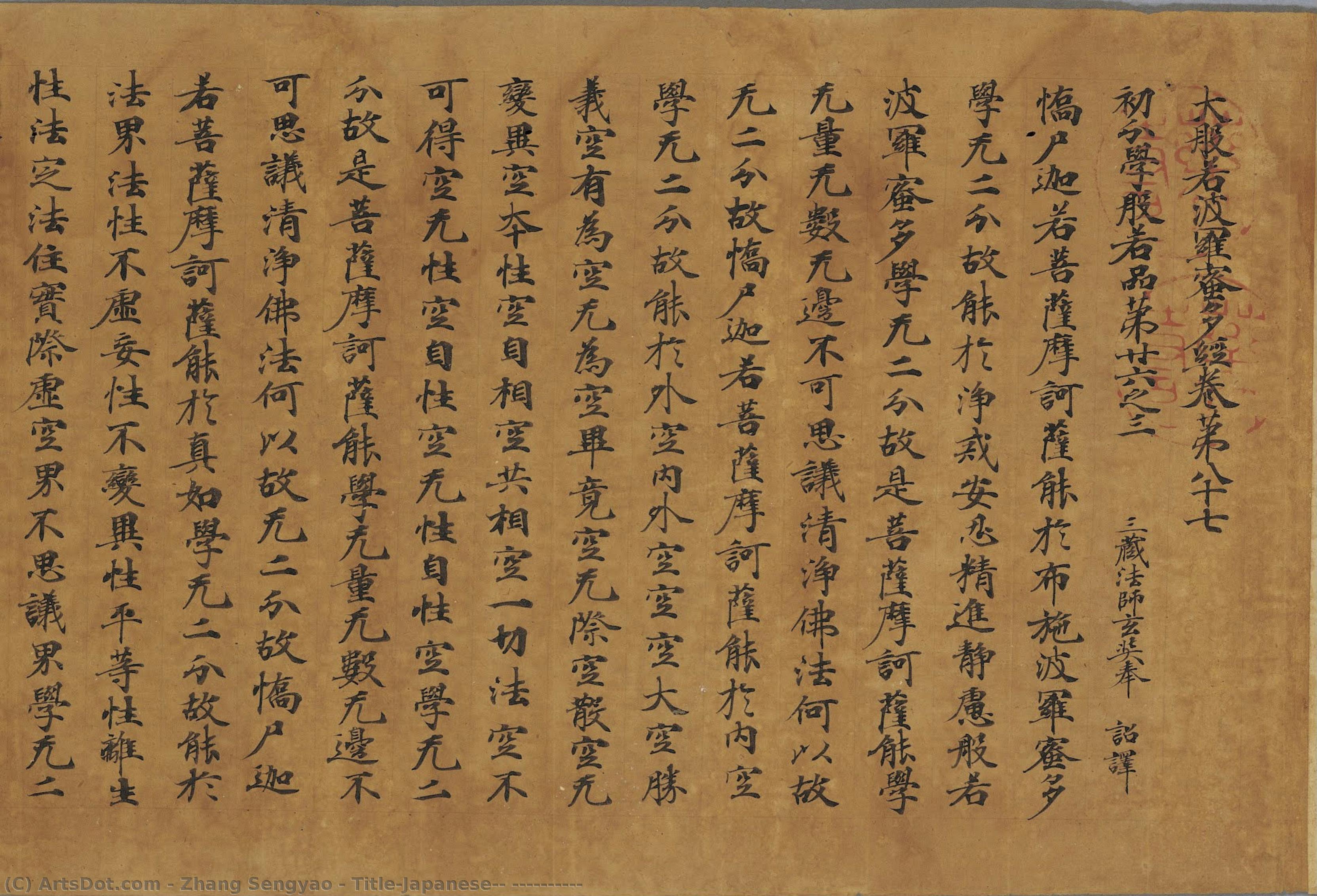
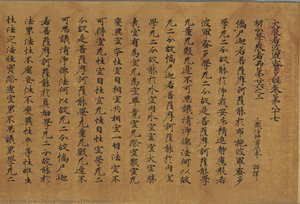
Title(Japanese): 大般若経(薬師寺経)
 700
700 34.0cm x 28.0cm
 Osaka City Museum of Fine Arts
 Weiterlesen
Erwerben Sie ein hochauflösendes, optimiertes digitales Bild, das der Online-Vorschau weit überlegen ist.
Jede Datei wird von unseren hauseigenen Spezialisten mit modernsten Werkzeugen und fachmännischer manueller Retusche sorgfältig vorbereitet. Wir stellen sicher, dass jedes Bild eine außergewöhnliche Klarheit, präzise Farbgenauigkeit und feinste Details aufweist.
Die endgültige Datei wird innerhalb von 72 Stunden per E-Mail zugestellt und ist für den sofortigen Einsatz in professionellen, redaktionellen und Druckumgebungen optimiert. Es handelt sich um dieselbe Qualität, der führende Designstudios, Verlage und Galerien vertrauen.
Digitales Bild
Laden Sie eine hochauflösende Datei für die persönliche Präsentation, den Druck und kreative Projekte herunter. ( Druck bestellen Handgemalte Reproduktion bestellen)
In jeder Bestellung digitaler Bilder enthalten
Professionelle digitale Bereitstellung, garantiert
Wenn Sie sich für ArtsDot.com entscheiden, erhalten Sie nicht nur ein Bild – Sie erhalten ein professionell aufbereitetes digitales Kunstwerk, das mit höchster Präzision erstellt und durch eine Zufriedenheitsgarantie abgesichert wird. Hier ist alles, was automatisch mit Ihrer Bestellung geliefert wird:

Schnelle E-Mail-Zustellung
Ihre hochauflösende digitale Bilddatei wird Ihnen innerhalb von 72 Stunden nach der Bestellung per E-Mail zugestellt – bereit zur sofortigen Verwendung.

KI-optimierte digitale Datei
Ihre Kunstwerke werden professionell mithilfe fortschrittlicher KI-Tools und manueller Bearbeitung optimiert, um maximale Detailtreue, Klarheit und Farbgenauigkeit zu gewährleisten.

Lebenslanger kostenloser Neudruckservice
Datei versehentlich gelöscht oder verloren? Keine Sorge – wir senden sie Ihnen jederzeit kostenlos erneut zu.

Keine Einfuhrgebühren – jemals
Genießen Sie Ihr Kunstwerk sofort ohne Zollgebühren, Einfuhrabgaben oder Versandkosten – digitale Downloads sind immer steuerfrei.

Garantierte Farbtreue
Wir garantieren, dass Ihr digitales Bild mithilfe professioneller Werkzeuge und Farbmanagement die Originalfarben so präzise wie möglich wiedergibt.

60-Tage-Zufriedenheitsgarantie
Sollten Sie mit Ihrem digitalen Bild nicht zufrieden sein, werden wir es überarbeiten oder Ihnen innerhalb von 60 Tagen 100% erstatten – ohne Wenn und Aber.

100% Geld-zurück-Garantie
Nicht zufrieden? Erhalten Sie innerhalb von 60 Tagen nach Erhalt Ihrer digitalen Datei eine vollständige Rückerstattung – ohne Angabe von Gründen.

Rabatte bei Großbestellungen
3 Bilder kaufen, 10% sparen – 5 Bilder kaufen, 15% sparen – Ab 10 Bildern 20% sparen. Ideal für kreative Projekte, Galerien und Agenturen.
Ähnliche Kunstwerke

Biografie des Künstlers
Zhang Sengyao (c. 490 – c. 540) - A Master of Liang Dynasty Ink Wash Painting
Zhang Sengyao remains an enigmatic figure in Chinese art history, shrouded in legend and celebrated for a single extraordinary tale that encapsulates the essence of artistic perfection. Despite the scarcity of biographical details—his birth year is unknown, and his death date uncertain—scholars agree on his active period during the Liang Dynasty (502–557 CE), a turbulent era marked by political fragmentation and religious fervor.
Born in Wu Commandery (modern Suzhou), Zhang Sengyao hailed from one of Wu’s four prominent clans, known for their patronage of art and scholarship. His family’s influence undoubtedly fostered his artistic inclinations, though concrete evidence regarding his formal education remains elusive. However, his dedication to Buddhist principles—evident in his lifelong devotion to the Dharma—shaped his worldview and profoundly impacted his artistic vision.
Zhang Sengyao gained renown primarily through his monumental contribution to Buddhist temple decoration, specifically the Anle Temple murals in Jinling (present-day Nanjing). These vibrant depictions of dragons—a symbol of imperial power and auspiciousness—became immortalized by a captivating anecdote that cemented his place in artistic lore.
The Legend of Flying Dragons
According to Xu Hao’s *Health Record*, Zhang Sengyao was commissioned by the Liang Prince to adorn the temple walls with four golden dragons. Driven by meticulous craftsmanship and philosophical contemplation, he painstakingly painted each dragon, striving for unparalleled realism. However, faced with skepticism from onlookers who questioned his assertion that adding eyes would cause the dragons to fly away—a statement deemed absurd by many—Zhang persevered.
With unwavering resolve, Zhang deliberately omitted pupils from two of the dragons’ eyes. He reasoned that the essence of a dragon resided in its spirit, and completing the image with eyes would infuse it with life force, triggering its ascent into the heavens. The onlookers scoffed at his unconventional approach, urging him to finalize the painting by adding pupils.
Undeterred, Zhang finally completed the task on two dragons. Immediately thereafter, a dramatic lightning bolt struck the temple wall where the dragons were situated. To everyone’s astonishment, the two dragons with pupils added to their eyes burst forth from the mural and soared into the sky—disappearing amidst thunder and lightning—leaving the remaining two dragons untouched.
Style and Technique
Zhang Sengyao's artistic style is characterized by a masterful command of ink wash painting (水墨畫), a technique deeply rooted in Daoist philosophy. He employed subtle gradations of tone, meticulous brushwork, and careful compositional arrangements to convey profound spiritual depth and visual splendor. His paintings exemplify the Liang Dynasty’s aesthetic sensibilities—a fusion of Buddhist iconography with refined artistic craftsmanship.
Scholars attribute Zhang Sengyao's distinctive style to influences from earlier masters such as Wang Meng (王夢) and Guo Xi (郭熙), who championed a contemplative approach to art that prioritized conveying inner harmony and capturing the sublime beauty of nature. Zhang’s meticulous attention to detail—particularly in depicting textures and atmospheric effects—reflects this legacy.
Legacy and Significance
Despite the loss of nearly all his extant works, Zhang Sengyao's tale continues to resonate throughout Chinese art history as a symbol of artistic perfection—a testament to the transformative power of intention and unwavering dedication. The legend encapsulates the Daoist belief that “completeness” is achieved not merely through technical skill but also through aligning oneself with cosmic principles.
More broadly, Zhang Sengyao’s contribution to Buddhist temple decoration underscores the importance of art as a vehicle for spiritual expression—a tradition that endured throughout subsequent dynasties and continues to inspire artists today. His legacy serves as an enduring reminder that true artistry transcends mere imitation; it strives to capture the essence of existence itself.
zhang sengyao
China
Kurzinfos
- Artistic Movement Or Style: Ink Style
- Full Name: Zhang Sengyao
- Nationality: Chinese
- Notable Artworks:
- Rolling Horses
- Immortal with Deer
- Title(Japanese): 大般若経(薬師寺経)
- Place Of Birth: Wu Commandery (Suzhou)

