

 Vorschau anzeigen
 Versenden
 Teilen
 Details anzeigen

 Herunterladen
 Ähnliche Objekte
 Röntgenaufnahme
 Diashow
 Stats
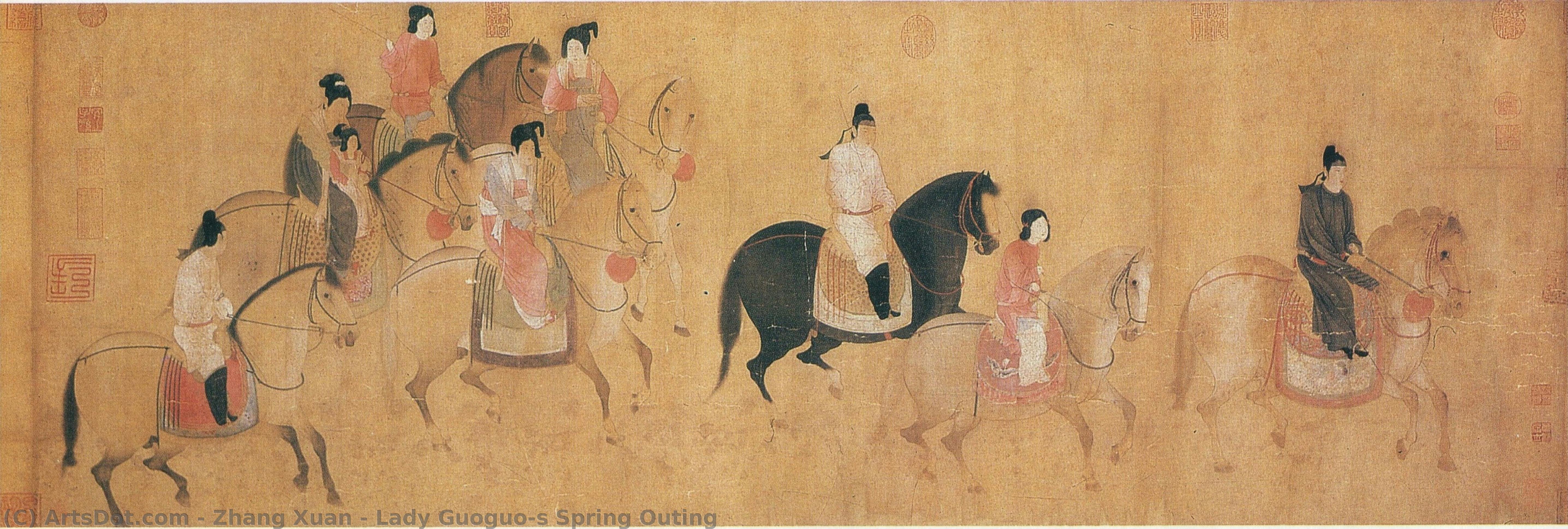
StatsLady Guoguo’s Spring Outing

 Weiterlesen
Erwerben Sie ein hochauflösendes, optimiertes digitales Bild, das der Online-Vorschau weit überlegen ist.
Jede Datei wird von unseren hauseigenen Spezialisten mit modernsten Werkzeugen und fachmännischer manueller Retusche sorgfältig vorbereitet. Wir stellen sicher, dass jedes Bild eine außergewöhnliche Klarheit, präzise Farbgenauigkeit und feinste Details aufweist.
Die endgültige Datei wird innerhalb von 72 Stunden per E-Mail zugestellt und ist für den sofortigen Einsatz in professionellen, redaktionellen und Druckumgebungen optimiert. Es handelt sich um dieselbe Qualität, der führende Designstudios, Verlage und Galerien vertrauen.
Digitales Bild
Laden Sie eine hochauflösende Datei für die persönliche Präsentation, den Druck und kreative Projekte herunter. ( Switch to Print Handgemalte Reproduktion bestellen)
In jeder Bestellung digitaler Bilder enthalten
Professionelle digitale Bereitstellung, garantiert
Wenn Sie sich für ArtsDot.com entscheiden, erhalten Sie nicht nur ein Bild – Sie erhalten ein professionell aufbereitetes digitales Kunstwerk, das mit höchster Präzision erstellt und durch eine Zufriedenheitsgarantie abgesichert wird. Hier ist alles, was automatisch mit Ihrer Bestellung geliefert wird:

Schnelle E-Mail-Zustellung
Ihre hochauflösende digitale Bilddatei wird Ihnen innerhalb von 72 Stunden nach der Bestellung per E-Mail zugestellt – bereit zur sofortigen Verwendung.

KI-optimierte digitale Datei
Ihre Kunstwerke werden professionell mithilfe fortschrittlicher KI-Tools und manueller Bearbeitung optimiert, um maximale Detailtreue, Klarheit und Farbgenauigkeit zu gewährleisten.

Lebenslanger kostenloser Neudruckservice
Datei versehentlich gelöscht oder verloren? Keine Sorge – wir senden sie Ihnen jederzeit kostenlos erneut zu.

Keine Einfuhrgebühren – jemals
Genießen Sie Ihr Kunstwerk sofort ohne Zollgebühren, Einfuhrabgaben oder Versandkosten – digitale Downloads sind immer steuerfrei.

Garantierte Farbtreue
Wir garantieren, dass Ihr digitales Bild mithilfe professioneller Werkzeuge und Farbmanagement die Originalfarben so präzise wie möglich wiedergibt.

100-Tage-Zufriedenheitsgarantie
Wenn Sie mit Ihrem digitalen Bild nicht zufrieden sind, werden wir es überarbeiten oder 100% innerhalb von 100 Tagen erstatten – ohne Wenn und Aber.

100% Geld-zurück-Garantie
Nicht zufrieden? Erhalten Sie innerhalb von 100 Tagen nach Erhalt Ihrer digitalen Datei eine vollständige Rückerstattung – ohne Wenn und Aber.

Rabatte bei Großbestellungen
3 Bilder kaufen, 10% sparen – 5 Bilder kaufen, 15% sparen – Ab 10 Bildern 20% sparen. Ideal für kreative Projekte, Galerien und Agenturen.
Ähnliche Kunstwerke





Biografie des Künstlers
Zhang Xuan: A Master of Tang Court Elegance
Zhang Xuan (713–755), a pivotal figure in Tang Dynasty art, stands as one of the two most celebrated painters of his era alongside Yan Liben. Born in Chang’an—the vibrant capital of the Tang Empire—his life coincided with a period of unparalleled artistic flourishing and imperial patronage, shaping him into an artist deeply attuned to the aesthetic sensibilities of the time. While biographical details remain scarce, scholarly consensus points to Xuan's formative years being steeped in Confucian ideals and humanist philosophy, influences that would permeate his oeuvre.- Early Life & Training: Precise information regarding Xuan’s upbringing is elusive, yet evidence suggests he received a rigorous artistic education under Yan Liben, arguably the foremost painter of his generation. This mentorship instilled in him a profound understanding of brushwork and composition—techniques that would become hallmarks of his distinctive style.
- Style & Technique: Zhang Xuan's artistic vision is characterized by meticulous observation and an unparalleled sensitivity to detail. He excelled at portraying figures with remarkable realism, capturing subtle expressions and postures that conveyed emotion and psychological depth. His signature technique involved layering brushstrokes—a method known as *hua qiang*—to achieve luminous effects and create a sense of atmospheric perspective.
Major Works & Artistic Legacy
Zhang Xuan’s artistic output during the Tang Dynasty cemented his place among China's most celebrated painters. His masterpiece, “Court Ladies Preparing Newly Woven Silk,” remains one of the few surviving depictions of this pivotal moment in Tang court life—a testament to Huizong’s patronage and Zhang Xuan’s ability to convey both visual splendor and profound human emotion. Similarly, "Spring Outing of the Tang Court," meticulously recreated by Li Gonglin, exemplifies Zhang Xuan's masterful command of perspective and color, establishing him as a pioneer in landscape painting. These works continue to inspire artists today, demonstrating the enduring power of his vision and technique. His influence extended beyond individual paintings; he helped shape the aesthetic sensibilities of subsequent generations, fostering a tradition of elegant realism that would define Chinese art for centuries to come.Early Life and Artistic Training
Born in Chang’an (modern Xi'an), Zhang Xuan emerged from a milieu steeped in artistic patronage—the imperial court itself—a circumstance that profoundly shaped his formative years. Precise biographical details remain elusive, largely due to the fragmentary nature of surviving historical records; however, scholarly consensus suggests he was born around 713 CE and died in 755 CE during the tumultuous reign of Emperor Xuanzong. While specifics regarding his family background are scant, it is known that Zhang Xuan received an exceptional education—a hallmark of aristocratic upbringing—primarily focused on calligraphy and painting. His training likely involved immersion in the traditions of Yan Liben (嚴 linewidth), a celebrated painter who championed naturalism and employed innovative techniques to capture the essence of nature.Early Artistic Influences & Style
Zhang Xuan’s artistic vision was decisively molded by the prevailing aesthetic sensibilities of his era—the zenith of Tang art. The court artists of Xuanzong’s reign embraced a style characterized by serene landscapes, idealized figures, and meticulous attention to detail. This stylistic preference stemmed from Confucian ideals that emphasized harmony with nature and moral contemplation. Zhang Xuan skillfully absorbed these influences, demonstrating an exceptional ability to synthesize disparate traditions into a cohesive artistic idiom. His paintings frequently depict scenes of aristocratic life—court ladies engaged in activities such as preparing silk—presented with remarkable realism and imbued with subtle symbolic resonances. The use of color palettes—often muted tones reflecting the tranquility of mountainous vistas—further underscores the artist’s commitment to conveying profound emotional depth.Early Life and Artistic Training
Zhang Xuan was born in Chang'an (modern Xi'an), the capital of the Tang Dynasty, around 713 CE. Details about his family background remain obscure, but he emerged from a milieu receptive to artistic innovation. The Tang court fostered a vibrant intellectual environment where calligraphy, painting, and music flourished—conditions ideal for nurturing talent. While biographical information is scarce, scholars believe Zhang Xuan received formal training in painting under Yan Liben (顏 ਲੀବեն), a prominent artist of the era who championed realism and expressive brushwork. This mentorship undoubtedly shaped Zhang Xuan’s artistic sensibilities and established him on a path toward mastering traditional Chinese techniques.Notable Works: Court Ladies Preparing Newly Woven Silk
Zhang Xuan's fame rests primarily upon *Court Ladies Preparing Newly Woven Silk (搗練圖)*, arguably the most celebrated painting of the Tang dynasty. Executed in the early 12th century by Emperor Huizong of Song—a remarkable feat considering the painting’s original destruction—this masterpiece exemplifies Zhang Xuan’s meticulous attention to detail and his ability to convey profound emotion through visual representation. The scene depicts a group of ladies diligently weaving silk, capturing not only the physical activity but also the contemplative atmosphere of the studio. Its vibrant colors, masterful brushwork, and symbolic resonance continue to inspire admiration and scholarly debate today.Early Life and Artistic Training
Zhang Xuan was born in Chang’an (modern Xi'an), the capital of the Tang Dynasty—a period renowned for its cosmopolitan culture and artistic flourishing. Precise biographical details remain scarce, reflecting the limitations of historical records during that era. However, scholarly consensus suggests he originated from a family with connections to the imperial court, affording him access to privileged artistic training. Evidence indicates he studied under Yan Liben (顏 ਲੀବեն), a celebrated painter known for his landscapes and portraits—a formative influence shaping Xuan’s stylistic sensibilities. This mentorship instilled in him a deep appreciation for naturalism and meticulous observation—principles that would permeate his oeuvre.Notable Works: Court Ladies Preparing Newly Woven Silk
Zhang Xuan's artistic legacy rests primarily upon *Court Ladies Preparing Newly Woven Silk (搗練圖)*, arguably the most iconic image of Tang Dynasty art. Executed in silk and ink wash technique—a hallmark of imperial patronage—the painting depicts a scene of aristocratic ladies diligently overseeing the weaving process of fresh silk fabric. Its exquisite detail captures not only the physical appearance of the figures but also their psychological state—expressing serenity, diligence, and an awareness of social hierarchy. The composition itself is masterful, utilizing asymmetrical balance and subtle tonal variations to create a sense of depth and atmosphere.Early Life and Artistic Training
Zhang Xuan’s birthdate is uncertain, but he was born in Chang'an (modern Xi'an), the capital of the Tang Dynasty—a period renowned for its cosmopolitan culture and artistic flourishing. He belonged to a family with connections to the imperial court, providing him with access to influential mentors and fostering an environment conducive to artistic development. While biographical details remain scarce, scholars believe he received formal training in painting under Yan Liben (顏 ਲੀବեն), a celebrated artist of his time who championed realism and employed innovative techniques—particularly the use of color—to depict scenes from daily life and court rituals. This formative influence would profoundly shape Zhang Xuan’s artistic vision.Notable Works and Artistic Style
Zhang Xuan achieved considerable fame during his lifetime for several outstanding paintings, most notably *Court Ladies Preparing Newly Woven Silk* (搗練圖) and *Spring Outing of the Tang Court* (虢國夫人遊春圖). The surviving copy of *Court Ladies Preparing Newly Woven Silk*, commissioned by Emperor Huizong of Song, exemplifies Zhang Xuan’s masterful command of color and composition. It captures a serene moment of aristocratic leisure—ladies meticulously inspecting newly woven silk—with meticulous detail and subtle tonal variations that convey an atmosphere of refined elegance. Similarly, Li Gonglin's reimagining of *Spring Outing of the Tang Court* showcases Zhang Xuan’s ability to translate historical narratives into visually arresting scenes. The painting depicts a procession of Tang court ladies embarking on a springtime excursion, rendered with vibrant hues and dynamic brushstrokes that convey movement and vitality.\n\nZhang Xuan emerged as one of the foremost figures in Tang Dynasty art during a period marked by unprecedented artistic innovation and patronage. Influenced by Yan Liben’s expressive style—particularly his masterful depiction of human emotion—Zhang Xuan embraced a humanist aesthetic that prioritized psychological realism alongside meticulous observation of nature. His training under Yan Liben instilled in him a profound understanding of tonal painting techniques, which he skillfully employed to capture the subtleties of light and shadow.\n\nHis artistic output spanned numerous genres, including portraiture, landscape painting, and mythological scenes. However, Zhang Xuan’s enduring legacy rests primarily on his monumental achievement: *Court Ladies Preparing Newly Woven Silk*. This iconic artwork exemplifies Tang Dynasty artistic ideals—harmony, elegance, and refined taste—and remains one of the most celebrated examples of Chinese silk painting. The meticulous detail with which Zhang Xuan rendered the ladies' postures, expressions, and attire speaks volumes about his dedication to capturing human experience.\n\nThe painting’s symbolism is equally compelling. It reflects the importance of female virtue and domestic tranquility within Tang society, while simultaneously celebrating the beauty of springtime and the artistry of weaving—a craft considered highly esteemed during the period. Li Gonglin's later reworking of this masterpiece solidified Zhang Xuan's legacy as a master of visual storytelling.\n\nZhang Xuan (713–755) stands as one of the two most revered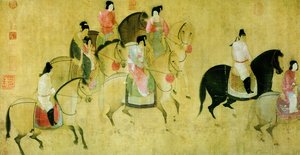
Zhang Xuan
China
Kurzinfos
- Artistic Movement Or Style: Malerei der Tang-Dynastie
- Artists Or Movements Influenced By This Artist: ['Li Gonglin']
- Artists Who Influenced This Artist: ['Yan Liben']
- Date Of Birth: 713
- Date Of Death: 755
- Full Name: Zhang Xuan
- Nationality: Chinesisch
- Notable Artworks:
- Hofdamen bei der Vorbereitung frisch gewebter Seide
- Frühlingsausflug des Tang-Hofes
- Place Of Birth: Chang'an, China